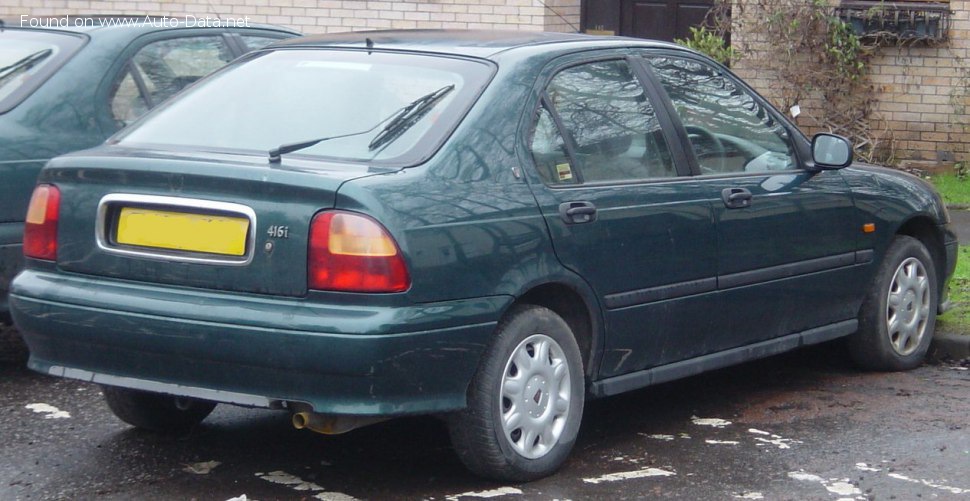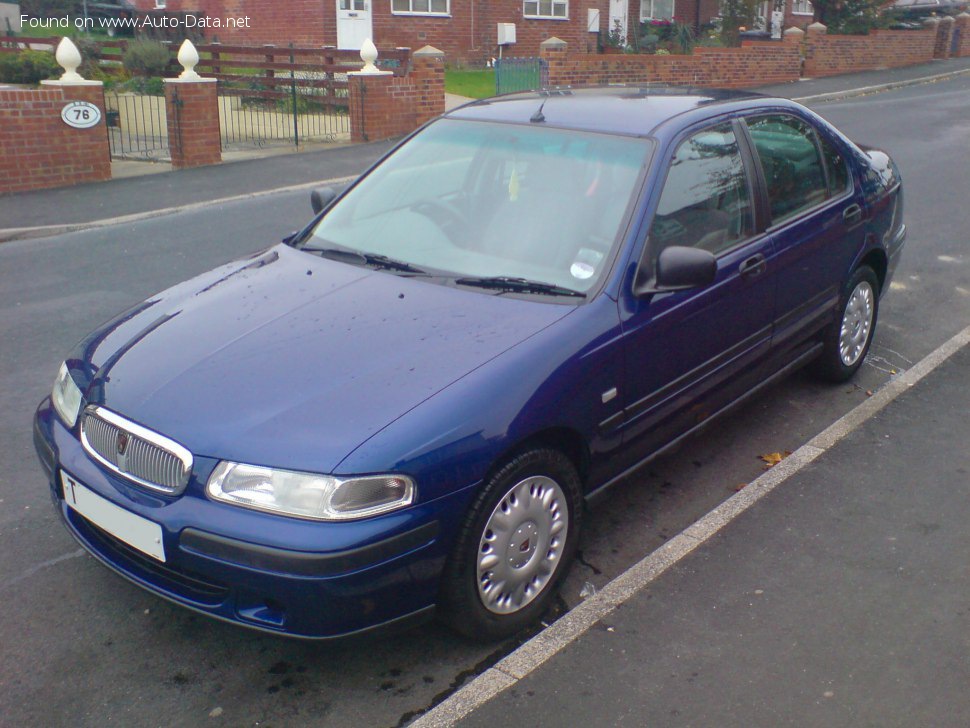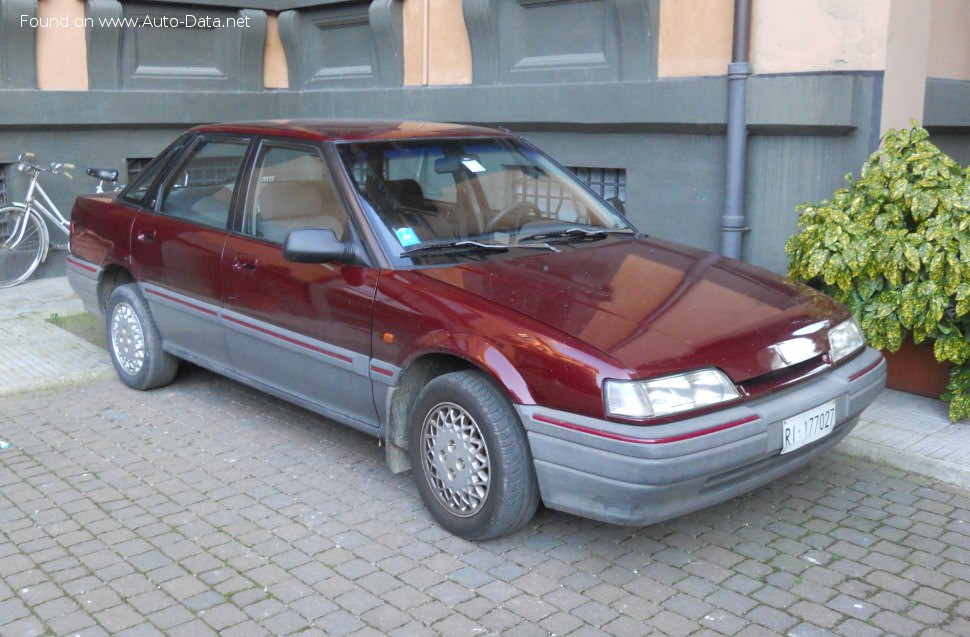
The Rover 400 (XW) 416 GSI (111 Hp): A British-Japanese Family Sedan of the Early 1990s
The Rover 400 (XW) 416 GSI (111 Hp) represents a significant chapter in the history of the British automotive manufacturer Rover, particularly during an era defined by crucial collaborations. Launched in 1990 and produced until 1995, the XW generation of the Rover 400 series was a compact family sedan that played a vital role in Rover’s lineup, primarily targeting the competitive European C-segment. This model, specifically the 416 GSI variant, embodied a blend of traditional British styling and refinement with the underlying mechanical prowess derived from its partnership with Honda. While Rover vehicles were not widely distributed in the United States, the 400 (XW) was a familiar sight on European roads, offering a practical, comfortable, and relatively sprightly option for families and commuters alike. Its design and engineering were a testament to the cross-continental efforts to create a globally competitive vehicle, even if its primary market remained within the confines of Europe and select Asian regions.
The 400 (XW) generation was a direct successor to the Rover 200 series (R8), which itself was a product of the Rover-Honda alliance. The 400 series essentially took the R8 platform and stretched it to create a more substantial four-door sedan, offering increased interior space and a more executive appearance compared to its hatchback sibling. The 416 GSI variant, with its 1.6-liter engine, stood out as a well-balanced offering within the range, providing a commendable mix of performance and fuel efficiency for its time. It was designed to appeal to buyers seeking a car with a touch of class and sophistication that was often associated with the Rover brand, combined with the reliability and modern engineering that Honda brought to the table.
Engine & Performance: The Heart of the Rover 400 (XW) 416 GSI (111 Hp)
At the core of the Rover 400 (XW) 416 GSI’s appeal was its capable powertrain, a product of the collaborative engineering efforts between Rover and Honda. This particular variant was equipped with a 1.6-liter (1590 cm³ or 97.03 cu. in.) naturally aspirated inline four-cylinder engine, designated as the K16. This engine featured a Double Overhead Camshaft (DOHC) valvetrain with four valves per cylinder, a configuration that was advanced for a family car of its era and contributed to its responsive nature. It delivered a respectable 111 horsepower at 6300 rpm, translating to a power-per-liter output of 69.8 horsepower per liter, which was competitive for its class.
Torque figures for the 416 GSI stood at 137 Nm (101.05 lb.-ft.) peaking at 5200 rpm. This power and torque, combined with a relatively low kerb weight of 2369.97 pounds (1075 kg), resulted in a lively performance for a compact sedan. The vehicle boasted an acceleration time from 0 to 60 mph in approximately 9 seconds (0-100 km/h in 9.5 seconds), making it one of the quicker options in its segment. Its maximum speed was rated at 118.06 mph (190 km/h), allowing for comfortable cruising on European highways.
The engine’s layout was front, transverse, driving the front wheels through a standard 5-speed manual transmission. This front-wheel-drive architecture was typical for compact cars of the period, offering predictable handling and efficient packaging. Fuel delivery was managed by a multi-port manifold injection system, ensuring efficient combustion and contributing to the car’s decent fuel economy. The combined fuel economy was rated at approximately 26.1 US mpg (9 l/100 km), with urban consumption around 24 US mpg (9.8 l/100 km) and extra-urban figures reaching 33.6 US mpg (7 l/100 km). These figures were quite reasonable for a non-turbocharged gasoline engine in the early 1990s, making the 416 GSI an economical choice for daily driving. The engine oil capacity was 3.7 US quarts, and the cooling system held 5.81 US quarts of coolant.
Design & Features: Blending British Aesthetics with Practicality
The design of the Rover 400 (XW) 416 GSI was a conscious effort to combine Rover’s traditional styling cues with a modern, aerodynamic profile. As a four-door sedan with seating for five, it exuded a more mature and executive presence than its hatchback sibling. Its dimensions—172.05 inches (4370 mm) in length, 66.14 inches (1680 mm) in width, and 55.12 inches (1400 mm) in height—placed it squarely within the compact sedan category, yet it offered a surprisingly spacious interior for its footprint. The wheelbase of 100.39 inches (2550 mm) contributed to a stable ride and ample legroom for rear passengers.
Aesthetically, the 400 (XW) featured a relatively clean and uncluttered design, characterized by smooth lines and a conservative yet elegant front fascia. The interior was designed with comfort and practicality in mind, typically featuring higher-quality materials than many of its direct competitors, a hallmark of the Rover brand. Standard features for the GSI trim level would have included power windows, central locking, and a more refined upholstery finish.
In terms of chassis and safety, the Rover 400 (XW) was built on a robust platform. It featured a front suspension utilizing wishbones and a rear suspension with coil springs, providing a comfortable and predictable ride. Braking performance was handled by disc brakes on both the front and rear axles, a significant advantage over many rivals that still used drum brakes at the rear. An Anti-lock Braking System (ABS) was available, enhancing safety during emergency braking. Steering was managed by a rack and pinion system with hydraulic power steering, offering good feedback and ease of maneuverability. The car rode on 175/65 R14 tires, which provided a good balance of grip and ride comfort for everyday driving. The trunk space was a practical 14.48 cubic feet (410 liters), making it suitable for family trips or grocery runs, and the fuel tank capacity was 14.53 US gallons (55 liters), offering a decent range between fill-ups.
Technical Specifications
| Category | Specification | US Equivalent |
|---|---|---|
| Brand | Rover | |
| Model | 400 | |
| Generation | 400 (XW) | |
| Type (Engine) | 416 GSI (111 Hp) | |
| Start of Production | 1990 year | |
| End of Production | 1995 year | |
| Powertrain Architecture | Internal Combustion engine | |
| Body Type | Sedan | |
| Seats | 5 | |
| Doors | 4 | |
|
Performance Specs |
||
| Fuel Consumption (Urban) | 9.8 l/100 km | 24 US mpg |
| Fuel Consumption (Extra Urban) | 7 l/100 km | 33.6 US mpg |
| Fuel Consumption (Combined) | 9 l/100 km | 26.1 US mpg |
| Fuel Type | Petrol (Gasoline) | |
| Acceleration 0 – 60 mph | 9 sec | 9 sec |
| Maximum Speed | 190 km/h | 118.06 mph |
| Weight-to-Power Ratio | 9.7 kg/Hp | 103.3 Hp/tonne |
|
Engine Specs |
||
| Power | 111 Hp @ 6300 rpm | 111 Hp @ 6300 rpm |
| Torque | 137 Nm @ 5200 rpm | 101.05 lb.-ft. @ 5200 rpm |
| Engine Layout | Front, Transverse | |
| Engine Model/Code | K16 | |
| Engine Displacement | 1590 cm³ | 97.03 cu. in. |
| Number of Cylinders | 4 | |
| Engine Configuration | Inline | |
| Cylinder Bore | 75 mm | 2.95 in. |
| Piston Stroke | 90 mm | 3.54 in. |
| Compression Ratio | 9.1:1 | |
| Valves per Cylinder | 4 | |
| Fuel Injection System | Multi-port manifold injection | |
| Engine Aspiration | Naturally aspirated engine | |
| Valvetrain | DOHC | |
| Engine Oil Capacity | 3.5 l | 3.7 US qt |
| Coolant Capacity | 5.5 l | 5.81 US qt |
|
Space, Volume and Weights |
||
| Kerb Weight | 1075 kg | 2369.97 lbs. |
| Max. Weight | 1550 kg | 3417.17 lbs. |
| Max Load | 475 kg | 1047.2 lbs. |
| Trunk (Boot) Space – Minimum | 410 l | 14.48 cu. ft. |
| Fuel Tank Capacity | 55 l | 14.53 US gal |
|
Dimensions |
||
| Length | 4370 mm | 172.05 in. |
| Width | 1680 mm | 66.14 in. |
| Height | 1400 mm | 55.12 in. |
| Wheelbase | 2550 mm | 100.39 in. |
| Front Track | 1475 mm | 58.07 in. |
| Rear Track | 1470 mm | 57.87 in. |
|
Drivetrain, Brakes and Suspension Specs |
||
| Drivetrain Architecture | Front wheel drive, Internal Combustion engine | |
| Drive Wheel | Front wheel drive | |
| Number of Gears and Type of Gearbox | 5 gears, manual transmission | |
| Front Suspension | Wishbone | |
| Rear Suspension | Coil spring | |
| Front Brakes | Disc | |
| Rear Brakes | Disc | |
| Assisting Systems | ABS (Anti-lock braking system) | |
| Steering Type | Steering rack and pinion | |
| Power Steering | Hydraulic Steering | |
| Tires Size | 175/65 R14 | |
Legacy & Market Impact of the Rover 400 (XW)
The Rover 400 (XW) 416 GSI (111 Hp) carved out a notable, if somewhat understated, legacy in the European automotive landscape of the early to mid-1990s. Positioned in the highly competitive C-segment, it faced formidable rivals such as the Ford Escort/Orion, Vauxhall Astra/Cavalier (Opel Kadett/Vectra in mainland Europe), and the Volkswagen Golf/Jetta. What set the Rover 400 apart was its unique blend of qualities: a perceived premium feel due to its Rover badging and interior appointments, combined with the underlying reliability and engineering excellence provided by Honda’s platform and powertrain.
The collaboration with Honda, which was a cornerstone of Rover’s strategy during this period, allowed the company to offer modern, reliable vehicles at a time when its own resources were somewhat constrained. The 400 (XW) benefited immensely from this, gaining a reputation for smooth operation, refined handling, and a generally trouble-free ownership experience, traits often associated with Japanese engineering. This helped to counter some of the historical perceptions of British cars being prone to mechanical issues.
Despite its strengths, the Rover 400 (XW) struggled to fully differentiate itself in a crowded market dominated by mass-market players. While it offered a more upscale alternative, it never quite achieved the sales volumes of its German or American-branded rivals. Its design, while elegant, was perhaps too conservative for some, and its British heritage, while a point of pride for some buyers, also meant it lacked the broad appeal of a truly international design.
The 400 (XW)’s tenure from 1990 to 1995 concluded with the introduction of its successor, the Rover 400 (HH), which marked a further evolution in Rover’s design language and continued the trend of platform sharing, this time with the Honda Civic. Today, the Rover 400 (XW) 416 GSI is remembered as a competent and comfortable family sedan, a testament to a specific era of Anglo-Japanese automotive cooperation. It stands as a symbol of Rover’s attempt to remain competitive and relevant in a rapidly changing global automotive industry, offering a glimpse into the brand’s efforts to blend traditional British luxury cues with modern engineering practicality. For enthusiasts and historians, it represents a period of quiet competence and a unique chapter in the story of a storied British marque.