Ford Mustang IV 4.6i V8 32V Mach I (305 Hp): A Modern Classic Reimagined
The Ford Mustang IV 4.6i V8 32V Mach I (305 Hp) represents a significant chapter in the storied history of the American pony car. Produced for a limited run between 2003 and 2004, this special edition model revived the iconic Mach 1 nameplate, last seen in 1978, for the fourth generation of the Mustang, often referred to as the SN95 generation. Positioned as a performance variant that bridged the gap between the standard Mustang GT and the top-tier SVT Cobra, the Mach 1 delivered a potent blend of retro styling cues, enhanced handling, and a distinctive powertrain. It was a celebration of Mustang heritage, offering enthusiasts a taste of classic muscle car spirit with modern-era refinements.
Engine & Performance: The DOHC V8 Heart of the Ford Mustang IV
At the core of the Ford Mustang IV Mach 1’s appeal was its formidable powertrain. Under the distinctive “shaker” hood scoop resided a 4.6-liter (4601 cm3 or 280.77 cu. in.) naturally aspirated V8 engine. This wasn’t just any 4.6-liter V8; it was a 32-valve DOHC (Dual Overhead Camshaft) unit, a detuned version of the engine found in the contemporary SVT Cobra. Unlike the SOHC V8 in the GT, the DOHC configuration allowed for greater breathing efficiency and higher revving capability, contributing to its impressive output.
This V-engine, with its eight cylinders, was longitudinally mounted in the front, driving the rear wheels, a classic Mustang setup. It generated a robust 305 horsepower at 5800 rpm, translating to a power-per-liter ratio of 66.3 Hp/l. Torque figures were equally compelling, peaking at 434 Nm (320.1 lb.-ft.) at 4200 rpm, ensuring strong acceleration across the rev range. The engine featured a multi-port manifold injection system and a compression ratio of 10.1:1, optimized for premium gasoline.
Power was delivered through a standard 5-speed manual transmission, offering an engaging and direct driving experience that true enthusiasts craved. This combination of a high-revving DOHC V8 and a manual gearbox gave the Mach 1 a visceral feel, reminiscent of its ancestors. With a curb weight of 3531.81 lbs (1602 kg), the car boasted a favorable weight-to-power ratio of 5.3 kg/Hp, or 190.4 Hp per tonne, underscoring its performance credentials. Fuel economy, while not its primary focus, was rated at an estimated 16.9 US mpg in urban driving and 25 US mpg on the highway, respectable for a V8-powered performance coupe of its era.
Design & Features: Retro Flair Meets Modern Functionality
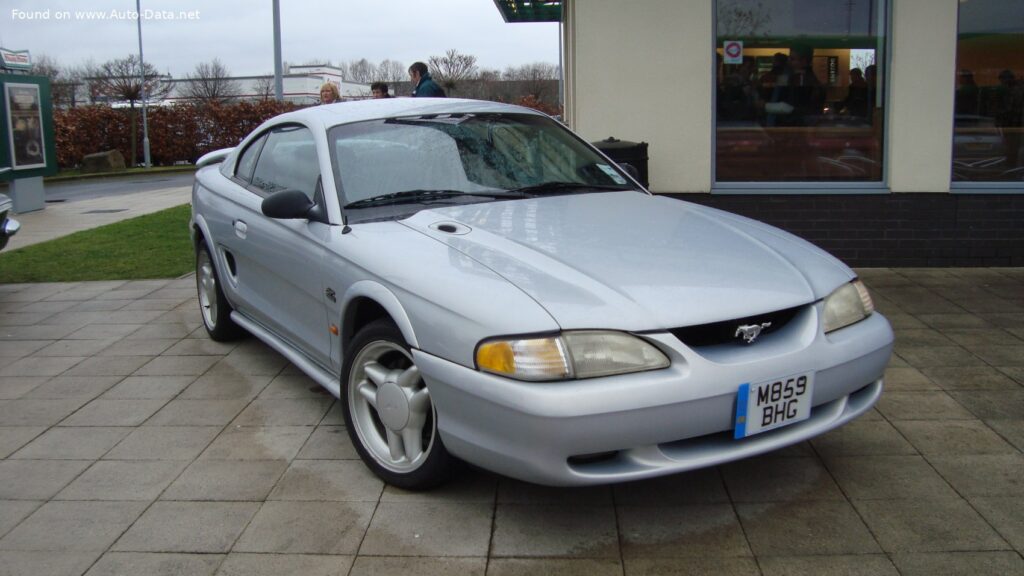
The design of the Ford Mustang IV Mach 1 was a deliberate nod to its 1969-1970 predecessors, incorporating several retro-inspired elements that set it apart from the standard SN95 Mustang. The most prominent feature was the functional “shaker” hood scoop, which protruded through an opening in the hood and vibrated with the engine, a direct callback to the original Mach 1. Other distinctive styling cues included the unique front fascia with a blacked-out grille, a chin spoiler, side scoops, and a rear spoiler, all contributing to an aggressive and purposeful stance.
The Mach 1 was offered exclusively as a 2-door coupe, providing seating for four occupants. Inside, the cabin featured retro-themed gauges, aluminum pedals, and special Mach 1-embroidered seats, further enhancing its unique identity. While not laden with the advanced infotainment systems of modern vehicles, it offered essential features for the time, including a hydraulic power steering system for precise control and an Anti-lock Braking System (ABS) for enhanced safety. The car rode on 245/45 R17 tires, providing ample grip for its performance capabilities.
Suspension-wise, the Mach 1 utilized a wishbone setup at the front and a coil spring system at the rear, typically indicative of a solid rear axle on Mustangs of this generation (unlike the independent rear suspension found on the SVT Cobra). This setup, combined with upgraded brakes (discs front and rear), provided a balanced ride and capable handling for spirited driving, maintaining the traditional muscle car feel while improving upon previous generations’ dynamics.
Technical Specifications: Ford Mustang IV 4.6i V8 32V Mach I (305 Hp)
| Category | Specification |
|---|---|
| General Information | |
| Brand | Ford |
| Model | Mustang |
| Generation | Mustang IV (SN95) |
| Type (Engine) | 4.6i V8 32V Mach I (305 Hp) |
| Start of Production | 2003 year |
| End of Production | 2004 year |
| Powertrain Architecture | Internal Combustion engine |
| Body type | Coupe |
| Seats | 4 |
| Doors | 2 |
| Performance Specs | |
| Fuel consumption (economy) – urban | 13.9 l/100 km (16.9 US mpg) |
| Fuel consumption (economy) – extra urban | 9.4 l/100 km (25 US mpg) |
| Fuel Type | Petrol (Gasoline) |
| Weight-to-power ratio | 5.3 kg/Hp (190.4 Hp/tonne) |
| Weight-to-torque ratio | 3.7 kg/Nm (270.9 Nm/tonne) |
| Engine Specs | |
| Power | 305 Hp @ 5800 rpm |
| Power per liter | 66.3 Hp/l |
| Torque | 434 Nm @ 4200 rpm (320.1 lb.-ft.) |
| Engine layout | Front, Longitudinal |
| Engine displacement | 4601 cm3 (280.77 cu. in.) |
| Number of cylinders | 8 |
| Engine configuration | V-engine |
| Cylinder Bore | 90.2 mm (3.55 in.) |
| Piston Stroke | 90 mm (3.54 in.) |
| Compression ratio | 10.1:1 |
| Number of valves per cylinder | 4 |
| Fuel injection system | Multi-port manifold injection |
| Engine aspiration | Naturally aspirated engine |
| Valvetrain | DOHC |
| Engine oil capacity | 5.7 l (6.02 US qt) |
| Coolant capacity | 15.2 l (16.06 US qt) |
| Space, Volume and Weights | |
| Kerb Weight | 1602 kg (3531.81 lbs) |
| Trunk (boot) space – minimum | 310 l (10.95 cu. ft.) |
| Fuel tank capacity | 59 l (15.59 US gal) |
| Dimensions | |
| Length | 4654 mm (183.23 in.) |
| Width | 1857 mm (73.11 in.) |
| Height | 1330 mm (52.36 in.) |
| Wheelbase | 2573 mm (101.3 in.) |
| Front track | 1529 mm (60.2 in.) |
| Rear (Back) track | 1539 mm (60.59 in.) |
| Drivetrain, Brakes and Suspension Specs | |
| Drivetrain Architecture | The Internal combustion engine (ICE) drives the rear wheels of the vehicle. |
| Drive wheel | Rear wheel drive |
| Number of gears and type of gearbox | 5 gears, manual transmission |
| Front suspension | Wishbone |
| Rear suspension | Coil spring |
| Front brakes | Disc |
| Rear brakes | Disc |
| Assisting systems | ABS (Anti-lock braking system) |
| Steering type | Steering rack and pinion |
| Power steering | Hydraulic Steering |
| Tires size | 245/45 R17 |
Legacy & Market Impact of the Ford Mustang IV Mach I
The reintroduction of the Mach 1 nameplate for the Mustang IV generation was a strategic move by Ford, capitalizing on the model’s rich history and the growing demand for retro-inspired performance. In its brief two-year production run, the Ford Mustang IV 4.6i V8 32V Mach I (305 Hp) carved out a distinct niche in the American performance car market. It offered a compelling alternative to both the standard Mustang GT, which had a less powerful SOHC 4.6L V8, and the more expensive, independently-rear-suspended SVT Cobra.
During its time, the Mach 1 faced stiff competition from rivals such as the Chevrolet Camaro SS and the Pontiac Firebird Trans Am WS6, both of which offered powerful V8 engines and rear-wheel-drive dynamics. However, the Mach 1 distinguished itself with its unique blend of heritage styling and a sophisticated DOHC engine, which, while not as powerful as the supercharged Cobra, offered a different character and a more direct connection to the Mustang’s performance lineage. Its “shaker” hood scoop alone was a significant draw, evoking nostalgia and making it instantly recognizable.
The Mach 1’s impact extended beyond its sales figures. It helped maintain enthusiasm for the SN95 platform in its twilight years and foreshadowed the full-blown retro design philosophy that would define the fifth-generation Mustang. The limited production numbers and special features have made the 2003-2004 Mach 1 a sought-after collectible among Mustang aficionados. It is remembered as a well-executed tribute to a legendary name, successfully blending classic muscle car aesthetics and spirit with the improved engineering and performance capabilities of the early 21st century. The Mach 1 remains a testament to Ford’s commitment to its heritage, offering a driving experience that is both engaging and deeply rooted in American automotive culture.