The Peugeot 3008 I (Phase I, 2009) – A European Crossover Pioneer
The Peugeot 3008 I (Phase I, 2009) represents a significant entry for the French automaker into the burgeoning compact crossover SUV segment. Unveiled in 2008 and launched in 2009, this first-generation 3008 marked Peugeot’s ambitious step to combine the practicality of an MPV (Multi-Purpose Vehicle), the rugged aesthetics of an SUV, and the driving dynamics of a traditional sedan. While the Peugeot brand is not widely sold in the United States, the 3008 quickly established itself as a popular choice in its primary European markets, offering a compelling blend of versatility, comfort, and fuel efficiency. This particular iteration, the 1.6 HDi (112 Hp) model, was a cornerstone of its lineup, emphasizing economical diesel power for daily driving and longer journeys.
Engine & Performance: The Efficient 1.6 HDi Powerplant
At the heart of the Peugeot 3008 I (Phase I, 2009) 1.6 HDi lies a robust and efficient 1.6-liter (1560 cm³ or 95.2 cu. in.) inline four-cylinder diesel engine, internally designated as the 9HR DV6C. This powerplant was engineered for a balance of performance and exceptional fuel economy, a critical factor in the European market. Utilizing a DOHC (Dual Overhead Camshaft) valvetrain with four valves per cylinder and a sophisticated Diesel Commonrail fuel injection system, the engine produced a respectable 112 horsepower at 1750 rpm. Its strength, however, lay in its torque delivery, churning out 285 Nm (210.21 lb.-ft.) at a relatively low 3600 rpm, ensuring ample pulling power for its class.
Further enhancing its capabilities, the engine featured a turbocharger with an intercooler, optimizing air intake for improved combustion and efficiency. A compression ratio of 18:1 contributed to its diesel characteristics. Power was seamlessly managed through a 6-speed automatic transmission, driving the front wheels. This drivetrain architecture, combined with the engine’s output, allowed the 3008 1.6 HDi to accelerate from 0 to 60 mph in a reasonable 11.6 seconds, with a top speed of 113.71 mph (183 km/h). More impressively, its fuel consumption figures were a major selling point: an estimated 48 US mpg (4.9 l/100 km) combined, making it a highly economical option for families and commuters alike. It also met the Euro 5 emission standard, reflecting its commitment to environmental performance for the era.
Design & Features: Blending Form and Function
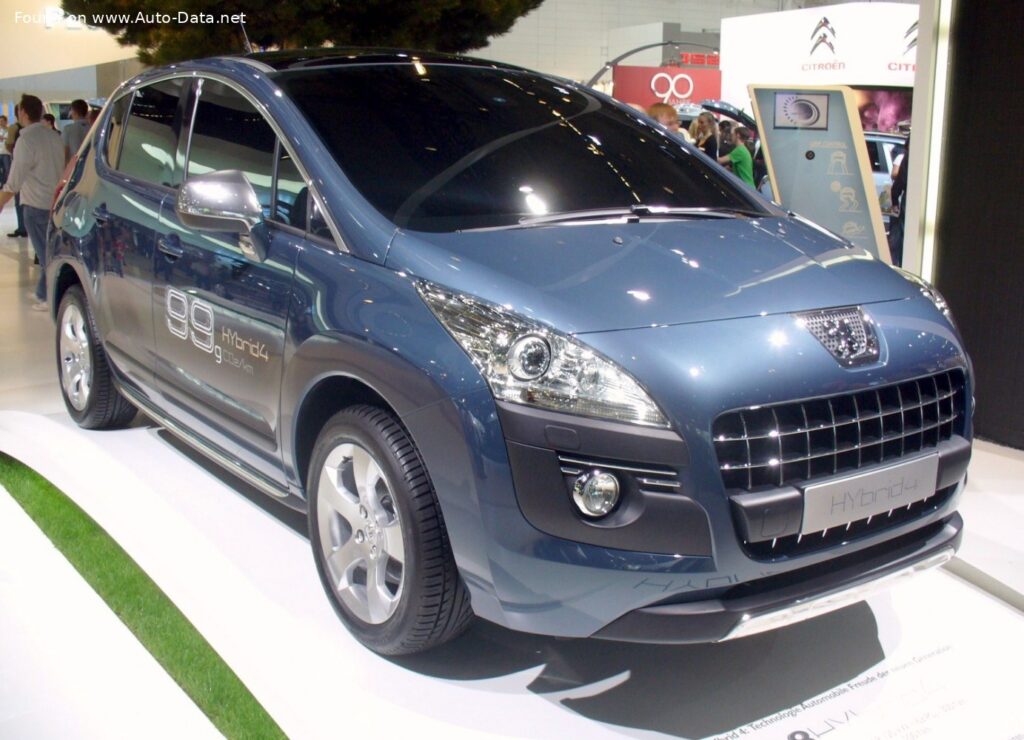
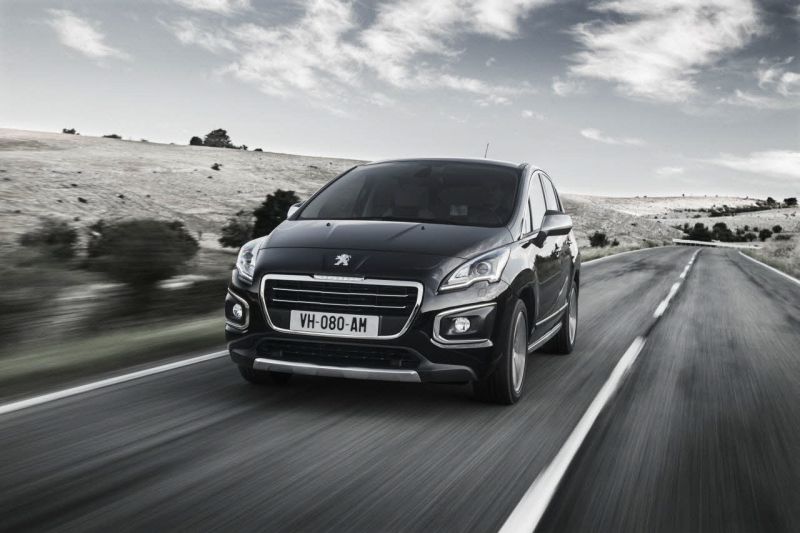
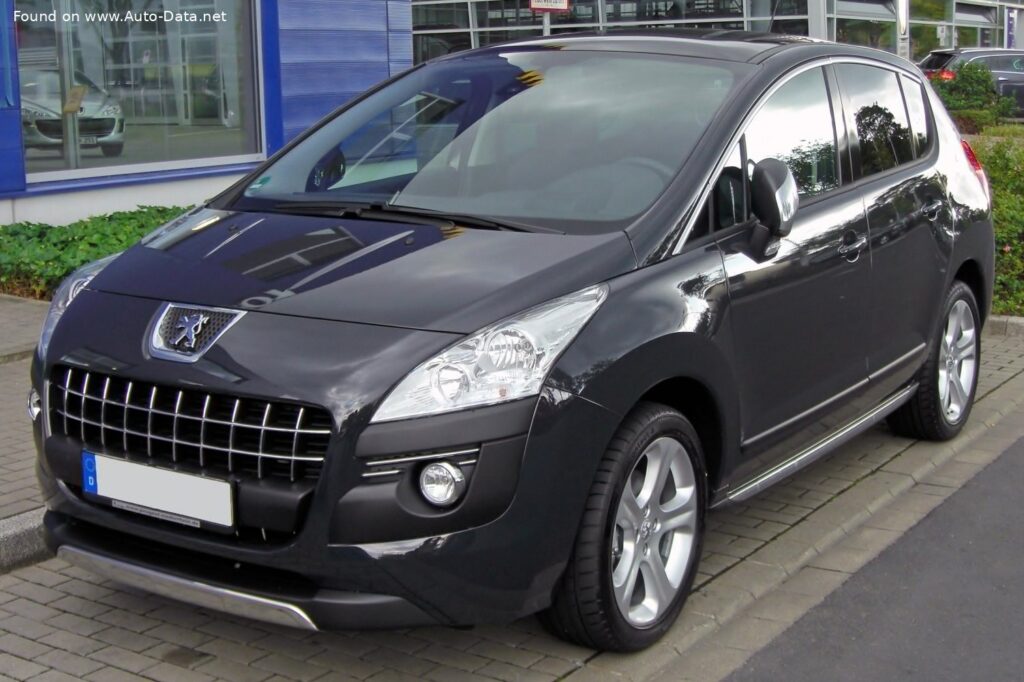
The design of the Peugeot 3008 I (Phase I, 2009) was a bold departure for the brand, aiming to carve out a unique niche between traditional SUVs and more practical MPVs. Classified as an SUV, its five-door, five-seat body offered a distinctive silhouette, characterized by a tall stance, a prominent grille, and a relatively compact footprint. Measuring 171.85 inches (4365 mm) in length, 72.32 inches (1837 mm) in width, and 64.53 inches (1639 mm) in height, the 3008 provided a commanding road presence without being overly cumbersome for urban environments.
Inside, the cabin was designed with practicality and comfort in mind. The elevated driving position, a hallmark of SUVs, offered excellent visibility. The interior space was generous for five occupants, and the trunk (boot) capacity was particularly impressive, ranging from 18.08 cubic feet (512 liters) with all seats in place to a cavernous 56.64 cubic feet (1604 liters) with the rear seats folded down, making it highly versatile for cargo. Key features for its time included a focus on safety, with ABS (Anti-lock Braking System) as a standard assisting system, and a particulate filter for the diesel engine to reduce emissions. The vehicle rode on 16-inch wheels with 215/60 R16 tires, providing a comfortable and stable ride. Suspension duties were handled by an independent McPherson setup with coil springs and an anti-roll bar at the front, complemented by a semi-independent coil spring rear suspension, offering a balanced ride quality.
Technical Specifications: Peugeot 3008 I (Phase I, 2009) 1.6 HDi (112 Hp)
| Category | Specification | Metric Unit | US/Imperial Unit |
|---|---|---|---|
| General Information | |||
| Brand | Peugeot | ||
| Model | 3008 | ||
| Generation | 3008 I (Phase I, 2009) | ||
| Type (Engine) | 1.6 HDi (112 Hp) | ||
| Start of Production | 2009 | ||
| End of Production | 2013 | ||
| Powertrain Architecture | Internal Combustion Engine | ||
| Body Type | SUV | ||
| Seats | 5 | ||
| Doors | 5 | ||
| Performance Specifications | |||
| Fuel Consumption (Urban) | 5.8 l/100 km | 40.6 US mpg | |
| Fuel Consumption (Extra Urban) | 4.4 l/100 km | 53.5 US mpg | |
| Fuel Consumption (Combined) | 4.9 l/100 km | 48 US mpg | |
| Fuel Type | Diesel | ||
| Acceleration 0 – 60 mph | 11.6 sec | ||
| Acceleration 0 – 100 km/h | 12.2 sec | ||
| Maximum Speed | 183 km/h | 113.71 mph | |
| Emission Standard | Euro 5 | ||
| Weight-to-Power Ratio | 12.7 kg/Hp | 27.99 lbs/Hp | |
| Weight-to-Torque Ratio | 5 kg/Nm | 3.69 lbs/lb.-ft. | |
| Engine Specifications | |||
| Power | 112 Hp @ 1750 rpm | ||
| Power per Liter | 71.8 Hp/l | ||
| Torque | 285 Nm @ 3600 rpm | 210.21 lb.-ft. @ 3600 rpm | |
| Engine Layout | Front, Transverse | ||
| Engine Model/Code | 9HR DV6C | ||
| Engine Displacement | 1560 cm³ | 1.6 l | 95.2 cu. in. |
| Number of Cylinders | 4 | ||
| Engine Configuration | Inline | ||
| Cylinder Bore | 75 mm | 2.95 in. | |
| Piston Stroke | 88.3 mm | 3.48 in. | |
| Compression Ratio | 18:1 | ||
| Number of Valves per Cylinder | 4 | ||
| Fuel Injection System | Diesel Commonrail | ||
| Engine Aspiration | Turbocharger, Intercooler | ||
| Valvetrain | DOHC | ||
| Engine Oil Capacity | 3.75 l | 3.96 US qt | |
| Engine Systems | Particulate filter | ||
| Space, Volume and Weights | |||
| Kerb Weight | 1422 kg | 3134.97 lbs. | |
| Max. Weight | 2030 kg | 4475.38 lbs. | |
| Max Load | 608 kg | 1340.41 lbs. | |
| Trunk (Boot) Space – Minimum | 512 l | 18.08 cu. ft. | |
| Trunk (Boot) Space – Maximum | 1604 l | 56.64 cu. ft. | |
| Fuel Tank Capacity | 60 l | 15.85 US gal | |
| Dimensions | |||
| Length | 4365 mm | 171.85 in. | |
| Width | 1837 mm | 72.32 in. | |
| Height | 1639 mm | 64.53 in. | |
| Wheelbase | 2613 mm | 102.87 in. | |
| Front Track | 1532 mm | 60.31 in. | |
| Rear (Back) Track | 1527 mm | 60.12 in. | |
| Minimum Turning Circle | 11 m | 36.09 ft. | |
| Drivetrain, Brakes and Suspension Specs | |||
| Drivetrain Architecture | Internal Combustion Engine drives the front wheels | ||
| Drive Wheel | Front wheel drive | ||
| Number of Gears and Type of Gearbox | 6 gears, automatic transmission | ||
| Front Suspension | Independent, McPherson with coil spring and anti-roll bar | ||
| Rear Suspension | Semi-independent, coil spring | ||
| Front Brakes | Ventilated discs | ||
| Rear Brakes | Disc | ||
| Assisting Systems | ABS (Anti-lock braking system) | ||
| Steering Type | Steering rack and pinion | ||
| Tires Size | 215/60 R16 | ||
| Wheel Rims Size | 16 inches | ||
Legacy & Market Impact of the Peugeot 3008 I (Phase I, 2009)
The first-generation Peugeot 3008, particularly models like the 1.6 HDi, carved out a significant niche in the European automotive landscape. Its introduction in 2009 came at a time when consumer preferences were rapidly shifting away from traditional sedans and MPVs towards more versatile and stylish crossovers. Peugeot’s approach with the 3008 was to offer a vehicle that combined the best attributes of several segments, resulting in a practical, comfortable, and efficient family car.
In Europe, the 3008 competed in a hotly contested segment against rivals such as the Nissan Qashqai, Renault Kadjar, Volkswagen Tiguan, and Ford Kuga. Its reputation was built on its distinctive styling, comfortable ride, and particularly its impressive fuel economy from the HDi diesel engines, which made it an attractive proposition for long-distance drivers and those conscious of running costs. The 1.6 HDi model, with its balance of power and efficiency, was a popular choice, embodying the pragmatic yet refined characteristics that many European buyers sought.
While its styling might have been somewhat polarizing upon launch, the 3008 I proved to be a commercial success for Peugeot, demonstrating the brand’s ability to innovate and adapt to market trends. It laid the groundwork for future generations, including the critically acclaimed second-generation model that truly solidified Peugeot’s position in the crossover market. The original 3008’s mechanical robustness, practical interior, and focus on diesel efficiency ensured its lasting appeal during its production run from 2009 to 2013, cementing its place as an important vehicle in Peugeot’s modern history and a pioneer in the compact European crossover segment.