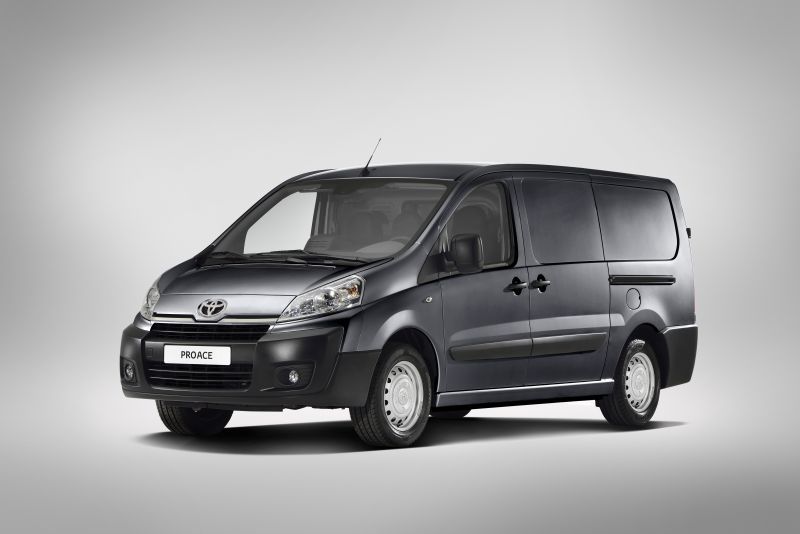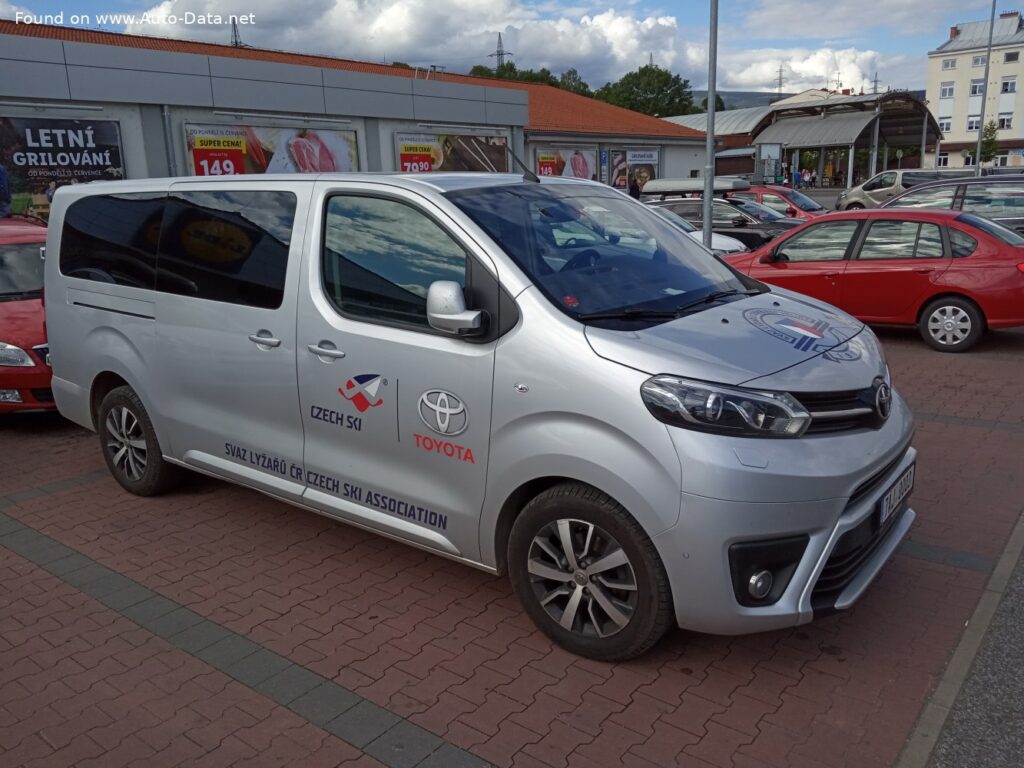
Toyota Proace Verso II LWB 50 kWh (136 Hp) Electric
The Toyota Proace Verso II LWB 50 kWh (136 Hp) Electric represents a significant stride for Toyota in the European electric vehicle market, offering a practical and emissions-free solution for large families, shuttle services, and businesses. Launched in April 2021 as part of the second generation of the Proace Verso, this Long Wheelbase (LWB) variant with a 50 kWh battery pack and a 136 horsepower electric motor underscored Toyota’s commitment to expanding its electrified lineup beyond traditional hybrids. While not directly sold in the United States, the Proace Verso Electric is a key player in the European and select international markets, where demand for versatile, multi-passenger electric vans is growing. It serves as a testament to the collaborative efforts within the automotive industry, being based on a platform shared with other European manufacturers, allowing for economies of scale and broader market reach for electric mobility solutions.
The Toyota Proace Verso II LWB: A European Electric Minivan
The Toyota Proace Verso is a passenger van variant of the Proace light commercial vehicle, which itself is a rebadged version of the Stellantis (formerly PSA Group) mid-size van platform. This collaboration has allowed Toyota to offer a competitive product in segments where it traditionally had less presence, particularly in the European commercial and multi-purpose vehicle (MPV) sectors. The second generation, introduced in 2016, brought significant improvements in design, technology, and efficiency. The electric version, specifically the Toyota Proace Verso II LWB 50 kWh (136 Hp) Electric, built upon this foundation by integrating an all-electric powertrain, positioning it as an environmentally conscious alternative to its diesel counterparts. Its LWB designation highlights its extended length, providing maximum interior volume for passengers and cargo, a critical attribute for its target demographic.
Engine & Performance of the Toyota Proace Verso II LWB 50 kWh (136 Hp) Electric
Underpinning the Proace Verso II LWB Electric is a dedicated Battery Electric Vehicle (BEV) powertrain architecture designed for efficiency and smooth operation. Power is delivered by a single electric motor, designated ZK01, mounted transversely on the front axle, driving the front wheels. This motor generates a respectable 136 horsepower (Hp) and a robust 191.77 lb.-ft. (260 Nm) of torque, available instantaneously from a standstill, a characteristic advantage of electric vehicles. This setup provides ample power for urban and suburban driving, offering quick acceleration suitable for navigating city traffic and merging onto highways.
The electric motor draws its energy from a 50 kWh gross capacity lithium-ion battery pack, strategically located below the floor. This placement not only optimizes the vehicle’s center of gravity for improved handling but also ensures that the spacious interior volume for passengers and cargo remains uncompromised. The battery provides an All-electric range (WLTP) of approximately 136.08 miles (219 km), making the vehicle well-suited for daily commutes, family trips, or shuttle services within metropolitan areas. Energy consumption is rated between 40.72 and 42.81 kWh/100 miles (25.3-26.6 kWh/100 km), translating to an impressive 79-83 MPGe (Miles Per Gallon equivalent), underscoring its efficiency.
Performance figures for the Proace Verso II LWB Electric reflect its practical rather than sporty intentions. It achieves a maximum speed of 80.78 mph (130 km/h), which is electronically limited to optimize range and battery longevity. The power is transmitted through a single-gear automatic transmission, characteristic of most electric vehicles, providing a seamless and quiet driving experience. The weight-to-power ratio stands at 15.9 kg/Hp (62.8 Hp/tonne), indicating a balanced approach to performance and utility for a vehicle of its size and purpose.
Design & Features: Practicality Meets Modernity
The Toyota Proace Verso II LWB 50 kWh (136 Hp) Electric maintains the familiar and functional design of its combustion-engine counterparts, emphasizing practicality, space, and comfort. As a minivan, it features a classic five-door configuration, with sliding rear doors that provide excellent access to the second and third rows, a crucial feature for a vehicle designed to carry 8 to 9 passengers. Its Long Wheelbase (LWB) variant stretches to an impressive 209.02 inches (5309 mm) in length, 75.59 inches (1920 mm) in width, and 74.41 inches (1890 mm) in height, riding on a substantial 128.94-inch (3275 mm) wheelbase. These dimensions contribute to a cavernous interior, offering exceptional legroom and headroom for all occupants.
The interior is highly versatile, with seating configurations that can be adapted to various needs, from maximizing passenger capacity to optimizing cargo space. The minimum trunk (boot) space is a generous 34.93 cu. ft. (989 liters), which can expand dramatically to an enormous 160.82 cu. ft. (4554 liters) with the rear seats removed or folded, rivaling the cargo capacity of many dedicated commercial vans. This makes it an ideal choice for large families, airport shuttles, or even light commercial duties requiring significant cargo volume.
From a technological standpoint, the Proace Verso Electric is equipped with essential modern features for safety and convenience. It includes an Anti-lock Braking System (ABS) for enhanced stopping power and stability. The steering system is a rack-and-pinion setup with electric power steering, providing light and responsive steering for easy maneuverability in urban environments and parking. The vehicle rides on 225/55 R17 tires mounted on 17-inch wheel rims, offering a comfortable ride quality suitable for a multi-passenger vehicle. The suspension system comprises an independent McPherson type at the front and a Wishbone setup at the rear, engineered to provide a smooth and stable ride even when fully loaded.
Technical Specifications
| Attribute | Value |
|---|---|
| Brand | Toyota |
| Model | Proace Verso II LWB |
| Type (Engine) | 50 kWh (136 Hp) Electric |
| Start of Production | April, 2021 |
| End of Production | August, 2022 |
| Powertrain Architecture | BEV (Electric Vehicle) |
| Body Type | Minivan |
| Seats | 8-9 |
| Doors | 5 |
| Fuel Type | Electricity |
| Maximum Speed | 80.78 mph (130 km/h) |
| Weight-to-Power Ratio | 15.9 kg/Hp, 62.8 Hp/tonne |
| Weight-to-Torque Ratio | 8.3 kg/Nm, 120 Nm/tonne |
| Gross Battery Capacity | 50 kWh |
| Battery Technology | Lithium-ion (Li-Ion) |
| Battery Location | Below the floor |
| All-Electric Range (WLTP) | 136.08 mi (219 km) |
| Average Energy Consumption (WLTP) | 40.72 – 42.81 kWh/100 mi (25.3-26.6 kWh/100 km) |
| MPGe (Equivalent) | 79 – 83 MPGe |
| Electric Motor Power | 136 Hp |
| Electric Motor Torque | 191.77 lb.-ft. (260 Nm) |
| Electric Motor Model/Code | ZK01 |
| Electric Motor Location | Front axle, Transverse |
| Electric Motor Type | Synchronous |
| System Power | 136 Hp |
| System Torque | 191.77 lb.-ft. (260 Nm) |
| Kerb Weight | 4775.21 lbs. (2166 kg) |
| Max. Weight (GVWR) | 6536.71 lbs. (2965 kg) |
| Max Load Capacity | 1761.49 lbs. (799 kg) |
| Trunk (boot) space – minimum | 34.93 cu. ft. (989 l) |
| Trunk (boot) space – maximum | 160.82 cu. ft. (4554 l) |
| Permitted Trailer Load with brakes (12%) | 2204.62 lbs. (1000 kg) |
| Permitted Towbar Download | 132.28 lbs. (60 kg) |
| Length | 209.02 in. (5309 mm) |
| Width | 75.59 in. (1920 mm) |
| Height | 74.41 in. (1890 mm) |
| Wheelbase | 128.94 in. (3275 mm) |
| Front Track | 64.06 in. (1627 mm) |
| Rear Track | 62.99 in. (1600 mm) |
| Drivetrain Architecture | One electric motor drives the front wheels. |
| Drive Wheel | Front wheel drive |
| Number of Gears and Type of Gearbox | 1 gear, automatic transmission |
| Front Suspension | Independent type McPherson |
| Rear Suspension | Wishbone |
| Front Brakes | Disc |
| Rear Brakes | Disc |
| Assisting Systems | ABS (Anti-lock braking system) |
| Steering Type | Steering rack and pinion |
| Power Steering | Electric Steering |
| Tires Size | 225/55 R17 |
| Wheel Rims Size | 17 inches |
Legacy & Market Impact
The Toyota Proace Verso II LWB 50 kWh (136 Hp) Electric, despite its relatively short production run from April 2021 to August 2022 in this specific configuration, played a crucial role in Toyota’s broader electrification strategy, particularly in the European market. It demonstrated Toyota’s capability to offer a fully electric multi-purpose vehicle, catering to a growing demand for zero-emission transport solutions in both private and commercial sectors. While Toyota is renowned for its hybrid technology, the Proace Verso Electric marked a significant step into the pure Battery Electric Vehicle segment for its commercial and passenger van offerings.
Its primary market impact was felt in Europe, where stringent emission regulations and incentives for electric vehicles have accelerated the adoption of EVs. The Proace Verso Electric carved out a niche for itself as a practical, spacious, and environmentally friendly alternative to traditional diesel minivans. Its competitors predominantly included its platform siblings, such as the Peugeot e-Traveller, Citroën e-Spacetourer, and Opel/Vauxhall Zafira-e Life, all sharing the same core electric powertrain and battery options. Other competitors in the electric van segment included the Mercedes-Benz EQV, though often positioned at a more premium price point, and various smaller electric vans.
The Proace Verso Electric’s reputation was built on its inherent practicality, generous interior space, and the quiet, smooth operation characteristic of electric vehicles. For families, it offered a comfortable and spacious cabin for long journeys without local emissions. For businesses, such as taxi services, hotel shuttles, or even last-mile delivery services requiring passenger capacity, it provided a cost-effective and green solution, benefiting from lower running costs and access to urban low-emission zones. Its ability to tow a respectable 2204.62 lbs. (1000 kg) also added to its versatility, making it a capable workhorse for various applications.
Although this specific 50 kWh variant had a limited production window, the underlying electric Proace platform continued to evolve, with subsequent models often offering larger battery options and improved ranges to meet market expectations. The legacy of the Proace Verso II LWB 50 kWh (136 Hp) Electric is therefore one of pioneering electric mobility in the large passenger van segment for Toyota in Europe, laying the groundwork for future, more advanced electric offerings and solidifying Toyota’s position as a comprehensive provider of diverse powertrain solutions.