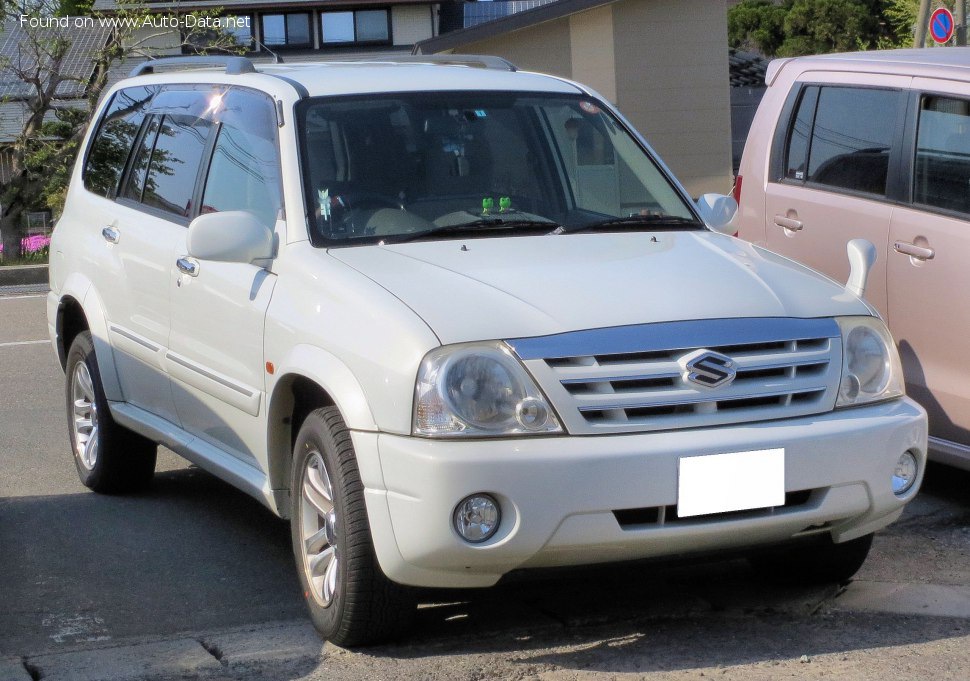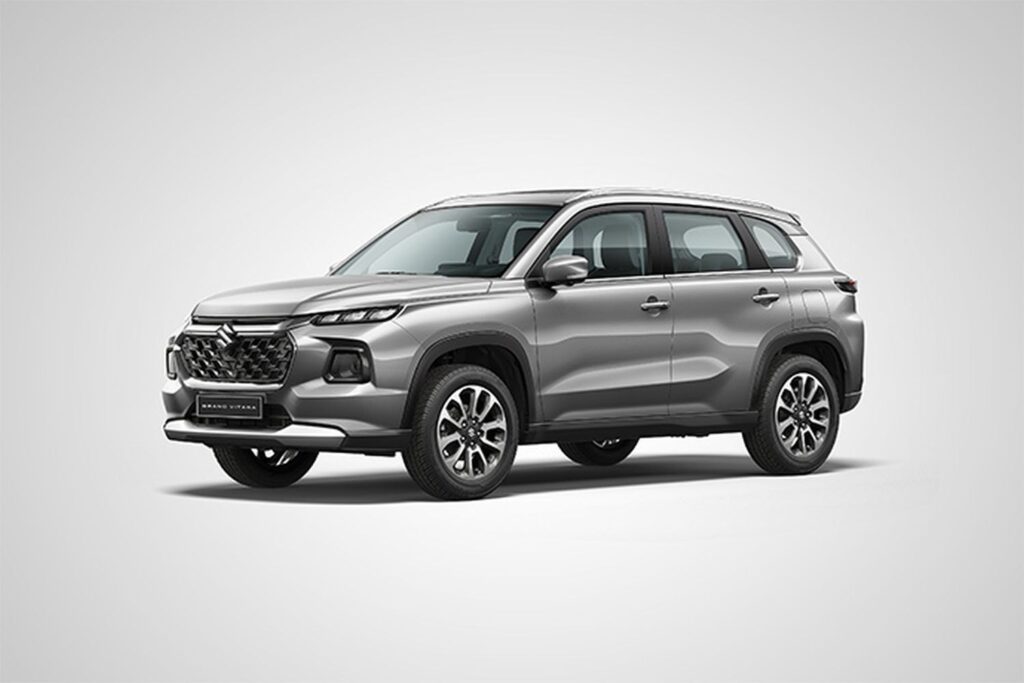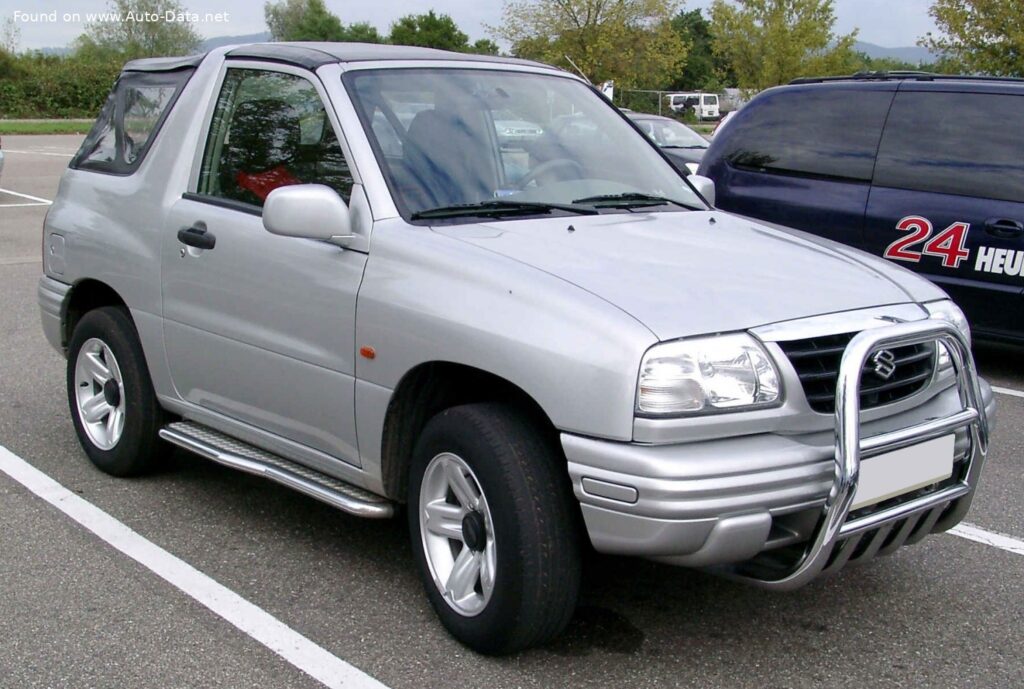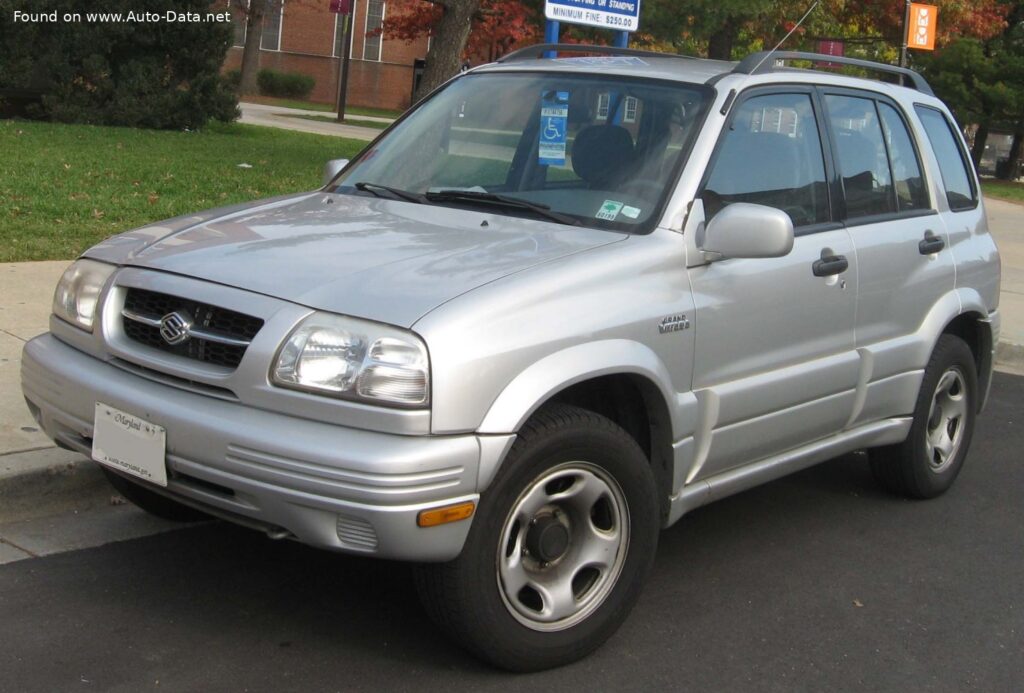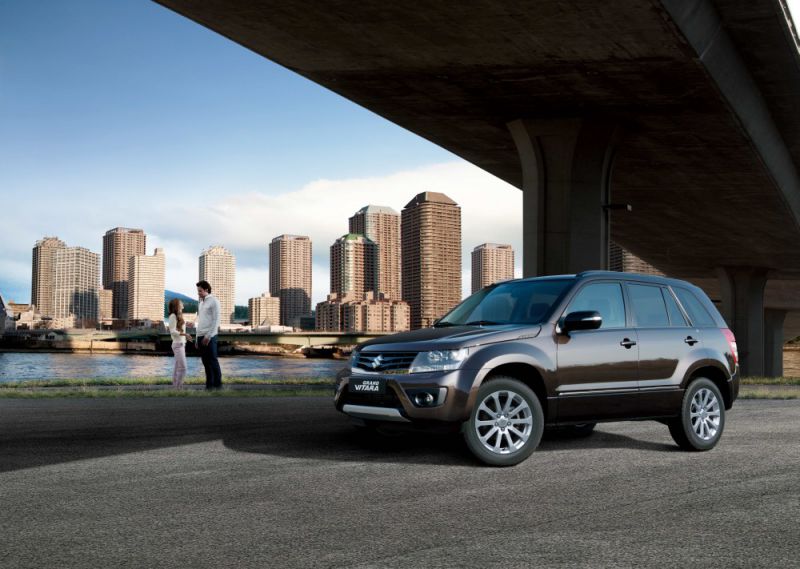
The 2012 Suzuki Grand Vitara II (facelift 2012) 5 Door 2.4 (169 Hp) 4×4: A Rugged Contender
The Suzuki Grand Vitara, particularly the second-generation model that underwent a significant facelift in 2012, represents a compelling chapter in the history of compact SUVs. Known globally for its blend of on-road civility and genuine off-road capability, the Grand Vitara stood out in an increasingly crowded segment dominated by more car-like crossovers. The 2012 facelifted 5-door model, equipped with the 2.4-liter (169 Hp) 4×4 powertrain, aimed to refresh its appeal, offering updated styling, improved features, and a reliable, if not exhilarating, driving experience. This iteration solidified the Grand Vitara’s reputation as a practical, durable, and surprisingly capable vehicle for adventurous families and individuals alike, maintaining its core identity as a true SUV in an era of softening competitors. While its market presence varied, it remained a strong option in numerous regions, including North America, where its unique proposition resonated with a specific buyer demographic.
Engine and Performance of the Suzuki Grand Vitara II (facelift 2012) 5 Door 2.4 (169 Hp) 4×4
At the heart of the 2012 facelifted Grand Vitara 5-door model was the robust J24B engine, a naturally aspirated 2.4-liter inline-four gasoline (petrol) unit. This powerplant was engineered to deliver a balanced combination of power and durability, producing 169 horsepower at 6000 rpm and a respectable 167.43 lb.-ft. of torque at 3800 rpm. Its design featured a double overhead camshaft (DOHC) valvetrain with Variable Valve Timing (VVT-i), ensuring efficient combustion and a broad torque curve for both city driving and light off-road excursions. With a bore of 3.62 inches and a stroke of 3.54 inches, and a compression ratio of 10:1, the engine was designed for reliability and smooth operation.
Power was exclusively routed through a 5-speed manual transmission to Suzuki’s well-regarded full-time all-wheel-drive (4×4) system. This setup provided consistent traction and enhanced stability, distinguishing the Grand Vitara from many front-wheel-drive biased crossovers of its time. Performance figures for this configuration included an acceleration time of 0 to 60 mph in a reasonable 11.1 seconds, with a top speed of 114.95 mph. While not a performance leader, these figures were more than adequate for daily driving and highway cruising.
Fuel economy, a critical factor for any vehicle in this segment, was rated at an estimated 21 US mpg in urban conditions, 31.4 US mpg on the highway, and a combined average of 26.7 US mpg. These figures, while not class-leading, were competitive for a permanent 4×4 SUV of its size and capability. The engine adhered to the Euro 5 emission standard, reflecting Suzuki’s commitment to environmental responsibility during its production run from 2012 to 2015. The 17.44 US gallon fuel tank capacity provided a decent cruising range, making it suitable for longer trips.
Design and Features
The 2012 facelift for the second-generation Suzuki Grand Vitara brought subtle yet effective updates to its exterior and interior, maintaining its rugged aesthetic while adding touches of modern refinement. The body type remained a practical 5-door SUV, designed to accommodate five occupants comfortably. Exterior revisions included a redesigned front grille, updated bumper fascias, and new wheel designs, lending a fresher, more contemporary look without straying from its established tough-guy image. The overall dimensions, with a length of 177.17 inches, a width of 71.26 inches, and a height of 66.73 inches, placed it firmly in the compact SUV category, making it maneuverable in urban environments while offering ample interior space.
Inside, the Grand Vitara offered a straightforward and functional cabin, prioritizing usability and durability. While specific luxury features varied by trim level, the focus was on ergonomics and practicality. The five-seat configuration provided comfortable seating for adults, and the cargo area was versatile, offering a minimum trunk space of 14.06 cubic feet, expandable to a generous 26.77 cubic feet with the rear seats folded down. This flexibility made it suitable for various hauling needs, from groceries to camping gear.
Underneath its refreshed exterior, the Grand Vitara retained its robust chassis, which featured an independent suspension system both front and rear. The front utilized a McPherson strut setup with coil springs and an anti-roll bar, while the rear employed an independent multi-link suspension. This configuration provided a comfortable ride on paved roads while offering sufficient articulation and strength for light off-road trails. Braking duties were handled by ventilated discs at both the front and rear, complemented by an Anti-lock Braking System (ABS) for enhanced safety and control in emergency stopping situations. The steering system was a responsive rack-and-pinion type, contributing to predictable handling. The vehicle rode on 225/65 R17 tires mounted on 6.5J x 17-inch wheel rims, providing a good balance of grip and ride comfort, with a ground clearance of 8.07 inches further emphasizing its off-road readiness.
Technical Specifications
| Category | Specification |
|---|---|
General Information |
|
| Brand | Suzuki |
| Model | Grand Vitara |
| Generation | Grand Vitara II (facelift 2012) 5 Door |
| Type (Engine) | 2.4 (169 Hp) 4×4 |
| Start of Production | 2012 year |
| End of Production | 2015 year |
| Powertrain Architecture | Internal Combustion engine |
| Body type | SUV |
| Seats | 5 |
| Doors | 5 |
Performance Specs |
|
| Fuel Consumption (Urban) | 11.2 l/100 km (21 US mpg) |
| Fuel Consumption (Extra Urban) | 7.5 l/100 km (31.4 US mpg) |
| Fuel Consumption (Combined) | 8.8 l/100 km (26.7 US mpg) |
| CO2 Emissions | 204 g/km |
| Fuel Type | Petrol (Gasoline) |
| Acceleration 0 – 60 mph | 11.1 sec |
| Acceleration 0 – 100 km/h | 11.7 sec |
| Maximum Speed | 185 km/h (114.95 mph) |
| Emission Standard | Euro 5 |
| Weight-to-Power Ratio | 9.7 kg/Hp, 102.8 Hp/tonne |
| Weight-to-Torque Ratio | 7.2 kg/Nm, 138.1 Nm/tonne |
Engine Specs |
|
| Power | 169 Hp @ 6000 rpm |
| Power per Liter | 70.6 Hp/l |
| Torque | 227 Nm @ 3800 rpm (167.43 lb.-ft. @ 3800 rpm) |
| Engine Layout | Front, Longitudinal |
| Engine Model/Code | J24B |
| Engine Displacement | 2393 cm3 (146.03 cu. in.) |
| Number of Cylinders | 4 |
| Engine Configuration | Inline |
| Cylinder Bore | 92 mm (3.62 in.) |
| Piston Stroke | 90 mm (3.54 in.) |
| Compression Ratio | 10:1 |
| Number of Valves per Cylinder | 4 |
| Fuel Injection System | Multi-port manifold injection |
| Engine Aspiration | Naturally aspirated engine |
| Valvetrain | DOHC – VVT-i |
| Engine Oil Capacity | 4.8 l (5.07 US qt) |
| Coolant Capacity | 7.3 l (7.71 US qt) |
Space, Volume and Weights |
|
| Kerb Weight | 1644 kg (3624.4 lbs.) |
| Max. Weight | 2100 kg (4629.71 lbs.) |
| Max Load | 456 kg (1005.31 lbs.) |
| Trunk (boot) Space – Minimum | 398 l (14.06 cu. ft.) |
| Trunk (boot) Space – Maximum | 758 l (26.77 cu. ft.) |
| Fuel Tank Capacity | 66 l (17.44 US gal) |
Dimensions |
|
| Length | 4500 mm (177.17 in.) |
| Width | 1810 mm (71.26 in.) |
| Height | 1695 mm (66.73 in.) |
| Wheelbase | 2640 mm (103.94 in.) |
| Front Track | 1540 mm (60.63 in.) |
| Rear (Back) Track | 1570 mm (61.81 in.) |
| Ride Height (Ground Clearance) | 205 mm (8.07 in.) |
| Minimum Turning Circle (Turning Diameter) | 11 m (36.09 ft.) |
Drivetrain, Brakes and Suspension Specs |
|
| Drive Wheel | All wheel drive (4×4) |
| Number of Gears and Type of Gearbox | 5 gears, manual transmission |
| Front Suspension | Independent, type McPherson with coil spring and anti-roll bar |
| Rear Suspension | Independent multi-link suspension |
| Front Brakes | Ventilated discs |
| Rear Brakes | Ventilated discs |
| Assisting Systems | ABS (Anti-lock braking system) |
| Steering Type | Steering rack and pinion |
| Tires Size | 225/65 R17 101H |
| Wheel Rims Size | 6.5J x 17 |
Legacy and Market Impact
The Suzuki Grand Vitara has carved out a distinct niche for itself in the global automotive landscape, particularly for its unwavering commitment to providing genuine SUV capability in a compact package. The 2012 facelifted model, with its 2.4-liter engine and standard 4×4 system, continued this legacy, appealing to buyers who valued robustness and off-road prowess over pure on-road refinement or fuel efficiency figures that were typical of its more car-like crossover rivals.
In its primary markets, including parts of Europe, Asia, Australia, and North America, the Grand Vitara stood as a more rugged alternative to popular compact SUVs like the Honda CR-V, Toyota RAV4, Nissan Rogue, and Subaru Forester. While these competitors increasingly moved towards unibody construction and more road-biased performance, the Grand Vitara retained a more traditional SUV ethos, featuring a unibody construction integrated with a ladder frame, which contributed to its impressive durability and capability on unpaved surfaces. This made it a favorite among those who frequently encountered rough roads, engaged in light off-roading, or needed a dependable tow vehicle within its class.
Suzuki’s reputation for building reliable, no-nonsense 4×4 vehicles, stemming from models like the Samurai and earlier Vitara/Sidekick, lent significant credibility to the Grand Vitara. Its relatively simple mechanicals translated into robust long-term reliability and manageable maintenance costs, factors that were highly appreciated by its owners. The vehicle’s practical five-door, five-seat configuration, combined with its decent cargo capacity, further cemented its role as a versatile family vehicle capable of handling diverse lifestyles.
Despite its strengths, the Grand Vitara faced challenges, particularly in markets like the United States where Suzuki ultimately withdrew its automotive operations in 2013. This withdrawal, driven by intense competition and a shifting market preference towards larger, more luxurious crossovers, meant that the Grand Vitara, despite its qualities, did not achieve the sales volumes of its more mainstream rivals. However, its impact on the segment was significant, demonstrating that a compact SUV could still offer genuine off-road credentials without being overly cumbersome or expensive.
Today, the 2012-2015 Grand Vitara II facelift remains a sought-after used vehicle in many markets, particularly for those seeking a dependable and capable compact SUV that can venture beyond the pavement. Its blend of traditional SUV ruggedness, modern amenities (for its time), and Suzuki’s proven reliability ensures its place as a respected and enduring model in the pantheon of compact utility vehicles.