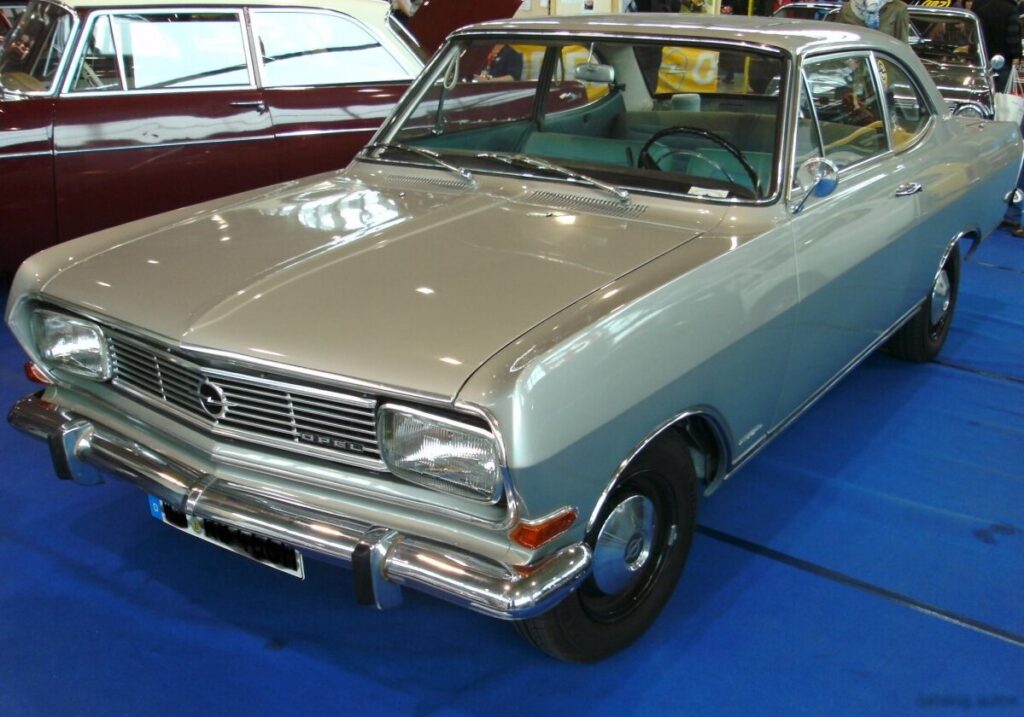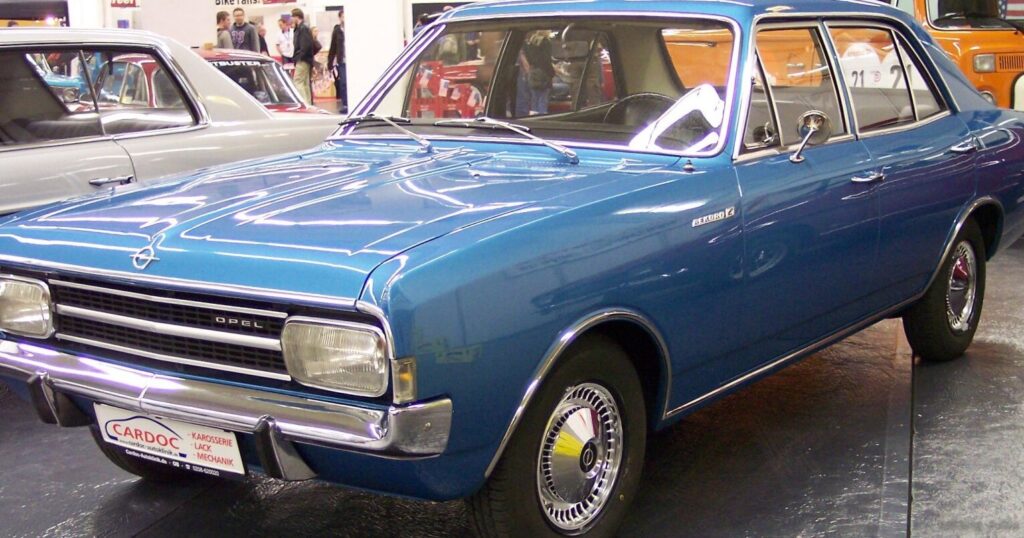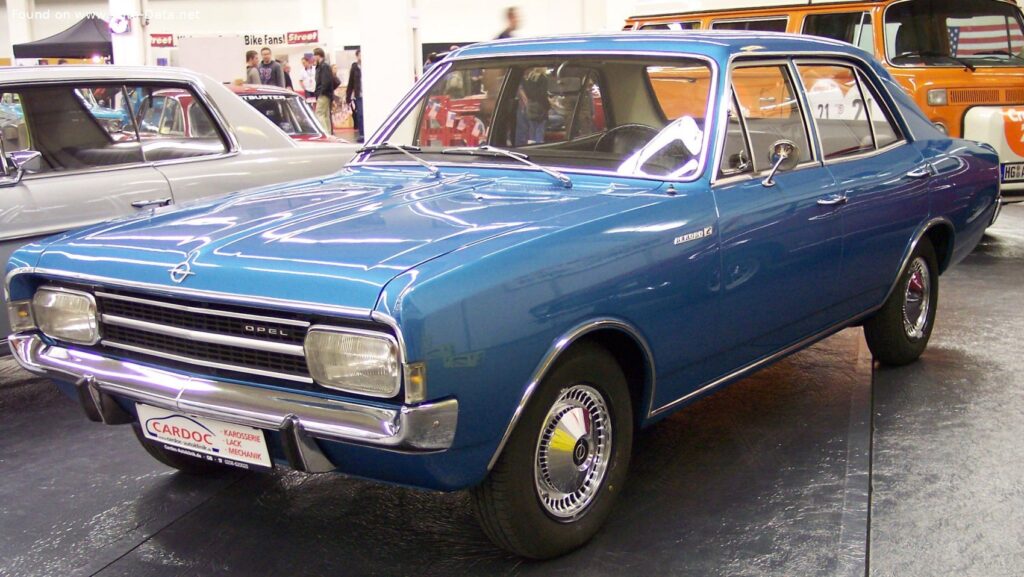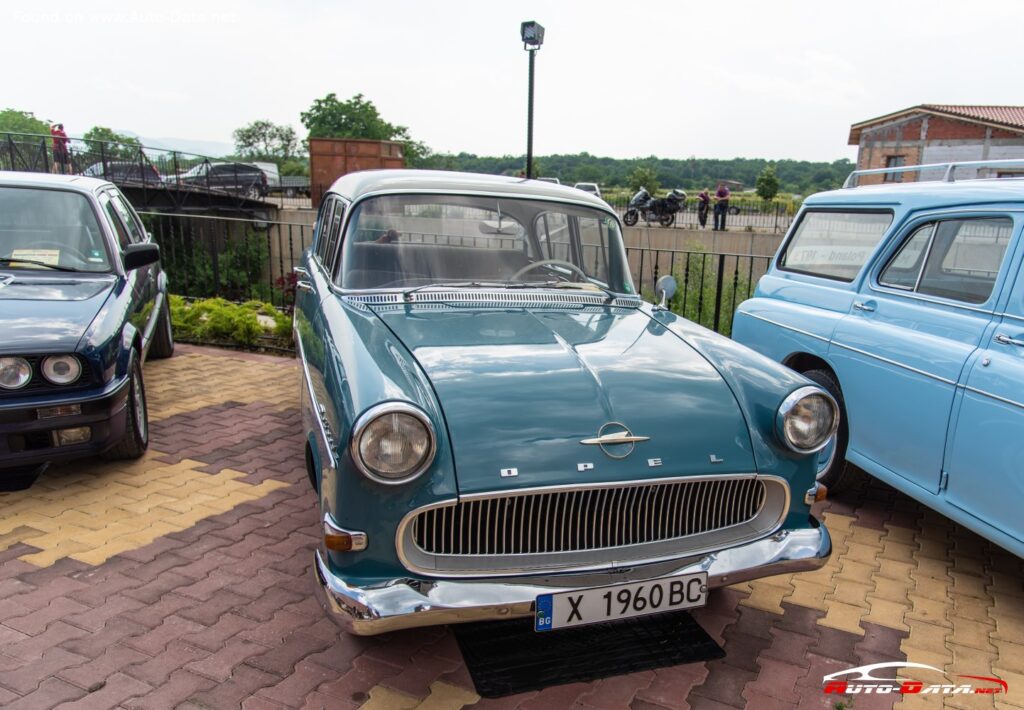
The Opel Rekord P1 (Olympia): A Post-War German Icon
The Opel Rekord P1 (Olympia), produced by the German automaker Opel from 1957 to 1960, represents a pivotal moment in European automotive history. Emerging during Germany’s “Wirtschaftswunder” (economic miracle) following World War II, the Rekord P1 quickly became a symbol of prosperity and modern mobility for the burgeoning middle class. Marketed primarily in Europe, where it was often referred to as the Opel Olympia Rekord P1 to highlight its lineage from the pre-war Olympia model, this vehicle was a stylistic departure for Opel, embracing American-inspired design cues that were highly fashionable at the time. It offered a blend of practicality, affordability, and a touch of transatlantic flair, making it a highly successful and recognizable car of its era.
This particular variant, the Rekord P1 (Olympia) 1.7 (55 Hp) sedan, was a popular choice, providing a robust and economical powertrain within a comfortable five-seater, four-door body. Its introduction marked Opel’s continued commitment to providing reliable family transportation, building on the success of its predecessors while ushering in a new aesthetic and improved engineering for the mass market.
Engine and Performance of the Opel Rekord P1 (Olympia) 1.7 (55 Hp)
At the heart of the Opel Rekord P1 (Olympia) 1.7 (55 Hp) lay a straightforward and dependable internal combustion engine, characteristic of Opel’s engineering philosophy during the late 1950s. This powertrain architecture featured a front-mounted, longitudinal inline-four cylinder engine with an overhead valve (OHV) valvetrain, a design known for its simplicity, durability, and ease of maintenance. With a displacement of 1,680 cubic centimeters (102.52 cubic inches), the engine delivered a modest but entirely adequate 55 horsepower at 4,000 revolutions per minute.
Torque was a more prominent feature for everyday driving, with the engine producing 120 Newton-meters (88.51 lb.-ft.) across a usable range of 1,900 to 2,300 rpm. This broad torque band ensured good tractability and flexibility, especially important given the car’s three-speed manual transmission. Power was sent to the rear wheels, a conventional and robust drivetrain layout for the period. Fueling was managed by a carburetor, and the engine was naturally aspirated, a common setup before the widespread adoption of fuel injection and forced induction. The compression ratio of 7.25:1 was typical for gasoline engines of the era, balancing performance with the quality of available fuels. This mechanical package allowed the Rekord P1 to achieve a top speed of 132 km/h (82.02 mph), making it capable of comfortable cruising on the nascent European highway network. Its combined fuel economy was rated at 8.9 liters per 100 kilometers, equating to approximately 26.4 US miles per gallon, a respectable figure for a family sedan of its size and vintage.
Design and Features
The design of the Opel Rekord P1 (Olympia) was a bold statement for Opel, drawing heavily on contemporary American automotive styling trends. This influence was most evident in its panoramic windshield and rear window, a feature dubbed “Panoramascheibe” by Opel, which provided excellent visibility and a sense of spaciousness. The P1’s two-tone paint schemes, often featuring a contrasting roof, further accentuated its modern, transatlantic appeal. The four-door sedan body offered practical access for five occupants, a key selling point for families.
Measuring 4,433 mm (174.53 inches) in length, 1,616 mm (63.62 inches) in width, and 1,490 mm (58.66 inches) in height, the Rekord P1 was a substantial vehicle for its time, providing ample interior room. Its 2,541 mm (100.04 inches) wheelbase contributed to a stable ride. Suspension was conventional but effective: independent coil springs at the front provided a degree of comfort and refined handling, while the rear utilized durable leaf springs, well-suited for carrying typical family loads. Braking was handled by drum brakes on all four wheels, a standard safety feature for the late 1950s, requiring a firm pedal but providing adequate stopping power for the car’s performance capabilities. The steering system, a cone worm with recirculation balls, offered predictable control, albeit with more effort than modern power-assisted systems. The car rode on 4J x 13-inch wheels, contributing to its classic proportions and ride quality.
Technical Specifications
| Category | Specification | US Equivalent / Notes |
|---|---|---|
| General Information | ||
| Brand | Opel | |
| Model | Rekord | |
| Generation | Rekord P1 (Olympia) | |
| Type (Engine) | 1.7 (55 Hp) | |
| Start of Production | 1957 year | |
| End of Production | 1960 year | |
| Powertrain Architecture | Internal Combustion engine | |
| Body type | Sedan | |
| Seats | 5 | |
| Doors | 4 | |
| Performance Specs | ||
| Fuel consumption (economy) – combined | 8.9 l/100 km | 26.4 US mpg |
| Fuel Type | Petrol (Gasoline) | |
| Maximum speed | 132 km/h | 82.02 mph |
| Weight-to-power ratio | 16.9 kg/Hp | 37.26 lbs/Hp |
| Weight-to-torque ratio | 7.8 kg/Nm | 5.68 lbs/lb.-ft. |
| Engine Specs | ||
| Power | 55 Hp @ 4000 rpm. | |
| Power per liter | 32.7 Hp/l | |
| Torque | 120 Nm @ 1900-2300 rpm. | 88.51 lb.-ft. @ 1900-2300 rpm. |
| Engine layout | Front, Longitudinal | |
| Engine displacement | 1680 cm3 | 1.7 liters (102.52 cu. in.) |
| Number of cylinders | 4 | |
| Engine configuration | Inline | |
| Cylinder Bore | 85 mm | 3.35 in. |
| Piston Stroke | 74 mm | 2.91 in. |
| Compression ratio | 7.25:1 | |
| Number of valves per cylinder | 2 | |
| Fuel injection system | Carburetor | |
| Engine aspiration | Naturally aspirated engine | |
| Valvetrain | OHV | Overhead Valve |
| Engine oil capacity | 3 l | 3.17 US qt |
| Coolant | 8 l | 8.45 US qt |
| Space, Volume and Weights | ||
| Kerb Weight | 930 kg | 2050.3 lbs. |
| Max. weight | 1340 kg | 2954.19 lbs. |
| Max load | 410 kg | 903.9 lbs. |
| Fuel tank capacity | 40 l | 10.57 US gal |
| Dimensions | ||
| Length | 4433 mm | 174.53 in. |
| Width | 1616 mm | 63.62 in. |
| Height | 1490 mm | 58.66 in. |
| Wheelbase | 2541 mm | 100.04 in. |
| Front track | 1260 mm | 49.61 in. |
| Rear (Back) track | 1270 mm | 50 in. |
| Minimum turning circle (turning diameter) | 10.7 m | 35.1 ft. |
| Drivetrain, Brakes and Suspension Specs | ||
| Drivetrain Architecture | The Internal combustion engine (ICE) drives the rear wheels of the vehicle. | |
| Drive wheel | Rear wheel drive | |
| Number of gears and type of gearbox | 3 gears, manual transmission | |
| Front suspension | Independent coil spring | |
| Rear suspension | Leaf spring | |
| Front brakes | Drum | |
| Rear brakes | Drum | |
| Steering type | Cone worm with recirculation balls | |
| Wheel rims size | 4J x 13 | |
Legacy and Market Impact of the Opel Rekord P1 (Olympia)
The Opel Rekord P1 (Olympia) left an indelible mark on the European automotive landscape and played a significant role in Opel’s post-war resurgence. Its production run, though relatively short from 1957 to 1960, saw over 300,000 units sold, a testament to its widespread appeal and Opel’s efficient manufacturing capabilities. The car was instrumental in solidifying Opel’s reputation as a purveyor of reliable, practical, and stylish vehicles for the masses.
In its primary European market, the Rekord P1 competed fiercely with other popular family sedans of the era. Key rivals included the Ford Taunus 17M, Volkswagen Beetle (though a different class, it was a dominant force), and various models from companies like Borgward and Mercedes-Benz (in higher segments). The Rekord P1 distinguished itself with its spacious interior, robust mechanicals, and particularly its eye-catching American-inspired styling, which resonated well with consumers eager for modern aesthetics. This “mini-American” look was a deliberate strategy by Opel, a subsidiary of General Motors, to offer something distinct from the more conservative designs of some domestic competitors.
Historically, the P1 is significant as the first Rekord model to adopt the “Rekord” nameplate fully, even though the Olympia name was often still used in conjunction. It set the stage for a long and successful line of Rekord models that would continue for decades, becoming a cornerstone of Opel’s product lineup. The P1’s blend of affordability, solid engineering, and fashionable design made it a symbol of the burgeoning prosperity in West Germany and a reliable workhorse for families and businesses alike. Today, the Opel Rekord P1 (Olympia) is cherished by classic car enthusiasts, recognized for its charming 1950s styling and its important place in the history of German and European automotive design.