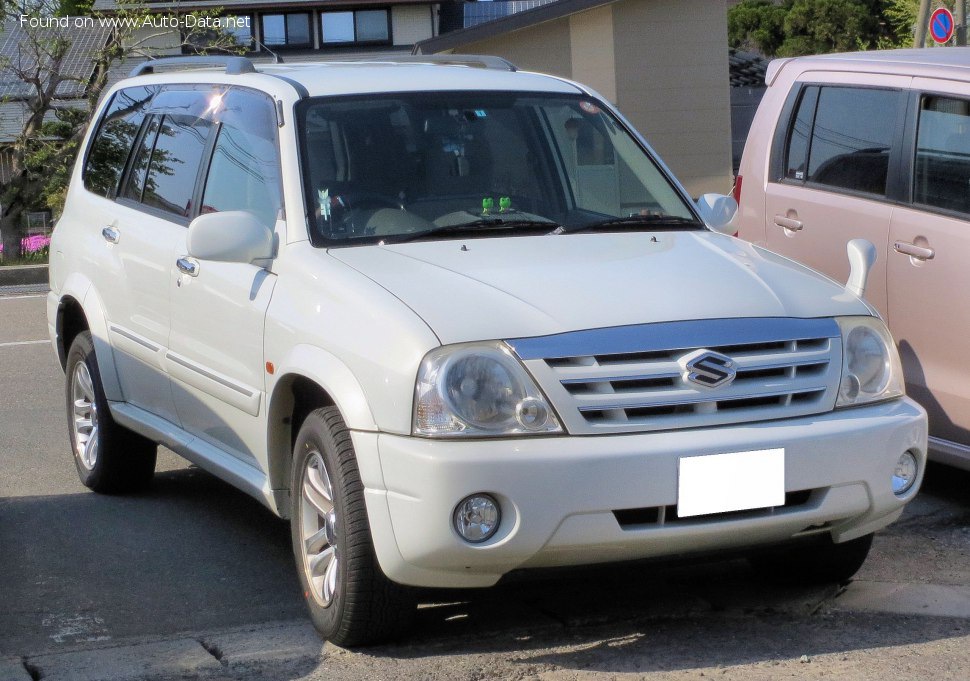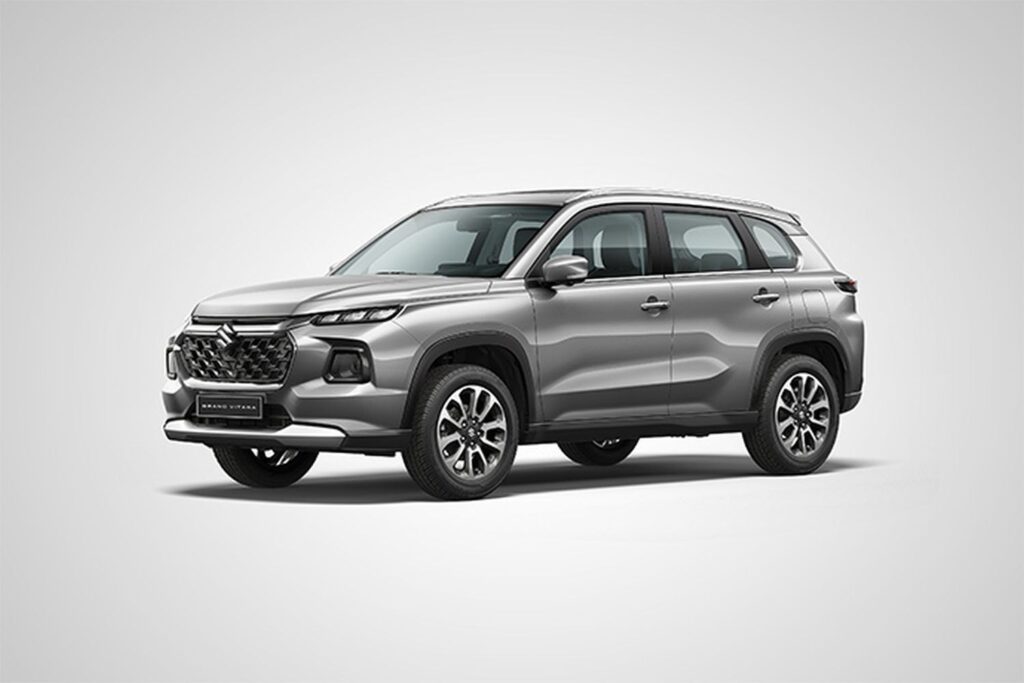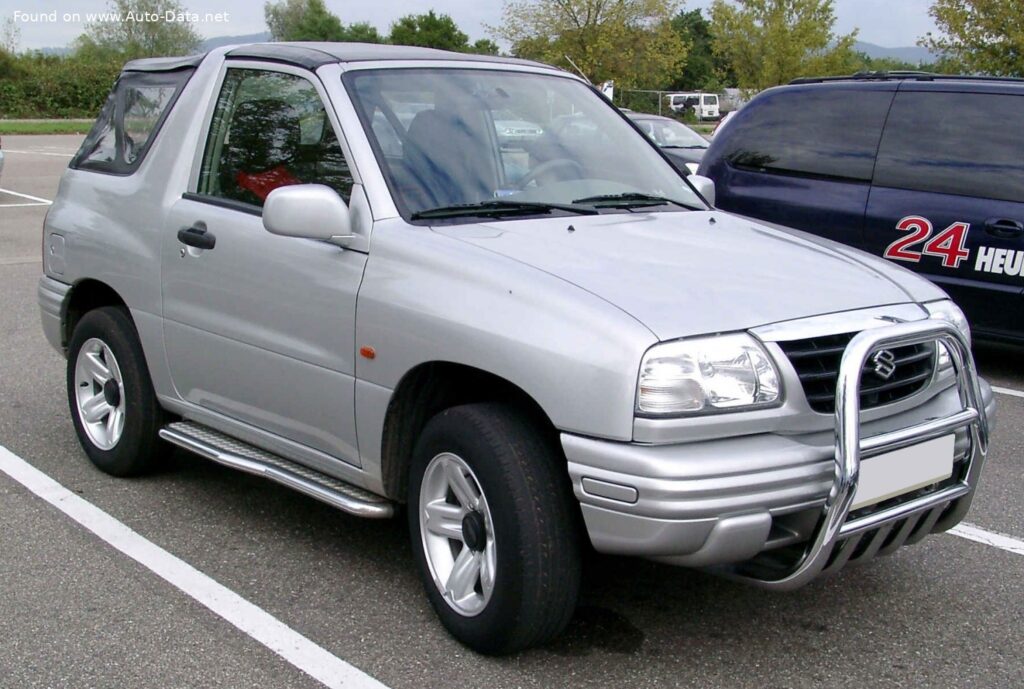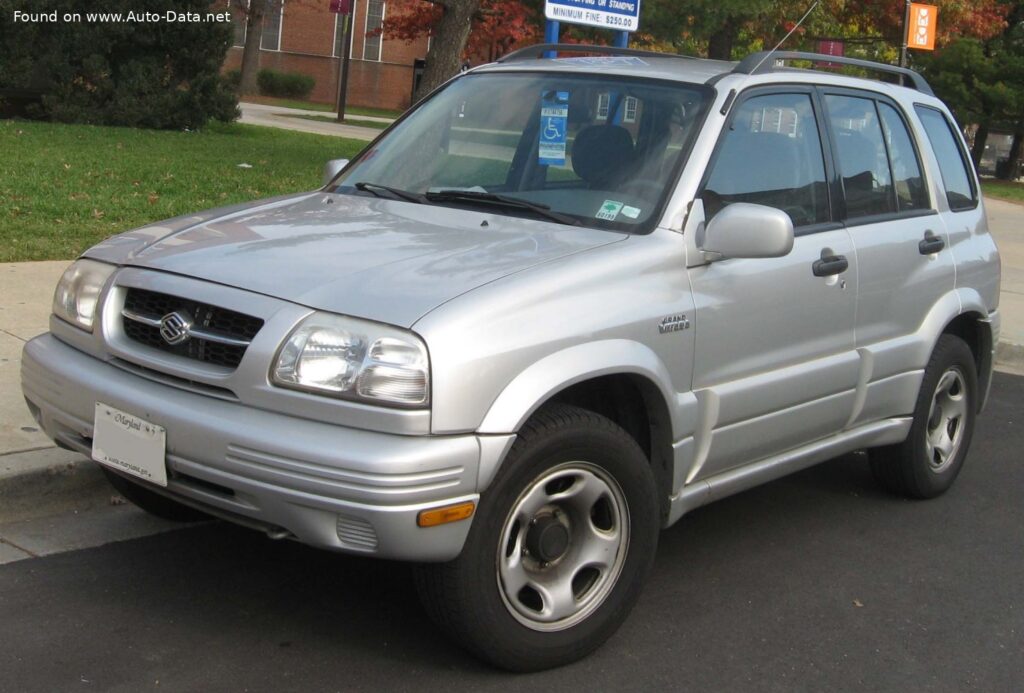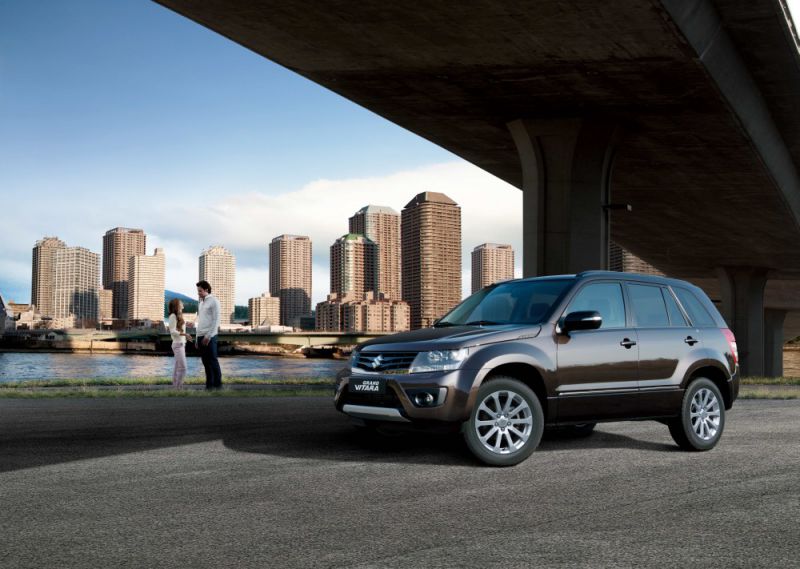
Suzuki Grand Vitara II (facelift 2012) 5 Door 2.4 (169 Hp) 4×4 Automatic: A Global SUV Contender
The Suzuki Grand Vitara II (facelift 2012) 5 Door 2.4 (169 Hp) 4×4 Automatic represents the refreshed iteration of Suzuki’s second-generation compact SUV, a vehicle celebrated for its robust construction, genuine off-road capability, and practical on-road demeanor. Produced from 2012 to 2015, this particular variant, with its 2.4-liter gasoline engine and four-speed automatic transmission, was a cornerstone of Suzuki’s global SUV lineup. While Suzuki had largely withdrawn its passenger car offerings from the American market by 2012, the Grand Vitara continued to be a significant player in numerous international markets, including Europe, Australia, Asia, and Latin America, where its blend of utility and ruggedness found a dedicated audience. This facelifted model maintained the Grand Vitara’s traditional body-on-frame (or integrated ladder frame) construction philosophy, distinguishing it from the growing tide of car-based crossovers that prioritized on-road comfort over genuine off-road prowess. It offered a compelling package for buyers seeking a versatile vehicle capable of tackling both urban commutes and challenging unpaved tracks.
Engine and Performance: The J24B Powertrain
Under the hood, the Suzuki Grand Vitara II (facelift 2012) 2.4-liter model featured the J24B inline-four engine, a naturally aspirated gasoline unit renowned for its reliability and smooth power delivery. With an engine displacement of 2393 cubic centimeters (146.03 cubic inches), this powerplant generated a respectable 169 horsepower at 6000 rpm. Torque output stood at 227 Newton-meters (167.43 lb.-ft.) at a relatively low 3800 rpm, providing ample pulling power for various driving conditions, whether navigating city streets or traversing rough terrain. The engine utilized a Multi-port manifold injection system and a DOHC (Double Overhead Camshaft) valvetrain with Variable Valve Timing (VVT-i), optimizing both performance and fuel efficiency for its era.
Mated to this engine was a four-speed automatic transmission, directing power to a full-time all-wheel-drive (4×4) system. While a four-speed automatic might seem modest by contemporary standards, it was a proven and durable unit, well-suited to the Grand Vitara’s utilitarian character. The vehicle could accelerate from 0 to 60 mph in a calculated 11.4 seconds (0-100 km/h in 12 seconds), reaching a maximum speed of 108.74 mph (175 km/h). Fuel economy figures were competitive for a capable 4×4 SUV of its size: an estimated 19.4 US mpg in urban driving, 29 US mpg on the extra-urban cycle, and a combined average of 24.5 US mpg (9.6 l/100 km). With CO2 emissions of 221 g/km, it met the Euro 5 emission standard, reflecting its compliance with contemporary environmental regulations in its key markets.
Design and Features: Practicality Meets Subtle Refinement
The 2012 facelift brought subtle yet effective design enhancements to the Suzuki Grand Vitara II (facelift 2012), primarily focusing on a refreshed front fascia. These updates included a revised grille, new bumper designs, and updated alloy wheel options, giving the vehicle a more contemporary look without straying from its established rugged identity. The five-door SUV body style offered practical access for five occupants, making it a suitable choice for families or individuals requiring ample cargo space. With a length of 177.17 inches (4500 mm), a width of 71.26 inches (1810 mm), and a height of 66.73 inches (1695 mm), the Grand Vitara struck a balance between maneuverability and interior volume.
Its architecture, while not a pure body-on-frame, incorporated an integrated ladder frame into a unibody structure, providing a significant advantage in terms of rigidity and off-road durability compared to most crossovers. This was complemented by a generous ground clearance of 8.07 inches (205 mm), ensuring it could confidently navigate uneven terrain. The suspension system featured an independent McPherson strut setup with coil springs and an anti-roll bar at the front, paired with an independent multi-link suspension at the rear, contributing to a surprisingly comfortable ride both on and off the pavement. Braking was handled by ventilated discs at both the front and rear, augmented by an Anti-lock Braking System (ABS) for enhanced safety. Standard 225/65 R17 tires mounted on 6.5J x 17-inch wheel rims provided a good balance of grip and ride comfort.
Inside, the Grand Vitara offered a functional and durable cabin. While not overly luxurious, the materials and layout were designed for longevity and ease of use. Cargo capacity was practical, with a minimum trunk space of 14.06 cubic feet (398 liters) that could expand to 26.77 cubic feet (758 liters) with the rear seats folded, making it versatile for hauling luggage or outdoor gear. The vehicle’s overall design ethos emphasized utility and capability, appealing to buyers who valued substance over flashy aesthetics.
Technical Specifications: Suzuki Grand Vitara II (facelift 2012)
| Category | Specification | Metric Unit | US Imperial Unit |
|---|---|---|---|
| Brand | Suzuki | ||
| Model | Grand Vitara | ||
| Generation | Grand Vitara II (facelift 2012) 5 Door | ||
| Type (Engine) | 2.4 (169 Hp) 4×4 Automatic | ||
| Start of production | 2012 year | ||
| End of production | 2015 year | ||
| Powertrain Architecture | Internal Combustion engine | ||
| Body type | SUV | ||
| Seats | 5 | ||
| Doors | 5 | ||
| Performance Specs | |||
| Fuel consumption (economy) – urban | 12.1 l/100 km | 19.4 US mpg | |
| Fuel consumption (economy) – extra urban | 8.1 l/100 km | 29 US mpg | |
| Fuel consumption (economy) – combined | 9.6 l/100 km | 24.5 US mpg | |
| CO2 emissions | 221 g/km | ||
| Fuel Type | Petrol (Gasoline) | ||
| Acceleration 0 – 60 mph | 11.4 sec | ||
| Acceleration 0 – 100 km/h | 12 sec | ||
| Maximum speed | 175 km/h | 108.74 mph | |
| Emission standard | Euro 5 | ||
| Weight-to-power ratio | 9.8 kg/Hp | 101.9 Hp/tonne | |
| Weight-to-torque ratio | 7.3 kg/Nm | 136.8 Nm/tonne | |
| Engine Specs | |||
| Power | 169 Hp @ 6000 rpm | ||
| Power per liter | 70.6 Hp/l | ||
| Torque | 227 Nm @ 3800 rpm | 167.43 lb.-ft. @ 3800 rpm | |
| Engine layout | Front, Longitudinal | ||
| Engine Model/Code | J24B | ||
| Engine displacement | 2393 cm3 | 146.03 cu. in. | |
| Number of cylinders | 4 | ||
| Engine configuration | Inline | ||
| Cylinder Bore | 92 mm | 3.62 in. | |
| Piston Stroke | 90 mm | 3.54 in. | |
| Compression ratio | 10:1 | ||
| Number of valves per cylinder | 4 | ||
| Fuel injection system | Multi-port manifold injection | ||
| Engine aspiration | Naturally aspirated engine | ||
| Valvetrain | DOHC – VVT-i | ||
| Engine oil capacity | 4.8 l | 5.07 US qt | |
| Coolant | 7.3 l | 7.71 US qt | |
| Space, Volume and Weights | |||
| Kerb Weight | 1659 kg | 3657.47 lbs. | |
| Max. weight | 2100 kg | 4629.71 lbs. | |
| Max load | 441 kg | 972.24 lbs. | |
| Trunk (boot) space – minimum | 398 l | 14.06 cu. ft. | |
| Trunk (boot) space – maximum | 758 l | 26.77 cu. ft. | |
| Fuel tank capacity | 66 l | 17.44 US gal | |
| Dimensions | |||
| Length | 4500 mm | 177.17 in. | |
| Width | 1810 mm | 71.26 in. | |
| Height | 1695 mm | 66.73 in. | |
| Wheelbase | 2640 mm | 103.94 in. | |
| Front track | 1540 mm | 60.63 in. | |
| Rear (Back) track | 1570 mm | 61.81 in. | |
| Ride height (ground clearance) | 205 mm | 8.07 in. | |
| Minimum turning circle (turning diameter) | 11 m | 36.09 ft. | |
| Drivetrain, Brakes and Suspension Specs | |||
| Drive wheel | All wheel drive (4×4) | ||
| Number of gears and type of gearbox | 4 gears, automatic transmission | ||
| Front suspension | Independent, type McPherson with coil spring and anti-roll bar | ||
| Rear suspension | Independent multi-link suspension | ||
| Front brakes | Ventilated discs | ||
| Rear brakes | Ventilated discs | ||
| Assisting systems | ABS (Anti-lock braking system) | ||
| Steering type | Steering rack and pinion | ||
| Tires size | 225/65 R17 101H | ||
| Wheel rims size | 6.5J x 17 | ||
Legacy and Market Impact of the Suzuki Grand Vitara II (facelift 2012)
The Suzuki Grand Vitara II (facelift 2012) held a unique position in the automotive landscape of its time. While many manufacturers were shifting towards softer, car-like crossovers, the Grand Vitara steadfastly maintained its credentials as a true compact SUV with genuine off-road capability. This made it a compelling choice in markets where rough roads, inclement weather, or adventurous lifestyles demanded more than just a raised wagon.
In regions like Australia, South America, and parts of Asia and Europe, the Grand Vitara was celebrated for its reliability, durability, and robust 4×4 system, which often included a low-range transfer case (though not specified for this exact automatic variant, it was a hallmark of the Grand Vitara line). Its competitors varied greatly by market, ranging from more road-biased compact SUVs like the Toyota RAV4, Honda CR-V, and Nissan Rogue (X-Trail) to more similarly capable, albeit often larger, vehicles. The Grand Vitara carved out a niche by offering a balanced package: practical size for urban environments, comfortable enough for daily driving, yet rugged enough to venture off the beaten path.
Despite Suzuki’s departure from the US passenger car market, the Grand Vitara’s global legacy as a “small but tough” SUV endured. It built upon a heritage of Suzuki off-road vehicles, including the original Vitara/Sidekick, known for their compact dimensions and surprising capability. The 2012 facelift ensured the model remained competitive in terms of aesthetics and features until its discontinuation, paving the way for future Suzuki SUV offerings that would eventually lean more towards the crossover segment. The Grand Vitara II, particularly in its 2.4-liter 4×4 automatic configuration, remains a testament to Suzuki’s commitment to building capable and dependable all-terrain vehicles that served a diverse global customer base.