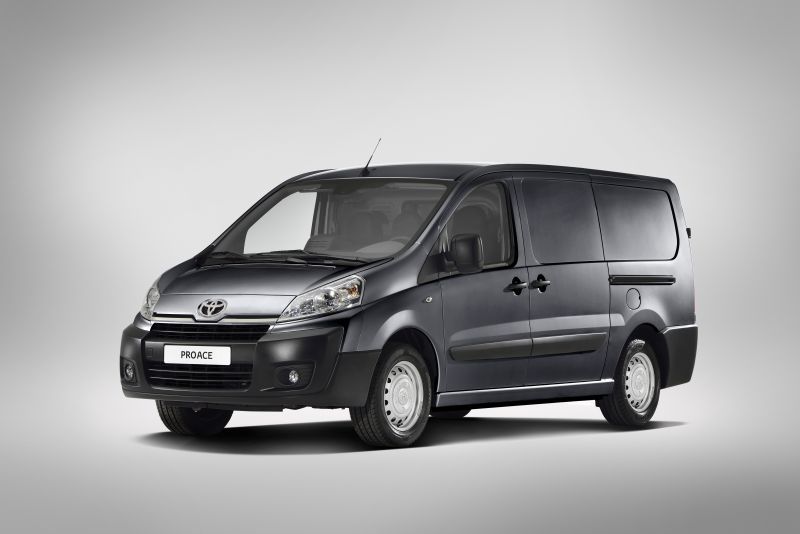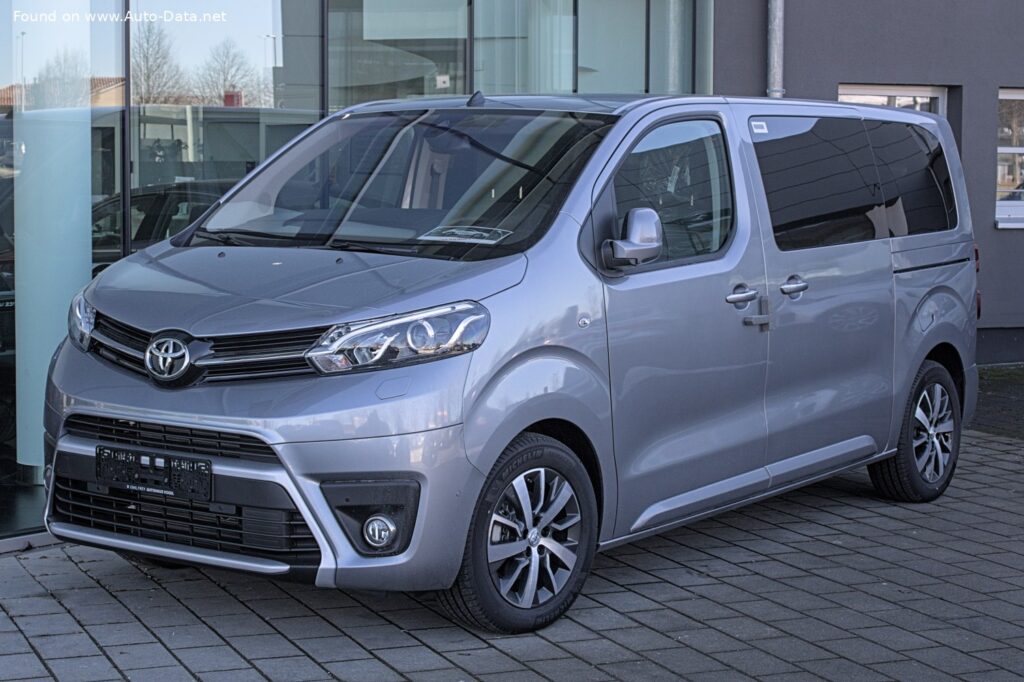
The Toyota Proace Verso II SWB 1.5d (120 Hp): A European Workhorse of Versatility
The Toyota Proace Verso II SWB 1.5d (120 Hp) represents the second generation of Toyota’s mid-size minivan, a versatile and practical vehicle primarily aimed at the European market. Launched in September 2018, this particular iteration, designated as the Short Wheelbase (SWB) model with a 1.5-liter diesel engine producing 120 horsepower, exemplifies Toyota’s strategy of offering a robust and efficient people-mover or cargo hauler in regions where such vehicles are highly valued. As part of a collaborative venture with Stellantis (formerly PSA Group), the Proace Verso shares its platform and underlying architecture with models like the Citroën Spacetourer, Peugeot Traveller, and Opel/Vauxhall Zafira Life, allowing Toyota to leverage established designs for cost-effectiveness and market reach.
The Proace Verso II SWB distinguishes itself through its focus on passenger comfort, flexible seating configurations, and economical operation, making it a popular choice for large families, shuttle services, and businesses requiring ample space without the footprint of a full-size van. While not directly sold in the United States, its design philosophy and technical specifications reflect a global trend towards more efficient and adaptable multi-purpose vehicles, albeit tailored for different regional demands and regulations. This article will delve into the technical prowess, design philosophy, and market impact of the Toyota Proace Verso II SWB 1.5d (120 Hp) within its primary operating environments.
Engine & Performance: The Efficient Heart of the Toyota Proace Verso II SWB 1.5d (120 Hp)
At the core of the Toyota Proace Verso II SWB 1.5d (120 Hp) lies a modern and efficient powertrain designed for balanced performance and impressive fuel economy. This specific model is equipped with a 1.5-liter (1499 cm3 or 91.47 cu. in.) inline four-cylinder diesel engine, identified by the model code 5WZ-HV. This unit is engineered with four valves per cylinder and utilizes a Diesel Commonrail fuel injection system, a sophisticated technology that precisely controls fuel delivery for optimal combustion efficiency. Further enhancing its performance and efficiency, the engine benefits from a turbocharger and an intercooler, which boost air intake for increased power output across the rev range.
The engine delivers a respectable 120 horsepower (80.1 Hp per liter) and a robust 221.27 lb.-ft. (300 Nm) of torque, which peaks at a low 1750 rpm. This low-end torque is crucial for a vehicle of this type, providing ample pulling power for acceleration, carrying heavy loads, and maintaining speed on inclines, even when fully laden with passengers or cargo. Power is sent to the front wheels via a smooth-shifting 6-speed manual transmission, a common and reliable choice for this segment that offers drivers direct control and contributes to the vehicle’s overall efficiency.
Fuel economy is a strong suit for the Proace Verso II SWB 1.5d (120 Hp), reflecting its European design brief where fuel costs and emissions are significant considerations. The combined fuel consumption is rated at an impressive 49 US mpg (4.8 l/100 km), with urban figures reaching 45.2 US mpg (5.2 l/100 km) and extra-urban figures soaring to 51.1 US mpg (4.6 l/100 km). These figures underscore the vehicle’s economic operation. Complementing its efficiency, the engine meets the strict Euro 6 emission standard, with CO2 emissions ranging from 126-128 g/km, thanks in part to the inclusion of a particulate filter. The 18.23 US gallon (69-liter) fuel tank provides a substantial driving range, reducing the frequency of fuel stops.
Design & Features: Practicality Meets Modernity
The Toyota Proace Verso II SWB is a quintessential minivan, prioritizing functionality and interior space. Its body type is characterized by a five-door configuration, providing easy access to all seating rows. This Short Wheelbase variant measures 195.24 inches (4959 mm) in length, 75.59 inches (1920 mm) in width, and 74.41 inches (1890 mm) in height, with a substantial 128.94-inch (3275 mm) wheelbase. These dimensions contribute to a remarkably spacious interior while maintaining a manageable footprint for urban maneuverability.
The interior is designed to accommodate 8 to 9 passengers comfortably, depending on the specific configuration. The versatility of the seating arrangements is a key selling point, allowing owners to customize the cabin for passenger transport or cargo hauling. The trunk space is highly adaptable, ranging from a respectable 23.13 cu. ft. (655 liters) with all seats in place to an cavernous 140.13 cu. ft. (3968 liters) when the rear seats are folded or removed. This makes the Proace Verso an ideal solution for a wide array of personal and professional needs.
From a chassis perspective, the Proace Verso II SWB features an independent McPherson-type front suspension and a wishbone rear suspension, a setup that provides a comfortable ride quality and stable handling. Braking is handled by disc brakes at both the front and rear, complemented by an Anti-lock Braking System (ABS) for enhanced safety during emergency stops. The electric power steering system, coupled with a steering rack and pinion, ensures light and precise steering, making parking and low-speed maneuvers effortless. The vehicle rides on either 215/65 R16 or 225/55 R17 tires, mounted on 16-inch or 17-inch wheel rims, respectively, offering a good balance of grip and ride comfort. Additional practical features include a maximum roof load capacity of 308.65 – 374.79 lbs. (140-170 kg) and a permitted trailer load with brakes of 3968.32 lbs. (1800 kg), further extending its utility.
Technical Specifications: Toyota Proace Verso II SWB 1.5d (120 Hp)
| Category | Specification | US Equivalent |
|---|---|---|
| Brand | Toyota | |
| Model | Proace Verso II SWB | |
| Type (Engine) | 1.5d (120 Hp) | |
| Start of Production | September, 2018 | |
| Powertrain Architecture | Internal Combustion engine | |
| Body Type | Minivan | |
| Seats | 8-9 | |
| Doors | 5 | |
| Performance Specs | ||
| Fuel Consumption (Urban) | 5.2 l/100 km | 45.2 US mpg |
| Fuel Consumption (Extra Urban) | 4.6 l/100 km | 51.1 US mpg |
| Fuel Consumption (Combined) | 4.8 l/100 km | 49 US mpg |
| CO2 Emissions | 126-128 g/km | |
| Fuel Type | Diesel | |
| Emission Standard | Euro 6 | |
| Engine Specs | ||
| Power | 120 Hp | |
| Power per liter | 80.1 Hp/l | |
| Torque | 300 Nm @ 1750 rpm | 221.27 lb.-ft. @ 1750 rpm |
| Engine Model/Code | 5WZ-HV | |
| Engine Displacement | 1499 cm3 | 91.47 cu. in. |
| Number of Cylinders | 4 | |
| Engine Configuration | Inline | |
| Number of Valves per Cylinder | 4 | |
| Fuel Injection System | Diesel Commonrail | |
| Engine Aspiration | Turbocharger, Intercooler | |
| Engine Oil Capacity | 5.75 l | 6.08 US qt |
| Engine Systems | Particulate filter | |
| Space, Volume and Weights | ||
| Trunk (boot) space – minimum | 655 l | 23.13 cu. ft. |
| Trunk (boot) space – maximum | 3968 l | 140.13 cu. ft. |
| Fuel Tank Capacity | 69 l | 18.23 US gal |
| Max. Roof Load | 140-170 kg | 308.65 – 374.79 lbs. |
| Permitted Trailer Load with Brakes (12%) | 1800 kg | 3968.32 lbs. |
| Permitted Trailer Load without Brakes | 750 kg | 1653.47 lbs. |
| Permitted Towbar Download | 72 kg | 158.73 lbs. |
| Dimensions | ||
| Length | 4959 mm | 195.24 in. |
| Width | 1920 mm | 75.59 in. |
| Height | 1890 mm | 74.41 in. |
| Wheelbase | 3275 mm | 128.94 in. |
| Front Track | 1627 mm | 64.06 in. |
| Rear (Back) Track | 1600 mm | 62.99 in. |
| Drivetrain, Brakes and Suspension Specs | ||
| Drivetrain Architecture | The Internal combustion engine (ICE) drives the front wheels of the vehicle. | |
| Drive Wheel | Front wheel drive | |
| Number of Gears and Type of Gearbox | 6 gears, manual transmission | |
| Front Suspension | Independent type McPherson | |
| Rear Suspension | Wishbone | |
| Front Brakes | Disc | |
| Rear Brakes | Disc | |
| Assisting Systems | ABS (Anti-lock braking system) | |
| Steering Type | Steering rack and pinion | |
| Power Steering | Electric Steering | |
| Tires Size | 215/65 R16; 225/55 R17 | |
| Wheel Rims Size | 16; 17 | |
Legacy & Market Impact of the Toyota Proace Verso II SWB
The Toyota Proace Verso II SWB, particularly the 1.5d (120 Hp) variant, has carved out a significant niche in the European and select Asian markets since its introduction. Its legacy is deeply intertwined with its role as a practical, reliable, and fuel-efficient multi-purpose vehicle. In regions where diesel engines remain popular for their torque and economy, and where minivans are still a preferred choice for family transport and commercial shuttle services, the Proace Verso offers a compelling package.
Its collaboration with Stellantis for its platform and manufacturing has been a strategic advantage, allowing Toyota to quickly enter and compete in a segment dominated by established players. This partnership ensures cost-effective production and access to proven technologies, while Toyota adds its renowned reputation for quality, durability, and reliability to the vehicle. This blend makes the Proace Verso a strong contender against its badge-engineered siblings and other rivals.
Competitors in its primary markets include a range of vehicles from both mainstream and premium brands. Key rivals in the European minivan segment often include the Volkswagen Multivan/Caravelle, Mercedes-Benz V-Class, Ford Transit Custom (Tourneo Custom variant), and its platform-mates like the Citroën Spacetourer, Peugeot Traveller, and Opel/Vauxhall Zafira Life. Against these, the Proace Verso stands out for its competitive pricing, strong standard feature set, and the peace of mind associated with the Toyota brand.
The market impact of the Proace Verso is largely defined by its versatility. It appeals to a broad demographic, from large families needing spacious and safe transport for daily commutes and long journeys, to businesses like hotels, airports, and tour operators requiring efficient and comfortable shuttle vehicles. Its ability to switch seamlessly between passenger and cargo configurations, coupled with its impressive towing capacity, further enhances its utility and appeal. The focus on efficiency, demonstrated by its low fuel consumption and Euro 6 compliance, also makes it an environmentally conscious choice within its class, aligning with increasingly stringent European regulations.
In essence, the Toyota Proace Verso II SWB 1.5d (120 Hp) is more than just a minivan; it’s a testament to practical engineering and strategic market positioning. While it may not be a household name in the American automotive landscape, its success in its intended markets underscores the enduring demand for vehicles that blend spaciousness, efficiency, and reliability in a highly adaptable package.