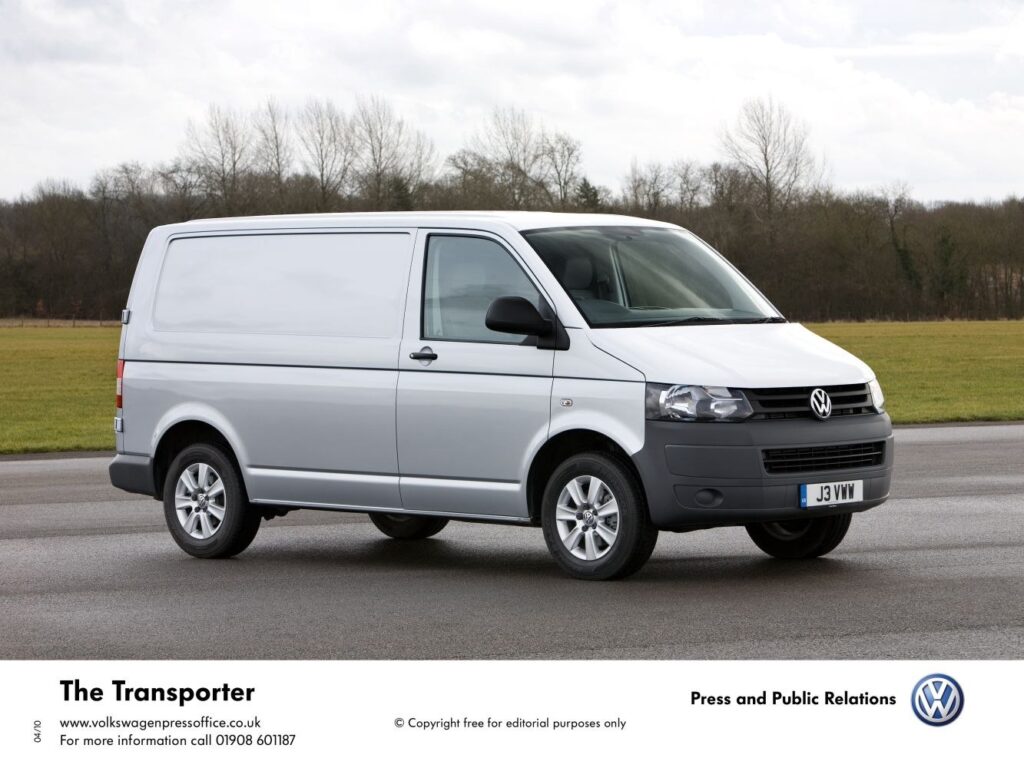
The Volkswagen Transporter T5 Facelift Panel Van 2.0 TDI BMT (180 Hp) DSG L2H1: A European Workhorse
The Volkswagen Transporter (T5, facelift 2009) Panel Van 2.0 TDI BMT (180 Hp) DSG L2H1 represents a highly capable and technologically advanced iteration of Volkswagen’s iconic light commercial vehicle (LCV) series. Produced between 2013 and 2015, this particular variant of the T5 generation, which received its significant facelift in 2009, solidified the Transporter’s reputation as a versatile and efficient workhorse across European and international markets. While not widely available in its panel van configuration in the United States, the Transporter, alongside its passenger-oriented Multivan and California camper siblings, is a cornerstone of Volkswagen Commercial Vehicles’ global strategy, known for its robust build quality, impressive cargo capacity, and car-like driving dynamics.
This specific model, designated as an L2H1, indicates a long wheelbase and standard roof height, offering a substantial cargo volume tailored for a wide range of business applications. Its powertrain, a 2.0-liter TDI (Turbocharged Direct Injection) engine featuring BlueMotion Technology (BMT) and paired with a sophisticated 7-speed DSG (Direct-Shift Gearbox), delivered a compelling blend of power, fuel efficiency, and reduced emissions, making it an economically attractive option for fleet operators and individual tradespeople alike.
Engine and Performance: Power and Efficiency in the Volkswagen Transporter T5 Facelift Panel Van
At the heart of the Volkswagen Transporter (T5, facelift 2009) Panel Van 2.0 TDI BMT (180 Hp) DSG L2H1 is a potent 2.0-liter (1968 cm3 or 120.09 cu. in.) inline-four cylinder diesel engine, factory code EA189 / CFCA. This unit stands out with its BiTurbo aspiration system, employing two turbochargers to deliver a broad and responsive power band. The common rail fuel injection system, coupled with Double Overhead Camshafts (DOHC) and four valves per cylinder, ensures precise fuel delivery and optimal combustion efficiency.
The engine generates a robust 180 horsepower at 4000 rpm, a significant output for a commercial van of its class. More critically for a utility vehicle, it produces an impressive 295.02 lb.-ft. (400 Nm) of torque, available across a wide and useful range from 1500 to 2000 rpm. This low-end torque is crucial for effortless hauling of heavy loads and smooth acceleration, even when fully laden. The power is efficiently managed by a 7-speed automatic DSG transmission, renowned for its quick, smooth shifts and contributions to both performance and fuel economy. This combination allows the Transporter to accelerate from 0 to 60 mph in a respectable 9.5 seconds and reach a top speed of 118.68 mph (191 km/h).
As part of Volkswagen’s BlueMotion Technology (BMT) initiative, this Transporter variant incorporates several efficiency-enhancing features. These include a Start & Stop system, which automatically shuts off the engine when the vehicle is stationary, and a particulate filter, reducing harmful emissions. The fuel economy figures are commendable for a vehicle of its size and capability: a combined cycle of 32.2 – 30.9 US mpg (7.3-7.6 l/100 km). With CO2 emissions ranging from 192-199 g/km, it met the Euro 5 emission standard, reflecting Volkswagen’s commitment to environmental responsibility in its commercial vehicle lineup.
Design and Features: Practicality and Refinement
The design of the Volkswagen Transporter T5 facelift panel van prioritizes functionality and durability, characteristic of its segment. As a panel van, it features a utilitarian body designed for maximizing cargo space. The L2H1 designation signifies a long wheelbase of 133.86 inches (3400 mm) and a standard roof height of 78.35 inches (1990 mm), contributing to its generous overall length of 208.35 inches (5292 mm). This configuration provides an expansive maximum trunk space of 236.61 cu. ft. (6700 liters), making it ideal for transporting large volumes of goods or equipment.
The vehicle typically offers 2-3 seats in the front cabin, emphasizing its role as a dedicated cargo carrier. Access to the cargo area is facilitated by 4-5 doors, including a rear tailgate or barn doors and often a sliding side door. The robust chassis is designed to handle significant payloads, with a maximum load capacity ranging from 2096.6 to 2134.07 lbs. (951-968 kg) and a maximum gross weight of up to 7054.79 lbs. (3200 kg). It also boasts impressive towing capabilities, rated for a permitted trailer load with brakes of 5511.56 lbs. (2500 kg).
Underneath, the Transporter features an independent suspension setup both front and rear, utilizing McPherson struts with coil springs and an anti-roll bar at the front, and independent coil springs with a transverse stabilizer and trailing arms at the rear. This sophisticated suspension system, combined with hydraulic rack and pinion power steering, contributes to the Transporter’s surprisingly car-like handling and ride comfort, reducing driver fatigue on long journeys. Safety is addressed with ventilated disc brakes (340×32.5 mm front, 294×22 mm rear) and an Anti-lock Braking System (ABS) as standard. Various tire sizes (215/60 R17; 235/55 R17; 255/45 R18) and wheel rim options (7J x 17; 8J x 18) were available, allowing for customization based on load requirements and desired aesthetics.
Technical Specifications
| Category | Specification | US Equivalent / Notes |
|---|---|---|
| General Information | ||
| Brand | Volkswagen | |
| Model | Transporter | |
| Generation | Transporter (T5, facelift 2009) Panel Van | |
| Type (Engine) | 2.0 TDI BMT (180 Hp) DSG L2H1 | |
| Production Years | 2013 – 2015 | |
| Body Type | Van | |
| Seats | 2-3 | |
| Doors | 4-5 | |
| Performance Specifications | ||
| Fuel Consumption (Urban, NEDC) | 8.5-8.8 l/100 km | 27.7 – 26.7 US mpg |
| Fuel Consumption (Extra Urban, NEDC) | 6.6-6.9 l/100 km | 35.6 – 34.1 US mpg |
| Fuel Consumption (Combined, NEDC) | 7.3-7.6 l/100 km | 32.2 – 30.9 US mpg |
| CO2 Emissions (NEDC) | 192-199 g/km | |
| Fuel Type | Diesel | |
| Acceleration 0-60 mph | 9.5 sec | |
| Maximum Speed | 191 km/h | 118.68 mph |
| Emission Standard | Euro 5 | |
| Weight-to-Power Ratio | 10.2 kg/Hp | 98.3 Hp/tonne |
| Weight-to-Torque Ratio | 4.6 kg/Nm | 218.3 Nm/tonne |
| Engine Specifications | ||
| Power | 180 Hp @ 4000 rpm | |
| Power per liter | 91.5 Hp/l | |
| Torque | 400 Nm @ 1500-2000 rpm | 295.02 lb.-ft. |
| Engine Layout | Front, Transverse | |
| Engine Model/Code | EA189 / CFCA | |
| Engine Displacement | 1968 cm3 | 2.0 Liters / 120.09 cu. in. |
| Number of Cylinders | 4 | |
| Engine Configuration | Inline | |
| Cylinder Bore | 81 mm | 3.19 in. |
| Piston Stroke | 95.5 mm | 3.76 in. |
| Compression Ratio | 16.5:1 | |
| Valves per Cylinder | 4 | |
| Fuel Injection System | Diesel Commonrail | |
| Engine Aspiration | BiTurbo, Intercooler | |
| Valvetrain | DOHC | |
| Engine Oil Capacity | 7 l | 7.4 US qt |
| Coolant Capacity | 11 l | 11.62 US qt |
| Engine Systems | Start & Stop System, Particulate Filter | |
| Space, Volume and Weights | ||
| Kerb Weight | 1832-2249 kg | 4038.87 – 4958.2 lbs. |
| Max. Weight | 2800-3200 kg | 6172.94 – 7054.79 lbs. |
| Max. Load | 951-968 kg | 2096.6 – 2134.07 lbs. |
| Trunk (boot) Space – Maximum | 6700 l | 236.61 cu. ft. |
| Fuel Tank Capacity | 80 l | 21.13 US gal |
| Max. Roof Load | 100 kg | 220.46 lbs. |
| Permitted Trailer Load (with brakes 12%) | 2500 kg | 5511.56 lbs. |
| Permitted Trailer Load (without brakes) | 750 kg | 1653.47 lbs. |
| Permitted Towbar Download | 100 kg | 220.46 lbs. |
| Dimensions | ||
| Length | 5292 mm | 208.35 in. |
| Width | 1904 mm | 74.96 in. |
| Width (including mirrors) | 2283 mm | 89.88 in. |
| Height | 1990 mm | 78.35 in. |
| Wheelbase | 3400 mm | 133.86 in. |
| Front Overhang | 896 mm | 35.28 in. |
| Rear Overhang | 996 mm | 39.21 in. |
| Ride Height (Ground Clearance) | 201 mm | 7.91 in. |
| Minimum Turning Circle | 13.2 m | 43.31 ft. |
| Approach Angle | 21° | |
| Departure Angle | 17° | |
| Ramp-over (Brakeover) Angle | 12° | |
| Drivetrain, Brakes and Suspension | ||
| Drivetrain Architecture | Internal Combustion engine drives front wheels | Front-wheel drive |
| Drive Wheel | Front wheel drive | |
| Number of Gears and Gearbox Type | 7 gears, automatic transmission DSG | |
| Front Suspension | Independent, McPherson with coil spring and anti-roll bar | |
| Rear Suspension | Independent coil spring, Transverse stabilizer, Trailing arm | |
| Front Brakes | Ventilated discs, 340×32.5 mm | |
| Rear Brakes | Ventilated discs, 294×22 mm | |
| Assisting Systems | ABS (Anti-lock braking system) | |
| Steering Type | Steering rack and pinion | |
| Power Steering | Hydraulic Steering | |
| Tires Size | 215/60 R17; 235/55 R17; 255/45 R18 | |
| Wheel Rims Size | 7J x 17; 8J x 18 | |
Legacy and Market Impact
The Volkswagen Transporter series boasts a storied history dating back to the iconic T1 “Bus” of the 1950s, evolving through generations to meet the changing demands of commercial and private users. The T5 generation, and particularly the facelifted models from 2009-2015, continued this legacy by offering a modern, efficient, and highly adaptable platform. The Volkswagen Transporter (T5, facelift 2009) Panel Van 2.0 TDI BMT (180 Hp) DSG L2H1, in particular, was a significant player in the European light commercial vehicle market during its production years.
Its reputation was built on Volkswagen’s core values of reliability, durability, and practicality. For businesses, the Transporter represented a low total cost of ownership thanks to its impressive fuel economy, particularly with the BlueMotion Technology, and robust engineering that ensured longevity. Tradespeople appreciated its substantial cargo volume, adaptable interior, and strong towing capabilities, making it an indispensable tool for daily operations. The powerful 180 HP 2.0 TDI engine, coupled with the smooth and efficient DSG transmission, provided a driving experience that was notably refined for a commercial van, reducing driver fatigue and increasing productivity.
In its primary markets, the Transporter faced fierce competition from rivals such as the Ford Transit Custom, Mercedes-Benz Vito, Renault Trafic, and Opel Vivaro. However, the T5 consistently held its own, often leading sales charts due to its blend of brand prestige, advanced technology, and a wide range of configurations. The facelift brought updated styling and enhanced features, keeping the T5 competitive against newer designs. Its continued success underscored Volkswagen’s deep understanding of the LCV segment and its ability to deliver vehicles that were both practical and enjoyable to drive.
Today, while the T5 has been succeeded by the T6 and T6.1 generations, its impact remains significant. Many T5 models, including the 2013-2015 facelifted panel vans, continue to serve reliably in fleets and with individual owners, a testament to their enduring quality. The technological advancements introduced in this era, such as efficient BiTurbo diesel engines, sophisticated automatic transmissions, and fuel-saving systems, set benchmarks for the commercial vehicle industry and paved the way for even more advanced and environmentally conscious vans in subsequent generations. The Volkswagen Transporter T5 facelift panel van stands as a prime example of German engineering excellence applied to the demanding world of commercial transport.