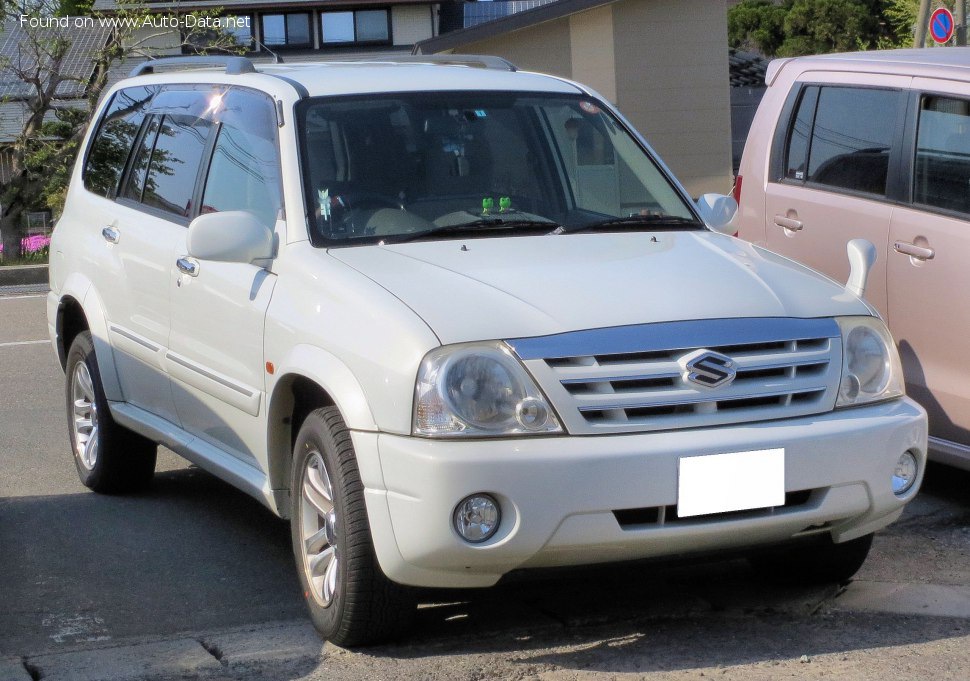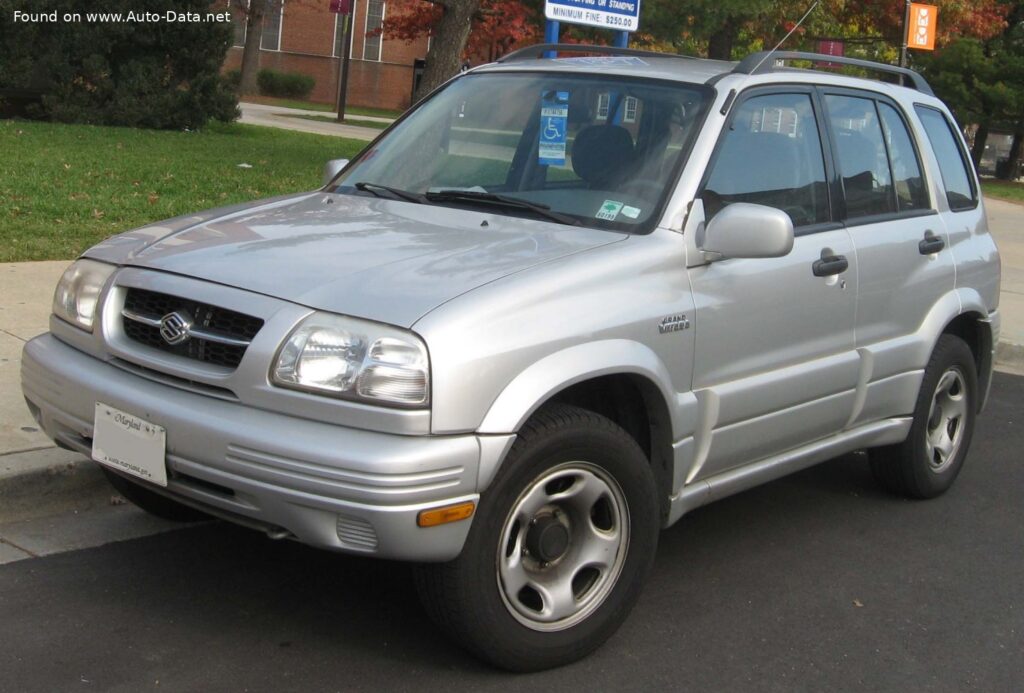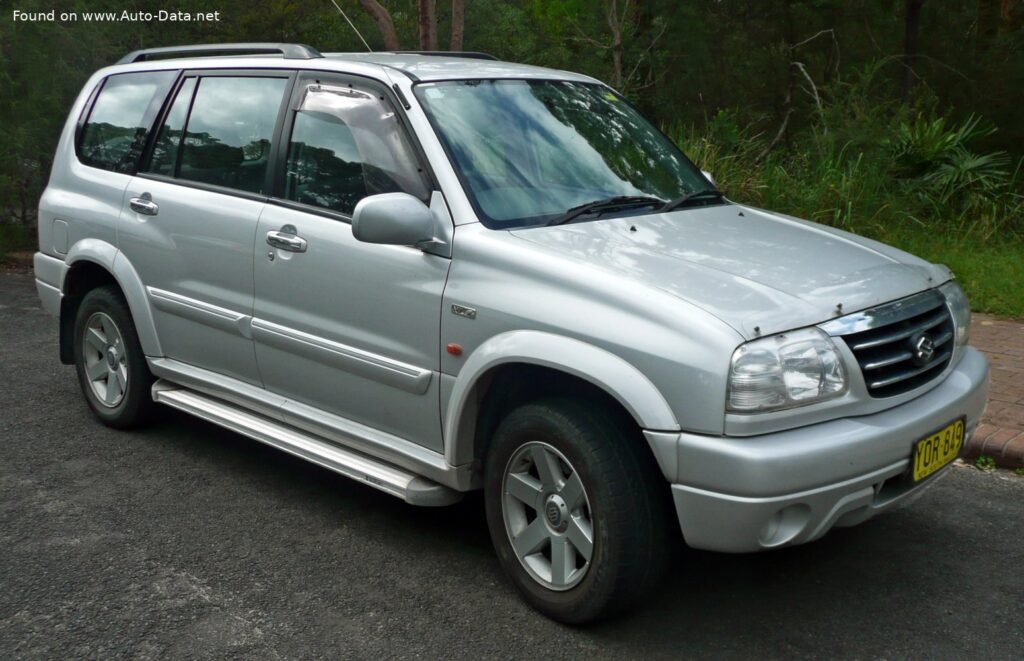
The Suzuki Grand Vitara XL-7 (HT): A Mid-Size Contender from 1998-2005
The Suzuki Grand Vitara XL-7 (HT) represents a significant evolution in Suzuki’s sport utility vehicle (SUV) lineup, bridging the gap between compact, more utilitarian offerings and the burgeoning demand for family-friendly, spacious SUVs in the late 1990s and early 2000s. Introduced in 1998, the XL-7 was an extended wheelbase variant of the popular Grand Vitara, designed to offer increased passenger and cargo capacity, often with the option for a third row of seating (though the specific configuration detailed here is a 5-seater). It positioned Suzuki as a more serious competitor in the growing mid-size SUV segment, appealing to buyers who needed more room than the standard Grand Vitara but still appreciated Suzuki’s reputation for ruggedness and off-road capability. Produced until 2005, this generation of the XL-7, particularly the 2.7 i V6 (172 Hp) 4WD Automatic model, highlighted Suzuki’s commitment to delivering a versatile and capable vehicle that could handle both daily commutes and adventurous excursions.
Engine and Performance of the Suzuki Grand Vitara XL-7 (HT)
Under the hood, the Suzuki Grand Vitara XL-7 (HT) in this configuration featured a robust 2.7-liter (2737 cm³ or 167.02 cu. in.) H27A V6 engine. This naturally aspirated, multi-port manifold injection powerplant was engineered for a blend of smooth power delivery and durability. With a DOHC (Double Overhead Camshaft) valvetrain and four valves per cylinder, the engine produced a respectable 172 horsepower at 5500 rpm and 177.75 lb.-ft. of torque at 4000 rpm. This output was competitive for its class at the time, offering sufficient grunt for highway cruising and light towing, while also providing adequate power for its intended off-road capabilities.
The V6 engine was longitudinally mounted in the front, contributing to a balanced weight distribution and optimized packaging for the all-wheel-drive (4×4) system. Power was routed through a conventional and reliable 4-speed automatic transmission. While not the most advanced gearbox by today’s standards, this automatic unit was well-suited to the engine’s torque curve, providing smooth shifts and predictable performance. The combination allowed the XL-7 to accelerate from 0 to 60 mph in a decent 10 seconds, with a top speed of approximately 108.74 mph (175 km/h).
Fuel economy, a common consideration for SUVs of this era, was rated at approximately 15.1 US mpg in urban driving conditions and 23.8 US mpg on the highway. These figures reflected the vehicle’s V6 engine, automatic transmission, and full-time 4WD system, which prioritized capability over outright fuel efficiency. The 16.91 US gallon fuel tank provided a reasonable cruising range for longer journeys.
Design and Features
The design of the Suzuki Grand Vitara XL-7 (HT) was unmistakably an SUV of its time, characterized by a rugged and purposeful stance. The “HT” in its designation likely referred to its Hard Top body, emphasizing its traditional SUV construction. It featured a 5-door body style, providing easy access to both front and rear seating areas. With a length of 183.66 inches (4665 mm), a width of 70.08 inches (1780 mm), and a height of 67.99 inches (1727 mm), the XL-7 was a substantial vehicle, offering a commanding presence on the road. The extended 110.24-inch (2800 mm) wheelbase was key to its improved interior space and ride comfort compared to the standard Grand Vitara.
Inside, the 5-seat configuration provided ample room for five adults, with a focus on practicality and durability. Cargo capacity was a strong suit, ranging from a respectable 6.6 cubic feet (187 liters) with all seats in place to an expansive 73 cubic feet (2067 liters) when the rear seats were folded down, making it highly versatile for carrying luggage, sports equipment, or larger items.
The XL-7 was built on a robust ladder-frame chassis, a hallmark of more traditional SUVs, which contributed to its durability and off-road prowess. Suspension duties were handled by an independent wishbone setup at the front, offering a good balance of ride comfort and handling, while the rear utilized a coil spring arrangement, designed to withstand heavier loads and provide articulation for uneven terrain. Braking performance was managed by ventilated discs at the front and drum brakes at the rear, a common setup for SUVs of this period. An Anti-lock Braking System (ABS) was included as a crucial safety feature, enhancing control during emergency braking. The steering system was a hydraulic rack-and-pinion setup, providing direct feedback and ease of maneuverability for a vehicle of its size. The 235/60 R16 tires offered a good compromise between on-road grip and off-road capability.
Technical Specifications: Suzuki Grand Vitara XL-7 (HT) 2.7 i V6 (172 Hp) 4WD Automatic
| Category | Specification |
|---|---|
| Brand | Suzuki |
| Model | Grand Vitara |
| Generation | Grand Vitara XL-7 (HT) |
| Type (Engine) | 2.7 i V6 (172 Hp) 4WD Automatic |
| Production Start | 1998 year |
| Production End | 2005 year |
| Powertrain Architecture | Internal Combustion engine |
| Body type | SUV |
| Seats | 5 |
| Doors | 5 |
| Performance Specs | |
| Fuel Consumption (Urban) | 15.1 US mpg (15.6 l/100 km) |
| Fuel Consumption (Extra Urban) | 23.8 US mpg (9.9 l/100 km) |
| Fuel Type | Petrol (Gasoline) |
| Acceleration 0 – 60 mph | 10 seconds |
| Maximum Speed | 108.74 mph (175 km/h) |
| Weight-to-Power Ratio | 10 kg/Hp (100.3 Hp/tonne) |
| Weight-to-Torque Ratio | 7.1 kg/Nm (140.5 Nm/tonne) |
| Engine Specs | |
| Power | 172 Hp @ 5500 rpm |
| Power per liter | 62.8 Hp/l |
| Torque | 177.75 lb.-ft. @ 4000 rpm (241 Nm @ 4000 rpm) |
| Engine Layout | Front, Longitudinal |
| Engine Model/Code | H27A |
| Engine Displacement | 2.7 liters (2737 cm³ / 167.02 cu. in.) |
| Number of Cylinders | 6 |
| Engine Configuration | V-engine |
| Cylinder Bore | 3.46 inches (88 mm) |
| Piston Stroke | 2.95 inches (75 mm) |
| Compression Ratio | 9.4:1 |
| Valves per Cylinder | 4 |
| Fuel Injection System | Multi-port manifold injection |
| Engine Aspiration | Naturally aspirated engine |
| Valvetrain | DOHC |
| Engine Oil Capacity | 5.81 US quarts (5.5 l) |
| Coolant Capacity | 8.45 US quarts (8 l) |
| Space, Volume and Weights | |
| Kerb Weight | 3780.93 lbs (1715 kg) |
| Max. Weight | 4916.31 lbs (2230 kg) |
| Max Load | 1135.38 lbs (515 kg) |
| Trunk (Boot) Space – Minimum | 6.6 cu. ft. (187 l) |
| Trunk (Boot) Space – Maximum | 73 cu. ft. (2067 l) |
| Fuel Tank Capacity | 16.91 US gallons (64 l) |
| Dimensions | |
| Length | 183.66 inches (4665 mm) |
| Width | 70.08 inches (1780 mm) |
| Height | 67.99 inches (1727 mm) |
| Wheelbase | 110.24 inches (2800 mm) |
| Front Track | 59.06 inches (1500 mm) |
| Rear Track | 59.06 inches (1500 mm) |
| Drivetrain, Brakes and Suspension Specs | |
| Drive Wheel | All-wheel drive (4×4) |
| Gearbox Type | 4 gears, automatic transmission |
| Front Suspension | Wishbone |
| Rear Suspension | Coil spring |
| Front Brakes | Ventilated discs |
| Rear Brakes | Drum |
| Assisting Systems | ABS (Anti-lock braking system) |
| Steering Type | Steering rack and pinion |
| Power Steering | Hydraulic Steering |
| Tires Size | 235/60 R16 |
Legacy and Market Impact
The Suzuki Grand Vitara XL-7 (HT) carved out a distinct niche in the North American automotive market, representing Suzuki’s most ambitious entry into the family-oriented SUV segment during its production run from 1998 to 2005. While Suzuki was well-known for its smaller, more rugged off-roaders like the Samurai and Vitara, the XL-7 aimed to offer a more refined and spacious package without abandoning its core principles of durability and capability.
In a market dominated by competitors such as the Toyota RAV4, Honda CR-V, Ford Escape, and later, the Nissan Xterra and Jeep Liberty, the XL-7 stood out with its body-on-frame construction and available V6 power, often providing a more traditional SUV feel than some of its car-based crossover rivals. Its elongated wheelbase translated directly into a more comfortable ride and significantly enhanced interior volume, which was crucial for families or those needing substantial cargo space. The option for a third row in some configurations further bolstered its appeal as a versatile family hauler.
The XL-7’s reputation was built on its reliability and robust mechanicals. The 2.7-liter V6 engine, coupled with the proven 4-speed automatic transmission and a capable 4WD system, offered a dependable powertrain that could tackle diverse driving conditions, from paved highways to unpaved trails. This made it an attractive option for buyers seeking a vehicle that could serve as a daily driver during the week and an adventurous companion on weekends.
Despite its merits, the XL-7 faced stiff competition from manufacturers with larger dealer networks and more extensive marketing budgets. Its interior, while practical, often lagged behind some rivals in terms of perceived refinement and features. However, for those who valued genuine SUV capability, a strong value proposition, and Suzuki’s reputation for building tough vehicles, the XL-7 was a compelling choice.
The legacy of the Suzuki Grand Vitara XL-7 (HT) is one of quiet competence. It demonstrated Suzuki’s ability to evolve its SUV offerings to meet changing consumer demands, providing a more spacious and powerful option that retained the brand’s adventurous spirit. While Suzuki eventually exited the North American market, models like the XL-7 contributed to its enduring image as a manufacturer of capable and no-nonsense utility vehicles, leaving behind a loyal following who appreciated its blend of practicality, power, and genuine off-road credentials.