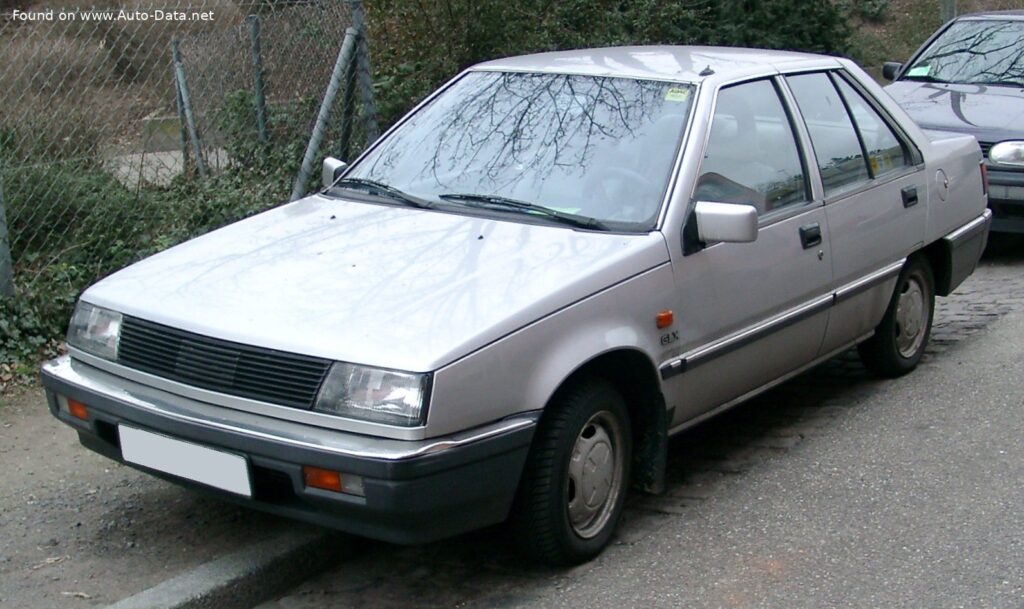
Introduction to the Mitsubishi Lancer III 1.5 (75 Hp)
The Mitsubishi Lancer III, also known by its chassis code C10 series, represented the third generation of Mitsubishi’s highly successful compact car line. Launched in 1983 and produced through 1988, this iteration marked a significant evolution in design, engineering, and market positioning for the Lancer nameplate. The specific variant under review, the Mitsubishi Lancer III 1.5 (75 Hp), was a cornerstone of the lineup, particularly in markets prioritizing fuel economy and robust reliability.
While the Lancer name has a storied history globally, with various generations and derivatives sold under different badges (such as the Dodge/Plymouth Colt in North America), the Lancer III maintained its identity as a straightforward, dependable, and economical compact sedan in its primary markets, including Japan, Europe, and parts of Asia. This generation moved towards a more aerodynamic and modern aesthetic compared to its predecessors, embracing the design trends of the mid-1980s. Its powertrain architecture, centered around an internal combustion engine driving the front wheels, solidified its position as a practical choice for everyday transportation.
Engine and Performance: The Heart of the Mitsubishi Lancer III 1.5 (75 Hp)
Powering the Mitsubishi Lancer III 1.5 (75 Hp) was the venerable Mitsubishi 4G15 engine, a 1.5-liter (1468 cm³) inline four-cylinder unit. This engine was a testament to Mitsubishi’s engineering philosophy of creating durable and efficient powertrains for its compact vehicles. Featuring a Single Overhead Camshaft (SOHC) valvetrain with two valves per cylinder, the 4G15 was a naturally aspirated engine, drawing its fuel mixture through a carburetor system – a common and cost-effective technology for the era.
The engine produced a modest but entirely adequate 75 horsepower at 5500 rpm, coupled with 83.34 lb.-ft. of torque at 4000 rpm. While these figures might seem modest by today’s standards, they were competitive for a compact sedan in the mid-1980s, especially one focused on economy and reliability. The power delivery was smooth and predictable, characteristic of a well-tuned carbureted engine. Power per liter stood at 51.1 Hp/l, indicating a balanced approach to output and longevity.
Mated to a 5-speed manual transmission, the front-wheel-drive Lancer III 1.5 offered an engaging and direct driving experience. This powertrain combination allowed the vehicle to accelerate from 0 to 60 mph in a respectable 12.1 seconds, with a top speed of 99.42 mph (160 km/h). These performance figures made the Lancer III a capable performer in urban environments and on highways, without sacrificing its primary objective of fuel efficiency.
Fuel economy was a significant selling point for the Lancer III 1.5. It achieved an estimated 27 US mpg in urban driving conditions and an impressive 42.8 US mpg on the extra-urban cycle. With a 45-liter (11.89 US gallon) fuel tank, this translated to a decent cruising range, making it an economical choice for commuters and families alike. The engine’s robust construction, with a 9.5:1 compression ratio, ensured it could handle various grades of gasoline readily available during its production run.
Design and Features: Practicality Meets 1980s Aerodynamics
The third-generation Lancer represented a more mature and streamlined design compared to its predecessors. The Mitsubishi Lancer III 1.5 (75 Hp) adopted a conventional four-door sedan body type, accommodating five occupants comfortably. Its dimensions—162.4 inches in length, 64.37 inches in width, and 53.54 inches in height—placed it firmly within the compact car segment, offering a good balance of interior space and exterior maneuverability.
A notable design improvement for this generation was its enhanced aerodynamics, reflected in a drag coefficient (Cd) of 0.38. While not exceptionally low by modern standards, this was a respectable figure for a compact sedan of the mid-1980s and contributed positively to both fuel economy and reduced wind noise at higher speeds. The styling was clean and functional, characterized by somewhat boxy yet softened lines, large glass areas for good visibility, and a straightforward grille and headlight treatment typical of Japanese cars of the era.
Inside, the Lancer III prioritized practicality and durability. The five-seat cabin offered adequate space for its class, with comfortable seating and a logical layout of controls. While luxury features were minimal in this base 1.5-liter variant, standard amenities would have included essential instrumentation, a heater, and perhaps a basic radio. The focus was on providing a reliable and ergonomic environment for daily driving, with materials chosen for their hard-wearing qualities.
Underneath its skin, the Lancer III featured a sophisticated suspension setup for its class. The front suspension utilized an independent McPherson strut design with coil springs and an anti-roll bar, providing good handling and ride comfort. The rear suspension was also independent, featuring coil springs, a transverse stabilizer, and trailing arms. This independent rear suspension was a relatively advanced feature for a compact sedan in the 1980s, contributing to improved road holding and a more compliant ride compared to simpler beam axle designs found in some competitors. Braking duties were handled by front disc brakes and rear drum brakes, a common and effective combination for vehicles of this weight and performance level. Steering was a conventional and reliable rack and pinion system, offering direct feel and ease of use.
Technical Specifications
| Category | Specification |
|---|---|
| Brand | Mitsubishi |
| Model | Lancer |
| Generation | Lancer III |
| Type (Engine) | 1.5 (75 Hp) |
| Start of Production | 1983 year |
| End of Production | 1988 year |
| Powertrain Architecture | Internal Combustion engine |
| Body Type | Sedan |
| Seats | 5 |
| Doors | 4 |
| Fuel Consumption (Urban) | 27 US mpg (8.7 l/100 km) |
| Fuel Consumption (Extra Urban) | 42.8 US mpg (5.5 l/100 km) |
| Fuel Type | Petrol (Gasoline) |
| Acceleration 0 – 60 mph | 12.1 sec |
| Maximum Speed | 99.42 mph (160 km/h) |
| Power | 75 Hp @ 5500 rpm |
| Torque | 83.34 lb.-ft. @ 4000 rpm (113 Nm @ 4000 rpm) |
| Engine Layout | Front, Longitudinal |
| Engine Model/Code | 4G15 |
| Engine Displacement | 1468 cm³ (1.5 l / 89.58 cu. in.) |
| Number of Cylinders | 4 |
| Engine Configuration | Inline |
| Cylinder Bore | 2.97 in. (75.5 mm) |
| Piston Stroke | 3.23 in. (82 mm) |
| Compression Ratio | 9.5:1 |
| Valves per Cylinder | 2 |
| Fuel Injection System | Carburetor |
| Engine Aspiration | Naturally Aspirated |
| Valvetrain | SOHC |
| Engine Oil Capacity | 3.7 US qt (3.5 l) |
| Coolant Capacity | 5.28 US qt (5 l) |
| Curb Weight | 1895.98 lbs. (860 kg) |
| Max. Weight | 2954.19 lbs. (1340 kg) |
| Max Load | 1058.22 lbs. (480 kg) |
| Fuel Tank Capacity | 11.89 US gal (45 l) |
| Towing Capacity with Brakes (12%) | 2204.62 lbs. (1000 kg) |
| Towing Capacity without Brakes | 881.85 lbs. (400 kg) |
| Length | 162.4 in. (4125 mm) |
| Width | 64.37 in. (1635 mm) |
| Height | 53.54 in. (1360 mm) |
| Wheelbase | 93.7 in. (2380 mm) |
| Front Track | 54.72 in. (1390 mm) |
| Rear Track | 52.76 in. (1340 mm) |
| Drag Coefficient (Cd) | 0.38 |
| Drivetrain Architecture | Front-wheel drive, Internal Combustion engine |
| Drive Wheel | Front wheel drive |
| Gearbox Type | 5 gears, manual transmission |
| Front Suspension | Independent, McPherson with coil spring and anti-roll bar |
| Rear Suspension | Independent coil spring, Transverse stabilizer, Trailing arm |
| Front Brakes | Disc |
| Rear Brakes | Drum |
| Steering Type | Steering rack and pinion |
| Wheel Rims Size | 5J x 13 |
Legacy and Market Impact of the Lancer III
The Mitsubishi Lancer III, and specifically the Mitsubishi Lancer III 1.5 (75 Hp) variant, played a crucial role in solidifying Mitsubishi’s reputation as a manufacturer of reliable, economical, and practical compact cars on a global scale. While the Lancer nameplate had a somewhat fragmented presence in the North American market during this period, often rebadged as models like the Dodge Colt or Plymouth Colt, the Lancer III was a strong performer in its primary markets of Asia, Europe, and Australia.
In these regions, it competed fiercely with established rivals such as the Honda Civic, Toyota Corolla, Nissan Sentra (known as Sunny in some markets), and various European compacts like the Opel Kadett/Vauxhall Astra and Ford Escort. The Lancer III’s key differentiators were its robust build quality, excellent fuel economy, and a reputation for enduring reliability, which made it a popular choice for budget-conscious buyers and fleets.
Its relatively advanced independent rear suspension, a feature not always found in all its competitors in the compact class at the time, contributed to a more comfortable ride and better handling dynamics, setting it apart. The simple yet effective 4G15 engine, despite its modest power output, was celebrated for its longevity and ease of maintenance, further enhancing the car’s appeal as a dependable daily driver.
The Lancer III’s legacy is not just in its sales figures but also in its contribution to the evolution of the Lancer nameplate. It helped pave the way for future generations, including the high-performance Evolution models that would later gain legendary status. The third generation demonstrated Mitsubishi’s capability to produce a well-engineered, globally competitive compact car that could meet the diverse needs of various international markets. Today, the Lancer III is remembered as a workhorse of its era, a car that exemplified the Japanese automotive industry’s commitment to quality, efficiency, and accessibility in the 1980s.