The Rover 400 (XW) 420 GSI/SLI/GTI/Vite: A British-Japanese Compact Sedan
The Rover 400 (XW) series, produced from 1993 to 1995, represented a crucial period for the British marque Rover, showcasing its engineering collaboration with Japanese automaker Honda. Specifically, the 420 GSI/SLI/GTI/Vite variants, powered by a 136 horsepower (HP) 2.0-liter engine, were positioned as the more performance-oriented and well-equipped models within the compact family car segment. This generation, often referred to as the XW, was essentially a rebadged and restyled version of the Honda Concerto sedan, tailored for the European market with distinct British styling cues and a more traditional interior ambiance.
While never officially sold in the United States, the Rover 400 (XW) played a significant role in the fiercely competitive European C-segment. It offered a compelling blend of Japanese reliability and engineering prowess, courtesy of its Honda underpinnings, combined with the classic “Rover feel” characterized by plush interiors and a more refined, understated exterior design. These 420 models, ranging from the well-appointed GSI and SLI to the sportier GTI and Vite, aimed to capture buyers seeking a practical yet engaging sedan with a touch of executive class.
Engine and Performance of the Rover 400 (XW) 420 GSI/SLI/GTI/Vite
At the heart of the Rover 400 (XW) 420 models was the robust and well-regarded M16 engine, a 2.0-liter (1994 cm³ or 121.68 cubic inches) inline four-cylinder unit. This powerplant was a testament to Rover’s engineering capabilities, particularly in its naturally aspirated configuration. Featuring a Double Overhead Camshaft (DOHC) valvetrain with four valves per cylinder, the engine was designed for efficient breathing and a broad powerband.
The M16 engine delivered a respectable 136 HP at 6000 revolutions per minute (rpm), providing ample power for its class. More importantly for everyday driving, it produced a strong 185 Newton-meters (136.45 lb.-ft.) of torque at a relatively low 2500 rpm. This characteristic ensured responsive acceleration from low speeds, making it well-suited for both city driving and highway cruising. The engine utilized a multi-port manifold injection system for precise fuel delivery, contributing to both performance and fuel efficiency.
Power was channeled to the front wheels via a smooth-shifting 5-speed manual transmission, a common and reliable setup for compact cars of this era. This drivetrain architecture, coupled with the engine’s transverse front-engine layout, provided predictable handling and maximized interior space. The Rover 400 (XW) 420 could achieve a top speed of 124.27 miles per hour (200 km/h), placing it competitively against other performance-oriented compact sedans. Its weight-to-power ratio stood at 8.6 kg/Hp, or 116.7 Hp per tonne, indicating a lively performance for a family sedan.
Fuel economy for the 420 GSI/SLI/GTI/Vite was rated at a combined 29.4 US miles per gallon (8 liters per 100 km), which was a respectable figure for a 2.0-liter gasoline engine in the early 1990s. The engine’s compression ratio of 10:1 further optimized its efficiency and power output, requiring standard petrol (gasoline) fuel.
Design and Features
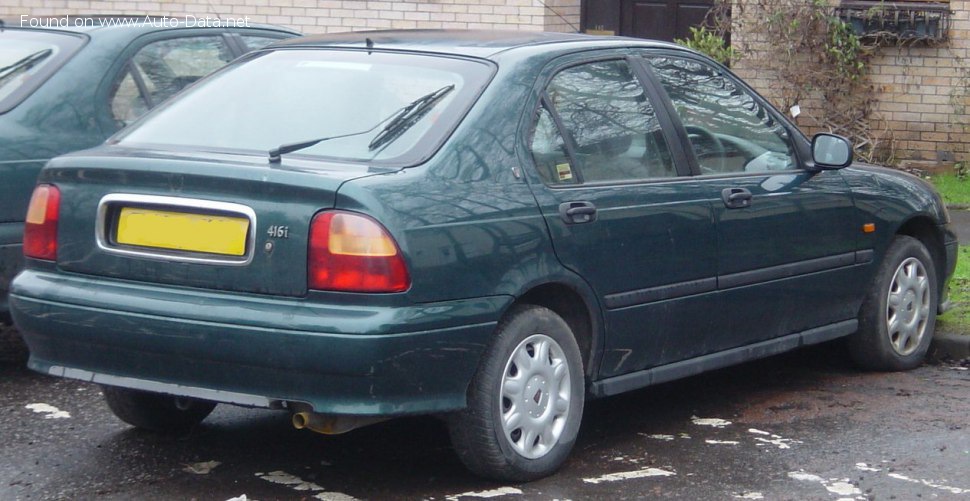
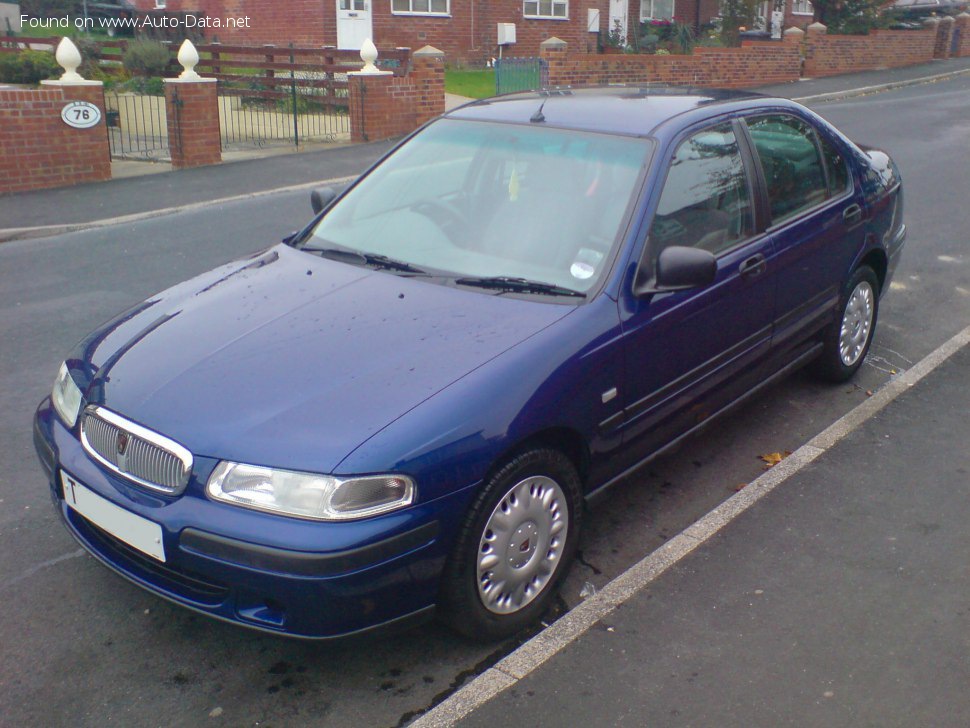
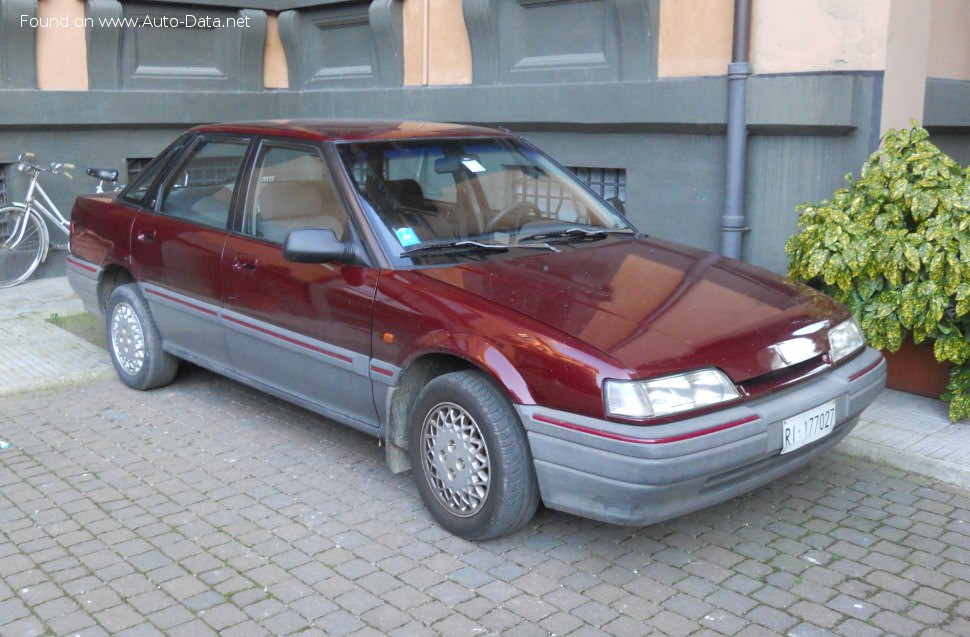
The Rover 400 (XW) was offered exclusively as a 4-door sedan, providing seating for five occupants. Its design represented a careful balance between the contemporary Japanese styling of its Honda Concerto donor car and Rover’s traditional British aesthetic. While the underlying structure was Honda, Rover designers implemented unique front and rear fascias, distinctive grilles, and specific interior trim to give the 400 a more upscale and distinctly European character. The GSI, SLI, GTI, and Vite trims typically featured varying levels of interior refinement, alloy wheel designs, and exterior accents, with the GTI and Vite often boasting a sportier stance.
Measuring 172.05 inches (4370 mm) in length, 66.14 inches (1680 mm) in width, and 55.12 inches (1400 mm) in height, the Rover 400 (XW) was a compact car by modern standards but offered a generous interior for its class at the time. Its 100.39-inch (2550 mm) wheelbase contributed to a stable ride and adequate legroom for rear passengers. The trunk offered a practical 14.48 cubic feet (410 liters) of cargo space, suitable for family errands or weekend trips.
In terms of features and safety for its era, the Rover 400 (XW) was relatively well-equipped. It came standard with hydraulic power steering, utilizing a precise steering rack and pinion system for a connected driving feel. Braking was handled by ventilated discs at the front and solid discs at the rear, providing confident stopping power. An Anti-lock Braking System (ABS) was available, enhancing safety during emergency braking maneuvers. The suspension setup featured a wishbone design at the front and coil springs at the rear, offering a comfortable yet composed ride characteristic of its segment.
The tires, sized 175/70 R14 H, provided a good balance of grip and comfort. With a kerb weight of 2568.39 lbs (1165 kg), the 400 (XW) was a relatively light vehicle, which further contributed to its agile handling and performance. The 14.53 US gallon (55-liter) fuel tank provided a decent cruising range.
Technical Specifications
| Category | Specification |
|---|---|
| Brand | Rover |
| Model | 400 |
| Generation | 400 (XW) |
| Type (Engine) | 420 GSI/SLI/GTI/Vite (136 Hp) |
| Start of Production | 1993 year |
| End of Production | 1995 year |
| Powertrain Architecture | Internal Combustion engine |
| Body type | Sedan |
| Seats | 5 |
| Doors | 4 |
| Performance Specs | |
| Fuel consumption (combined) | 8 l/100 km (29.4 US mpg, 35.3 UK mpg, 12.5 km/l) |
| Fuel Type | Petrol (Gasoline) |
| Maximum speed | 200 km/h (124.27 mph) |
| Weight-to-power ratio | 8.6 kg/Hp, 116.7 Hp/tonne |
| Weight-to-torque ratio | 6.3 kg/Nm, 158.8 Nm/tonne |
| Engine Specs | |
| Power | 136 Hp @ 6000 rpm |
| Power per liter | 68.2 Hp/l |
| Torque | 185 Nm @ 2500 rpm (136.45 lb.-ft. @ 2500 rpm) |
| Engine layout | Front, Transverse |
| Engine Model/Code | M16 |
| Engine displacement | 1994 cm³ (2.0 l, 121.68 cu. in.) |
| Number of cylinders | 4 |
| Engine configuration | Inline |
| Cylinder Bore | 84.45 mm (3.32 in.) |
| Piston Stroke | 89 mm (3.5 in.) |
| Compression ratio | 10:1 |
| Number of valves per cylinder | 4 |
| Fuel injection system | Multi-port manifold injection |
| Engine aspiration | Naturally aspirated engine |
| Valvetrain | DOHC |
| Engine oil capacity | 4.5 l (4.76 US qt | 3.96 UK qt) |
| Engine oil specification | Not specified |
| Coolant | 7 l (7.4 US qt | 6.16 UK qt) |
| Space, Volume and Weights | |
| Kerb Weight | 1165 kg (2568.39 lbs) |
| Trunk (boot) space – minimum | 410 l (14.48 cu. ft.) |
| Fuel tank capacity | 55 l (14.53 US gal | 12.1 UK gal) |
| Dimensions | |
| Length | 4370 mm (172.05 in.) |
| Width | 1680 mm (66.14 in.) |
| Height | 1400 mm (55.12 in.) |
| Wheelbase | 2550 mm (100.39 in.) |
| Front track | 1475 mm (58.07 in.) |
| Rear (Back) track | 1470 mm (57.87 in.) |
| Drivetrain, Brakes and Suspension Specs | |
| Drivetrain Architecture | The Internal combustion engine (ICE) drives the front wheels of the vehicle. |
| Drive wheel | Front wheel drive |
| Number of gears and type of gearbox | 5 gears, manual transmission |
| Front suspension | Wishbone |
| Rear suspension | Coil spring |
| Front brakes | Ventilated discs |
| Rear brakes | Disc |
| Assisting systems | ABS (Anti-lock braking system) |
| Steering type | Steering rack and pinion |
| Power steering | Hydraulic Steering |
| Tires size | 175/70 R14 H |
Legacy and Market Impact of the Rover 400 (XW)
The Rover 400 (XW) generation, and particularly the 420 variants, held a significant position in the European automotive landscape during its production run. It was a product of the strategic alliance between Rover Group and Honda, an era that defined much of Rover’s product line in the late 1980s and early 1990s. This partnership provided Rover with access to modern, reliable platforms and powertrains, crucial for competing against established European rivals.
In its primary markets, such as the United Kingdom and other parts of Europe, the Rover 400 (XW) competed with a broad array of compact and mid-size sedans. Its main competitors included the Ford Escort and later the Mondeo, the Vauxhall Astra and Cavalier (Opel Kadett and Vectra in mainland Europe), the Volkswagen Jetta, and even its platform-mate, the Honda Civic and Concerto. What set the Rover 400 apart was its attempt to blend the best of both worlds: the perceived reliability and mechanical sophistication of a Honda, combined with a distinctly British interior ambience and exterior styling that exuded a more traditional, almost executive feel compared to its often more utilitarian rivals.
The 420 GSI/SLI/GTI/Vite models, with their more powerful 2.0-liter engine, were particularly aimed at buyers who desired a bit more performance without sacrificing practicality or refinement. The “GTI” and “Vite” badges, in particular, suggested a sportier proposition, appealing to those who might have otherwise considered a hot hatch but preferred the practicality of a sedan. These variants offered a more engaging driving experience than the smaller-engined models in the range, making them a popular choice for company car drivers and private buyers alike.
The legacy of the Rover 400 (XW) is multifaceted. On one hand, it represented a high point in terms of product quality and reliability for Rover, largely due to the Honda engineering input. It was generally well-regarded for its comfortable ride, refined engines, and pleasant interiors. On the other hand, its close association with Honda meant that Rover sometimes struggled to establish a truly unique identity, with critics occasionally pointing to its derivative nature. Nevertheless, the 400 (XW) was a commercial success for Rover, helping to maintain its market share in a highly competitive segment.
Upon its discontinuation in 1995, the Rover 400 (XW) was replaced by the R3 generation, which was a more substantial departure from its Honda roots, though still sharing some components. The XW generation remains a testament to an era of Anglo-Japanese automotive collaboration, offering a compelling package of performance, practicality, and a touch of British charm that resonated with European consumers.