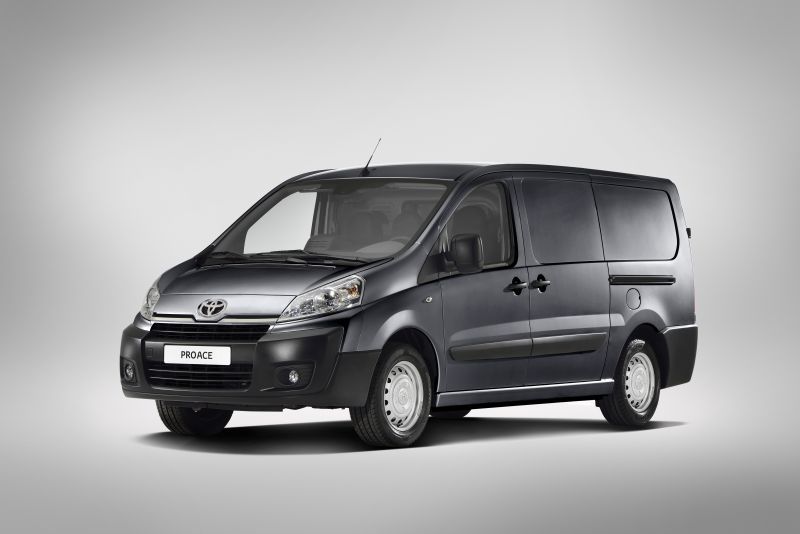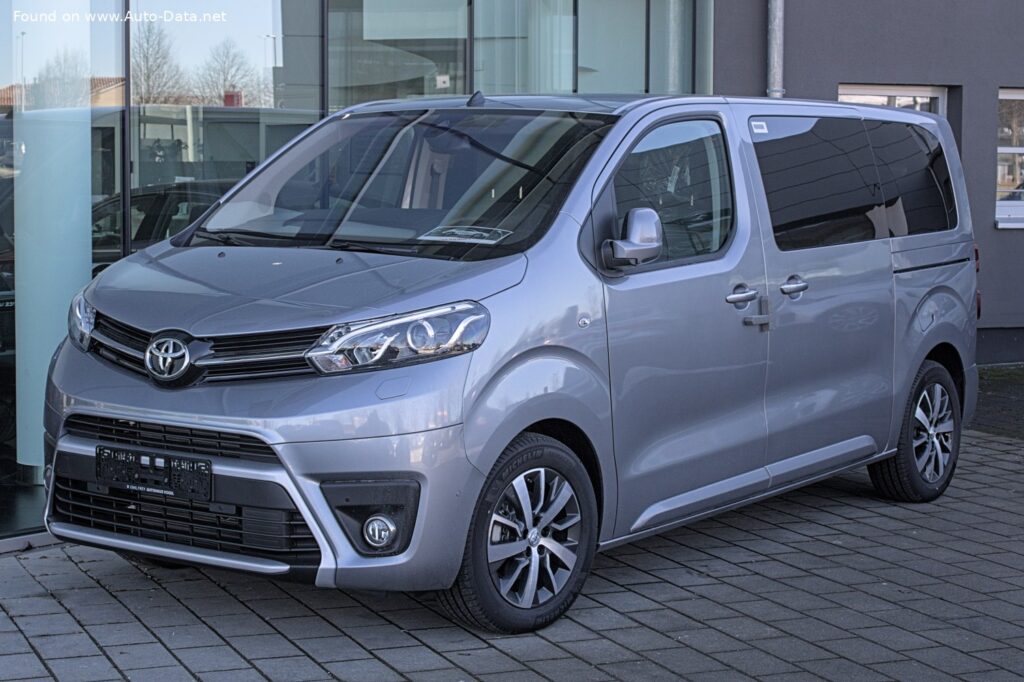
Toyota Proace Verso II SWB 2.0 D-4D (144 Hp) Automatic: A Versatile European People Mover
The Toyota Proace Verso II SWB 2.0 D-4D (144 Hp) Automatic represents the second generation of Toyota’s highly adaptable minivan, a product of a successful collaboration with PSA Group (now Stellantis). Launched in April 2020, this specific variant, configured with a short wheelbase (SWB) and powered by a 2.0-liter D-4D diesel engine delivering 144 horsepower and an efficient automatic transmission, is a cornerstone of Toyota’s commercial and passenger vehicle offerings in European and other international markets. Designed primarily for the demanding European market, where diesel powertrains and versatile passenger transport solutions are highly valued, the Proace Verso II SWB serves a broad spectrum of users, from large families to shuttle services and corporate fleets. It embodies Toyota’s commitment to reliability, efficiency, and practicality in a segment not typically served by the brand in the North American market.
Engine and Performance of the Toyota Proace Verso II SWB 2.0 D-4D (144 Hp) Automatic
Under the hood of the Toyota Proace Verso II SWB 2.0 D-4D (144 Hp) Automatic lies a robust 2.0-liter (1997 cm3 or 121.86 cu. in.) inline-four diesel engine, designated by the code AH01. This sophisticated powertrain is equipped with a common rail fuel injection system, a turbocharger, and an intercooler, optimizing both power output and fuel efficiency. It delivers a respectable 144 horsepower at 4000 rpm, translating to a power-per-liter ratio of 72.1 Hp/l, showcasing its efficient design. More significantly for a vehicle of this type, it produces a substantial 272.9 lb.-ft. (370 Nm) of torque, readily available at a low 2000 rpm. This ample torque ensures strong pulling power, crucial for carrying multiple passengers or heavy cargo, and facilitates confident overtaking maneuvers on highways.
Power is channeled to the front wheels via a smooth and responsive 8-speed automatic transmission, a modern choice that balances driving comfort with optimal fuel economy. The drivetrain architecture is front-wheel drive, which is typical for this segment, offering good traction and packaging efficiency. The vehicle’s weight-to-power ratio stands at 10.7 kg/Hp (93.8 Hp/tonne), and its weight-to-torque ratio is 4.2 kg/Nm (240.9 Nm/tonne), indicating a well-balanced power delivery for its intended purpose.
In terms of environmental performance and fuel economy, the Proace Verso II SWB 2.0 D-4D (144 Hp) Automatic is highly competitive. It adheres to the strict Euro 6d-ISC-FCM emission standard, reflecting its modern diesel particulate filter and Start & Stop system designed to reduce emissions. Fuel consumption figures are impressive for a vehicle of its size: an urban economy of 42.8 US mpg (5.5 l/100 km), an extra-urban economy of 49 US mpg (4.8 l/100 km), and a combined economy ranging from 46.1 to 47 US mpg (5.0-5.1 l/100 km). CO2 emissions are kept low at 133-134 g/km, underscoring its efficiency and lower environmental impact compared to many gasoline alternatives. The 18.23 US gallon (69 liter) fuel tank provides a considerable range, making it suitable for long-distance travel without frequent stops for refueling.
Design and Features
The Toyota Proace Verso II SWB 2.0 D-4D (144 Hp) Automatic is configured as a practical and versatile minivan with five doors, designed to accommodate 8 to 9 passengers comfortably. Despite its “Short Wheelbase” designation within the Proace Verso lineup, its dimensions are substantial, measuring 195.24 inches (4959 mm) in length, 75.59 inches (1920 mm) in width, and 74.41 inches (1890 mm) in height. The generous 128.94-inch (3275 mm) wheelbase contributes significantly to interior space and ride comfort, while front and rear tracks of 64.06 inches (1627 mm) and 62.99 inches (1600 mm) respectively provide a stable stance.
The exterior design of the Proace Verso is functional and clean, typical of a modern European minivan, focusing on maximizing interior volume and ease of access. The five-door configuration typically includes two conventional front doors, two sliding rear doors for excellent passenger access in tight spaces, and a large rear liftgate for cargo loading. The interior is highly adaptable, with a minimum trunk space of 17.9 cu. ft. (507 liters) which can expand dramatically to a maximum of 140.13 cu. ft. (3968 liters) by folding or removing rear seats, allowing for immense cargo-carrying capabilities.
For a 2020 model year vehicle, the Proace Verso II SWB comes equipped with modern features geared towards comfort, convenience, and safety. Standard safety equipment includes ABS (Anti-lock Braking System), and as a contemporary Toyota, it would likely feature a suite of advanced driver-assistance systems (ADAS) though not explicitly detailed in the raw data. The suspension system comprises an independent McPherson type at the front and a Wishbone setup at the rear, engineered to provide a comfortable ride quality even when fully loaded. Braking is handled by disc brakes on both the front and rear axles, ensuring confident stopping power. Steering is managed by an electric power-assisted rack and pinion system, offering ease of maneuverability in urban environments and stable handling at higher speeds. The vehicle rides on 225/55 R17 tires mounted on 17-inch wheel rims, providing a good balance of grip and ride comfort.
Technical Specifications
| Category | Specification |
|---|---|
| General Information | |
| Brand | Toyota |
| Model | Proace Verso |
| Generation | Proace Verso II SWB |
| Engine Type | 2.0 D-4D (144 Hp) Automatic |
| Start of Production | April, 2020 |
| Powertrain Architecture | Internal Combustion Engine |
| Body Type | Minivan |
| Seats | 8-9 |
| Doors | 5 |
| Performance Specs | |
| Fuel Consumption (Urban, NEDC) | 5.5 l/100 km (42.8 US mpg) |
| Fuel Consumption (Extra Urban, NEDC) | 4.8 l/100 km (49 US mpg) |
| Fuel Consumption (Combined, NEDC) | 5-5.1 l/100 km (46.1 – 47 US mpg) |
| CO2 Emissions (NEDC) | 133-134 g/km |
| Fuel Type | Diesel |
| Emission Standard | Euro 6d-ISC-FCM |
| Weight-to-Power Ratio | 10.7 kg/Hp (93.8 Hp/tonne) |
| Weight-to-Torque Ratio | 4.2 kg/Nm (240.9 Nm/tonne) |
| Engine Specs | |
| Power | 144 Hp @ 4000 rpm |
| Power per Liter | 72.1 Hp/l |
| Torque | 370 Nm @ 2000 rpm (272.9 lb.-ft. @ 2000 rpm) |
| Engine Layout | Front, Transverse |
| Engine Model/Code | AH01 |
| Engine Displacement | 1997 cm3 (121.86 cu. in.) |
| Number of Cylinders | 4 |
| Engine Configuration | Inline |
| Number of Valves per Cylinder | 4 |
| Fuel Injection System | Diesel Commonrail |
| Engine Aspiration | Turbocharger, Intercooler |
| Valvetrain | OHC |
| Engine Oil Capacity | 6.1 l (6.45 US qt) |
| Engine Systems | Start & Stop System, Particulate Filter |
| Space, Volume, and Weights | |
| Kerb Weight | 1536 kg (3386.3 lbs.) |
| Max. Weight (GVWR) | 2675 kg (5897.37 lbs.) |
| Max Load | 1139 kg (2511.07 lbs.) |
| Trunk (Boot) Space – Minimum | 507 l (17.9 cu. ft.) |
| Trunk (Boot) Space – Maximum | 3968 l (140.13 cu. ft.) |
| Fuel Tank Capacity | 69 l (18.23 US gal) |
| Permitted Trailer Load with Brakes (12%) | 1900 kg (4188.78 lbs.) |
| Permitted Trailer Load without Brakes | 750 kg (1653.47 lbs.) |
| Permitted Towbar Download | 84 kg (185.19 lbs.) |
| Dimensions | |
| Length | 4959 mm (195.24 in.) |
| Width | 1920 mm (75.59 in.) |
| Height | 1890 mm (74.41 in.) |
| Wheelbase | 3275 mm (128.94 in.) |
| Front Track | 1627 mm (64.06 in.) |
| Rear (Back) Track | 1600 mm (62.99 in.) |
| Drivetrain, Brakes, and Suspension | |
| Drivetrain Architecture | Internal Combustion engine drives the front wheels |
| Drive Wheel | Front Wheel Drive |
| Number of Gears and Type of Gearbox | 8 gears, automatic transmission |
| Front Suspension | Independent type McPherson |
| Rear Suspension | Wishbone |
| Front Brakes | Disc |
| Rear Brakes | Disc |
| Assisting Systems | ABS (Anti-lock Braking System) |
| Steering Type | Steering rack and pinion |
| Power Steering | Electric Steering |
| Tires Size | 225/55 R17 |
| Wheel Rims Size | 17 inches |
Legacy and Market Impact of the Toyota Proace Verso
The Toyota Proace Verso II SWB 2.0 D-4D (144 Hp) Automatic has carved out a significant niche in the highly competitive European minivan and light commercial vehicle segment. As part of a joint venture, it benefits from shared platforms and powertrains with its siblings, the Peugeot Traveller and Citroën SpaceTourer, allowing Toyota to offer a strong contender in a category where it might otherwise have a limited presence. This collaboration leverages economies of scale and expertise in developing robust, efficient, and versatile vehicles.
In its primary markets, the Proace Verso is recognized for its blend of Toyota’s renowned reliability and the practical design inherent to its platform. It competes directly with established players such as the Volkswagen Multivan, Mercedes-Benz V-Class, Ford Transit Custom, and Renault Trafic Passenger. What sets the Proace Verso apart is its emphasis on fuel efficiency, low running costs, and the strong reputation of the Toyota brand for durability and customer satisfaction. The 2.0-liter D-4D engine, with its impressive torque and excellent fuel economy figures, makes it a particularly attractive option for businesses requiring dependable shuttle services, taxi operations, or executive transport, as well as for large families seeking a spacious and economical daily driver.
The Proace Verso’s modular interior, capable of seating 8-9 passengers or providing vast cargo space, highlights its versatility. This adaptability contributes significantly to its market impact, as it can seamlessly transition between different roles, from a comfortable family tourer to a workhorse for professional use. Its modern diesel powertrain, coupled with an advanced automatic transmission and adherence to strict emission standards like Euro 6d-ISC-FCM, ensures its relevance in an era of increasing environmental scrutiny. The robust towing capacity, allowing for up to 4188.78 lbs. (1900 kg) with brakes, further enhances its utility for those needing to haul trailers or caravans.
While not available in the United States, where large minivans are typically gasoline-powered and often cater to different aesthetic and feature preferences, the Toyota Proace Verso II SWB 2.0 D-4D (144 Hp) Automatic stands as a testament to efficient, practical, and reliable people-moving solutions in markets that prioritize diesel economy and functional design. Its legacy is built on providing a dependable, cost-effective, and comfortable transport solution that upholds Toyota’s global reputation for quality and engineering excellence in its segment.