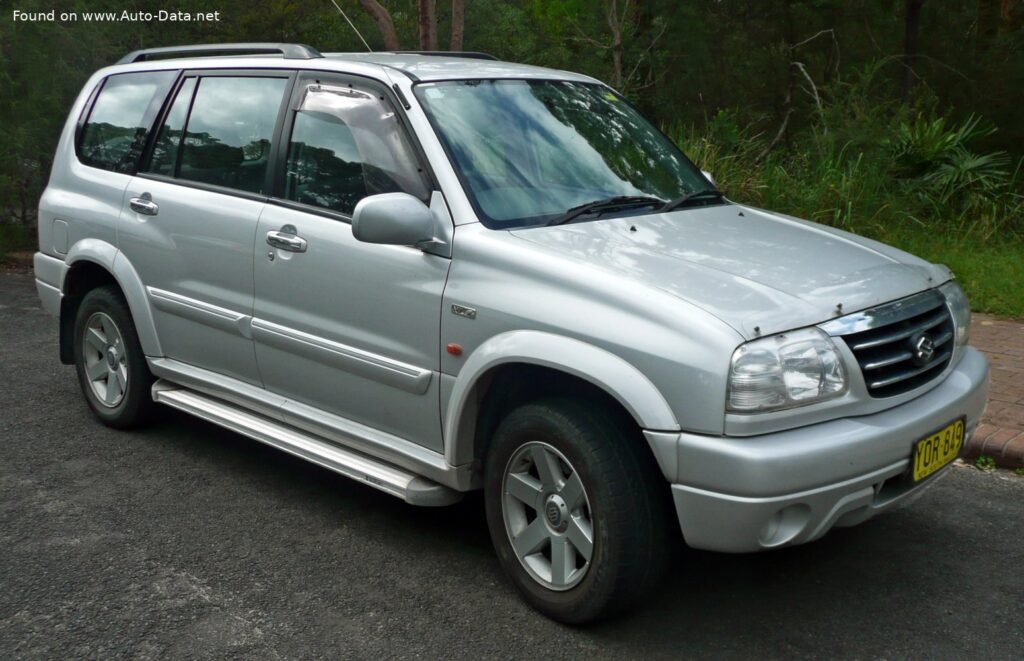
Introduction: The Suzuki Grand Vitara XL-7 (HT)
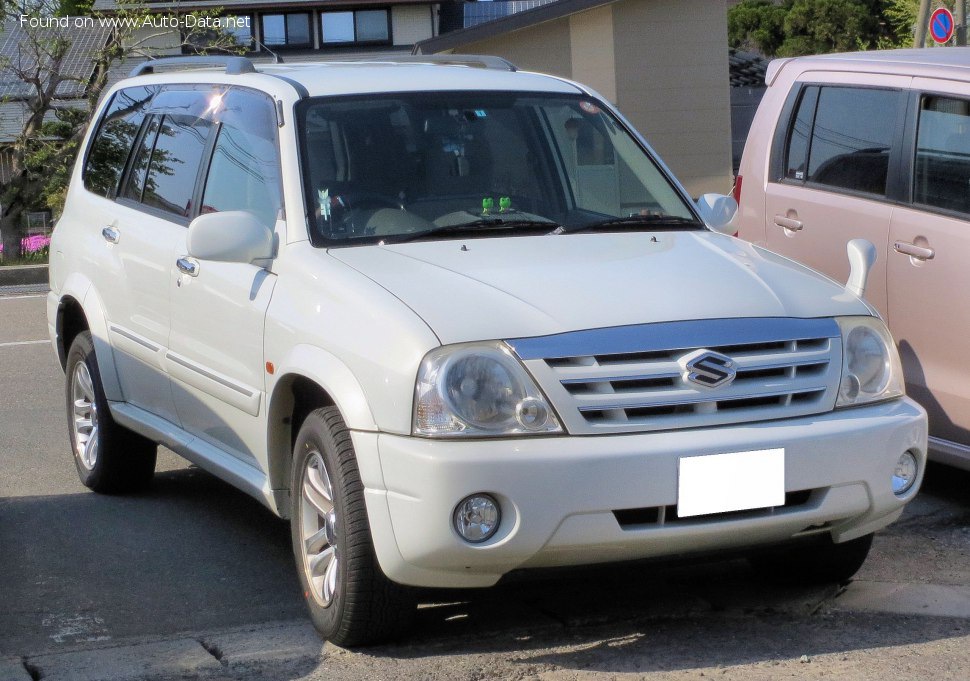
The Suzuki Grand Vitara XL-7 (HT) represents a significant chapter in Suzuki’s foray into the global sport utility vehicle (SUV) market. Launched in 1998 and produced through 2005, this model was an extended wheelbase variant of the popular Grand Vitara, designed to offer more interior space and enhanced practicality for families and adventurers alike. Positioned as a mid-size SUV, the XL-7 (HT) aimed to bridge the gap between compact SUVs and larger, more traditional full-size models, providing a compelling blend of maneuverability, off-road capability (in its typical configurations, though this specific variant highlights RWD), and comfort.
The “XL-7” designation itself often implied an “extra long” wheelbase and the potential for seven-passenger seating, though the specific configuration detailed here focuses on a robust five-seat layout within its more expansive dimensions. This particular iteration, equipped with a 2.7-liter V6 engine producing 173 horsepower, was designed for markets seeking a versatile and durable vehicle capable of handling both urban commuting and light-duty off-road excursions. It carved out a niche for Suzuki, emphasizing value, reliability, and a more substantial presence compared to its smaller siblings.
Engine and Performance of the Suzuki Grand Vitara XL-7 (HT)
Powertrain Overview
At the heart of the Suzuki Grand Vitara XL-7 (HT) 2.7 i V6 was a capable and reliable H27A engine. This 2.7-liter (2736 cm3 or 166.96 cu. in.) V6 gasoline engine was a naturally aspirated unit, featuring a Double Overhead Camshaft (DOHC) valvetrain with four valves per cylinder, a configuration that allowed for efficient breathing and a broad power band. Fuel was delivered via a multi-port manifold injection system, ensuring precise fuel delivery and combustion.
The engine produced a healthy 173 horsepower at 6000 rpm, which was a competitive figure for a mid-size SUV of its era. Torque peaked at 170.38 lb.-ft. (231 Nm) at a relatively low 3300 rpm, providing ample pulling power for acceleration and light towing. This torque characteristic, combined with the engine’s V6 configuration, offered a smooth and responsive driving experience.
Driving Dynamics and Fuel Economy
Power was sent to the rear wheels through a 5-speed manual transmission, a choice that appealed to drivers who preferred more direct control over their vehicle’s performance. While many Grand Vitara models were known for their robust four-wheel-drive systems, this specific rear-wheel-drive configuration offered a simpler, potentially lighter, and more fuel-efficient option for those primarily driving on paved roads or in milder conditions.
In terms of acceleration, the Suzuki Grand Vitara XL-7 (HT) could sprint from 0 to 60 mph in approximately 10 seconds, with a top speed of 108.74 mph (175 km/h). These figures underscored its capability as a family hauler that could keep up with traffic. Fuel economy, a crucial consideration for any SUV, was rated at a combined 21.8 US mpg (10.8 l/100 km), with urban consumption at 17 US mpg and extra-urban at 25.8 US mpg. These figures reflected a reasonable balance between engine output and efficiency for a vehicle of its size and design during its production run.
Design and Features of the Suzuki Grand Vitara XL-7 (HT)
Exterior and Interior Design
The Suzuki Grand Vitara XL-7 (HT) sported a classic SUV silhouette, characterized by its five-door, body-on-frame construction. With an overall length of 185.04 inches (4700 mm), a width of 70.08 inches (1780 mm), and a height of 68.5 inches (1740 mm), the XL-7 (HT) had a commanding presence. Its extended wheelbase of 110.24 inches (2800 mm) was a key differentiator from the standard Grand Vitara, contributing to enhanced ride comfort and increased interior volume. The front and rear tracks measured 59.06 inches (1500 mm), providing a stable stance.
While the “XL-7” name often implied a 7-seat configuration in many markets, the data for this specific model details a practical 5-seat layout. This allowed for generous passenger space in the first two rows and a substantial cargo area. The trunk space ranged from a minimum of 6.6 cu. ft. (187 liters) with all seats in place, expanding dramatically to a maximum of 72.92 cu. ft. (2065 liters) when the rear seats were folded, making it highly versatile for hauling gear, groceries, or luggage.
Chassis and Safety Features
Underneath its robust exterior, the XL-7 (HT) featured a suspension setup designed for both on-road comfort and light off-road capability. The front suspension utilized a wishbone design, known for its ability to provide precise wheel control, while the rear employed a coil spring setup, offering a good balance of ride quality and load-carrying capacity. Braking performance was handled by ventilated discs at the front and drum brakes at the rear, a common and effective combination for SUVs of this era. An Anti-lock Braking System (ABS) was included as a crucial safety feature, preventing wheel lock-up during hard braking and helping maintain steering control.
Steering was managed by a rack and pinion system with hydraulic power steering, providing a direct and assisted feel to the driver. The vehicle rode on 235/60 R16 H tires mounted on 16-inch wheel rims, offering a good compromise between road grip and comfort. With a curb weight of 3703.77 lbs. (1680 kg) and a maximum permissible weight of 4982.45 lbs. (2260 kg), the XL-7 (HT) demonstrated its substantial build quality and capacity for heavy loads. The 17.44 US gallon (66-liter) fuel tank provided a decent cruising range.
Technical Specifications
| Specification | Value |
|---|---|
| Brand | Suzuki |
| Model | Grand Vitara |
| Generation | Grand Vitara XL-7 (HT) |
| Engine Type | 2.7 i V6 (173 Hp) |
| Production Start | 1998 |
| Production End | 2005 |
| Powertrain Architecture | Internal Combustion Engine |
| Body Type | SUV |
| Seats | 5 |
| Doors | 5 |
| Fuel Consumption (Urban) | 17 US mpg (13.8 l/100 km) |
| Fuel Consumption (Extra Urban) | 25.8 US mpg (9.1 l/100 km) |
| Fuel Consumption (Combined) | 21.8 US mpg (10.8 l/100 km) |
| Fuel Type | Petrol (Gasoline) |
| Acceleration 0-60 mph | 10 seconds |
| Maximum Speed | 108.74 mph (175 km/h) |
| Weight-to-Power Ratio | 9.7 kg/Hp, 103 Hp/tonne |
| Weight-to-Torque Ratio | 7.3 kg/Nm, 137.5 Nm/tonne |
| Power | 173 Hp @ 6000 rpm |
| Power per liter | 63.2 Hp/l |
| Torque | 170.38 lb.-ft. @ 3300 rpm (231 Nm) |
| Engine Layout | Front, Longitudinal |
| Engine Model/Code | H27A |
| Engine Displacement | 2.7 liters (166.96 cu. in. / 2736 cm3) |
| Number of Cylinders | 6 |
| Engine Configuration | V-engine |
| Cylinder Bore | 3.46 in. (88 mm) |
| Piston Stroke | 2.95 in. (75 mm) |
| Compression Ratio | 9.5:1 |
| Valves per Cylinder | 4 |
| Fuel Injection System | Multi-port manifold injection |
| Engine Aspiration | Naturally aspirated |
| Valvetrain | DOHC |
| Engine Oil Capacity | 5.81 US qt (5.5 l) |
| Coolant Capacity | 8.45 US qt (8 l) |
| Kerb Weight | 3703.77 lbs. (1680 kg) |
| Max. Weight | 4982.45 lbs. (2260 kg) |
| Max Load | 1278.68 lbs. (580 kg) |
| Trunk Space (Min) | 6.6 cu. ft. (187 l) |
| Trunk Space (Max) | 72.92 cu. ft. (2065 l) |
| Fuel Tank Capacity | 17.44 US gal (66 l) |
| Length | 185.04 in. (4700 mm) |
| Width | 70.08 in. (1780 mm) |
| Height | 68.5 in. (1740 mm) |
| Wheelbase | 110.24 in. (2800 mm) |
| Front Track | 59.06 in. (1500 mm) |
| Rear Track | 59.06 in. (1500 mm) |
| Drivetrain Architecture | Internal Combustion engine drives rear wheels |
| Drive Wheel | Rear wheel drive |
| Gearbox | 5 gears, manual transmission |
| Front Suspension | Wishbone |
| Rear Suspension | Coil spring |
| Front Brakes | Ventilated discs |
| Rear Brakes | Drum |
| Assisting Systems | ABS (Anti-lock braking system) |
| Steering Type | Steering rack and pinion |
| Power Steering | Hydraulic Steering |
| Tires Size | 235/60 R16 H |
| Wheel Rims Size | 16 inches |
Legacy and Market Impact of the Suzuki Grand Vitara XL-7 (HT)
The Suzuki Grand Vitara XL-7 (HT) played a crucial role in Suzuki’s global strategy, particularly in North America and other markets where larger, more family-oriented SUVs were in high demand. While the Grand Vitara nameplate was already established for its ruggedness and compact size, the XL-7 variant offered a more refined and spacious option, catering to buyers who needed more passenger room and cargo capacity without stepping into a full-size SUV.
Its reputation was built on Suzuki’s long-standing principles of reliability, durability, and affordability. Owners appreciated the XL-7’s robust build quality and its relatively straightforward mechanicals, which often translated into lower maintenance costs compared to some competitors. While this specific data entry highlights a rear-wheel-drive configuration, the Grand Vitara XL-7 was widely available with capable 4×4 systems, further cementing its appeal to those who valued genuine off-road capability in a family-friendly package. The extended wheelbase not only improved ride comfort but also offered a significant advantage in cargo volume, making it a practical choice for road trips and daily errands alike.
In the competitive mid-size SUV segment of the late 1990s and early 2000s, the Suzuki Grand Vitara XL-7 (HT) faced rivals such as the Honda CR-V, Toyota RAV4, Nissan Xterra, Kia Sorento, and Hyundai Santa Fe. While some competitors leaned more towards car-like comfort (like the CR-V and RAV4), the XL-7 maintained a more traditional SUV character with its body-on-frame construction and available low-range gearing (in 4×4 versions), appealing to a segment of the market that still valued ruggedness. Its 2.7-liter V6 engine provided a good balance of power and efficiency, positioning it as a strong value proposition against more expensive V6-equipped alternatives.
The XL-7 (HT) also holds historical significance as it showcased Suzuki’s ability to adapt its successful compact SUV formula to meet evolving market demands for larger, more versatile vehicles. It represented a step towards the modern crossover while retaining some of the authentic SUV attributes that Suzuki was known for. Although the “XL-7” name often implied a seven-seat capacity, this five-seat configuration demonstrated flexibility in market offerings, perhaps targeting regions or buyers for whom maximum passenger count was less critical than overall interior volume and a comfortable ride. The Suzuki Grand Vitara XL-7 (HT) ultimately left a legacy as a dependable, practical, and understated workhorse in the mid-size SUV category, appreciated for its blend of utility and value.