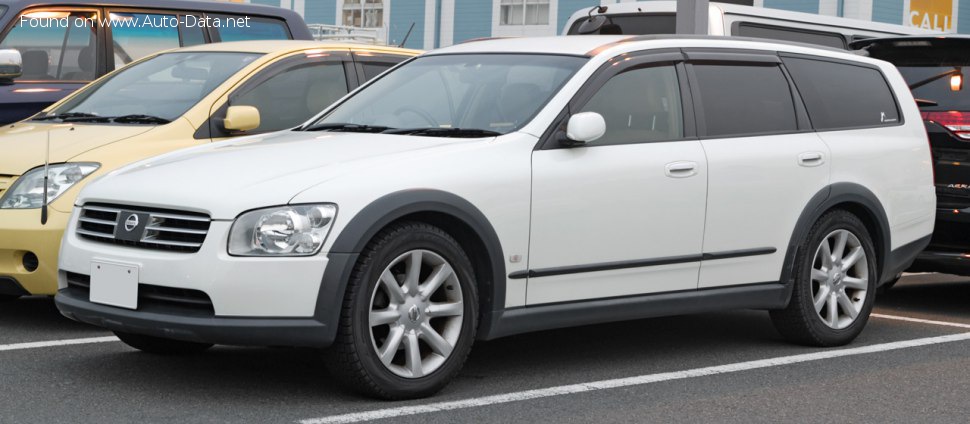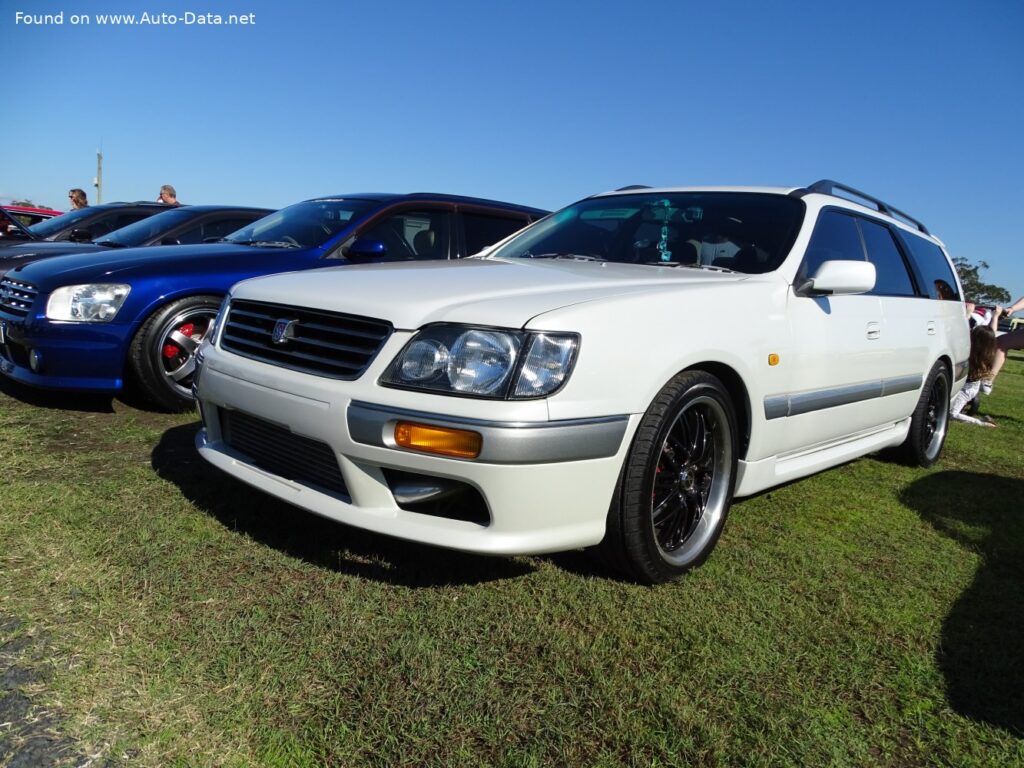
The Nissan Stagea: A Japanese Performance Wagon Icon
The Nissan Stagea, specifically the first-generation WC34 model produced from 1996 to 2001, represents a unique chapter in Nissan’s automotive history. Marketed exclusively in Japan and other right-hand-drive markets, the Stagea was Nissan’s answer to the demand for a practical station wagon that didn’t compromise on performance or style. Often affectionately dubbed the “Skyline wagon” due to its shared platform with the R33/R34 Skyline and its distinctive front-end styling, the Stagea quickly carved out a niche for itself. The Nissan Stagea 2.5 (190 Hp) variant, the focus of this expert analysis, offered a compelling blend of everyday usability and a spirited driving experience, powered by Nissan’s renowned inline-six engine architecture. It stood out as a sophisticated and capable vehicle in its segment, appealing to those who desired both utility and a touch of driving excitement, a combination not commonly found in the wagon market of its era.
Engine and Performance of the Nissan Stagea 2.5 (190 Hp)
Under the hood of the Nissan Stagea 2.5 (190 Hp) lies a naturally aspirated 2.5-liter (2499 cm3 or 152.5 cu. in.) inline-six engine, part of Nissan’s highly respected RB series. This specific powerplant, designated RB25DE, was celebrated for its smooth operation, robust construction, and linear power delivery. Equipped with a Double Overhead Camshaft (DOHC) valvetrain and multi-port manifold injection, the engine produced a healthy 190 horsepower at a peak of 6400 rpm. This impressive power output for a naturally aspirated 2.5-liter engine translated to a specific power output of 76 horsepower per liter, indicating an efficiently designed and tuned engine.
Torque figures further complemented the power, with the engine generating 230 Nm (169.64 lb.-ft.) at 4800 rpm. This broad torque band ensured responsive acceleration and flexibility in various driving conditions, from urban commuting to highway cruising. Power was transmitted to the front wheels via a 5-speed manual transmission, a choice that underscored the vehicle’s driver-focused appeal, offering greater engagement and control compared to automatic alternatives. This specific front-wheel-drive (FWD) configuration, while less common than the all-wheel-drive (AWD) variants of the Stagea, provided a lighter and potentially more agile driving experience.
In terms of raw performance, the Stagea 2.5 (190 Hp) was capable of reaching a maximum speed of 210 km/h (130.49 mph). Its weight-to-power ratio stood at 7.7 kg/Hp (approximately 17 lbs/Hp), contributing to its brisk acceleration for a family wagon. While fuel economy figures, particularly the urban consumption of 15 liters per 100 km (15.7 US mpg), might seem high by today’s standards, they were competitive for a large-engined, performance-oriented wagon of its time. The extra-urban economy improved significantly to 9 liters per 100 km (26.1 US mpg), highlighting its efficiency during longer journeys. The engine’s compression ratio of 10:1 further optimized combustion efficiency and power output, running on standard gasoline (petrol).
Design and Features
The Nissan Stagea’s design was a harmonious blend of practicality and understated sportiness. As a full-size station wagon (often referred to as an “estate” in other markets), it featured a five-door, five-seat configuration, emphasizing its role as a versatile family vehicle. Its dimensions were substantial, with an overall length of 4800 mm (188.98 inches), a width of 1755 mm (69.09 inches), and a height of 1490 mm (58.66 inches). The generous wheelbase of 2720 mm (107.09 inches) contributed significantly to interior space and ride comfort, providing ample legroom for all occupants and a stable platform at speed.
Visually, the Stagea shared design cues with its Skyline brethren, particularly the front fascia, which offered a more aggressive and sporty appearance than typical wagons. This genetic link was a major selling point for enthusiasts. Inside, the cabin was designed with practicality and comfort in mind. While specific luxury features varied by trim, the Stagea generally offered a well-appointed interior for its segment, including standard features like power windows, air conditioning, and a capable audio system. The cargo area was expansive, making it ideal for hauling luggage, sports equipment, or groceries, a testament to its wagon utility.
Safety and driving dynamics were also key considerations. The Stagea 2.5 (190 Hp) was equipped with ventilated disc brakes at the front and disc brakes at the rear, complemented by an Anti-lock Braking System (ABS) for enhanced stopping power and control in emergency situations. The suspension system featured coil springs at both the front and rear, tuned to provide a balance between comfortable ride quality and responsive handling. Steering was managed by a rack and pinion system with hydraulic power steering, offering direct feedback to the driver. The vehicle rode on 205/60 R15 tires, providing a good balance of grip and ride comfort for its class. With a curb weight of 1470 kg (3240.8 lbs), the Stagea was a solid and well-planted vehicle on the road.
Technical Specifications: Nissan Stagea 2.5 (190 Hp)
| Specification | Value |
|---|---|
| Brand | Nissan |
| Model | Stagea |
| Generation | Stagea (WC34) |
| Engine Type | 2.5 (190 Hp) |
| Production Start | 1996 |
| Production End | 2001 |
| Powertrain Architecture | Internal Combustion Engine |
| Body Type | Station Wagon (Estate) |
| Seats | 5 |
| Doors | 5 |
| Performance Specs | |
| Fuel Consumption (Urban) | 15 L/100 km (15.7 US mpg) |
| Fuel Consumption (Extra Urban) | 9 L/100 km (26.1 US mpg) |
| Fuel Consumption (Combined) | 15 L/100 km (15.7 US mpg) |
| Fuel Type | Petrol (Gasoline) |
| Maximum Speed | 210 km/h (130.49 mph) |
| Weight-to-Power Ratio | 7.7 kg/Hp (129.3 Hp/tonne) |
| Weight-to-Torque Ratio | 6.4 kg/Nm (156.5 Nm/tonne) |
| Engine Specs | |
| Power | 190 Hp @ 6400 rpm |
| Power per Liter | 76 Hp/L |
| Torque | 230 Nm (169.64 lb.-ft.) @ 4800 rpm |
| Engine Layout | Front, Longitudinal |
| Engine Displacement | 2499 cm3 (2.5 L / 152.5 cu. in.) |
| Number of Cylinders | 6 |
| Engine Configuration | Inline |
| Cylinder Bore | 86 mm (3.39 in.) |
| Piston Stroke | 71.7 mm (2.82 in.) |
| Compression Ratio | 10:1 |
| Valves per Cylinder | 4 |
| Fuel Injection System | Multi-port manifold injection |
| Engine Aspiration | Naturally Aspirated |
| Valvetrain | DOHC |
| Dimensions, Volume, and Weights | |
| Kerb Weight | 1470 kg (3240.8 lbs) |
| Fuel Tank Capacity | 68 L (17.96 US gal) |
| Length | 4800 mm (188.98 in.) |
| Width | 1755 mm (69.09 in.) |
| Height | 1490 mm (58.66 in.) |
| Wheelbase | 2720 mm (107.09 in.) |
| Front Track | 1460 mm (57.48 in.) |
| Rear Track | 1515 mm (59.65 in.) |
| Drivetrain, Brakes, and Suspension | |
| Drivetrain Architecture | Internal Combustion Engine drives the front wheels |
| Drive Wheel | Front Wheel Drive (FWD) |
| Gearbox Type | 5-speed Manual Transmission |
| Front Suspension | Coil Spring |
| Rear Suspension | Coil Spring |
| Front Brakes | Ventilated Discs |
| Rear Brakes | Disc |
| Assisting Systems | ABS (Anti-lock Braking System) |
| Steering Type | Steering Rack and Pinion |
| Power Steering | Hydraulic Steering |
| Tire Size | 205/60 R15 |
Legacy and Market Impact
The Nissan Stagea, particularly the first-generation WC34, carved out a distinctive legacy in the Japanese domestic market (JDM). It was unique in its blend of executive comfort, robust engineering, and a surprising degree of performance, particularly for a station wagon. While the Nissan Stagea 2.5 (190 Hp) FWD variant offered a solid and reliable platform, the Stagea lineup as a whole gained significant notoriety for its more potent turbocharged, all-wheel-drive models, which shared even closer mechanical ties with the legendary Skyline GT-R. This familial connection cemented the Stagea’s reputation as a “sleeper” performance vehicle, capable of surprising many a sports car.
In its primary market, the Stagea competed with other Japanese performance wagons such as the Toyota Caldina GT-T and the Subaru Legacy GT-B. However, the Stagea often stood apart due to its larger size, more luxurious appointments, and the prestige associated with its RB-series engine. Its robust inline-six engines were known for their durability and significant tuning potential, attracting a strong aftermarket following. Even the naturally aspirated 2.5-liter engine, while not as extreme as its turbo counterparts, provided a refined and enjoyable driving experience that resonated with a broad spectrum of buyers.
The Stagea’s market impact was significant within Japan, offering a compelling alternative to traditional sedans and SUVs for families who still valued driving dynamics. Its versatility, combining ample cargo space with a comfortable ride and respectable performance, made it a highly practical daily driver. The vehicle’s enduring appeal is evident in its continued popularity among enthusiasts in Japan, Australia, New Zealand, and other right-hand-drive markets where it has gained a cult following. Many Stageas are now sought after as import classics, appreciated for their unique styling, mechanical robustness, and the sheer nostalgia they evoke.
The absence of the Nissan Stagea from the North American market was largely a strategic decision by Nissan, focusing on different segments for its US lineup during that period. The market for large, performance-oriented Japanese wagons was not as developed in the US as it was in Japan, where such vehicles held a distinct niche. Nonetheless, the Stagea remains a testament to Nissan’s engineering prowess and its ability to create vehicles that are both functional and genuinely engaging to drive, leaving an indelible mark on the landscape of Japanese performance cars.