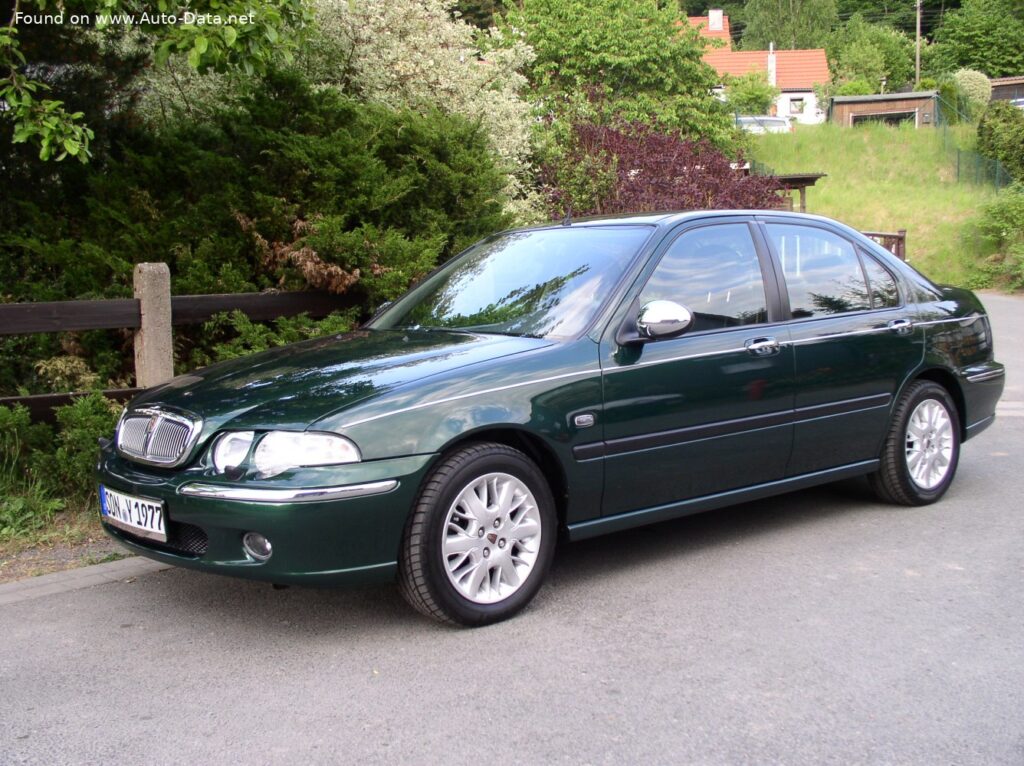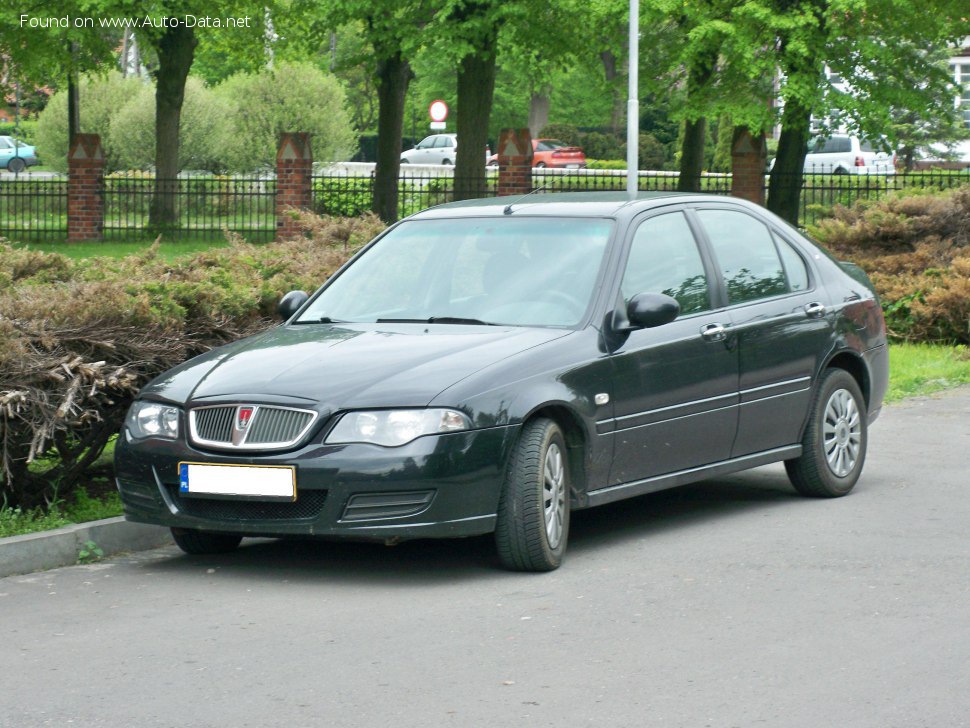
The Rover 45 Hatchback (RT) 1.4 i 16V (103 Hp): A European Compact Contender
The Rover 45 Hatchback (RT) represents a significant chapter in the history of the British automotive manufacturer, Rover. Produced from 1999 to 2005, this model served as Rover’s entry into the highly competitive European C-segment, a market dominated by practical and efficient compact family cars. The Rover 45 Hatchback (RT) was essentially a heavily revised and rebadged version of the preceding Rover 400, which itself shared a platform with the Honda Civic/Domani. This particular variant, the 1.4 i 16V with 103 horsepower, aimed to offer a blend of traditional British styling, comfort, and modest performance, targeting buyers looking for an alternative to mainstream European offerings.
While never officially sold in the United States, the Rover 45 played a crucial role in Rover’s strategy to maintain relevance in its primary European markets, particularly the United Kingdom. It positioned itself as a slightly more upmarket choice compared to some direct rivals, emphasizing a perceived sense of refinement and a classic aesthetic often associated with the Rover brand. The RT generation introduced updated styling cues, an improved interior, and a focus on ride comfort, attempting to carve out its niche in a segment that demanded versatility, economy, and everyday usability.
Engine & Performance of the Rover 45 Hatchback (RT) 1.4 i 16V
At the heart of the Rover 45 Hatchback (RT) 1.4 i 16V lies Rover’s venerable K-series engine. This specific variant, designated K16, is a 1.4-liter (1396 cm³ or 85.19 cu. in.) naturally aspirated inline-four cylinder engine. Featuring a Double Overhead Camshaft (DOHC) valvetrain with four valves per cylinder, it was engineered for a balance of efficiency and responsiveness. The engine produced a respectable 103 horsepower at 6000 rpm, delivering a power-per-liter output of 73.8 HP/l, which was competitive for its class at the time. Torque output stood at 90.72 lb.-ft. (123 Nm) arriving at 4500 rpm, providing adequate pulling power for city driving and highway cruising.
Power was delivered to the front wheels via a five-speed manual transmission, a common configuration for European compact cars of this era. This powertrain allowed the Rover 45 Hatchback (RT) to accelerate from 0 to 60 mph in a measured 10.6 seconds, with a top speed of approximately 115 mph (185 km/h). While not a performance leader, these figures ensured the car was capable of keeping pace with traffic and offered a generally pleasant driving experience for its intended market. The engine’s multi-port manifold injection system contributed to its fuel efficiency, with a combined fuel economy rating of 34.1 US mpg (6.9 l/100 km), making it an economical choice for daily commuting.
The K-series engine was known for its lightweight design and free-revving nature, characteristics that contributed to the car’s agile feel. With a compression ratio of 10.5:1, it ran on standard petrol (gasoline). Its front, transverse layout was typical for front-wheel-drive compacts, optimizing interior space and weight distribution. The engine oil capacity was 4.5 liters (4.76 US quarts), and the cooling system held 5.3 liters (5.6 US quarts) of coolant, indicating a well-engineered thermal management system for its output.
Design & Features
The Rover 45 Hatchback (RT) adopted a classic five-door hatchback body style, a highly popular and practical choice in Europe. Its design language was an evolution of the Rover 400, featuring a slightly more assertive front fascia with distinct headlights and a revised grille, aiming for a more contemporary yet recognizably Rover aesthetic. The car measured 171.73 inches (4362 mm) in length, 66.77 inches (1696 mm) in width, and 54.88 inches (1394 mm) in height, with a wheelbase of 103.15 inches (2620 mm). These dimensions provided a compact footprint ideal for navigating crowded European cities while still offering a reasonably spacious interior for five occupants.
Inside, the Rover 45 aimed for an atmosphere of understated comfort, often incorporating wood trim and plush fabrics, which were hallmarks of the Rover brand’s attempt to offer a more “premium” feel than its segment rivals. The hatchback body provided excellent versatility, offering a minimum trunk space of 13.42 cubic feet (380 liters), expandable to a generous 25.32 cubic feet (717 liters) with the rear seats folded, making it suitable for family duties and hauling cargo. The fuel tank capacity of 14.53 US gallons (55 liters) provided a decent cruising range.
Key technical features included a robust drivetrain architecture where the internal combustion engine drove the front wheels. The suspension system comprised a wishbone setup at the front and spring struts at the rear, designed to offer a comfortable ride quality typical of Rover vehicles. Braking performance was handled by ventilated discs at the front and drum brakes at the rear, augmented by an Anti-lock Braking System (ABS) for enhanced safety. The hydraulic steering rack and pinion system provided direct and communicative feedback to the driver, a desirable trait for European road conditions. The car rode on 175/70 R14 T tires, balancing grip with ride comfort.
Technical Specifications
| Category | Specification |
|---|---|
| Brand | Rover |
| Model | 45 |
| Generation | 45 Hatchback (RT) |
| Type (Engine) | 1.4 i 16V (103 Hp) |
| Start of Production | 1999 year |
| End of Production | 2005 year |
| Powertrain Architecture | Internal Combustion engine |
| Body type | Hatchback |
| Seats | 5 |
| Doors | 5 |
| Fuel consumption (economy) – urban | 25.3 US mpg (9.3 l/100 km) |
| Fuel consumption (economy) – extra urban | 42.8 US mpg (5.5 l/100 km) |
| Fuel consumption (economy) – combined | 34.1 US mpg (6.9 l/100 km) |
| Fuel Type | Petrol (Gasoline) |
| Acceleration 0 – 60 mph | 10.6 sec |
| Maximum speed | 114.95 mph (185 km/h) |
| Power | 103 Hp @ 6000 rpm |
| Torque | 90.72 lb.-ft. (123 Nm) @ 4500 rpm |
| Engine layout | Front, Transverse |
| Engine Model/Code | K16 |
| Engine displacement | 1.4 l (1396 cm³, 85.19 cu. in.) |
| Number of cylinders | 4 |
| Engine configuration | Inline |
| Cylinder Bore | 2.95 in. (75 mm) |
| Piston Stroke | 3.11 in. (79 mm) |
| Compression ratio | 10.5:1 |
| Number of valves per cylinder | 4 |
| Fuel injection system | Multi-port manifold injection |
| Engine aspiration | Naturally aspirated engine |
| Valvetrain | DOHC |
| Engine oil capacity | 4.76 US qt (4.5 l) |
| Coolant | 5.6 US qt (5.3 l) |
| Kerb Weight | 2601.45 lbs. (1180 kg) |
| Max. weight | 3615.58 lbs. (1640 kg) |
| Max load | 1014.13 lbs. (460 kg) |
| Trunk (boot) space – minimum | 13.42 cu. ft. (380 l) |
| Trunk (boot) space – maximum | 25.32 cu. ft. (717 l) |
| Fuel tank capacity | 14.53 US gal (55 l) |
| Length | 171.73 in. (4362 mm) |
| Width | 66.77 in. (1696 mm) |
| Height | 54.88 in. (1394 mm) |
| Wheelbase | 103.15 in. (2620 mm) |
| Front track | 58.07 in. (1475 mm) |
| Rear (Back) track | 57.68 in. (1465 mm) |
| Drivetrain Architecture | Front wheel drive, Internal Combustion engine |
| Drive wheel | Front wheel drive |
| Number of gears and type of gearbox | 5 gears, manual transmission |
| Front suspension | Wishbone |
| Rear suspension | Spring Strut |
| Front brakes | Ventilated discs |
| Rear brakes | Drum |
| Assisting systems | ABS (Anti-lock braking system) |
| Steering type | Steering rack and pinion |
| Power steering | Hydraulic Steering |
| Tires size | 175/70 R14 T |
Legacy & Market Impact of the Rover 45 Hatchback
The Rover 45 Hatchback (RT) entered a fiercely competitive market segment in Europe, vying for sales against established giants like the Ford Focus, Volkswagen Golf, Vauxhall Astra (known as Opel Astra in continental Europe), and Peugeot 306. Its direct competitors also included the Honda Civic, from which its platform lineage derived, and other compacts like the Renault Mégane and Fiat Bravo/Brava.
In its primary market, the UK, the Rover 45 was generally well-received for its comfortable ride, traditional interior ambiance, and competitive pricing. It often appealed to buyers who appreciated a slightly more understated and “classic” British feel compared to the overtly modern designs of some of its European rivals. The 1.4-liter engine, while not exceptionally powerful, offered a good balance of economy and daily usability, making it a popular choice for first-time car owners or those seeking a reliable commuter.
However, the Rover 45 also faced significant challenges. Its underpinnings were aging, being largely carried over from the Rover 400 and ultimately the Honda Domani/Civic platform from the early 1990s. This meant that while competent, it lagged behind newer competitors in terms of dynamic prowess, interior packaging innovation, and some advanced safety features that were becoming standard in the segment by the early 2000s. The K-series engine, despite its performance merits, gained a reputation for certain reliability issues, particularly head gasket failures, which unfortunately overshadowed some of its positive attributes.
The Rover 45’s production run coincided with a tumultuous period for the Rover Group itself. The brand struggled with ownership changes, financial difficulties, and a dwindling market share. Despite its earnest efforts, the 45, along with its larger 75 sibling, couldn’t reverse the company’s fortunes. When Rover Group eventually collapsed in 2005, production of the 45 ceased. Its legacy is therefore intertwined with the final years of the historic British marque. Today, the Rover 45 is remembered as a respectable, if somewhat understated, compact car that offered a distinct British character in a globalized automotive landscape, representing one of the last efforts of an iconic brand before its demise.