The Renault Clio Symbol 1.4 i 16V (98 Hp): A Practical Sedan for Global Markets
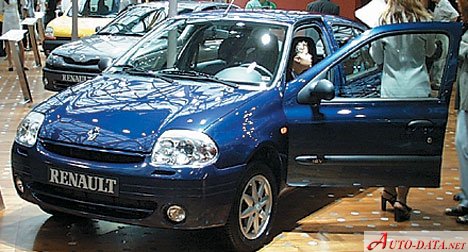
The Renault Clio Symbol, known in some markets as the Renault Thalia, represents a significant chapter in Renault’s strategy to cater to diverse global markets with a versatile and cost-effective subcompact sedan. Launched in 1999 and produced until 2002 in this specific generation, the Clio Symbol was essentially a three-box sedan variant of the popular second-generation Renault Clio hatchback. While the hatchback Clio enjoyed immense success in Western Europe, the Clio Symbol was specifically developed to address the strong demand for sedans in Eastern European countries, Turkey, and Latin America, where such body styles were often preferred for their perceived prestige, practicality, and larger trunk capacity. This particular variant, the 1.4 i 16V with 98 horsepower, stood as a well-balanced offering within its range, providing a blend of adequate performance and commendable fuel efficiency for its target audience.
Unlike its hatchback sibling, which was a common sight across Western European urban landscapes, the Renault Clio Symbol was never officially marketed in the United States. Its design and engineering were tailored for markets prioritizing durability, low running costs, and interior space over high-performance or luxury features. It quickly established itself as a reliable workhorse and a popular choice for families and taxi operators in its primary sales regions, embodying Renault’s reputation for building practical and accessible vehicles.
Engine and Performance of the Clio Symbol 1.4 i 16V
At the heart of the 1999-2002 Renault Clio Symbol 1.4 i 16V lay a robust and well-proven powertrain architecture: a naturally aspirated, 1.4-liter (1390 cm3 or 84.82 cu. in.) inline four-cylinder engine, designated by Renault as the K4J. This engine, featuring a Single Overhead Camshaft (SOHC) and 16 valves (four per cylinder), was a testament to Renault’s engineering prowess in developing efficient and durable small-displacement units. It delivered a respectable 98 horsepower at 5700 rpm, which, for a vehicle of its class and era, provided a lively driving experience. The power-per-liter figure stood at a commendable 70.5 Hp/l, indicating efficient design.
Torque output was rated at 93.67 lb.-ft. (127 Nm) achieved at 4250 rpm. This torque delivery, coupled with a relatively low curb weight of 2094.39 lbs. (950 kg), ensured that the Clio Symbol felt agile and responsive in urban traffic and capable on open roads. The engine’s front, transverse layout, combined with a 5-speed manual transmission, directed power to the front wheels, a common and efficient setup for subcompact vehicles. The compression ratio of 10:1 further optimized combustion efficiency for regular gasoline (petrol).
Performance figures reflected its practical orientation. The Clio Symbol 1.4 i 16V could accelerate from 0 to 60 mph in a respectable 10.6 seconds, making it competitive within its segment. Its maximum speed of 115.58 mph (186 km/h) was more than sufficient for highway cruising in its target markets. Fuel economy was a strong selling point, with an extra-urban consumption figure of 42 US mpg (5.6 l/100 km) and urban consumption of 23.8 US mpg (9.9 l/100 km), highlighting its cost-effectiveness for daily use. The multi-port manifold injection system ensured precise fuel delivery, contributing to both performance and efficiency.
Design and Features
The Renault Clio Symbol adopted a classic three-box sedan design, differentiating itself from the Clio hatchback by incorporating a distinct trunk volume. The body type was a 4-door sedan, providing easy access for up to five occupants. Its dimensions were compact yet practical, with a length of 163.39 inches (4150 mm), a width of 64.53 inches (1639 mm), and a height of 55.75 inches (1416 mm). The wheelbase of 97.32 inches (2472 mm) contributed to a stable ride and adequate interior space for its class.
One of the most appealing features of the Clio Symbol for its intended markets was its generous trunk capacity. At 18.01 cu. ft. (510 liters), the trunk space was exceptionally large for a car of its size, rivaling vehicles from a segment above. This made it an ideal choice for families needing to carry luggage, groceries, or for professionals requiring ample cargo room.
The car’s chassis featured a straightforward and robust suspension system, with coil springs at both the front and rear, designed to provide a comfortable ride over varying road conditions often encountered in its primary markets. Braking was handled by disc brakes at the front and drum brakes at the rear, a common and cost-effective setup for vehicles in this category. Crucially, the vehicle was equipped with an Anti-lock Braking System (ABS), a significant safety feature for its time, providing enhanced control during emergency braking. Steering was managed by a rack and pinion system with hydraulic power steering, offering a direct and assisted feel. The car rode on 14-inch wheels fitted with 175/65 R14 tires, a common size that balanced ride comfort with affordability and availability.
Technical Specifications
| Category | Specification |
|---|---|
| Brand | Renault |
| Model | Clio |
| Generation | Clio Symbol |
| Engine Type | 1.4 i 16V (98 Hp) |
| Production Start | 1999 year |
| Production End | 2002 year |
| Powertrain Architecture | Internal Combustion engine |
| Body type | Sedan |
| Seats | 5 |
| Doors | 4 |
| Fuel consumption (economy) – urban | 9.9 l/100 km (23.8 US mpg) |
| Fuel consumption (economy) – extra urban | 5.6 l/100 km (42 US mpg) |
| Fuel Type | Petrol (Gasoline) |
| Acceleration 0 – 60 mph | 10.6 sec |
| Maximum speed | 186 km/h (115.58 mph) |
| Weight-to-power ratio | 9.7 kg/Hp, 103.2 Hp/tonne |
| Weight-to-torque ratio | 7.5 kg/Nm, 133.7 Nm/tonne |
| Power | 98 Hp @ 5700 rpm. |
| Power per liter | 70.5 Hp/l |
| Torque | 127 Nm @ 4250 rpm. (93.67 lb.-ft.) |
| Engine layout | Front, Transverse |
| Engine Model/Code | K4J |
| Engine displacement | 1390 cm3 (84.82 cu. in.) |
| Number of cylinders | 4 |
| Engine configuration | Inline |
| Cylinder Bore | 79.5 mm (3.13 in.) |
| Piston Stroke | 70 mm (2.76 in.) |
| Compression ratio | 10:1 |
| Number of valves per cylinder | 4 |
| Fuel injection system | Multi-port manifold injection |
| Engine aspiration | Naturally aspirated engine |
| Valvetrain | SOHC |
| Engine oil capacity | 4.9 l (5.18 US qt) |
| Coolant | 5.7 l (6.02 US qt) |
| Kerb Weight | 950 kg (2094.39 lbs.) |
| Max. weight | 1475 kg (3251.82 lbs.) |
| Max load | 525 kg (1157.43 lbs.) |
| Trunk (boot) space – minimum | 510 l (18.01 cu. ft.) |
| Fuel tank capacity | 50 l (13.21 US gal) |
| Length | 4150 mm (163.39 in.) |
| Width | 1639 mm (64.53 in.) |
| Height | 1416 mm (55.75 in.) |
| Wheelbase | 2472 mm (97.32 in.) |
| Front track | 1406 mm (55.35 in.) |
| Rear (Back) track | 1386 mm (54.57 in.) |
| Drivetrain Architecture | The Internal combustion engine (ICE) drives the front wheels of the vehicle. |
| Drive wheel | Front wheel drive |
| Number of gears and type of gearbox | 5 gears, manual transmission |
| Front suspension | Coil spring |
| Rear suspension | Coil spring |
| Front brakes | Disc |
| Rear brakes | Drum |
| Assisting systems | ABS (Anti-lock braking system) |
| Steering type | Steering rack and pinion |
| Power steering | Hydraulic Steering |
| Tires size | 175/65 R14 |
| Wheel rims size | 14 |
Legacy and Market Impact of the Renault Clio Symbol
The Renault Clio Symbol, particularly the 1.4 i 16V variant, played a pivotal role in Renault’s strategy to expand its presence in emerging markets throughout the late 1990s and early 2000s. Its reputation was built on a foundation of reliability, economy, and practicality, making it an attractive proposition for buyers seeking a no-nonsense family car. The generous trunk space was a standout feature, directly addressing the needs of consumers in regions where sedans were often seen as more versatile for family trips and carrying goods than hatchbacks.
In markets like Turkey, Russia, and various Eastern European countries, the Clio Symbol faced competition from other budget-friendly sedans such as the Fiat Siena, Volkswagen Polo Classic (sedan variant), and locally produced models like the Lada 110. It carved out a significant niche for itself by offering French design sensibilities, a proven powertrain, and competitive pricing. Its strong sales performance in these regions demonstrated Renault’s understanding of local preferences and economic conditions.
The Clio Symbol’s mechanical robustness and ease of maintenance also contributed to its longevity and popularity. The K4J engine, in particular, was known for its durability, requiring minimal fuss and proving resilient to diverse operating conditions. This meant lower running costs for owners, a critical factor for many buyers in its target demographic.
Over time, the Clio Symbol evolved, eventually being rebranded as the Renault Thalia in many markets for its second generation, and later succeeded by models like the Renault Logan (Dacia Logan in Europe), which further cemented Renault’s position in the value-oriented sedan segment. The legacy of the 1999-2002 Clio Symbol 1.4 i 16V is one of a successful, pragmatic vehicle that perfectly served its purpose: providing accessible, reliable, and spacious transportation to millions of customers outside of Western Europe, effectively bridging the gap between basic transportation and modern automotive amenities for its era. It remains a testament to Renault’s global vision and its ability to adapt its product offerings to meet specific market demands.