Volkswagen Transporter (T5, facelift 2009) Panel Van: An In-Depth Look
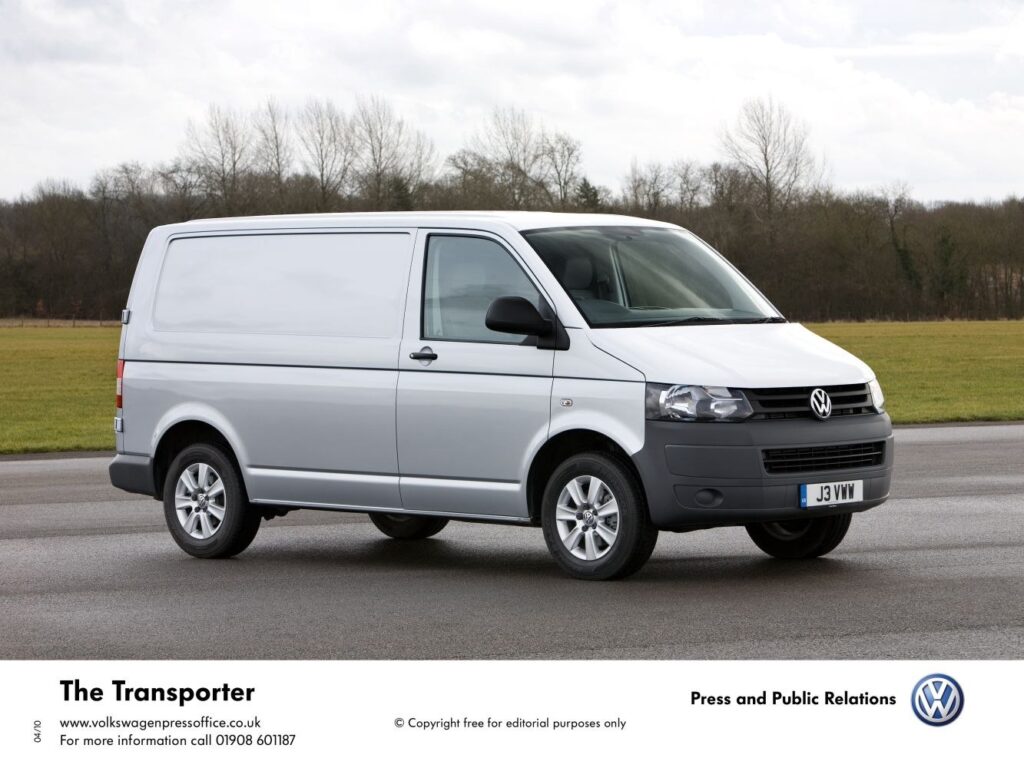
The Volkswagen Transporter, a lineage spanning over seventy years, represents one of the most iconic and successful light commercial vehicles globally. The fifth generation, known as the T5, received a significant facelift in 2009, bringing updated styling, enhanced powertrains, and improved technology. This article focuses on a specific variant from the post-facelift era, the Volkswagen Transporter (T5, facelift 2009) Panel Van 2.0 TDI BMT (180 Hp) L1H1, produced between 2013 and 2015. While not a common sight on American roads, the Transporter series is a cornerstone of commercial transport and a lifestyle icon across Europe, Asia, and other international markets, revered for its versatility, reliability, and robust engineering. This particular model, a panel van, epitomizes the workhorse capabilities of the T5 generation, combining a powerful and efficient diesel engine with a practical cargo-focused design.
Engine and Performance: The 2.0 TDI BMT Powerplant
At the heart of the Volkswagen Transporter (T5, facelift 2009) Panel Van discussed here is a sophisticated 2.0-liter (1968 cm3 or 120.09 cu. in.) four-cylinder inline diesel engine. Coded EA189 / CFCA, this powerplant features a DOHC (Double Overhead Camshaft) valvetrain with four valves per cylinder and a common rail direct fuel injection system. What truly sets this engine apart is its BiTurbo aspiration, meaning it employs two turbochargers to deliver a broad and consistent power band across the RPM range, complemented by an intercooler for optimal air density.
This advanced setup allows the engine to produce a robust 180 horsepower at 4000 rpm, translating to an impressive 91.5 horsepower per liter. More critically for a commercial vehicle, it generates a substantial 295.02 lb.-ft. of torque, available from a low 1500 rpm and sustained up to 2000 rpm. This broad torque curve ensures excellent pulling power, crucial for hauling heavy loads or navigating challenging terrain. Paired with a precise 6-speed manual transmission and front-wheel drive, the Transporter exhibits surprisingly brisk acceleration for a van, achieving 0 to 60 mph in an estimated 9.4 seconds and reaching a maximum speed of 118.68 mph.
The “BMT” designation, standing for BlueMotion Technology, highlights Volkswagen’s focus on efficiency and reduced emissions. This includes features like a Start & Stop system, which automatically shuts off the engine when the vehicle is stationary, and a particulate filter to reduce soot emissions, helping the vehicle meet stringent Euro 5 emission standards. Despite its performance, the Transporter 2.0 TDI BMT demonstrates commendable fuel economy for its class, with a combined NEDC rating of 33.6 to 32.2 US mpg (7-7.3 l/100 km). Urban consumption ranges from 27.4 to 26.4 US mpg, while extra-urban driving can yield 38.6 to 36.8 US mpg, making it an economical choice for businesses.
Design and Features: Form Follows Function
The Volkswagen Transporter (T5, facelift 2009) Panel Van is designed with practicality and utility as its paramount concerns. As a panel van, its primary purpose is cargo transport, reflected in its robust, boxy silhouette. The “L1H1” designation indicates a short wheelbase (L1) and a standard roof height (H1), making it a versatile option for urban deliveries and general trade use where maneuverability is key. The vehicle typically offers 2-3 seats in the cabin, leaving the entire rear section dedicated to cargo.
Measuring 192.6 inches in length, 74.96 inches in width (89.88 inches including mirrors), and 78.35 inches in height, the L1H1 variant strikes a balance between interior volume and exterior compactness. Its 118.11-inch wheelbase contributes to a manageable minimum turning circle of 39.04 feet, an advantage in tight city environments. The cargo area is exceptionally generous, offering a maximum trunk space of 204.83 cu. ft. (5800 liters), capable of accommodating substantial payloads ranging from 2272.97 to 2297.22 lbs. (1031-1042 kg).
Underneath its utilitarian exterior, the T5 facelift incorporates modern engineering for enhanced driving dynamics and safety. It features an independent McPherson front suspension with coil springs and an anti-roll bar, while the rear utilizes an independent coil spring system with a transverse stabilizer and trailing arms, providing a comfortable ride even when loaded. Braking is handled by ventilated discs both front (340×32.5 mm) and rear (294×22 mm), supported by an Anti-lock Braking System (ABS) for secure stopping power. The hydraulic power steering system ensures ease of handling, crucial for a vehicle that spends much of its life in motion. Standard tire sizes include 215/60 R17, with options up to 255/45 R18 on 8J x 18 rims, offering stability and grip.
Technical Specifications
| Category | Specification | Metric (Original) | US (Converted) |
|---|---|---|---|
| General Information | |||
| Brand | Volkswagen | ||
| Model | Transporter | ||
| Generation | Transporter (T5, facelift 2009) Panel Van | ||
| Type (Engine) | 2.0 TDI BMT (180 Hp) L1H1 | ||
| Start of Production | 2013 | ||
| End of Production | 2015 | ||
| Powertrain Architecture | Internal Combustion engine | ||
| Body Type | Van | ||
| Seats | 2-3 | ||
| Doors | 4-5 | ||
| Performance Specifications | |||
| Fuel Consumption (Urban, NEDC) | 8.6-8.9 l/100 km | 27.4 – 26.4 US mpg | |
| Fuel Consumption (Extra Urban, NEDC) | 6.1-6.4 l/100 km | 38.6 – 36.8 US mpg | |
| Fuel Consumption (Combined, NEDC) | 7-7.3 l/100 km | 33.6 – 32.2 US mpg | |
| CO2 Emissions (NEDC) | 184-192 g/km | ||
| Fuel Type | Diesel | ||
| Acceleration 0 – 60 mph | 9.4 sec | ||
| Maximum Speed | 191 km/h | 118.68 mph | |
| Emission Standard | Euro 5 | ||
| Weight-to-Power Ratio | 9.8 kg/Hp | 21.6 lbs/Hp | |
| Weight-to-Torque Ratio | 4.4 kg/Nm | 9.7 lbs/lb.-ft. | |
| Engine Specifications | |||
| Power | 180 Hp @ 4000 rpm | 180 Hp @ 4000 rpm | |
| Power per liter | 91.5 Hp/l | ||
| Torque | 400 Nm @ 1500-2000 rpm | 295.02 lb.-ft. @ 1500-2000 rpm | |
| Engine Layout | Front, Transverse | ||
| Engine Model/Code | EA189 / CFCA | ||
| Engine Displacement | 1968 cm3 | 120.09 cu. in. | |
| Number of Cylinders | 4 | ||
| Engine Configuration | Inline | ||
| Cylinder Bore | 81 mm | 3.19 in. | |
| Piston Stroke | 95.5 mm | 3.76 in. | |
| Compression Ratio | 16.5:1 | ||
| Number of Valves per Cylinder | 4 | ||
| Fuel Injection System | Diesel Commonrail | ||
| Engine Aspiration | BiTurbo, Intercooler | ||
| Valvetrain | DOHC | ||
| Engine Oil Capacity | 7 l | 7.4 US qt | |
| Coolant Capacity | 11 l | 11.62 US qt | |
| Engine Systems | Start & Stop System, Particulate filter | ||
| Space, Volume and Weights | |||
| Kerb Weight | 1769-2158 kg | 3899.98 – 4757.58 lbs. | |
| Max. Weight (GVWR) | 2800-3200 kg | 6172.94 – 7054.79 lbs. | |
| Max Load | 1031-1042 kg | 2272.97 – 2297.22 lbs. | |
| Trunk (Boot) Space – Maximum | 5800 l | 204.83 cu. ft. | |
| Fuel Tank Capacity | 80 l | 21.13 US gal | |
| Max. Roof Load | 100 kg | 220.46 lbs. | |
| Permitted Trailer Load with Brakes (12%) | 2500 kg | 5511.56 lbs. | |
| Permitted Trailer Load without Brakes | 750 kg | 1653.47 lbs. | |
| Permitted Towbar Download | 100 kg | 220.46 lbs. | |
| Dimensions | |||
| Length | 4892 mm | 192.6 in. | |
| Width | 1904 mm | 74.96 in. | |
| Width including mirrors | 2283 mm | 89.88 in. | |
| Height | 1990 mm | 78.35 in. | |
| Wheelbase | 3000 mm | 118.11 in. | |
| Front Overhang | 896 mm | 35.28 in. | |
| Rear Overhang | 996 mm | 39.21 in. | |
| Ride Height (Ground Clearance) | 201 mm | 7.91 in. | |
| Minimum Turning Circle (Turning Diameter) | 11.9 m | 39.04 ft. | |
| Approach Angle | 21° | ||
| Departure Angle | 17° | ||
| Ramp-over (Brakeover) Angle | 14° | ||
| Wading Depth | 300 mm | 11.81 in. | |
| Drivetrain, Brakes and Suspension Specs | |||
| Drivetrain Architecture | The Internal combustion engine (ICE) drives the front wheels of the vehicle. | ||
| Drive Wheel | Front wheel drive | ||
| Number of Gears and Type of Gearbox | 6 gears, manual transmission | ||
| Front Suspension | Independent, type McPherson with coil spring and anti-roll bar | ||
| Rear Suspension | Independent coil spring, Transverse stabilizer, Trailing arm | ||
| Front Brakes | Ventilated discs | 340×32.5 mm | |
| Rear Brakes | Ventilated discs | 294×22 mm | |
| Assisting Systems | ABS (Anti-lock braking system) | ||
| Steering Type | Steering rack and pinion | ||
| Power Steering | Hydraulic Steering | ||
| Tires Size | 215/60 R17; 235/55 R17; 255/45 R18 | ||
| Wheel Rims Size | 7J x 17; 8J x 18 | ||
Legacy and Market Impact
The Volkswagen Transporter series, often simply referred to as the “Bus” or “Van,” holds an almost mythological status in the automotive world, especially in markets outside North America. The T5 generation, introduced in 2003 and facelifted in 2009, continued this proud heritage, building upon the reputation for durability, versatility, and efficiency established by its predecessors. The Volkswagen Transporter (T5, facelift 2009) Panel Van, particularly with the potent 2.0 TDI BMT (180 Hp) engine, was a significant player in the competitive European light commercial vehicle (LCV) market from 2013 to 2015.
In its primary markets, the Transporter T5 faced stiff competition from rivals such as the Ford Transit Custom, Mercedes-Benz Vito, Renault Trafic, and Opel Vivaro. However, it consistently stood out due to its superior build quality, refined driving dynamics (often feeling more car-like than many competitors), and the breadth of its variant offerings, from basic panel vans to luxury people carriers and camper vans (like the California). The 2.0 TDI BMT (180 Hp) engine was particularly well-regarded for providing a blend of strong performance suitable for heavy loads and motorway cruising, coupled with impressive fuel economy for a vehicle of its size and capability. This made it a favorite among tradespeople, small businesses, and fleet operators who prioritized low running costs and reliability.
The T5’s impact extends beyond its commercial prowess. Its robust chassis and comfortable cabin also formed the basis for popular passenger versions like the Caravelle and Multivan, and the highly sought-after California camper van. This versatility cemented the Transporter’s place not just as a tool for work but also as a vehicle for adventure and leisure. Even after the introduction of the T6 generation in 2015, the T5, especially the facelifted models, maintained strong resale values due to its proven reliability and enduring appeal. Its mechanical robustness, coupled with Volkswagen’s extensive service network, ensured a long operational life for many units, contributing to its reputation as a sound investment for commercial users. The 2.0 TDI BMT (180 Hp) L1H1 panel van variant specifically represents a pinnacle of the T5’s commercial utility, offering a powerful, efficient, and highly capable solution for businesses requiring a dependable workhorse.