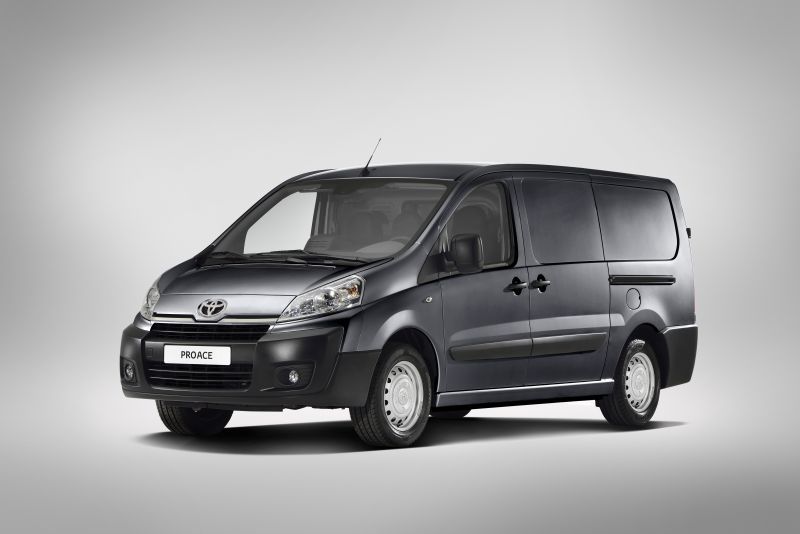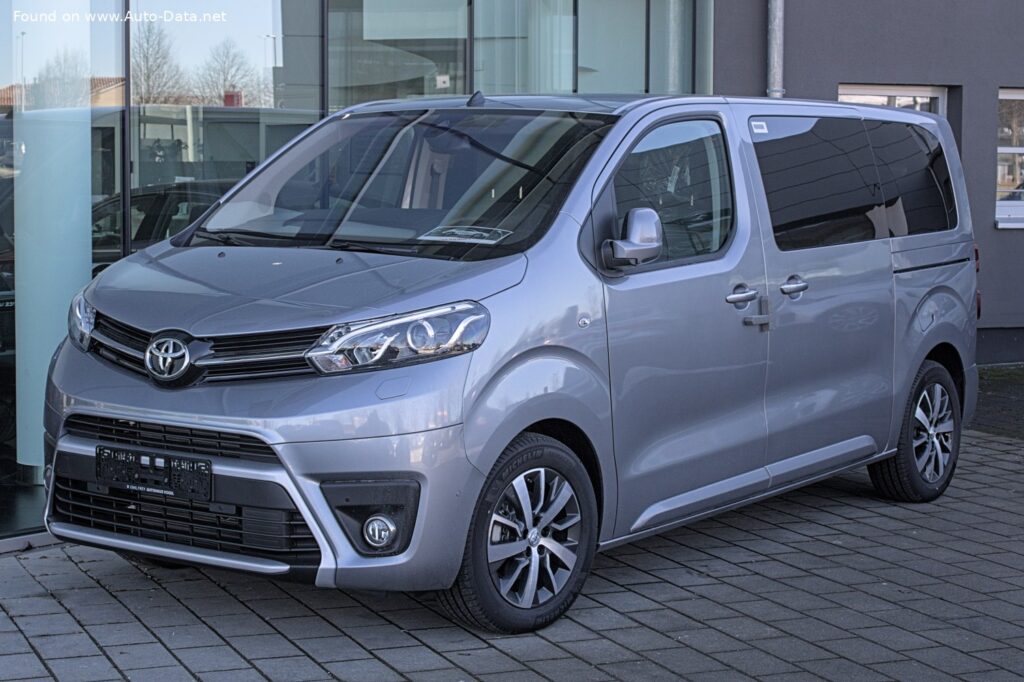
The Toyota Proace Verso II SWB: A Versatile European People Mover
The Toyota Proace Verso II SWB, specifically the 2.0 D-4D (177 Hp) Automatic variant, represents a significant offering in the European minivan and shuttle vehicle segment. Launched in September 2016, this second-generation Proace Verso, in its Short Wheelbase (SWB) configuration, is Toyota’s answer to the growing demand for highly adaptable and efficient vehicles capable of transporting multiple passengers with comfort and practicality. While not sold in the United States, the Proace Verso plays a crucial role in Toyota’s light commercial vehicle (LCV) and passenger transport strategy across Europe, providing a compelling blend of Toyota’s renowned reliability with a platform developed in collaboration with PSA Group (now Stellantis). This particular model, equipped with a potent diesel engine and a smooth automatic transmission, is designed to cater to a diverse clientele, from large families needing ample space to businesses operating shuttle services or executive transport.
Engine and Performance: Powering the Toyota Proace Verso II SWB
Under the hood of the Toyota Proace Verso II SWB lies a robust 2.0-liter D-4D (Direct Injection 4-stroke Common Rail Diesel) engine, designated with the model code 4WZ-FHV. This inline four-cylinder powerplant is engineered for both efficiency and strong pulling power, a critical attribute for a vehicle designed to carry up to nine occupants and their luggage. With a displacement of 1997 cm3 (approximately 121.86 cubic inches), the engine generates a healthy 177 horsepower, resulting in a power-per-liter output of 88.6 Hp/l, indicative of a well-tuned and modern diesel unit.
Perhaps even more important for a vehicle of this type is its torque output. The 2.0 D-4D engine delivers an impressive 400 Nm (295.02 lb.-ft.) of torque, available at a low 2000 rpm. This substantial torque ensures strong acceleration from a standstill, effortless cruising, and ample power for overtaking, even when the vehicle is fully loaded or towing. The engine’s aspiration system features both a turbocharger and an intercooler, optimizing air intake for enhanced performance and efficiency. Fuel is supplied via a sophisticated Diesel Commonrail injection system, contributing to cleaner combustion and adherence to Euro 6 emission standards, which are stringent in the European market.
Mated to this powerful diesel engine is an advanced 8-speed automatic transmission. This gearbox is instrumental in maximizing both performance and fuel economy. The multiple ratios allow the engine to operate within its most efficient rev range more consistently, reducing fuel consumption during highway driving and providing smooth, responsive acceleration in urban environments. The drivetrain architecture is front-wheel drive, a common and practical choice for minivans, offering good traction and packaging efficiency.
Fuel efficiency for the Toyota Proace Verso II SWB 2.0 D-4D (177 Hp) Automatic is commendable for its class. Combined fuel consumption ranges from 6.0 to 6.3 liters per 100 km, which translates to an impressive 39.2 to 37.3 US miles per gallon. Urban consumption is rated at 7.3-7.6 l/100 km (32.2 – 30.9 US mpg), while extra-urban driving sees figures of 5.3-5.6 l/100 km (44.4 – 42 US mpg). CO2 emissions are kept between 159-166 g/km, reflecting its Euro 6 compliance and Toyota’s commitment to environmental responsibility. The engine also features a particulate filter, crucial for reducing harmful emissions typical of diesel engines.
Design and Features: Practicality Meets Modernity
The Toyota Proace Verso II SWB is fundamentally designed as a minivan, prioritizing interior space, versatility, and ease of access. Its body type is a 5-door minivan, providing wide-opening sliding doors for convenient entry and exit for passengers, particularly in tight parking spaces. The SWB designation indicates its shorter wheelbase compared to other Proace Verso variants, making it more maneuverable in city environments while still offering substantial interior volume.
With seating for 8-9 passengers, the Proace Verso II SWB is exceptionally versatile. The interior can be configured in various ways, allowing owners to prioritize passenger capacity or cargo space as needed. This flexibility is highlighted by its impressive trunk (boot) space, which ranges from a minimum of 655 liters (23.13 cu. ft.) with all seats in place, expanding to a cavernous 3968 liters (140.13 cu. ft.) when rear seats are removed or folded down. This makes it an ideal choice for both large families and commercial operators needing to transport significant amounts of luggage or equipment.
Dimensionally, the Proace Verso II SWB measures 4959 mm (195.24 inches) in length, 1920 mm (75.59 inches) in width, and 1890 mm (74.41 inches) in height. Its wheelbase of 3275 mm (128.94 inches) contributes to a stable ride and generous interior room. The front track is 1627 mm (64.06 inches) and the rear track is 1600 mm (62.99 inches). These dimensions, combined with an electric power steering system and a rack and pinion steering type, ensure that despite its size, the vehicle remains relatively easy to pilot and park.
Safety is a key consideration, and the Proace Verso II SWB comes equipped with essential systems such as ABS (Anti-lock Braking System). The braking system features disc brakes on both the front and rear axles, providing strong and consistent stopping power. Suspension-wise, it employs an independent McPherson type at the front for comfortable handling and a wishbone setup at the rear, balancing ride comfort with load-carrying capability. The vehicle can be fitted with 215/65 R16 or 225/55 R17 tires on corresponding 16-inch or 17-inch wheel rims.
Practical features extend to its towing capabilities, with a permitted trailer load of 2000 kg (4409.25 lbs) with brakes and 750 kg (1653.47 lbs) without brakes, further enhancing its utility for those needing to haul additional cargo or recreational equipment. A fuel tank capacity of 69 liters (18.23 US gallons) ensures a good range between refills, important for long journeys.
Technical Specifications: Toyota Proace Verso II SWB 2.0 D-4D (177 Hp) Automatic
| Category | Specification | Value |
|---|---|---|
| General Information | ||
| Brand | Toyota | |
| Model | Proace Verso | |
| Generation | Proace Verso II SWB | |
| Type (Engine) | 2.0 D-4D (177 Hp) Automatic | |
| Start of Production | September, 2016 | |
| Powertrain Architecture | Internal Combustion engine | |
| Body Type | Minivan | |
| Seats | 8-9 | |
| Doors | 5 | |
| Performance Specs | ||
| Fuel Consumption (Urban) | 7.3-7.6 l/100 km (32.2 – 30.9 US mpg) | |
| Fuel Consumption (Extra Urban) | 5.3-5.6 l/100 km (44.4 – 42 US mpg) | |
| Fuel Consumption (Combined) | 6.0-6.3 l/100 km (39.2 – 37.3 US mpg) | |
| CO2 Emissions | 159-166 g/km | |
| Fuel Type | Diesel | |
| Emission Standard | Euro 6 | |
| Engine Specs | ||
| Power | 177 Hp | |
| Power per Liter | 88.6 Hp/l | |
| Torque | 400 Nm @ 2000 rpm (295.02 lb.-ft. @ 2000 rpm) | |
| Engine Model/Code | 4WZ-FHV | |
| Engine Displacement | 1997 cm3 (121.86 cu. in.) | |
| Number of Cylinders | 4 | Inline |
| Number of Valves per Cylinder | 4 | |
| Fuel Injection System | Diesel Commonrail | |
| Engine Aspiration | Turbocharger, Intercooler | |
| Engine Oil Capacity | 6 l (6.34 US qt) | |
| Engine Systems | Particulate filter | |
| Space, Volume and Weights | ||
| Trunk (Boot) Space – Minimum | 655 l (23.13 cu. ft.) | |
| Trunk (Boot) Space – Maximum | 3968 l (140.13 cu. ft.) | |
| Fuel Tank Capacity | 69 l (18.23 US gal) | |
| Max. Roof Load | 140-170 kg (308.65 – 374.79 lbs) | |
| Permitted Trailer Load with Brakes (12%) | 2000 kg (4409.25 lbs) | |
| Permitted Trailer Load without Brakes | 750 kg (1653.47 lbs) | |
| Permitted Towbar Download | 80 kg (176.37 lbs) | |
| Dimensions | ||
| Length | 4959 mm (195.24 in.) | |
| Width | 1920 mm (75.59 in.) | |
| Height | 1890 mm (74.41 in.) | |
| Wheelbase | 3275 mm (128.94 in.) | |
| Front Track | 1627 mm (64.06 in.) | |
| Rear (Back) Track | 1600 mm (62.99 in.) | |
| Drivetrain, Brakes and Suspension Specs | ||
| Drivetrain Architecture | The Internal combustion engine (ICE) drives the front wheels of the vehicle. | |
| Drive Wheel | Front wheel drive | |
| Number of Gears and Type of Gearbox | 8 gears, automatic transmission | |
| Front Suspension | Independent type McPherson | |
| Rear Suspension | Wishbone | |
| Front Brakes | Disc | |
| Rear Brakes | Disc | |
| Assisting Systems | ABS (Anti-lock braking system) | |
| Steering Type | Steering rack and pinion | |
| Power Steering | Electric Steering | |
| Tires Size | 215/65 R16; 225/55 R17 | |
| Wheel Rims Size | 16; 17 | |
Legacy and Market Impact in the European Segment
The Toyota Proace Verso II SWB, particularly in its 2.0 D-4D (177 Hp) Automatic configuration, has carved out a respectable niche in the highly competitive European minivan and people mover market. Unlike the North American market, where large minivans like the Chrysler Pacifica or Honda Odyssey dominate, Europe offers a broader spectrum of commercial-vehicle-derived people movers, often prized for their robust construction, diesel efficiency, and immense practicality.
Toyota’s strategy with the Proace Verso was a smart move, leveraging a joint venture with PSA Group (Peugeot, Citroën, and Opel/Vauxhall) to efficiently enter and compete in this segment. The Proace Verso shares its platform and many mechanical components with the Peugeot Traveller, Citroën Spacetourer, and Opel Zafira Life. This collaboration allows Toyota to offer a strong product without the prohibitive development costs of an entirely new platform, while still infusing it with Toyota’s characteristic quality and dealership network.
Its primary competitors in Europe include established players such as the Volkswagen Multivan/California, Mercedes-Benz V-Class, and the Ford Transit Custom Tourneo. The Proace Verso distinguishes itself with its strong diesel engine options, including the powerful 177 Hp unit discussed here, its practical and versatile interior, and Toyota’s reputation for reliability and low running costs. For businesses, the diesel powertrain’s fuel efficiency and torque make it an economical choice for long-distance shuttle services or demanding urban routes. For large families, the ample seating, flexible cargo space, and comfortable ride are significant draws.
The “Verso” designation, meaning “versatility,” is well-earned. The vehicle’s ability to transform from a passenger shuttle to a substantial cargo carrier by folding or removing seats underscores its utility. This adaptability, combined with modern safety features and a comfortable cabin, has contributed to its solid reputation. While it may lack some of the premium interior finishes of its more luxurious rivals, the Proace Verso offers a compelling value proposition, focusing on durability, efficiency, and functionality. Its Euro 6 compliance also ensures its longevity in a market increasingly scrutinizing diesel emissions. In essence, the Toyota Proace Verso II SWB has successfully positioned itself as a dependable, efficient, and highly practical choice for European consumers seeking a capable and spacious people mover.