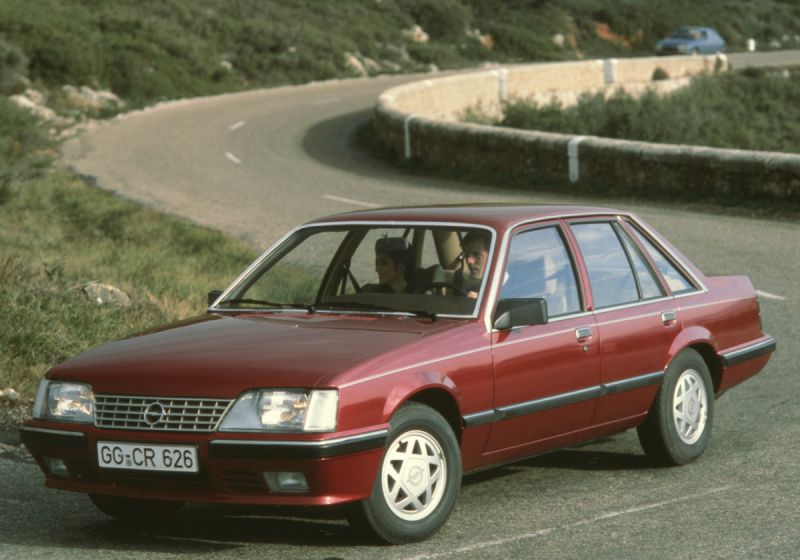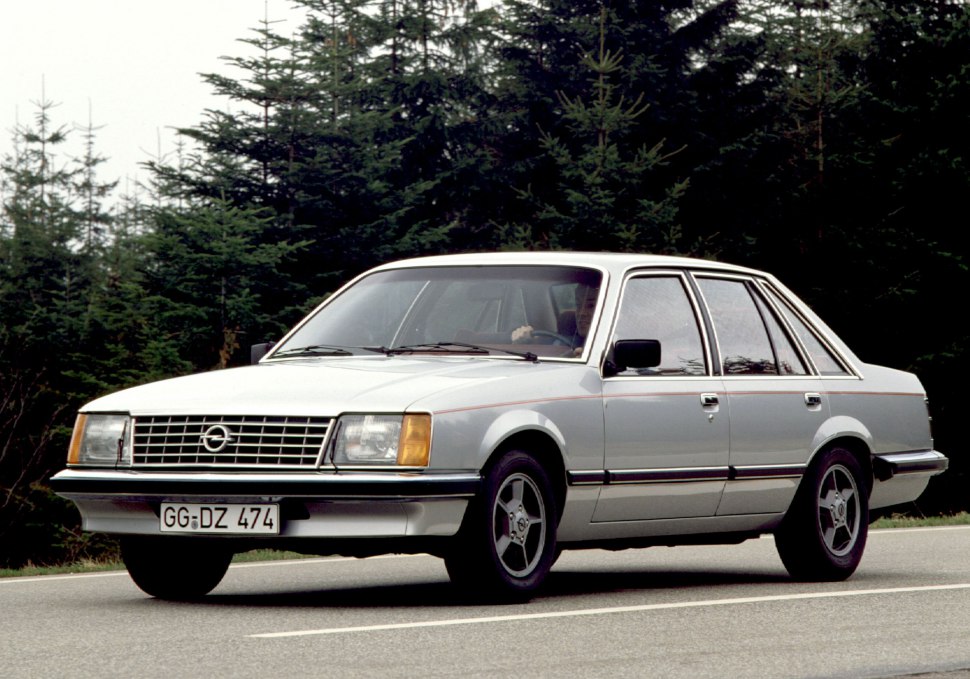
The Opel Senator A 2.8 (140 Hp) Automatic: A German Executive Sedan of the Late 1970s
The Opel Senator A represents a significant chapter in the history of German automotive engineering, serving as Opel’s flagship executive sedan during its production run from 1978 to 1981. Designed to compete in the demanding European luxury and executive car segment, the Senator A offered a blend of comfort, robust engineering, and a more accessible price point compared to its more prestigious German rivals. The specific variant, the Opel Senator A 2.8 (140 Hp) Automatic, was a popular choice for those seeking a smooth and capable cruiser, embodying the traditional rear-wheel-drive, straight-six sedan formula that defined many premium vehicles of its era. While never officially sold in the United States, the Senator A carved out a strong niche in its primary European markets, standing as a testament to Opel’s ambition to offer a full-size, upscale vehicle.
Engineering and Performance of the Opel Senator A 2.8 (140 Hp) Automatic
At the heart of the Opel Senator A 2.8 (140 Hp) Automatic was a longitudinally mounted 2.8-liter (2784 cm3 or 169.89 cu. in.) inline-six gasoline engine, designated by the code ’28H’. This naturally aspirated powerplant featured a Single OverHead Camshaft (SOHC) valvetrain with two valves per cylinder, a common and reliable configuration for the period. Fuel delivery was managed by a carburetor system, typical for gasoline engines of the late 1970s before the widespread adoption of electronic fuel injection. This robust six-cylinder unit was engineered to produce 140 horsepower at 5200 revolutions per minute (rpm), providing ample motivation for the executive sedan.
Torque output was a healthy 214 Newton-meters (157.84 lb.-ft.) available at a relatively low 3400 rpm, contributing to the car’s relaxed cruising demeanor and responsive in-town acceleration. Power was channeled to the rear wheels via a three-speed automatic transmission, a configuration that prioritized smooth shifts and comfort over outright performance or fuel efficiency.
Despite its emphasis on comfort, the Senator A 2.8 (140 Hp) Automatic offered respectable performance for its class and time. It could accelerate from 0 to 60 miles per hour in an estimated 11.9 seconds (or 0-100 km/h in 12.5 seconds), and reach a top speed of approximately 115 mph (185 km/h). While these figures might seem modest by today’s standards, they were competitive for a large, comfortable sedan in the late 1970s. The kerb weight of 3020.33 pounds (1370 kg) contributed to a weight-to-power ratio of 9.8 kg/Hp, indicating a solid, if not sporty, power delivery. Fuel economy, rated at a combined 19.3 US miles per gallon (12.2 l/100 km), was typical for a large displacement, carbureted inline-six engine paired with an automatic transmission from that era.
Design and Features
The Opel Senator A was characterized by its classic three-box sedan silhouette, embodying the design language prevalent in European executive cars of the late 1970s. Its styling was understated and elegant, prioritizing a dignified presence over flamboyant lines. The four-door, five-seat configuration offered generous interior space, a hallmark of vehicles designed for comfortable long-distance travel.
Dimensionally, the Senator A was a substantial vehicle, measuring 189.41 inches (4811 mm) in length, 68.03 inches (1728 mm) in width, and 55.71 inches (1415 mm) in height. A wheelbase of 105.63 inches (2683 mm) provided a stable ride and contributed significantly to interior roominess. The trunk space was particularly impressive for its class, offering a cavernous 25.25 cubic feet (715 liters) of cargo capacity, making it highly practical for family trips or executive travel.
The chassis featured a rear-wheel-drive architecture, which was the standard for executive cars, contributing to balanced handling and a traditional driving feel. Braking duties were handled by ventilated discs at the front and solid discs at the rear, a modern setup for the time, ensuring confident stopping power. The turning circle of 35.43 feet (10.8 meters) was respectable for a vehicle of its size, aiding maneuverability in urban environments. While the drag coefficient of 0.45 is not remarkable by modern aerodynamic standards, it was acceptable for a squared-off sedan of the late 1970s.
Inside, the Senator A aimed for a comfortable and well-appointed cabin, often featuring plush seating, wood trim, and a comprehensive array of instrumentation. While specific luxury features varied by market and trim level, the focus was on providing a refined and quiet environment for occupants, reflecting its executive aspirations.
Technical Specifications: Opel Senator A 2.8 (140 Hp) Automatic
| General Information | |
|---|---|
| Brand | Opel |
| Model | Senator |
| Generation | Senator A |
| Type (Engine) | 2.8 (140 Hp) Automatic |
| Start of Production | 1978 year |
| End of Production | 1981 year |
| Powertrain Architecture | Internal Combustion engine |
| Body Type | Sedan |
| Seats | 5 |
| Doors | 4 |
| Performance Specifications | |
| Fuel Consumption (Combined) | 19.3 US mpg (12.2 l/100 km) |
| Fuel Type | Petrol (Gasoline) |
| Acceleration 0 – 60 mph | 11.9 sec (Calculated) |
| Acceleration 0 – 62 mph (0-100 km/h) | 12.5 sec |
| Maximum Speed | 114.95 mph (185 km/h) |
| Weight-to-Power Ratio | 9.8 kg/Hp |
| Weight-to-Torque Ratio | 6.4 kg/Nm |
| Engine Specifications | |
| Power | 140 Hp @ 5200 rpm |
| Power per Liter | 50.3 Hp/l |
| Torque | 214 Nm (157.84 lb.-ft.) @ 3400 rpm |
| Engine Model/Code | 28H |
| Engine Displacement | 2.8 l (2784 cm3 / 169.89 cu. in.) |
| Number of Cylinders | 6 |
| Engine Configuration | Inline |
| Cylinder Bore | 3.62 in. (92 mm) |
| Piston Stroke | 2.75 in. (69.8 mm) |
| Compression Ratio | 9:1 |
| Number of Valves per Cylinder | 2 |
| Fuel Injection System | Carburettor |
| Engine Aspiration | Naturally aspirated engine |
| Valvetrain | SOHC |
| Space, Volume and Weights | |
| Kerb Weight | 3020.33 lbs (1370 kg) |
| Max. Weight | 4188.78 lbs (1900 kg) |
| Max Load | 1168.45 lbs (530 kg) |
| Trunk (Boot) Space – Maximum | 25.25 cu. ft. (715 l) |
| Fuel Tank Capacity | 19.81 US gal (75 l) |
| Permitted Trailer Load with Brakes (12%) | 3747.86 lbs (1700 kg) |
| Permitted Trailer Load without Brakes | 1543.24 lbs (700 kg) |
| Dimensions | |
| Length | 189.41 in. (4811 mm) |
| Width | 68.03 in. (1728 mm) |
| Height | 55.71 in. (1415 mm) |
| Wheelbase | 105.63 in. (2683 mm) |
| Front Track | 56.81 in. (1443 mm) |
| Rear (Back) Track | 57.95 in. (1472 mm) |
| Ride Height (Ground Clearance) | 5.51 in. (140 mm) |
| Drag Coefficient (Cd) | 0.45 |
| Minimum Turning Circle (Turning Diameter) | 35.43 ft. (10.8 m) |
| Drivetrain, Brakes and Suspension Specifications | |
| Drivetrain Architecture | The Internal combustion engine (ICE) drives the rear wheels of the vehicle. |
| Drive Wheel | Rear wheel drive |
| Number of Gears and Type of Gearbox | 3 gears, automatic transmission |
| Front Brakes | Ventilated discs |
| Rear Brakes | Disc |
Legacy and Market Impact
The Opel Senator A played a crucial role in Opel’s strategy to compete in the executive car segment, a realm typically dominated by more premium German brands like Mercedes-Benz and BMW. Positioned above the Opel Rekord, the Senator A was designed to offer a comfortable, reliable, and well-equipped alternative for buyers who desired a spacious and refined sedan without the higher price tag associated with its luxury rivals. Its primary competitors in Europe included the Ford Granada, the Mercedes-Benz W123 series, and the BMW 5-Series (E12) and 7-Series (E23).
While it may not have carried the same prestige as a Mercedes or BMW, the Senator A earned a reputation for its robust build quality, smooth ride, and dependable mechanicals. The 2.8-liter inline-six, in particular, was known for its durability and relatively smooth operation, making it a popular choice for long-distance cruising. Its conservative yet elegant styling ensured it blended seamlessly into the executive parking lots of Europe.
The Senator A was also significant for sharing its platform with the Opel Monza, a stylish two-door grand tourer coupe, demonstrating Opel’s ability to diversify its offerings from a common architectural base. The Senator A’s success in its various European markets solidified Opel’s presence in the upper echelons of the mainstream automotive sector. It laid the groundwork for its successor, the Senator B, which continued to evolve Opel’s executive car philosophy. Today, the Opel Senator A is remembered as a classic European executive sedan, representing a period when Opel actively challenged the established luxury marques with a compelling blend of value, comfort, and traditional German engineering. Its impact was primarily felt in its home market and across continental Europe, where it served as a practical and respectable choice for discerning buyers.