Peugeot 3008 I (Phase I, 2009) 2.0 HDi FAP (150 Hp): A European Crossover Pioneer
The
Peugeot 3008 I (Phase I, 2009) 2.0 HDi FAP (150 Hp)
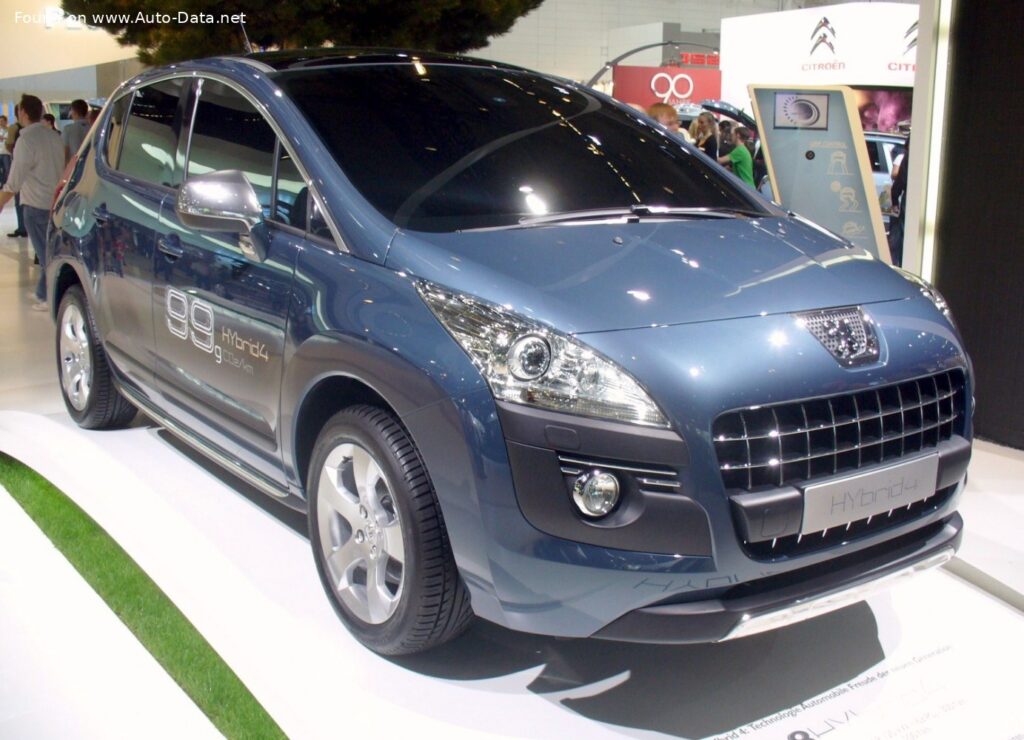
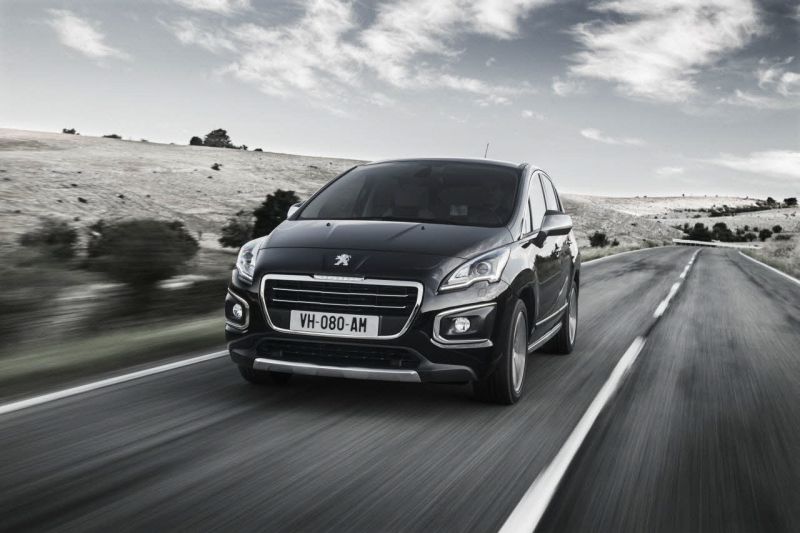
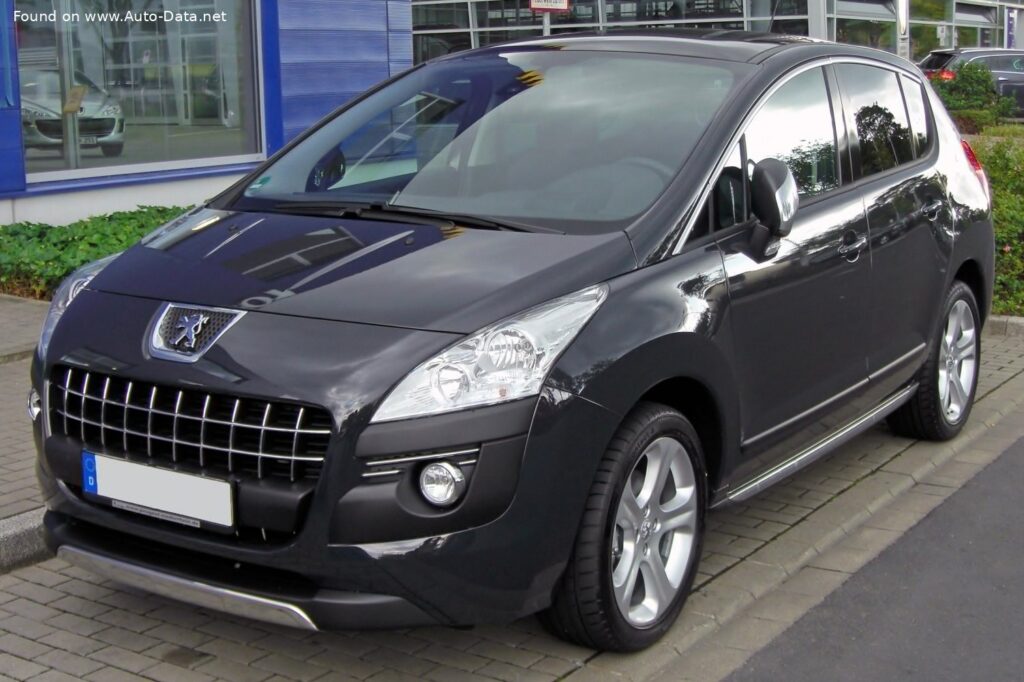
represents a pivotal moment for the French automaker, marking its ambitious foray into the burgeoning compact crossover SUV segment. Launched in 2009, this first-generation 3008, specifically the Phase I variant, was designed to blend the practicality of a multi-purpose vehicle (MPV) with the elevated driving position and rugged styling cues of a sport utility vehicle (SUV), all while maintaining the driving dynamics of a conventional hatchback. Positioned as a versatile family vehicle, the 3008 quickly found favor in its primary European markets, offering a compelling package of efficiency, comfort, and innovative design. While never officially sold in the United States, the 3008 showcased Peugeot’s engineering prowess and strategic adaptation to changing consumer tastes, particularly its commitment to advanced diesel powertrains exemplified by the 2.0-liter HDi FAP engine.
Engine & Performance: The Heart of the Peugeot 3008 I (Phase I, 2009)
At the core of the
Peugeot 3008 I (Phase I, 2009) 2.0 HDi FAP (150 Hp)
lies a highly efficient and robust 2.0-liter (1997 cm³, 121.86 cu. in.) inline four-cylinder diesel engine, codenamed RHE DW10CTED4. This powertrain was a hallmark of Peugeot’s commitment to diesel technology, delivering a strong balance of power and exceptional fuel economy. Equipped with a turbocharger and intercooler, along with a sophisticated Common Rail fuel injection system, the engine produced a healthy 150 horsepower at 3750 rpm. More impressively for a vehicle of its class, it generated a substantial 250.77 lb.-ft. of torque at a low 2000 rpm, ensuring strong pulling power and effortless cruising.
This diesel powerplant was mated to a precise 6-speed manual transmission, directing power to the front wheels. This drivetrain architecture, combined with the engine’s ample torque, allowed the 3008 to accelerate from 0 to 60 mph in a respectable 9.2 seconds, with a top speed reaching 121.17 mph. Beyond its performance figures, the 2.0 HDi FAP engine was engineered to meet the stringent Euro 5 emission standards, incorporating a Diesel Particulate Filter (FAP) system to significantly reduce soot emissions. This focus on environmental responsibility, coupled with impressive fuel consumption figures – a combined 42 US mpg – made it an incredibly attractive option for European families and commuters seeking to minimize running costs and environmental impact. The engine’s DOHC valvetrain and 17.6:1 compression ratio further underscored its modern design and efficiency.
Design & Features: Blending Form with Function
The design of the Peugeot 3008 I (Phase I, 2009) was a bold step for the brand, attempting to carve out a niche between traditional SUVs and more practical MPVs. Classified as a 5-door, 5-seat SUV, its exterior styling was distinctive, featuring a prominent front grille, a high waistline, and a somewhat bulbous yet aerodynamic profile. While its aesthetics initially divided opinion, the design prioritized interior space and versatility, which were key selling points for its target audience.
Measuring 171.85 inches in length, 72.32 inches in width, and 64.53 inches in height, with a wheelbase of 102.87 inches, the 3008 offered a commanding presence on the road. Inside, the cabin was designed for maximum comfort and practicality. The elevated driving position provided excellent visibility, a feature highly sought after by SUV buyers. The interior boasted a modular layout, with a minimum trunk space of 15.26 cu. ft. that could expand to a generous 43.83 cu. ft. with the rear seats folded, making it highly adaptable for cargo and family needs. Features like an optional panoramic glass roof further enhanced the sense of spaciousness.
In terms of chassis and safety, the 3008 was well-equipped for its time. It featured an independent McPherson strut front suspension and a semi-independent coil spring rear suspension, providing a comfortable yet composed ride. Braking duties were handled by ventilated discs at the front and solid discs at the rear, complemented by an Anti-lock Braking System (ABS) as standard. The electric power steering system offered light and precise control, enhancing maneuverability, especially in urban environments. The vehicle rode on 225/50R17 tires mounted on 7.5J x 17 wheel rims, contributing to its stable stance. With a curb weight of 3536.21 lbs. and a maximum load capacity of 1049.4 lbs., the 3008 was built to handle family adventures with ease.
Technical Specifications
| Category | Specification |
|---|---|
| General Information | |
| Brand | Peugeot |
| Model | 3008 |
| Generation | 3008 I (Phase I, 2009) |
| Type (Engine) | 2.0 HDi FAP (150 Hp) |
| Start of Production | 2009 year |
| End of Production | 2013 year |
| Powertrain Architecture | Internal Combustion engine |
| Body type | SUV |
| Seats | 5 |
| Doors | 5 |
| Performance Specs | |
| Fuel Consumption (Urban) | 7.1 l/100 km (33.1 US mpg) |
| Fuel Consumption (Extra Urban) | 4.6 l/100 km (51.1 US mpg) |
| Fuel Consumption (Combined) | 5.6 l/100 km (42 US mpg) |
| Fuel Type | Diesel |
| Acceleration 0 – 60 mph | 9.2 sec |
| Maximum Speed | 195 km/h (121.17 mph) |
| Emission Standard | Euro 5 |
| Weight-to-power ratio | 10.7 kg/Hp (93.5 Hp/tonne) |
| Weight-to-torque ratio | 4.7 kg/Nm (212 Nm/tonne) |
| Engine Specs | |
| Power | 150 Hp @ 3750 rpm |
| Power per liter | 75.1 Hp/l |
| Torque | 340 Nm @ 2000 rpm (250.77 lb.-ft. @ 2000 rpm) |
| Engine Layout | Front, Transverse |
| Engine Model/Code | RHE DW10CTED4 |
| Engine Displacement | 1997 cm³ (121.86 cu. in.) |
| Number of Cylinders | 4 |
| Engine Configuration | Inline |
| Cylinder Bore | 85 mm (3.35 in.) |
| Piston Stroke | 88 mm (3.46 in.) |
| Compression Ratio | 17.6:1 |
| Number of Valves per Cylinder | 4 |
| Fuel Injection System | Diesel Commonrail |
| Engine Aspiration | Turbocharger, Intercooler |
| Valvetrain | DOHC |
| Engine Oil Capacity | 5 l (5.28 US qt) |
| Coolant Capacity | 8.4 l (8.88 US qt) |
| Engine Systems | Particulate filter |
| Space, Volume and Weights | |
| Kerb Weight | 1604 kg (3536.21 lbs.) |
| Max. Weight | 2080 kg (4585.62 lbs.) |
| Max Load | 476 kg (1049.4 lbs.) |
| Trunk (boot) Space – Minimum | 432 l (15.26 cu. ft.) |
| Trunk (boot) Space – Maximum | 1241 l (43.83 cu. ft.) |
| Fuel Tank Capacity | 60 l (15.85 US gal) |
| Dimensions | |
| Length | 4365 mm (171.85 in.) |
| Width | 1837 mm (72.32 in.) |
| Height | 1639 mm (64.53 in.) |
| Wheelbase | 2613 mm (102.87 in.) |
| Front Track | 1532 mm (60.31 in.) |
| Rear (Back) Track | 1527 mm (60.12 in.) |
| Minimum Turning Circle | 11 m (36.09 ft.) |
| Drivetrain, Brakes and Suspension Specs | |
| Drivetrain Architecture | Front-wheel drive, Internal Combustion engine |
| Drive Wheel | Front wheel drive |
| Number of Gears and Type of Gearbox | 6 gears, manual transmission |
| Front Suspension | Independent, type McPherson with coil spring and anti-roll bar |
| Rear Suspension | Semi-independent, coil spring |
| Front Brakes | Ventilated discs |
| Rear Brakes | Disc |
| Assisting Systems | ABS (Anti-lock braking system) |
| Steering Type | Steering rack and pinion |
| Power Steering | Electric Steering |
| Tires Size | 225/50R17 |
| Wheel Rims Size | 7.5J x 17 |
Legacy & Market Impact
The Peugeot 3008 I (Phase I, 2009) 2.0 HDi FAP (150 Hp) arrived in a rapidly evolving European automotive landscape, where the demand for versatile, family-friendly vehicles was soaring. While it faced stiff competition from established players like the Nissan Qashqai, Volkswagen Tiguan, Ford Kuga, and Skoda Yeti, the 3008 carved out its own identity. Its unique blend of MPV practicality, SUV stance, and hatchback driving dynamics offered a distinct alternative to more traditional offerings.
Its strong suit, particularly in the European context, was its exceptional fuel efficiency and low emissions, thanks to advanced diesel engines like the 2.0 HDi FAP. This made it a popular choice for families and company car drivers concerned with running costs and environmental impact. The 3008’s comfortable ride, spacious and flexible interior, and high-quality finishes also contributed to its appeal. It helped Peugeot solidify its position in the compact crossover segment and demonstrated the brand’s ability to innovate and adapt.
While the 3008 was never directly marketed in the United States, its success in Europe was crucial for Peugeot’s global strategy. It paved the way for subsequent generations that would further refine the crossover formula, culminating in the critically acclaimed second-generation 3008 which won European Car of the Year in 2017. The first-generation 3008, particularly with its efficient diesel powertrains, played a significant role in defining Peugeot’s modern identity as a manufacturer of stylish, practical, and technologically advanced vehicles, proving that a blend of different vehicle types could be a recipe for success in a diverse and demanding market. It showcased Peugeot’s engineering capabilities and its understanding of the evolving needs of the contemporary European motorist.