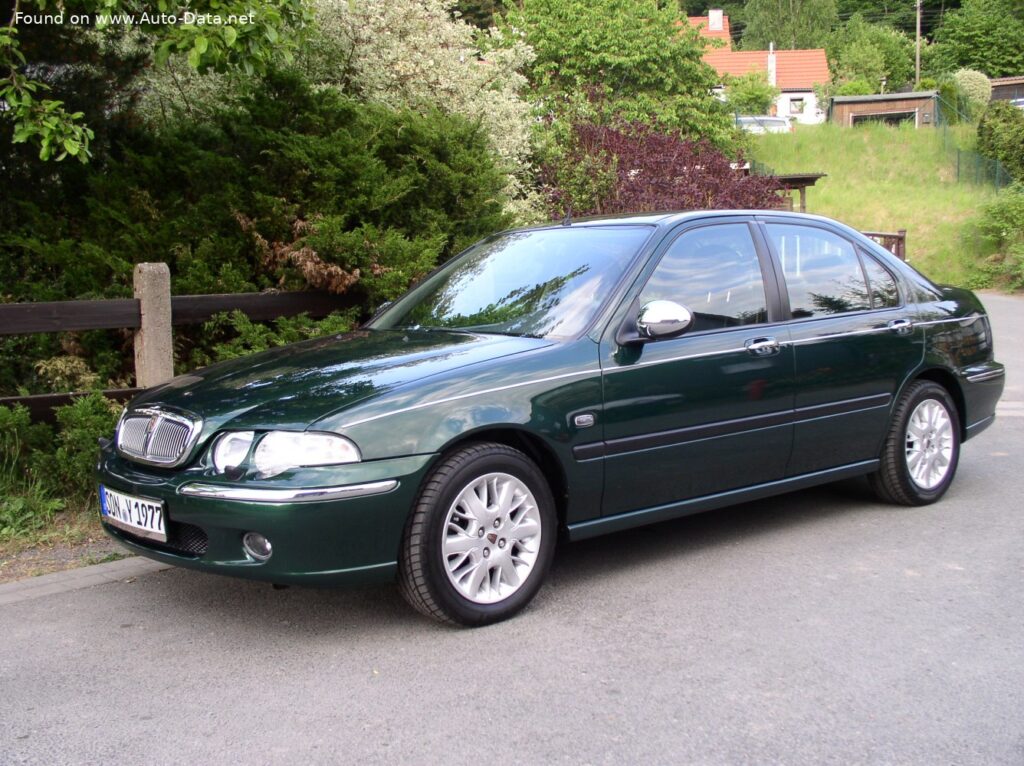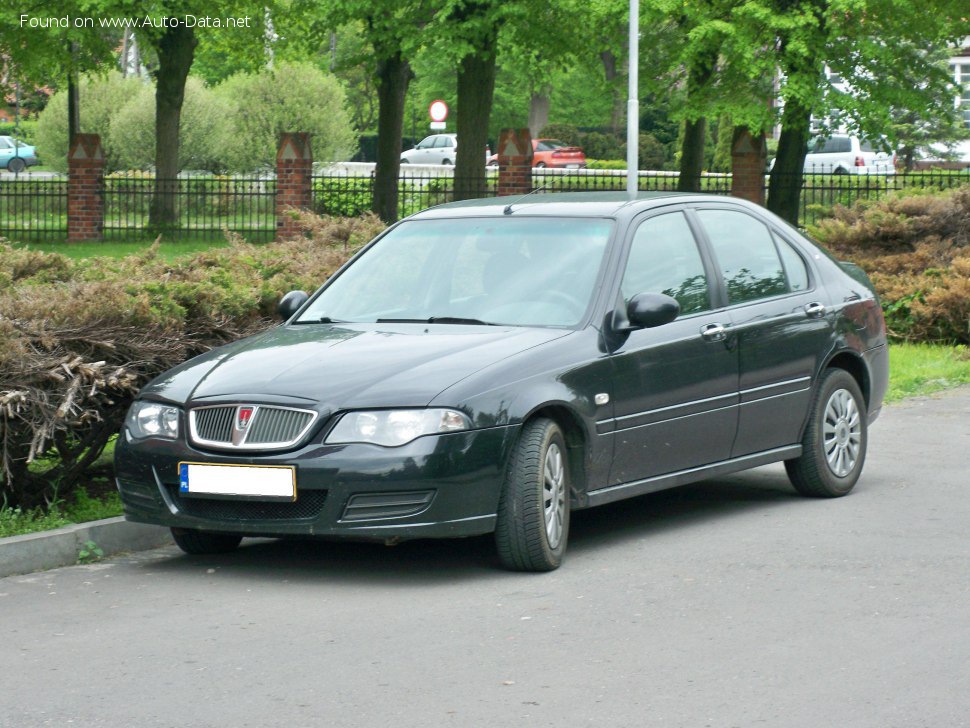
Introduction to the Rover 45 Hatchback (RT) 1.8i 16V (117 Hp)
The Rover 45, specifically the Hatchback (RT) generation with the 1.8i 16V (117 Hp) engine, represents a significant chapter in the history of the British automotive manufacturer, Rover. Produced from 1999 to 2005, the Rover 45 was positioned in the highly competitive European C-segment (compact family car class), offering a blend of traditional British comfort, ride quality, and affordability. Although never officially sold in the United States, the Rover 45 played a crucial role in its primary markets, particularly the United Kingdom and continental Europe, as a practical and well-appointed five-door hatchback designed for family use and daily commuting.
The “RT” designation refers to the internal code for this generation, which was essentially a heavily revised and rebadged version of the earlier Rover 400 Series. The 45 aimed to provide a more refined and upmarket feel than its predecessor, incorporating styling cues from the larger Rover 75 and benefiting from continuous development. The 1.8i 16V variant, with its 117 horsepower, was a popular choice, offering a good balance of performance and fuel efficiency for its time, catering to drivers seeking a capable yet economical compact vehicle.
Engine and Performance of the Rover 45 Hatchback (RT)
The 1.8i 16V Powertrain
At the heart of the Rover 45 Hatchback (RT) 1.8i 16V (117 Hp) lay Rover’s venerable K-Series engine, a 1.8-liter (109.6 cu. in.) naturally aspirated inline-four gasoline unit. This engine, designated with the code K18, was renowned for its lightweight aluminum construction and efficient design, featuring a Double Overhead Camshaft (DOHC) valvetrain with four valves per cylinder, totaling 16 valves. This configuration allowed for optimal airflow and combustion, contributing to both power output and responsiveness.
The engine produced a respectable 117 horsepower at 5500 revolutions per minute (rpm), making it one of the more potent options in the 45 lineup. Torque stood at 118.01 lb.-ft. (160 Nm), delivered at a relatively low 2750 rpm. This low-end torque characteristic made the car feel sprightly in urban driving conditions and provided adequate pulling power for overtaking maneuvers on highways. Power was transmitted to the front wheels via a smooth-shifting 5-speed manual transmission, a common and reliable setup for compact cars of this era.
In terms of performance, the Rover 45 Hatchback (RT) 1.8i 16V (117 Hp) was competitive within its class. It could accelerate from 0 to 60 miles per hour (0-97 km/h) in a respectable 9.8 seconds, with a top speed of approximately 119.92 mph (193 km/h). These figures underscored its capability as a versatile family car, suitable for both daily commutes and longer journeys.
Fuel economy was also a strong point for the 1.8i 16V. The combined fuel consumption was rated at 33.1 US miles per gallon (7.1 liters per 100 km), demonstrating its efficiency. Urban driving yielded around 24.8 US mpg (9.5 l/100 km), while extra-urban (highway) driving could achieve an impressive 41.3 US mpg (5.7 l/100 km). These figures were competitive for a gasoline engine of its size and power output in the early 2000s, making it an attractive option for cost-conscious buyers in Europe.
Design, Features, and Ergonomics
Interior and Exterior Design
The Rover 45 Hatchback (RT) maintained the brand’s commitment to classic British styling, albeit with a modern interpretation for the turn of the millennium. The exterior design was characterized by smooth lines and a somewhat conservative but elegant aesthetic. The front fascia featured Rover’s signature grille, flanked by updated headlights, giving it a more contemporary and upmarket appearance compared to its 400 Series predecessor. With a length of 171.73 inches, a width of 66.77 inches, and a height of 54.88 inches, the 45 was a compact yet substantial vehicle, offering a good balance between maneuverability and interior space. The wheelbase measured 103.15 inches, contributing to a stable ride and reasonable cabin room.
Inside, the Rover 45 aimed to provide a comfortable and traditionally British ambiance. Depending on the trim level, the cabin could feature wood trim accents and quality fabric or leather upholstery, creating an inviting and somewhat luxurious feel for its segment. The five-door hatchback body style provided excellent practicality, offering seating for five occupants and a versatile cargo area. The trunk (boot) space ranged from 13.42 cubic feet (380 liters) with the rear seats up, expanding to a generous 25.32 cubic feet (717 liters) when the rear seats were folded down, making it suitable for carrying groceries, luggage, or larger items.
Safety and Convenience Features
For its time, the Rover 45 included a reasonable array of safety and convenience features. Standard safety equipment typically included an Anti-lock Braking System (ABS), which was crucial for maintaining steering control during emergency braking. The braking system itself comprised ventilated discs at the front and solid discs at the rear, providing effective stopping power. Power steering, specifically a hydraulic rack and pinion system, ensured ease of maneuverability, particularly in urban environments and during parking.
The suspension setup featured a wishbone design for the front and a spring strut system for the rear, providing a comfortable and composed ride characteristic that Rover vehicles were known for. This setup prioritized comfort over outright sporty handling, aligning with the car’s role as a family-friendly compact. The standard tire size for the 1.8i 16V model was 175/70 R14 H, offering a good balance of grip and ride comfort. While not equipped with the advanced driver-assistance systems found in modern vehicles, the Rover 45 offered the essential features expected of a compact car in its production era.
Technical Specifications: Rover 45 Hatchback (RT) 1.8i 16V (117 Hp)
| General Information | |
|---|---|
| Brand | Rover |
| Model | 45 |
| Generation | 45 Hatchback (RT) |
| Type (Engine) | 1.8i 16V (117 Hp) |
| Start of Production | 1999 year |
| End of Production | 2005 year |
| Powertrain Architecture | Internal Combustion engine |
| Body Type | Hatchback |
| Seats | 5 |
| Doors | 5 |
| Performance Specifications | |
| Fuel Consumption (Economy) – Urban | 9.5 l/100 km (24.8 US mpg) |
| Fuel Consumption (Economy) – Extra Urban | 5.7 l/100 km (41.3 US mpg) |
| Fuel Consumption (Economy) – Combined | 7.1 l/100 km (33.1 US mpg) |
| Fuel Type | Petrol (Gasoline) |
| Acceleration 0 – 60 mph | 9.8 sec |
| Maximum Speed | 119.92 mph (193 km/h) |
| Weight-to-Power Ratio | 10.5 kg/Hp (95.1 Hp/tonne) |
| Weight-to-Torque Ratio | 7.7 kg/Nm (130.1 Nm/tonne) |
| Engine Specifications | |
| Power | 117 Hp @ 5500 rpm |
| Power per Liter | 65.1 Hp/l |
| Torque | 118.01 lb.-ft. @ 2750 rpm (160 Nm) |
| Engine Layout | Front, Transverse |
| Engine Model/Code | K18 |
| Engine Displacement | 1.8 liters (1796 cm³, 109.6 cu. in.) |
| Number of Cylinders | 4 |
| Engine Configuration | Inline |
| Cylinder Bore | 3.15 in. (80 mm) |
| Piston Stroke | 3.52 in. (89.3 mm) |
| Compression Ratio | 10.5:1 |
| Number of Valves per Cylinder | 4 |
| Fuel Injection System | Multi-port manifold injection |
| Engine Aspiration | Naturally aspirated engine |
| Valvetrain | DOHC |
| Engine Oil Capacity | 5.28 US qt (5 l) |
| Engine Oil Specification | Not specified |
| Coolant Capacity | 5.81 US qt (5.5 l) |
| Dimensions, Volume, and Weights | |
| Kerb Weight | 2711.69 lbs. (1230 kg) |
| Max. Weight | 3615.58 lbs. (1640 kg) |
| Max Load | 903.9 lbs. (410 kg) |
| Trunk (Boot) Space – Minimum | 13.42 cu. ft. (380 l) |
| Trunk (Boot) Space – Maximum | 25.32 cu. ft. (717 l) |
| Fuel Tank Capacity | 14.53 US gal (55 l) |
| Length | 171.73 in. (4362 mm) |
| Width | 66.77 in. (1696 mm) |
| Height | 54.88 in. (1394 mm) |
| Wheelbase | 103.15 in. (2620 mm) |
| Front Track | 58.07 in. (1475 mm) |
| Rear (Back) Track | 57.68 in. (1465 mm) |
| Drivetrain, Brakes, and Suspension | |
| Drivetrain Architecture | Front-wheel drive, Internal Combustion engine |
| Drive Wheel | Front wheel drive |
| Number of Gears and Type of Gearbox | 5 gears, manual transmission |
| Front Suspension | Wishbone |
| Rear Suspension | Spring Strut |
| Front Brakes | Ventilated discs |
| Rear Brakes | Disc |
| Assisting Systems | ABS (Anti-lock braking system) |
| Steering Type | Steering rack and pinion |
| Power Steering | Hydraulic Steering |
| Tires Size | 175/70 R14 H |
Legacy and Market Impact of the Rover 45
The Rover 45, particularly the 1.8i 16V hatchback, occupied a challenging position in the European automotive market during its production run. It was a direct competitor to established segment leaders like the Volkswagen Golf, Ford Focus, Opel/Vauxhall Astra, Peugeot 307, and Renault Mégane. While many rivals offered sharper handling or more cutting-edge design, the Rover 45 distinguished itself with its emphasis on ride comfort, a relatively spacious and well-appointed interior, and a distinctly British character. Its target audience appreciated the car’s refined demeanor and value proposition.
The 45’s heritage as a facelifted Rover 400, itself based on the Honda Civic platform, provided it with a solid and reliable foundation. This Honda connection meant that many mechanical components were robust, contributing to the car’s overall dependability. However, the K-Series engine, while praised for its light weight and efficiency, also gained a reputation for head gasket issues, which unfortunately overshadowed some of its positive attributes and contributed to a perception of unreliability for some owners. This issue became a significant challenge for Rover’s brand image, especially during the tumultuous final years of the MG Rover Group.
Despite these challenges, the Rover 45 represented Rover’s last concerted effort to remain competitive in the vital compact car segment. It was a key volume seller for the struggling company, trying to balance traditional Rover values with the demands of a modern market. Its legacy is complex: on one hand, it was seen as an aging design struggling against newer, more technologically advanced rivals; on the other, it was appreciated by a loyal customer base for its comfort, distinctive styling, and relatively low cost of ownership.
Ultimately, the Rover 45, along with the rest of the Rover lineup, ceased production with the collapse of the MG Rover Group in 2005. Today, the Rover 45 is remembered as a car that embodied the final era of a historic British marque, offering a comfortable and characterful alternative in a segment increasingly dominated by global players. It stands as a testament to Rover’s enduring design philosophy and its attempt to navigate the fiercely competitive automotive landscape of the early 21st century.