The Peugeot 3008 I (Phase II, 2013) 1.2 PureTech (130 Hp): A European Crossover’s Evolution
The Peugeot 3008 I (Phase II, 2013) represents a crucial period in the evolution of Peugeot’s compact crossover SUV offering. Launched as a facelifted version of the first-generation 3008, which originally debuted in 2008, the Phase II model arrived in 2013, with the specific 1.2 PureTech (130 Hp) variant starting production in 2015 and concluding in 2016. While not officially sold in the United States, the 3008 played a significant role in the highly competitive European C-segment, blending the practicality of a multi-purpose vehicle (MPV) with the rugged aesthetics and higher driving position of an SUV. This particular iteration, powered by Peugeot’s innovative 1.2-liter PureTech turbocharged gasoline engine, underscored a growing industry trend towards smaller, more efficient powertrains without sacrificing performance.
Engine and Performance: The Efficient 1.2 PureTech in the Peugeot 3008 I (Phase II, 2013)
At the heart of this specific Peugeot 3008 I (Phase II, 2013) model is the acclaimed 1.2-liter PureTech (HNY EB2DTS) inline three-cylinder engine. This powerplant, a testament to modern engine downsizing, delivers a robust 130 horsepower at 5500 revolutions per minute, offering a commendable power-per-liter ratio of 108.4 horsepower per liter. What truly sets this engine apart is its impressive torque output: 169.64 lb.-ft. (230 Nm) available at a remarkably low 1750 rpm. This broad torque band ensures responsive acceleration and flexible driving characteristics, making it well-suited for both urban commutes and highway cruising.
The engine’s advanced architecture features direct fuel injection and a turbocharger with an intercooler, optimizing combustion efficiency and boosting power output despite its small displacement of 1199 cubic centimeters (73.17 cu. in.). Power is channeled to the front wheels via a smooth-shifting 6-speed manual transmission, a common and popular choice in the European market for its driver engagement and efficiency.
In terms of outright performance, the 3008 1.2 PureTech (130 Hp) accelerates from 0 to 60 mph in a respectable 10.3 seconds (0-100 km/h in 10.8 seconds), reaching a maximum speed of 123.65 mph (199 km/h). These figures highlight its capability as a family-oriented crossover that doesn’t feel underpowered. Crucially, its efficiency is a strong selling point, with a combined fuel economy rating of 44.4 US mpg (5.3 liters per 100 km). This, coupled with CO2 emissions of 123 g/km, allowed the vehicle to meet stringent Euro 6 emission standards, showcasing Peugeot’s commitment to environmental responsibility in its primary markets. The engine oil capacity is 3.7 US quarts, while the cooling system holds 6.34 US quarts.
Design and Features: Practicality Meets Refinement
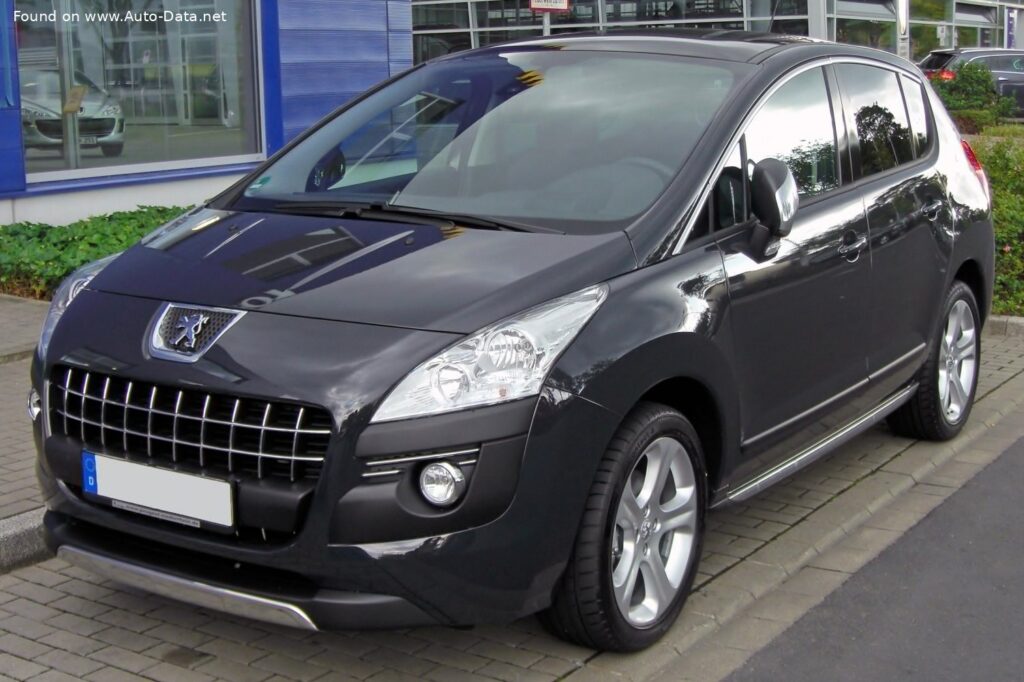
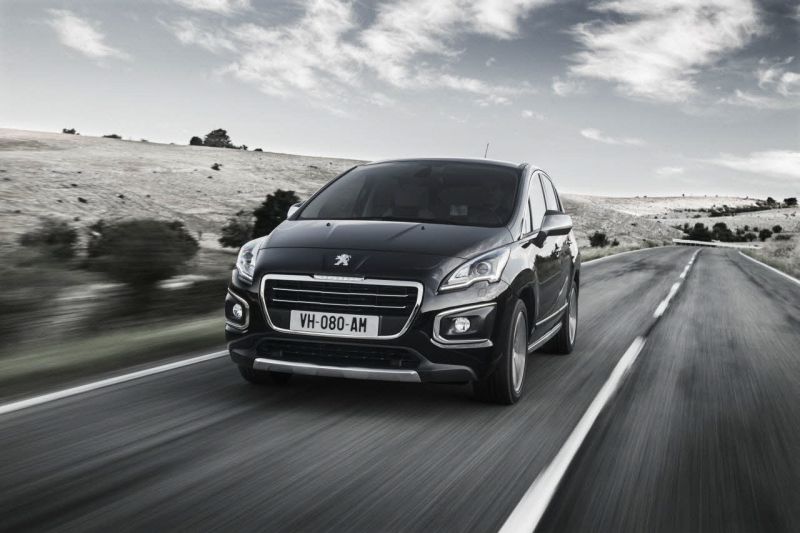
The Peugeot 3008 I (Phase II, 2013) retains the distinctive, somewhat unconventional styling of its first generation, characterized by its elevated ride height and spacious cabin. As an SUV body type with five doors and seating for five occupants, it prioritizes practicality and versatility. The Phase II facelift introduced subtle but effective updates, including a revised grille, updated headlights, and minor trim enhancements, aiming to give the vehicle a more contemporary and refined appearance in line with Peugeot’s evolving design language.
Measuring 171.85 inches in length, 72.32 inches in width (83.19 inches including mirrors), and 64.37 inches in height, the 3008 occupies a footprint ideal for navigating European city streets while offering ample interior space. Its 102.87-inch wheelbase contributes to a stable ride and generous legroom for passengers. The interior design emphasizes ergonomics and functionality, with a focus on ease of use.
One of the 3008’s standout features is its highly adaptable cargo area. With the rear seats in place, it offers a substantial 18.08 cubic feet (512 liters) of trunk space, expanding to an impressive 56.64 cubic feet (1604 liters) with the rear seats folded down. This flexibility makes it highly practical for families, luggage, or even light cargo hauling.
Safety and driving dynamics are addressed through a robust chassis and standard features. The front suspension consists of an independent McPherson strut setup with coil springs and an anti-roll bar, while the rear utilizes a semi-independent arrangement with coil springs. Braking is handled by ventilated discs at the front and solid discs at the rear, complemented by an Anti-lock Braking System (ABS) for enhanced control. The steering utilizes a precise rack and pinion system. The vehicle rides on 225/50 R17 tires mounted on 17-inch wheel rims, providing a good balance of comfort and grip. With a curb weight of 3086.47 pounds (1400 kg) and a maximum permissible weight of 4299.01 pounds (1950 kg), the 3008 offers a solid and reassuring feel on the road.
Technical Specifications: Peugeot 3008 I (Phase II, 2013) 1.2 PureTech (130 Hp)
| Category | Specification |
|---|---|
| Brand | Peugeot |
| Model | 3008 |
| Generation | 3008 I (Phase II, 2013) |
| Engine Type | 1.2 PureTech (130 Hp) |
| Production Start | 2015 |
| Production End | 2016 |
| Body Type | SUV |
| Seats | 5 |
| Doors | 5 |
| Fuel Type | Petrol (Gasoline) |
| Fuel Consumption (Urban) | 36.2 US mpg (6.5 l/100 km) |
| Fuel Consumption (Extra Urban) | 51.1 US mpg (4.6 l/100 km) |
| Fuel Consumption (Combined) | 44.4 US mpg (5.3 l/100 km) |
| CO2 Emissions | 123 g/km |
| Acceleration 0-60 mph | 10.3 sec |
| Maximum Speed | 123.65 mph (199 km/h) |
| Emission Standard | Euro 6 |
| Power | 130 Hp @ 5500 rpm |
| Torque | 169.64 lb.-ft. (230 Nm) @ 1750 rpm |
| Engine Layout | Front, Transverse |
| Engine Displacement | 1.2 liters (1199 cm3 / 73.17 cu. in.) |
| Number of Cylinders | 3, Inline |
| Valves per Cylinder | 4 |
| Fuel Injection System | Direct injection |
| Engine Aspiration | Turbocharger, Intercooler |
| Engine Oil Capacity | 3.7 US qt (3.5 l) |
| Coolant Capacity | 6.34 US qt (6 l) |
| Kerb Weight | 3086.47 lbs (1400 kg) |
| Max. Weight | 4299.01 lbs (1950 kg) |
| Max. Load | 1212.54 lbs (550 kg) |
| Trunk Space (Min) | 18.08 cu. ft. (512 l) |
| Trunk Space (Max) | 56.64 cu. ft. (1604 l) |
| Fuel Tank Capacity | 15.85 US gal (60 l) |
| Length | 171.85 in. (4365 mm) |
| Width | 72.32 in. (1837 mm) |
| Width (inc. mirrors) | 83.19 in. (2113 mm) |
| Height | 64.37 in. (1635 mm) |
| Wheelbase | 102.87 in. (2613 mm) |
| Front Track | 60.31 in. (1532 mm) |
| Rear Track | 60.12 in. (1527 mm) |
| Minimum Turning Circle | 35.76 ft. (10.9 m) |
| Drive Wheel | Front-wheel drive |
| Gearbox | 6-speed manual transmission |
| Front Suspension | Independent, McPherson with coil spring and anti-roll bar |
| Rear Suspension | Semi-independent, coil spring |
| Front Brakes | Ventilated discs |
| Rear Brakes | Disc |
| Assisting Systems | ABS (Anti-lock Braking System) |
| Steering Type | Steering rack and pinion |
| Tire Size | 225/50 R17 |
| Wheel Rims Size | 17 inches |
Legacy and Market Impact
The first-generation Peugeot 3008, and particularly its Phase II facelift, played a pivotal role in Peugeot’s strategy to capture a share of the burgeoning crossover market in Europe. While its initial design, blending MPV and SUV characteristics, was somewhat polarizing, the 3008 quickly gained a reputation for its practical interior, comfortable ride, and commendable fuel efficiency. In its primary European market, it competed fiercely with established rivals such as the Nissan Qashqai, Volkswagen Tiguan, Renault Kadjar, and Kia Sportage.
The introduction of the 1.2 PureTech engine in 2015 was a significant move, demonstrating Peugeot’s engineering prowess in developing highly efficient, small-displacement turbocharged gasoline engines. This engine became a cornerstone of Peugeot’s powertrain lineup, offering a compelling balance of performance, refinement, and low running costs, which were critical factors for European buyers facing increasingly stringent emissions regulations and higher fuel prices. Its success helped popularize the concept of “downsized” engines that could still deliver a satisfying driving experience.
The 3008 I, especially in its later Phase II guise, helped solidify Peugeot’s standing in the compact SUV segment, paving the way for the critically acclaimed and commercially successful second-generation 3008, which transformed into a more conventional, stylish SUV. The groundwork laid by the first generation, particularly its focus on interior versatility and efficient powertrains like the 1.2 PureTech, proved instrumental in Peugeot’s continued success in the competitive global automotive landscape, even if its direct presence was limited in the North American market. It remains a testament to European automotive design and engineering, prioritizing intelligent packaging and advanced powertrain technology for everyday usability.