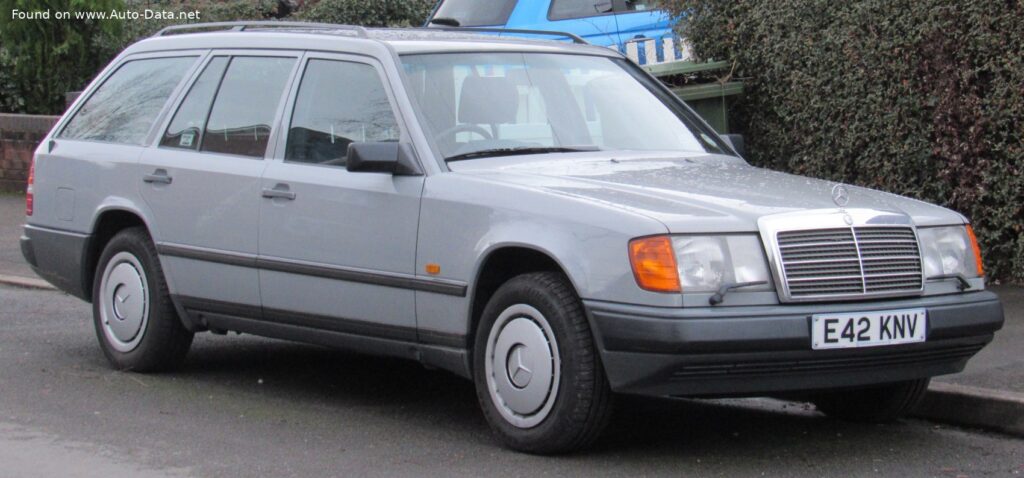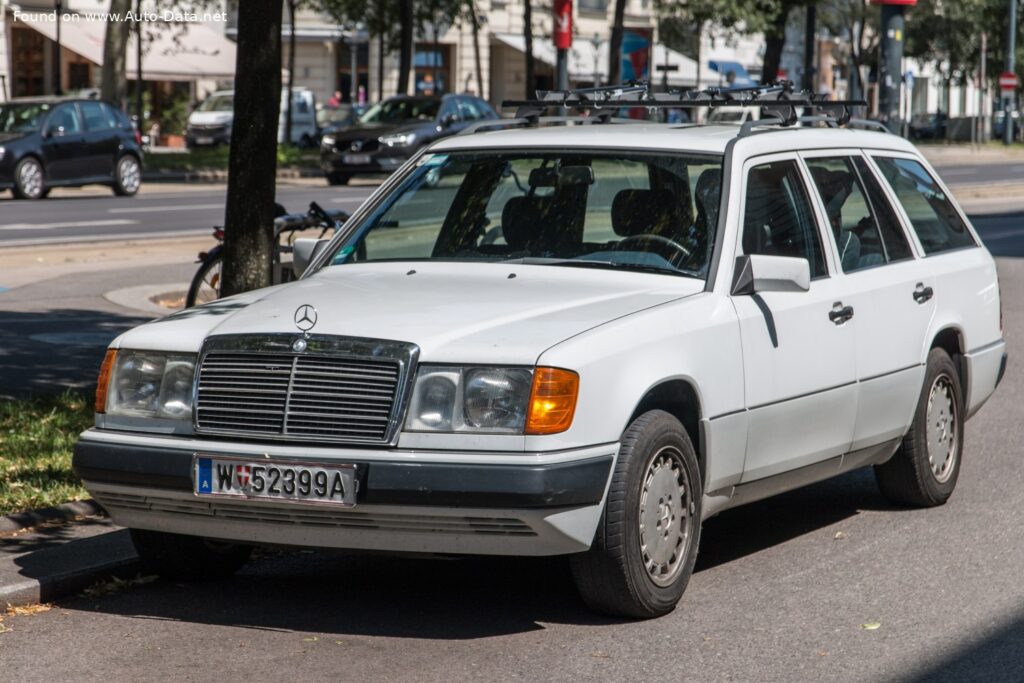
The Mercedes-Benz S124 (facelift 1989) 300 TD CAT: A Pillar of German Engineering
The Mercedes-Benz W124 series, produced from 1984 to 1996, stands as a testament to the brand’s commitment to engineering excellence, durability, and a refined driving experience. Among its diverse lineup, the Mercedes-Benz S124 (facelift 1989) 300 TD CAT represents the station wagon variant, a highly practical and robust offering that cemented Mercedes-Benz’s reputation in the executive car segment. Introduced as part of the significant 1989 facelift for the W124 generation, this particular model combined the spaciousness and utility of a five-door, five-seat station wagon with a durable, naturally aspirated diesel engine, specifically designed for long-distance comfort and efficiency. While primarily targeted at the European market, where diesel powertrains were highly favored for their economy and longevity, its engineering principles and build quality resonated globally, earning it legendary status among enthusiasts and professionals alike. The S124, known internally as the “T-Modell” (Touring Model), was celebrated for its blend of luxury, safety, and unparalleled reliability, making it a benchmark for premium family vehicles of its era.
Engine and Performance of the Mercedes-Benz S124 (facelift 1989) 300 TD CAT
Under the hood of the Mercedes-Benz S124 (facelift 1989) 300 TD CAT lies Mercedes-Benz’s venerable OM 603 D 30 / 603.912 diesel engine. This 3.0-liter (2996 cubic inches) inline-six powerplant was renowned for its smooth operation and robust construction. Unlike the more powerful turbocharged diesel variants that would follow, this particular iteration was naturally aspirated, delivering a respectable 110 horsepower at 4600 revolutions per minute (rpm). Torque figures stood at 140.87 pound-feet, available across a usable band from 2800 to 3050 rpm, providing ample pulling power for a vehicle of its size, especially when laden.
The engine featured a SOHC (Single Overhead Camshaft) valvetrain with two valves per cylinder and utilized a precombustion chamber injection system, a common and reliable diesel injection method of its time known for its relatively smooth operation. The “CAT” in its designation signified the inclusion of a catalytic converter, a significant step towards reducing emissions in diesel vehicles during the late 1980s.
Power was transmitted to the rear wheels via a durable and smooth-shifting 4-speed automatic transmission. This setup prioritized comfortable cruising and longevity over outright acceleration. The 300 TD CAT could accelerate from 0 to 60 miles per hour in approximately 14.5 seconds and reach a top speed of around 108.74 mph. While these figures might seem modest by today’s standards, they were competitive for a large, executive diesel station wagon of its era, emphasizing relaxed long-distance travel and fuel efficiency. The urban fuel economy was rated at approximately 25 US mpg, while extra-urban driving could yield around 35.1 US mpg, impressive figures for a vehicle of its size and weight.
Design and Features of the W124 S124 (facelift 1989)
The S124, the station wagon variant of the W124 chassis, inherited the clean, elegant, and functional design language characteristic of Mercedes-Benz cars from this period. The 1989 facelift brought subtle but meaningful updates, including body-colored side moldings, revised taillights, and a more integrated front bumper, aligning its aesthetics with newer Mercedes-Benz models of the time. The S124’s five-door body type offered exceptional practicality, making it a popular choice for families and professionals requiring significant cargo capacity without sacrificing luxury or driving comfort.
Measuring 187.6 inches in length, 68.5 inches in width, and 58.62 inches in height, with a generous 110.24-inch wheelbase, the S124 provided a spacious cabin for five occupants and a substantial cargo area. The design prioritized utility, with a wide, low-loading rear hatch and a thoughtfully designed interior that could withstand years of heavy use.
Inside, the S124 featured high-quality materials and meticulous craftsmanship. While specific luxury features varied by market and optional extras, standard equipment for the era included power windows, central locking, and a sophisticated heating and ventilation system. For its time, the S124 was also advanced in terms of safety. It came equipped with an Anti-lock Braking System (ABS) as standard, enhancing control during emergency braking. The steering system was a robust cone worm with recirculation balls, complemented by hydraulic power steering, providing a precise yet comfortable feel on the road. The independent multi-link rear suspension, a Mercedes-Benz hallmark, ensured exceptional ride comfort and handling stability, even when fully loaded. The front suspension utilized a wishbone design, further contributing to the car’s refined road manners. Braking performance was assured by ventilated discs at the front and solid discs at the rear.
Technical Specifications
| Category | Specification |
|---|---|
| Brand | Mercedes-Benz |
| Model | W124 |
| Generation | S124 (facelift 1989) |
| Type (Engine) | 300 TD CAT (110 Hp) Automatic |
| Production Start | September, 1989 |
| Production End | August, 1993 |
| Powertrain Architecture | Internal Combustion engine |
| Body type | Station wagon (estate), 5 Doors, 5 Seats |
| Performance Specs | |
| Fuel Consumption (Urban) | 9.4 L/100 km (25 US mpg) |
| Fuel Consumption (Extra Urban) | 6.7 L/100 km (35.1 US mpg) |
| Fuel Type | Diesel |
| Acceleration 0 – 60 mph | 14.5 seconds |
| Maximum Speed | 108.74 mph (175 km/h) |
| Weight-to-power ratio | 14.1 kg/Hp (31.08 lbs/Hp) |
| Weight-to-torque ratio | 8.1 kg/Nm (17.86 lbs/Nm) |
| Engine Specs | |
| Power | 110 HP @ 4600 rpm |
| Power per liter | 36.7 Hp/L |
| Torque | 191 Nm (140.87 lb-ft) @ 2800-3050 rpm |
| Engine Layout | Front, Longitudinal |
| Engine Model/Code | OM 603 D 30 / 603.912 |
| Engine Displacement | 2996 cm3 (3.0 Liters / 182.83 cu. in.) |
| Number of Cylinders | 6 |
| Engine Configuration | Inline |
| Cylinder Bore | 87 mm (3.43 in.) |
| Piston Stroke | 84 mm (3.31 in.) |
| Compression Ratio | 22:1 |
| Number of Valves per Cylinder | 2 |
| Fuel Injection System | Precombustion chamber injection |
| Engine Aspiration | Naturally aspirated engine |
| Valvetrain | SOHC |
| Engine Oil Capacity | 7.5 L (7.93 US qt) |
| Space, Volume and Weights | |
| Kerb Weight | 1550 kg (3417.17 lbs) |
| Max. Weight | 2170 kg (4784.03 lbs) |
| Max Load | 620 kg (1366.87 lbs) |
| Fuel Tank Capacity | 72 L (19.02 US gal) |
| Dimensions | |
| Length | 4765 mm (187.6 in.) |
| Width | 1740 mm (68.5 in.) |
| Height | 1489 mm (58.62 in.) |
| Wheelbase | 2800 mm (110.24 in.) |
| Front Track | 1497 mm (58.94 in.) |
| Rear (Back) Track | 1497 mm (58.94 in.) |
| Drivetrain, Brakes and Suspension Specs | |
| Drivetrain Architecture | Internal Combustion engine drives the rear wheels. |
| Drive Wheel | Rear wheel drive |
| Number of Gears and Type of Gearbox | 4 gears, automatic transmission |
| Front Suspension | Wishbone |
| Rear Suspension | Independent multi-link suspension |
| Front Brakes | Ventilated discs |
| Rear Brakes | Disc |
| Assisting Systems | ABS (Anti-lock braking system) |
| Steering Type | Cone worm with recirculation balls |
| Power Steering | Hydraulic Steering |
| Tires Size (Front & Rear) | 195/65 R15 |
| Wheel Rims Size (Front & Rear) | 6.5J x 15 |
Legacy and Market Impact
The Mercedes-Benz S124, particularly models like the 300 TD CAT, carved out an indelible legacy as one of the most over-engineered and durable vehicles ever produced by Mercedes-Benz. Its impact was most profound in Europe, where it competed fiercely with rivals such as the BMW 5 Series Touring (E34) and the Audi 100 Avant (C3/C4). While BMW offered a sportier driving experience and Audi championed its quattro all-wheel-drive system, the S124 distinguished itself through its uncompromising build quality, superior ride comfort, and a reputation for near-indestructibility.
Owners frequently reported these vehicles accumulating hundreds of thousands of miles, sometimes even exceeding a million, with proper maintenance. This longevity translated into strong resale values and a passionate following. The 300 TD CAT, with its robust diesel engine, was particularly prized for its fuel efficiency and torque, making it an ideal choice for long-distance commuting, taxi services, and family hauling across the continent. The inclusion of a catalytic converter, indicated by “CAT,” was also forward-thinking for a diesel engine in the late 1980s, demonstrating Mercedes-Benz’s early efforts to address environmental concerns.
In the United States, diesel W124 models were sold, but the naturally aspirated 300 TD CAT wagon was less common than its turbocharged counterparts or gasoline-powered siblings. Nevertheless, those that did make it to American shores were highly regarded for their unique blend of German luxury, build quality, and distinct diesel character.
Today, the S124 is considered a modern classic, revered by enthusiasts for its timeless design, exceptional reliability, and the tactile quality of its engineering. It represents an era when Mercedes-Benz prioritized longevity and mechanical integrity above all else, creating vehicles that were not just modes of transportation but enduring pieces of automotive craftsmanship. The Mercedes-Benz S124 (facelift 1989) 300 TD CAT remains a symbol of this golden age, a practical and elegant workhorse that continues to impress with its enduring performance and unwavering appeal.