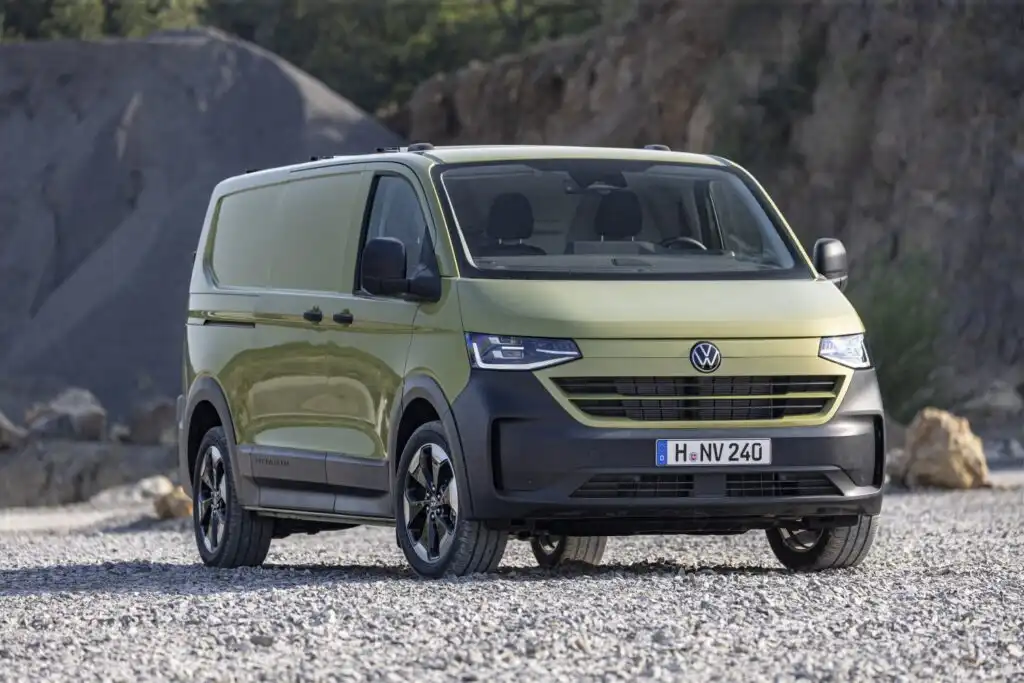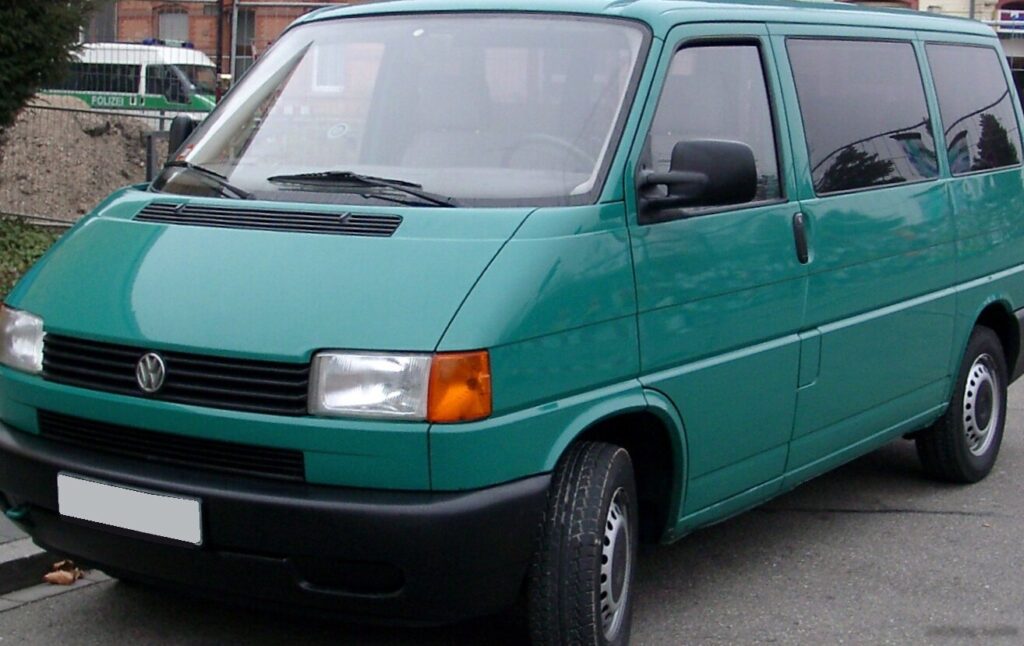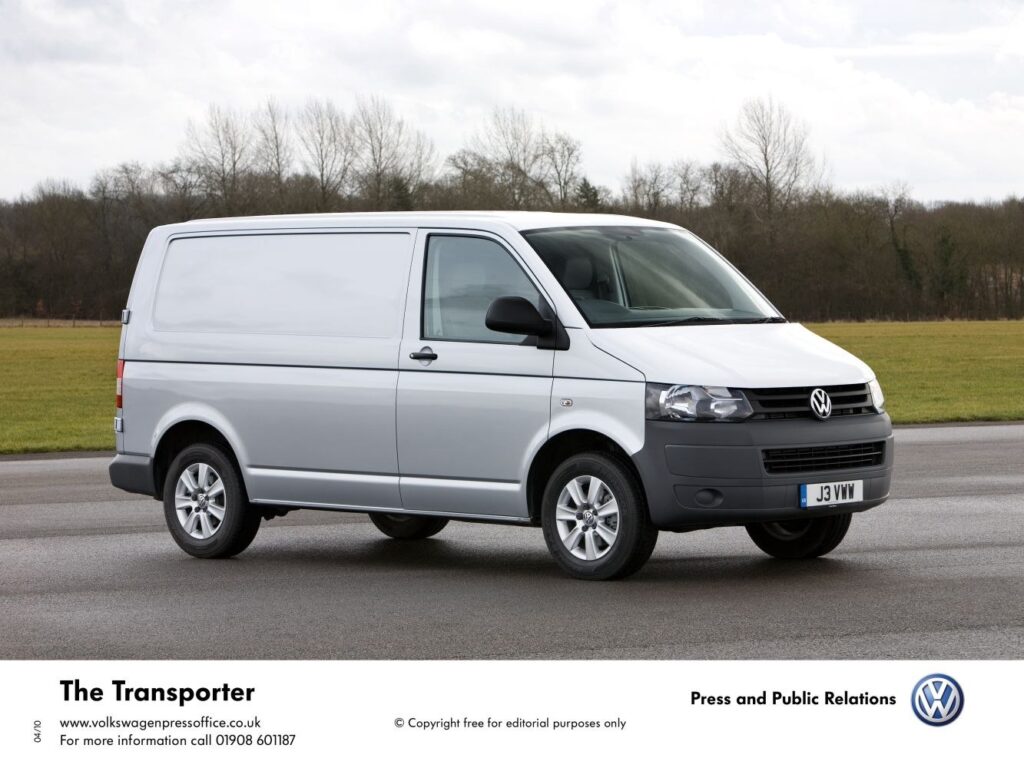
Volkswagen Transporter (T5, facelift 2009) Panel Van 2.0 TDI BMT (180 Hp) L2H2
The Volkswagen Transporter (T5, facelift 2009) Panel Van represents a significant iteration in Volkswagen’s long-standing tradition of producing robust and versatile commercial vehicles. As part of the fifth generation (T5) of the iconic Transporter series, this particular variant, produced between 2013 and 2015, benefited from a mid-cycle refresh in 2009, bringing updated styling, improved powertrains, and enhanced features. While the Transporter series holds an almost legendary status in Europe and other global markets, it was not officially sold in the United States, where Volkswagen’s commercial vehicle offerings have historically been limited to larger models or have been absent entirely. In its primary markets, the T5 Panel Van served as a critical workhorse, catering to a wide array of businesses that required a reliable, efficient, and spacious vehicle for goods transport and various professional applications.
This specific model, the 2.0 TDI BMT (180 Hp) L2H2, highlights Volkswagen’s commitment to efficiency and performance within the light commercial vehicle segment. The designation “L2H2” refers to its longer wheelbase (L2) and higher roof (H2) configuration, maximizing cargo volume and versatility. Equipped with the advanced BlueMotion Technology (BMT) diesel engine, this Transporter variant aimed to deliver a compelling balance of strong performance, impressive fuel economy, and reduced emissions, making it a highly competitive option for fleet operators and independent tradespeople alike.
Engine and Performance of the Volkswagen Transporter (T5, facelift 2009) Panel Van
At the heart of this Volkswagen Transporter (T5, facelift 2009) Panel Van is a sophisticated 2.0-liter (120.09 cu. in.) TDI (Turbocharged Direct Injection) diesel engine, specifically the EA189 / CFCA code. This inline four-cylinder powerplant is a prime example of modern diesel engineering, featuring a DOHC (Double Overhead Camshaft) valvetrain, Commonrail fuel injection, and a BiTurbo setup coupled with an intercooler. The BiTurbo system, which utilizes two turbochargers working in sequence, ensures a broad power band and excellent responsiveness across the RPM range. This advanced configuration allows the engine to produce a robust 180 horsepower at 4000 rpm, translating to a power-per-liter rating of 91.5 Hp/l, which is quite impressive for a commercial vehicle.
More critically for a commercial vehicle, the engine delivers a substantial 400 Nm (295.02 lb.-ft.) of torque, available from a low 1500 rpm and sustained up to 2000 rpm. This wide torque band is crucial for hauling heavy loads and providing effortless acceleration, even when the van is fully laden. Power is sent to the front wheels via a smooth-shifting 6-speed manual transmission, a common and reliable choice for commercial applications. Performance figures include an acceleration from 0 to 60 mph in a respectable 9.5 seconds and a top speed of 114.33 mph (184 km/h), demonstrating that this Transporter is more than capable of keeping pace with highway traffic.
The “BMT” in its designation stands for BlueMotion Technology, Volkswagen’s suite of efficiency-enhancing features. This includes a Start & Stop system, which automatically shuts off the engine when the vehicle is stationary and restarts it upon clutch engagement, significantly reducing fuel consumption and emissions in urban driving. A particulate filter is also standard, ensuring compliance with the Euro 5 emission standard. Fuel economy for the combined cycle is rated at an impressive 33.6 – 32.2 US mpg (7-7.3 l/100 km), with extra-urban figures reaching 38.6 – 36.8 US mpg (6.1-6.4 l/100 km), underscoring its cost-effectiveness for businesses.
Design and Features
The Volkswagen Transporter (T5, facelift 2009) Panel Van is designed first and foremost for functionality and durability. Its body type is a traditional van, featuring 4-5 doors (including the rear loading doors) and a 2-3 seat cabin layout, prioritizing cargo capacity over passenger comfort. The L2H2 configuration denotes a long wheelbase of 133.86 inches (3400 mm) and a high roof height of 85.67 inches (2176 mm), offering a cavernous maximum trunk space of 275.45 cubic feet (7800 liters). This generous cargo volume, combined with a maximum payload capacity ranging from 2123.05 to 2160.53 lbs (963-980 kg), makes it an ideal choice for tradespeople, delivery services, and various logistical operations.
Visually, the facelifted T5 maintained Volkswagen’s characteristic understated yet purposeful design. The exterior styling was updated to align with Volkswagen’s contemporary passenger car lineup, featuring revised headlights, grille, and bumper designs that gave it a more modern and refined appearance. Despite these aesthetic enhancements, the core design remained focused on practicality, with large side panels suitable for livery and advertising, and robust construction to withstand the rigors of daily commercial use.
Inside, the cabin is designed for functionality and ergonomic efficiency, offering a practical workspace for the driver and up to two passengers. Storage compartments are strategically placed throughout the cockpit, ensuring that tools, documents, and personal items are easily accessible. The seating position provides excellent visibility, a crucial factor for navigating urban environments and maneuvering in tight spaces. For safety, the Transporter T5 came equipped with essential features for its era, including an Anti-lock Braking System (ABS), which helps maintain steering control during emergency braking. The robust braking system features ventilated discs both at the front (340×32.5 mm) and rear (294×22 mm), providing strong stopping power even under heavy loads.
The suspension system is engineered for a balance of load-carrying capability and driving comfort. It features an independent McPherson strut setup with coil springs and an anti-roll bar at the front, paired with an independent coil spring, transverse stabilizer, and trailing arm configuration at the rear. This setup ensures stable handling and a relatively smooth ride, even when the van is unladen. The hydraulic power steering system, a rack and pinion type, provides precise control and ease of maneuverability, which is particularly beneficial in urban settings where the turning circle of 43.31 feet (13.2 m) is highly advantageous.
Technical Specifications
| Category | Specification | US Equivalent |
|---|---|---|
| General Information | ||
| Brand | Volkswagen | Volkswagen |
| Model | Transporter | Transporter |
| Generation | Transporter (T5, facelift 2009) Panel Van | Transporter (T5, facelift 2009) Panel Van |
| Type (Engine) | 2.0 TDI BMT (180 Hp) L2H2 | 2.0 TDI BMT (180 Hp) L2H2 |
| Start of production | 2013 year | 2013 year |
| End of production | 2015 year | 2015 year |
| Powertrain Architecture | Internal Combustion engine | Internal Combustion engine |
| Body type | Van | Van |
| Seats | 2-3 | 2-3 |
| Doors | 4-5 | 4-5 |
| Performance Specs | ||
| Fuel consumption (economy) – urban (NEDC) | 8.6-8.9 l/100 km | 27.4 – 26.4 US mpg |
| Fuel consumption (economy) – extra urban (NEDC) | 6.1-6.4 l/100 km | 38.6 – 36.8 US mpg |
| Fuel consumption (economy) – combined (NEDC) | 7-7.3 l/100 km | 33.6 – 32.2 US mpg |
| CO2 emissions (NEDC) | 184-192 g/km | 184-192 g/km |
| Fuel Type | Diesel | Diesel |
| Acceleration 0 – 60 mph (Calculated) | 9.5 sec | 9.5 sec |
| Maximum speed | 184 km/h | 114.33 mph |
| Emission standard | Euro 5 | Euro 5 |
| Weight-to-power ratio | 10.1 kg/Hp | 22.27 lbs/Hp |
| Weight-to-torque ratio | 4.6 kg/Nm | 10.14 lbs/Nm |
| Engine Specs | ||
| Power | 180 Hp @ 4000 rpm. | 180 Hp @ 4000 rpm. |
| Power per liter | 91.5 Hp/l | 91.5 Hp/l |
| Torque | 400 Nm @ 1500-2000 rpm. | 295.02 lb.-ft. @ 1500-2000 rpm. |
| Engine layout | Front, Transverse | Front, Transverse |
| Engine Model/Code | EA189 / CFCA | EA189 / CFCA |
| Engine displacement | 1968 cm3 | 120.09 cu. in. |
| Number of cylinders | 4 | 4 |
| Engine configuration | Inline | Inline |
| Cylinder Bore | 81 mm | 3.19 in. |
| Piston Stroke | 95.5 mm | 3.76 in. |
| Compression ratio | 16.5:1 | 16.5:1 |
| Number of valves per cylinder | 4 | 4 |
| Fuel injection system | Diesel Commonrail | Diesel Commonrail |
| Engine aspiration | BiTurbo, Intercooler | BiTurbo, Intercooler |
| Valvetrain | DOHC | DOHC |
| Engine oil capacity | 7 l | 7.4 US qt |
| Engine oil specification | Not specified in public data | Not specified in public data |
| Coolant | 11 l | 11.62 US qt |
| Engine Systems | ||
| Start & Stop System | Yes | Yes |
| Particulate filter | Yes | Yes |
| Space, Volume and Weights | ||
| Kerb Weight | 1820-2237 kg | 4012.41 – 4931.74 lbs. |
| Max. weight | 2800-3200 kg | 6172.94 – 7054.79 lbs. |
| Max load | 963-980 kg | 2123.05 – 2160.53 lbs. |
| Trunk (boot) space – maximum | 7800 l | 275.45 cu. ft. |
| Fuel tank capacity | 80 l | 21.13 US gal |
| Permitted trailer load with brakes (12%) | 2500 kg | 5511.56 lbs. |
| Permitted trailer load without brakes | 750 kg | 1653.47 lbs. |
| Permitted towbar download | 100 kg | 220.46 lbs. |
| Dimensions | ||
| Length | 5292 mm | 208.35 in. |
| Width | 1904 mm | 74.96 in. |
| Width including mirrors | 2283 mm | 89.88 in. |
| Height | 2176 mm | 85.67 in. |
| Wheelbase | 3400 mm | 133.86 in. |
| Front overhang | 896 mm | 35.28 in. |
| Rear overhang | 996 mm | 39.21 in. |
| Ride height (ground clearance) | 201 mm | 7.91 in. |
| Minimum turning circle (turning diameter) | 13.2 m | 43.31 ft. |
| Approach angle | 21° | 21° |
| Departure angle | 17° | 17° |
| Ramp-over (brakeover) angle | 12° | 12° |
| Drivetrain, Brakes and Suspension Specs | ||
| Drivetrain Architecture | Front-wheel drive | Front-wheel drive |
| Drive wheel | Front wheel drive | Front wheel drive |
| Number of gears and type of gearbox | 6 gears, manual transmission | 6 gears, manual transmission |
| Front suspension | Independent, type McPherson with coil spring and anti-roll bar | Independent, type McPherson with coil spring and anti-roll bar |
| Rear suspension | Independent coil spring, Transverse stabilizer, Trailing arm | Independent coil spring, Transverse stabilizer, Trailing arm |
| Front brakes | Ventilated discs, 340×32.5 mm | Ventilated discs, 13.39×1.28 in. |
| Rear brakes | Ventilated discs, 294×22 mm | Ventilated discs, 11.57×0.87 in. |
| Assisting systems | ABS (Anti-lock braking system) | ABS (Anti-lock braking system) |
| Steering type | Steering rack and pinion | Steering rack and pinion |
| Power steering | Hydraulic Steering | Hydraulic Steering |
| Tires size | 215/60 R17; 235/55 R17; 255/45 R18 | 215/60 R17; 235/55 R17; 255/45 R18 |
| Wheel rims size | 7J x 17; 8J x 18 | 7J x 17; 8J x 18 |
Legacy and Market Impact of the Volkswagen Transporter (T5, facelift 2009)
The Volkswagen Transporter series boasts an unparalleled legacy in the commercial vehicle world, tracing its roots back to the iconic T1 “Bus” or “Microbus” of the 1950s. The T5 generation, and particularly its facelifted version from 2009 to 2015, continued this tradition of reliability, versatility, and enduring appeal. While the Volkswagen Transporter (T5, facelift 2009) Panel Van was not a common sight on American roads, its impact across Europe, Asia, and other global markets was immense. It solidified the Transporter’s reputation as the benchmark for light commercial vans, often referred to simply as the “VW Van” by many.
In its primary markets, the T5 facelift, especially with the potent 2.0 TDI BMT 1