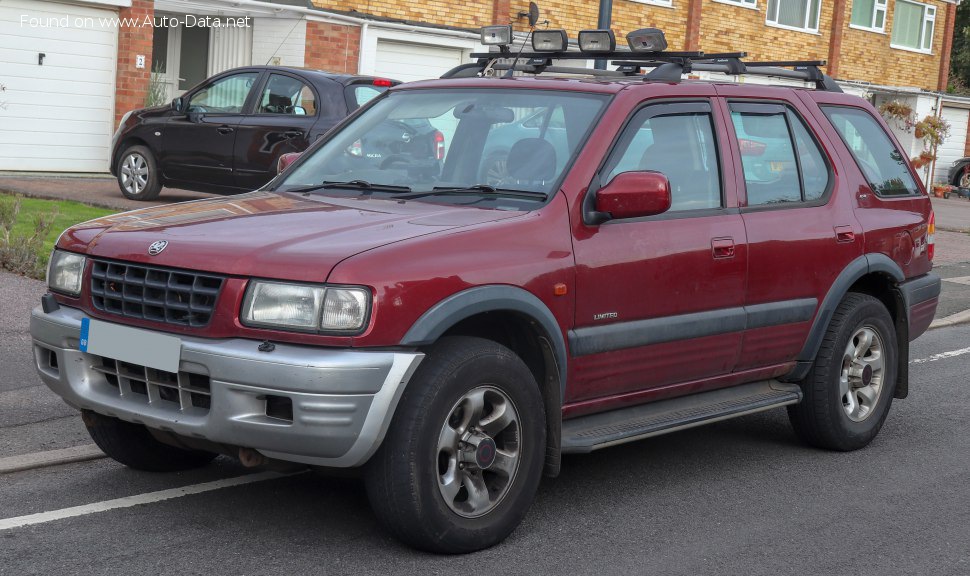
The Vauxhall Frontera Mk II Sport 2.2 16V (136 Hp): A European SUV Contender
The Vauxhall Frontera Mk II Sport 2.2 16V (136 Hp) represents a significant chapter in the history of compact sport utility vehicles (SUVs) within the European market. Produced under the Vauxhall badge, primarily for the United Kingdom, and as the Opel Frontera across mainland Europe, this vehicle was a rebadged version of the Isuzu MU (Mysterious Utility) or Isuzu Wizard/Rodeo, reflecting General Motors’ global platform sharing strategy. The Mk II generation, launched in 1998 and continuing production until 2004, aimed to address the evolving demands of European consumers for more refined, yet still capable, off-road vehicles. The “Sport” designation specifically referred to the shorter, three-door variant, offering a more compact footprint and often appealing to a younger demographic or those seeking a more agile SUV for both urban environments and light off-road excursions. At its core, the Frontera Mk II Sport 2.2 16V (136 Hp) carved out a niche as a practical, rugged, and relatively affordable option in a burgeoning segment dominated by competitors from Japan and other European manufacturers.
Engine and Performance of the Vauxhall Frontera Mk II Sport 2.2 16V
At the heart of the Vauxhall Frontera Mk II Sport 2.2 16V (136 Hp) was a robust 2.2-liter (2198 cm3 or 134.13 cubic inches) inline four-cylinder gasoline engine. This powerplant, identified by engine codes X22SE and Y22SE, was configured longitudinally at the front of the vehicle, a common setup for SUVs prioritizing traditional four-wheel-drive systems. Featuring a Double Overhead Camshaft (DOHC) valvetrain with four valves per cylinder, the engine was designed for efficient breathing and power delivery. Fueling was handled by a multi-port manifold injection system, a standard technology of the era that provided precise fuel atomization for improved combustion. Being a naturally aspirated engine, it relied on atmospheric pressure for air intake, contributing to its straightforward and reliable nature.
The engine produced a respectable 136 horsepower at 5200 revolutions per minute (rpm), making it a competitive offering for its class. More importantly for an SUV, it delivered a solid 149 pound-feet of torque at a relatively low 2600 rpm. This low-end torque was crucial for off-road capability, towing, and general driveability, allowing the vehicle to pull strongly from a standstill or navigate challenging terrain without excessive revving.
Power was sent to all four wheels through a durable 5-speed manual transmission, offering drivers direct control over gear selection and optimizing power transfer for various conditions. This all-wheel-drive (4×4) system, coupled with the manual gearbox, underscored the Frontera’s utility-oriented design. In terms of acceleration, the Mk II Sport 2.2 16V could accelerate from 0 to 60 miles per hour in approximately 12.7 seconds, with a top speed reaching 102.53 miles per hour (165 km/h). While not sports car performance, these figures were adequate for highway cruising and typical SUV duties.
Fuel economy, while not a primary selling point for SUVs of this vintage, was reasonable for its class. The vehicle achieved an estimated 15.9 US miles per gallon in urban driving conditions and a more efficient 29.4 US miles per gallon on the extra-urban cycle. These figures reflected the balance between engine size, vehicle weight (curb weight of 3659.67 pounds), and the demands of its all-wheel-drive system.
Design and Features
The Vauxhall Frontera Mk II Sport 2.2 16V (136 Hp) adopted a distinctive 3-door SUV body type, setting it apart from its longer 5-door sibling. This “Sport” variant, measuring 168.03 inches in length, 70.35 inches in width, and 66.61 inches in height, with a wheelbase of 96.93 inches, offered a more nimble and visually dynamic profile. Its relatively short wheelbase contributed to a better break-over angle, which, combined with a capable 4×4 system, enhanced its off-road prowess in tighter situations. The design language was typical of late 1990s SUVs, featuring a robust, utilitarian aesthetic with prominent wheel arches and a relatively upright stance.
Inside, the Frontera Mk II Sport provided seating for five occupants, though access to the rear seats in the 3-door model required some maneuverability. Despite its compact exterior, the vehicle offered practical cargo solutions. The trunk space ranged from a minimum of 11.3 cubic feet (320 liters) with all seats in place, expanding significantly to a generous 40.15 cubic feet (1137 liters) when the rear seats were folded, making it suitable for carrying luggage, sports equipment, or groceries.
From a structural and safety perspective for its era, the Frontera Mk II was equipped with essential features. It utilized ventilated disc brakes on both the front and rear axles, providing effective stopping power. An Anti-lock Braking System (ABS) was a standard assisting system, enhancing control during emergency braking, especially on slippery surfaces. Steering was managed by a worm-reduction unit with hydraulic power steering, offering predictable and assisted control, which was particularly beneficial when navigating rough terrain or parking the relatively heavy vehicle. The suspension setup featured a torsion bar system at the front and coil springs at the rear, a conventional arrangement designed to balance ride comfort with off-road articulation and load-carrying capability. The vehicle rode on 235/75 R15 tires mounted on 6.5J x 15-inch wheel rims, providing a good balance of road holding and sidewall flexibility for off-road conditions.
Technical Specifications: Vauxhall Frontera Mk II Sport 2.2 16V (136 Hp)
| Category | Specification | US Equivalent / Conversion |
|---|---|---|
General Information |
||
| Brand | Vauxhall | |
| Model | Frontera | |
| Generation | Frontera Mk II Sport | |
| Type (Engine) | 2.2 16V (136 Hp) | |
| Start of production | 1998 year | |
| End of production | 2004 year | |
| Powertrain Architecture | Internal Combustion engine | |
| Body type | SUV | |
| Seats | 5 | |
| Doors | 3 | |
Performance Specs |
||
| Fuel consumption (economy) – urban | 14.8 l/100 km | 15.9 US mpg |
| Fuel consumption (economy) – extra urban | 8 l/100 km | 29.4 US mpg |
| Fuel Type | Petrol (Gasoline) | Gasoline |
| Acceleration 0 – 100 km/h | 13.4 sec | |
| Acceleration 0 – 62 mph | 13.4 sec | |
| Acceleration 0 – 60 mph (Calculated) | 12.7 sec | |
| Maximum speed | 165 km/h | 102.53 mph |
| Weight-to-power ratio | 12.2 kg/Hp | 81.9 Hp/tonne |
| Weight-to-torque ratio | 8.2 kg/Nm | 121.7 Nm/tonne |
Engine Specs |
||
| Power | 136 Hp @ 5200 rpm | 136 Horsepower @ 5200 rpm |
| Power per liter | 61.9 Hp/l | |
| Torque | 202 Nm @ 2600 rpm | 148.99 lb.-ft. @ 2600 rpm |
| Engine layout | Front, Longitudinal | |
| Engine Model/Code | X22SE, Y22SE | |
| Engine displacement | 2198 cm3 | 2.2 Liters (134.13 cu. in.) |
| Number of cylinders | 4 | |
| Engine configuration | Inline | |
| Cylinder Bore | 86 mm | 3.39 in. |
| Piston Stroke | 94.6 mm | 3.72 in. |
| Compression ratio | 10.5:1 | |
| Number of valves per cylinder | 4 | |
| Fuel injection system | Multi-port manifold injection | |
| Engine aspiration | Naturally aspirated engine | |
| Valvetrain | DOHC | |
| Engine oil capacity | 4.5 l | 4.76 US qt |
| Coolant | 7.2 l | 7.61 US qt |
Space, Volume and Weights |
||
| Kerb Weight | 1660 kg | 3659.67 lbs. (Curb Weight) |
| Max. weight | 2300 kg | 5070.63 lbs. (Gross Vehicle Weight) |
| Max load | 640 kg | 1410.96 lbs. |
| Trunk (boot) space – minimum | 320 l | 11.3 cu. ft. |
| Trunk (boot) space – maximum | 1137 l | 40.15 cu. ft. |
| Fuel tank capacity | 65 l | 17.17 US gal |
Dimensions |
||
| Length | 4268 mm | 168.03 in. |
| Width | 1787 mm | 70.35 in. |
| Height | 1692 mm | 66.61 in. |
| Wheelbase | 2462 mm | 96.93 in. |
| Front track | 1515 mm | 59.65 in. |
| Rear (Back) track | 1520 mm | 59.84 in. |
Drivetrain, Brakes and Suspension Specs |
||
| Drive wheel | All wheel drive (4×4) | |
| Number of gears and type of gearbox | 5 gears, manual transmission | |
| Front suspension | Torsion | |
| Rear suspension | Coil spring | |
| Front brakes | Ventilated discs | |
| Rear brakes | Ventilated discs | |
| Assisting systems | ABS (Anti-lock braking system) | |
| Steering type | Worm-reduction unit | |
| Power steering | Hydraulic Steering | |
| Tires size | 235/75 R15 | |
| Wheel rims size | 6.5J x 15 | |
Legacy and Market Impact of the Vauxhall Frontera Mk II Sport
The Vauxhall Frontera Mk II Sport 2.2 16V (136 Hp), and the Frontera line as a whole, carved out a distinct legacy in the European SUV market during its production run from 1998 to 2004. As a rebadged Isuzu model, it represented General Motors’ strategy of leveraging global platforms to offer competitive products in various markets. For Vauxhall in the UK and Opel across continental Europe, the Frontera was a crucial entry into the rapidly expanding SUV segment, offering a more rugged and off-road-capable alternative to many car-based crossovers that were beginning to emerge.
In its primary market, the Frontera Mk II Sport competed against a diverse array of rivals. These included established players like the Land Rover Freelander, which offered a more premium and arguably more sophisticated off-road experience, and Japanese imports such as the Toyota RAV4 and Honda CR-V, which often emphasized reliability and on-road comfort. Additionally, other European manufacturers like the Nissan Terrano II (also a rebadge, from Ford Maverick) and even the Suzuki Vitara (known as Geo Tracker/Chevrolet Tracker in North America) were direct competitors. The Frontera distinguished itself with its traditional body-on-frame construction, offering a more robust feel and genuine off-road capability compared to many unibody rivals. The 3-door “Sport” variant, with its shorter wheelbase and more compact dimensions, appealed to buyers who wanted the versatility of an SUV without the bulk of a full-size model, making it more maneuverable in crowded European cities while still being capable enough for weekend adventures.
The Frontera’s reputation was generally that of a dependable, no-frills workhorse. While it might not have matched the refinement of some of its Japanese rivals or the perceived prestige of a Land Rover, it offered a compelling combination of space, capability, and value. The 2.2-liter 16V engine provided a good balance of power and torque for its weight, making it a competent performer both on and off the pavement. The manual transmission and selectable all-wheel-drive system further cemented its appeal among drivers who appreciated direct control and genuine utility.
Despite its solid performance and market presence, the Frontera eventually faced increasing pressure from newer, more fuel-efficient, and car-like crossovers that prioritized on-road dynamics and passenger comfort over rugged off-road capability. As market tastes shifted, the traditional SUV design of the Frontera began to show its age. Production ceased in 2004, and Opel/Vauxhall later introduced models like the Antara and Mokka, which were more aligned with the burgeoning crossover segment, moving away from the true SUV roots of the Frontera.
Today, the Vauxhall Frontera Mk II Sport 2.2 16V (136 Hp) is remembered as a sturdy and practical vehicle that served its purpose well in the European market. It highlighted GM’s ability to adapt global platforms for regional needs and provided a reliable option for consumers seeking an affordable, capable, and versatile SUV before the segment fully transitioned to its modern, more urban-focused form. Its legacy lies in its contribution to making SUVs a more mainstream vehicle type in Europe, offering genuine utility in a compact, accessible package.