Rover 45 Hatchback (RT) 2.0 i V6 24V (150 Hp): A Refined Compact for the European Market
The Rover 45 Hatchback (RT) 2.0 i V6 24V (150 Hp) represents a distinctive chapter in the history of the British automotive manufacturer, Rover. Produced from 1999 to 2005, the 45 series was Rover’s offering in the highly competitive European compact car segment, often referred to as the C-segment. While never officially sold in the United States, the Rover 45 was a familiar sight on European roads, aiming to blend traditional British comfort and styling with everyday practicality. This particular variant, featuring a 2.0-liter V6 engine, stood out in a class predominantly populated by four-cylinder powertrains, offering a unique proposition of smoothness and refinement.
The Rover 45 was essentially a heavily revised and rebadged version of the Rover 400, which itself shared significant underpinnings with the Honda Domani and Civic. However, the introduction of Rover’s proprietary KV6 engine in the 45 marked a departure from the Honda-sourced engines in the higher-end variants, showcasing Rover’s engineering capabilities even during challenging times for the company. This V6 model was positioned as a more premium, sophisticated option within the 45 lineup, targeting buyers who prioritized a cultured driving experience over outright sportiness or segment-leading fuel economy.
Engine and Performance: The Heart of the Rover 45 Hatchback (RT) 2.0 i V6 24V (150 Hp)
At the core of this particular Rover 45 model was its 2.0-liter (1997 cm3 / 121.86 cu. in.) KV6 engine, designated as the 20K4F. This naturally aspirated V-engine was a testament to Rover’s engineering prowess, featuring a DOHC (Double Overhead Camshaft) valvetrain with four valves per cylinder, totaling 24 valves. Mounted transversely at the front, this compact V6 delivered a respectable 150 horsepower at 6500 rpm and 136.45 lb.-ft. of torque at 4000 rpm. For its era and segment, a V6 engine in a compact hatchback was a relatively uncommon and premium offering, differentiating the Rover 45 from many of its four-cylinder rivals.
The power delivery from the KV6 was known for its smoothness and refinement, characteristic of a multi-cylinder engine. This translated into a more relaxed and quiet cruising experience compared to the often coarser four-cylinder units found in competitors. Performance figures included an acceleration from 0 to 60 mph in approximately 9 seconds, with a maximum speed of 126.14 mph (203 km/h). While not a hot-hatch in the traditional sense, these figures provided ample performance for daily driving and comfortable highway cruising. The engine was paired with a 5-speed automatic transmission, further emphasizing the car’s focus on ease of use and a refined driving experience rather than aggressive manual shifting.
Fuel efficiency, as expected for a V6 in a compact car of this era, was moderate. The combined fuel consumption was rated at 25 US mpg (9.4 l/100 km). Urban driving saw consumption rise to 16.8 US mpg (14 l/100 km), while extra-urban figures were more economical at 35.1 US mpg (6.7 l/100 km). The fuel injection system utilized a multi-port manifold injection, a standard and reliable setup for the time.
Chassis and Drivetrain
The Rover 45 utilized a front-wheel-drive architecture, typical for compact cars, ensuring predictable handling and efficient packaging. The suspension system comprised a wishbone setup at the front, providing a good balance of comfort and control, while the rear featured a spring strut arrangement. This combination, along with a hydraulic rack and pinion power steering system, aimed to deliver a comfortable ride with adequate feedback. Braking performance was handled by ventilated discs at the front and solid discs at the rear, augmented by an Anti-lock Braking System (ABS) for enhanced safety and control under heavy braking.
Design and Features
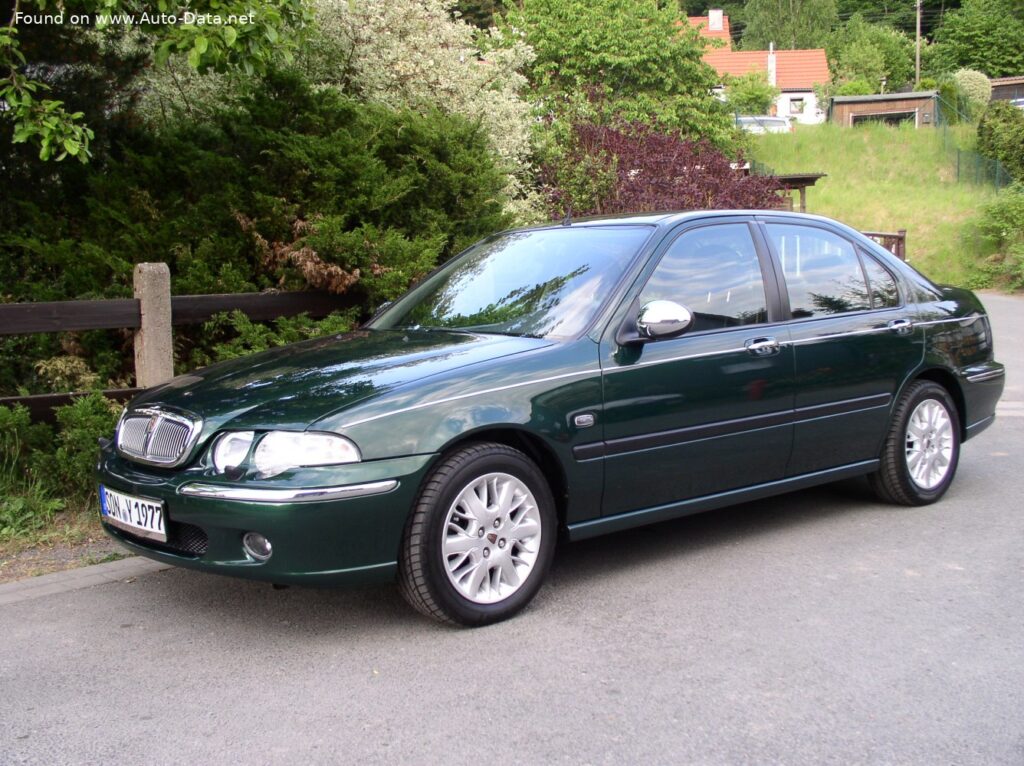
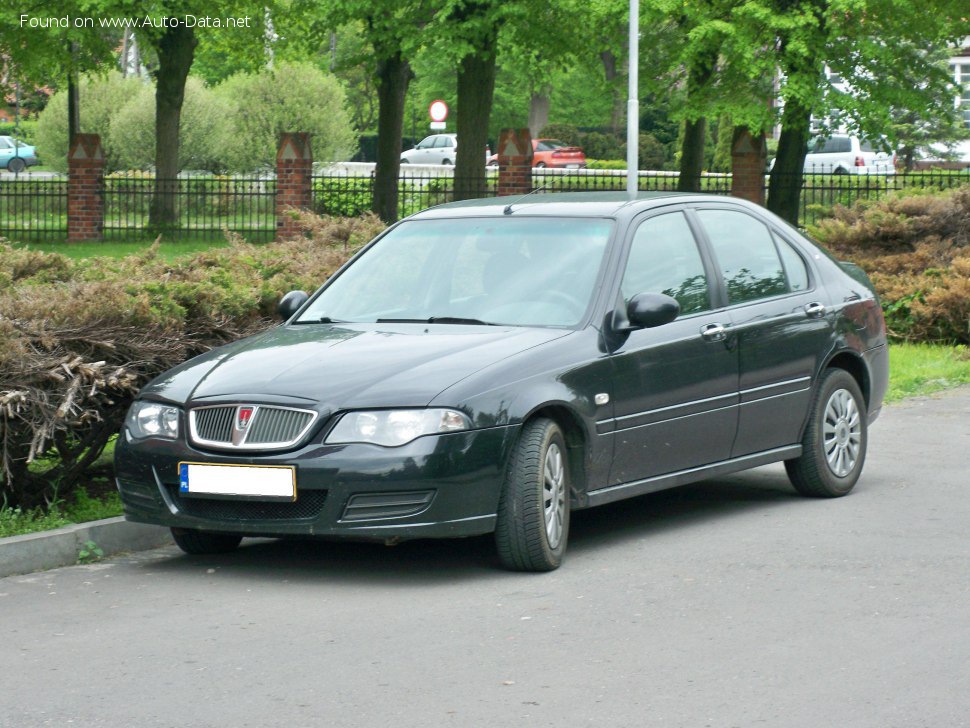
The Rover 45 Hatchback adopted a conventional five-door hatchback body style, offering practicality and versatility for families. Its design language was distinctly Rover: a blend of traditional British styling cues with a somewhat conservative, yet elegant, aesthetic. The exterior featured clean lines, a prominent grille, and a generally understated appearance that appealed to buyers looking for a more mature and less overtly sporty compact car. Dimensions were practical for European city driving, with a length of 171.73 inches (4362 mm), a width of 66.77 inches (1696 mm), and a height of 54.88 inches (1394 mm). The wheelbase measured 103.15 inches (2620 mm), contributing to a stable ride and reasonable interior space.
Inside, the Rover 45 Hatchback (RT) 2.0 i V6 24V (150 Hp) offered seating for five occupants. Rover interiors of this period were known for their emphasis on comfort and perceived quality, often featuring wood trim, chrome accents, and comfortable seating, aiming for a more “executive” feel than many rivals. Practicality was a strong suit, with a minimum trunk (boot) space of 13.42 cu. ft. (380 liters), expandable to 25.32 cu. ft. (717 liters) with the rear seats folded, making it suitable for shopping or family trips. Standard features for the V6 model would likely have included power windows, central locking, and potentially climate control, reflecting its premium positioning within the lineup.
Safety features, while not as comprehensive as modern vehicles, were standard for its time, including ABS and driver/passenger airbags. The overall package aimed to provide a comfortable, refined, and practical compact car experience, distinct from the more utilitarian or overtly sporty offerings from other manufacturers.
Technical Specifications: Rover 45 Hatchback (RT) 2.0 i V6 24V (150 Hp)
| Category | Specification |
|---|---|
| Brand | Rover |
| Model | 45 |
| Generation | 45 Hatchback (RT) |
| Type (Engine) | 2.0 i V6 24V (150 Hp) |
| Production Start | 1999 |
| Production End | 2005 |
| Powertrain Architecture | Internal Combustion Engine |
| Body Type | Hatchback |
| Seats | 5 |
| Doors | 5 |
| Performance Specs | |
| Fuel Consumption (Urban) | 16.8 US mpg (14 l/100 km) |
| Fuel Consumption (Extra Urban) | 35.1 US mpg (6.7 l/100 km) |
| Fuel Consumption (Combined) | 25 US mpg (9.4 l/100 km) |
| Fuel Type | Petrol (Gasoline) |
| Acceleration 0 – 60 mph | 9 seconds |
| Maximum Speed | 126.14 mph (203 km/h) |
| Weight-to-Power Ratio | 8.9 kg/Hp, 111.9 Hp/tonne |
| Weight-to-Torque Ratio | 7.2 kg/Nm, 138.1 Nm/tonne |
| Engine Specs | |
| Power | 150 Hp @ 6500 rpm |
| Power per Liter | 75.1 Hp/l |
| Torque | 136.45 lb.-ft. (185 Nm) @ 4000 rpm |
| Engine Layout | Front, Transverse |
| Engine Model/Code | KV6 / 20K4F |
| Engine Displacement | 2.0 liters (1997 cm3 / 121.86 cu. in.) |
| Number of Cylinders | 6 |
| Engine Configuration | V-engine |
| Cylinder Bore | 3.15 inches (80 mm) |
| Piston Stroke | 2.61 inches (66.2 mm) |
| Compression Ratio | 10.5:1 |
| Number of Valves per Cylinder | 4 |
| Fuel Injection System | Multi-port manifold injection |
| Engine Aspiration | Naturally aspirated engine |
| Valvetrain | DOHC |
| Engine Oil Capacity | 6.34 US qt (6 liters) |
| Engine Oil Specification | Not specified |
| Coolant Capacity | 6.08 US qt (5.75 liters) |
| Space, Volume, and Weights | |
| Kerb Weight | 2954.19 lbs. (1340 kg) |
| Max. Weight (Gross Vehicle Weight) | 3791.95 lbs. (1720 kg) |
| Max Load | 837.76 lbs. (380 kg) |
| Trunk (Boot) Space – Minimum | 13.42 cu. ft. (380 liters) |
| Trunk (Boot) Space – Maximum | 25.32 cu. ft. (717 liters) |
| Fuel Tank Capacity | 14.53 US gal (55 liters) |
| Dimensions | |
| Length | 171.73 inches (4362 mm) |
| Width | 66.77 inches (1696 mm) |
| Height | 54.88 inches (1394 mm) |
| Wheelbase | 103.15 inches (2620 mm) |
| Front Track | 58.07 inches (1475 mm) |
| Rear (Back) Track | 57.68 inches (1465 mm) |
| Drivetrain, Brakes, and Suspension Specs | |
| Drivetrain Architecture | Front-wheel drive; Internal combustion engine drives the front wheels. |
| Drive Wheel | Front wheel drive |
| Number of Gears and Type of Gearbox | 5 gears, automatic transmission |
| Front Suspension | Wishbone |
| Rear Suspension | Spring Strut |
| Front Brakes | Ventilated discs |
| Rear Brakes | Disc |
| Assisting Systems | ABS (Anti-lock braking system) |
| Steering Type | Steering rack and pinion |
| Power Steering | Hydraulic Steering |
| Tires Size | 195/55 R15 |
Legacy and Market Impact
The Rover 45 Hatchback (RT) 2.0 i V6 24V (150 Hp) carved out a niche for itself in the European market by offering a unique blend of refinement and traditional British charm in a compact package. In an era dominated by more utilitarian or performance-oriented four-cylinder rivals such as the Ford Focus, Volkswagen Golf, Opel Astra, and Peugeot 307, the Rover 45 V6 stood apart. Its smooth V6 engine provided a driving experience that prioritized quietness and effortless cruising, appealing to buyers who valued comfort and a sense of understated luxury over sharp handling or aggressive styling.
Despite its qualities, the Rover 45, and indeed the Rover brand itself, faced significant challenges during its production run. The platform, while updated, was based on an older Honda design, leading to perceptions that the car was not as cutting-edge as some of its newer competitors in terms of packaging efficiency or dynamic prowess. The V6 engine, while refined, came with a fuel economy penalty and added weight compared to smaller, more efficient four-cylinder turbo engines that were starting to gain traction in the market. Furthermore, the automatic transmission, while smooth, was not as engaging for all drivers, especially in a segment where manual transmissions were often preferred.
The Rover 45’s legacy is intertwined with the broader narrative of Rover’s decline. While it represented an attempt to offer a distinctive, premium product, it ultimately couldn’t reverse the company’s fortunes. However, for those who owned and appreciated them, the Rover 45 V6 was a comfortable, well-appointed, and distinctively British car. It offered a glimpse of what Rover could achieve with its own engineering, particularly with the KV6 engine, which was widely praised for its smoothness and character. Today, these V6 variants are considered somewhat rare and desirable among enthusiasts, representing a unique and often overlooked example of a refined compact car from a bygone era of British automotive manufacturing.