The Renault Clio V (Phase I) 1.0 TCe (100 Hp): A Cornerstone of European Motoring
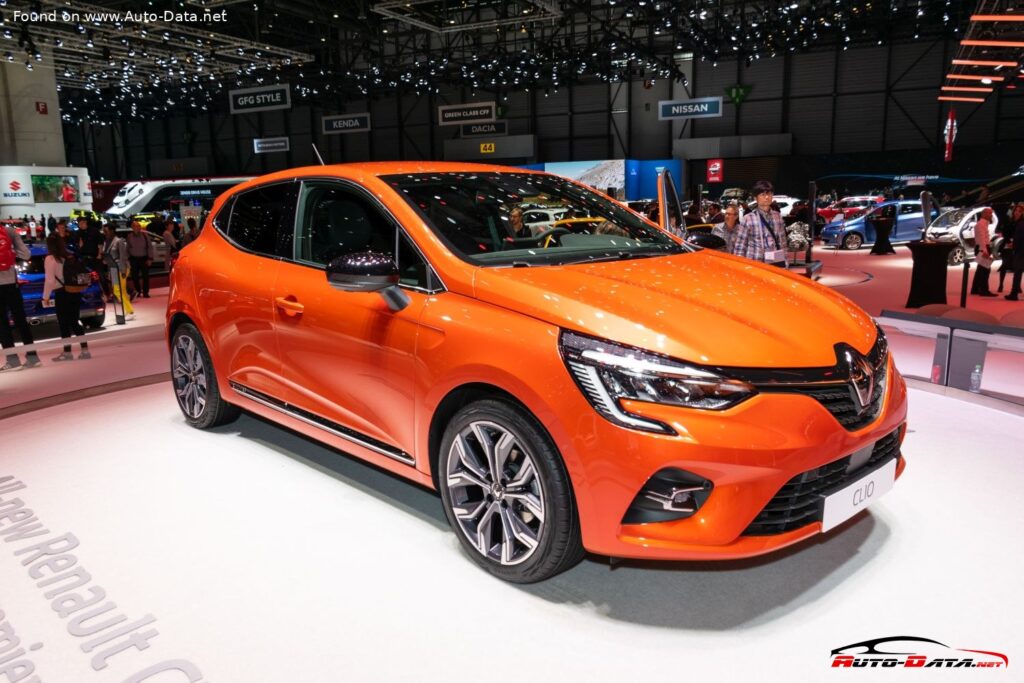
The Renault Clio V (Phase I) 1.0 TCe (100 Hp), produced from September 2019 to August 2020, represents a pivotal offering in the highly competitive European B-segment, often referred to as the subcompact or supermini class. As the fifth generation of Renault’s immensely successful Clio line, this particular variant showcases a compelling blend of modern design, practical dimensions, and an efficient turbocharged gasoline engine. While the Clio has never been officially sold in the United States, it is a household name across Europe, consistently ranking among the continent’s best-selling vehicles. The “Phase I” designation indicates the initial release iteration of the fifth-generation model, before any mid-cycle refreshes. This model, with its 1.0-liter TCe engine, was specifically engineered to deliver a balance of usable power for urban and highway driving, coupled with impressive fuel economy and lower emissions, critical factors in the European automotive landscape.
Evolution and Market Position of the Renault Clio V (Phase I)
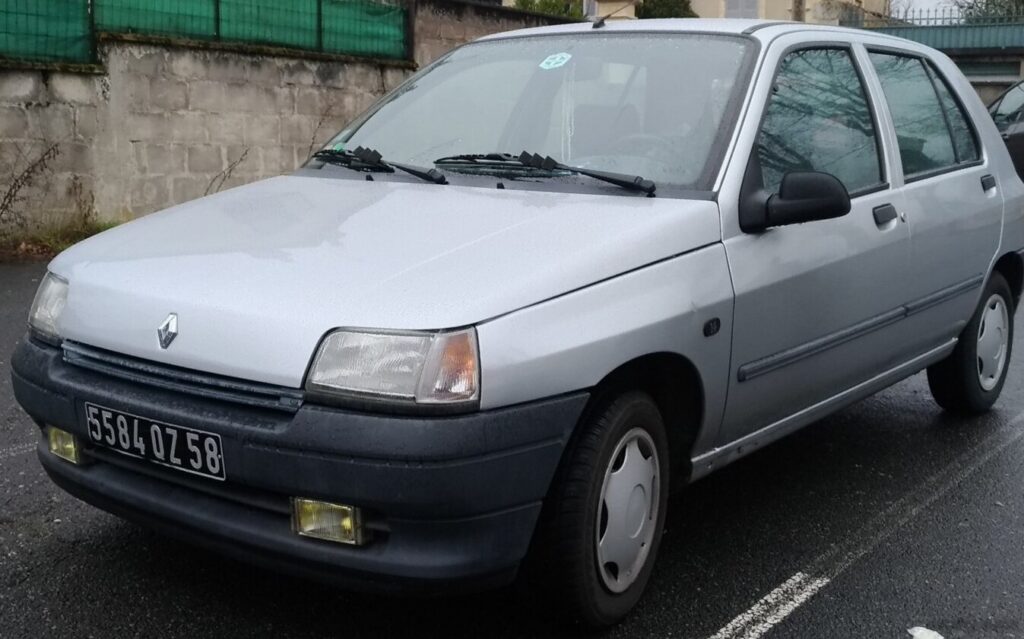
The Renault Clio has a rich heritage, dating back to its introduction in 1990. Each subsequent generation has built upon the last, consistently pushing boundaries in design, technology, and safety within its segment. The Clio V, launched in 2019, was a significant leap forward, adopting the new CMF-B platform shared with other Renault-Nissan-Mitsubishi Alliance vehicles. This platform allowed for greater structural rigidity, improved safety, and the integration of advanced driver-assistance systems and connectivity features, even in its entry-level configurations. The Renault Clio V (Phase I) 1.0 TCe (100 Hp) was positioned as a core offering, targeting a wide demographic from first-time buyers to small families seeking an economical yet stylish and well-equipped vehicle. Its 5-door hatchback body style, combined with a surprisingly spacious interior for its class, made it a versatile choice for navigating congested city streets while still being capable of longer journeys.
Engine and Performance: The 1.0 TCe Powertrain
At the heart of this particular Clio variant is the H4D 460 engine, a 1.0-liter (999 cm3 or 60.96 cu. in.) inline three-cylinder gasoline unit. Renault’s “TCe” designation stands for Turbo Control efficiency, indicating the use of a turbocharger and intercooler to maximize power output and fuel efficiency from a small displacement. This setup allows the engine to produce a respectable 100 horsepower at 5000 rpm. More importantly for daily driving, it generates 118.01 lb-ft of torque at a relatively low 2750 rpm, providing a responsive feel in city traffic and sufficient grunt for highway overtaking. The engine’s three-cylinder configuration contributes to its inherent efficiency and compact size, crucial for packaging within the Clio’s dimensions.
Power is delivered to the front wheels via a 5-speed manual transmission, a common choice in this segment for its direct engagement and contribution to fuel economy. The Clio V 1.0 TCe (100 Hp) achieves a 0-60 mph acceleration time of 11.2 seconds, with a maximum speed of 116.2 mph. While not a performance-oriented vehicle, these figures are more than adequate for typical European driving conditions. The emphasis here is clearly on efficiency, as evidenced by its fuel consumption figures: a combined WLTP rating of 45.2 US mpg (5.2 l/100 km) and NEDC figures showing an impressive 63.6 US mpg (3.7 l/100 km) in extra-urban driving. Its CO2 emissions are also competitive at 117 g/km (WLTP) and 100 g/km (NEDC), meeting the stringent Euro 6 d-TEMP emission standard, which was a significant factor for buyers in Europe concerned with environmental impact and taxation.
Design and Features
The Renault Clio V (Phase I) inherits the sleek and modern design language that has become a hallmark of Renault’s recent offerings. As a 5-door hatchback, it balances sporty aesthetics with practical accessibility. Its dimensions—159.45 inches (4050 mm) long, 70.79 inches (1798 mm) wide (mirrors folded), and 56.69 inches (1440 mm) tall—make it agile and easy to maneuver in urban environments, yet its 101.69-inch (2583 mm) wheelbase ensures a stable ride and a surprisingly roomy cabin for five occupants.
The interior of the Clio V was designed with a focus on ergonomics and perceived quality, a significant upgrade over its predecessor. While specific infotainment features are not detailed in the provided data, the era of its production (2019-2020) suggests the availability of modern connectivity options, including touchscreen displays and smartphone integration, which were key selling points for subcompacts at the time. Practicality is further enhanced by its cargo capacity: a generous 13.81 cu. ft. (391 liters) with the rear seats up, expanding to a substantial 37.75 cu. ft. (1069 liters) when the seats are folded, making it suitable for varying cargo needs.
Underneath, the Clio V features a robust chassis with an independent McPherson strut front suspension and a semi-independent, coil spring, elastic beam rear suspension, providing a comfortable ride quality and predictable handling. Braking is handled by ventilated discs at the front (280×24 mm) and solid discs at the rear (260×8 mm), complemented by an Anti-lock Braking System (ABS) for enhanced safety. The electric power steering system, with a rack and pinion setup, offers light steering effort at low speeds for easy parking and more feedback at higher speeds. The vehicle typically came with 195/55 R16 87H or optional 205/45 R17 88H tires, mounted on 16-inch or 17-inch wheel rims, contributing to both aesthetics and handling dynamics.
Technical Specifications: Renault Clio V (Phase I) 1.0 TCe (100 Hp)
| Category | Specification | Metric/US Equivalent |
|---|---|---|
| General Information | ||
| Brand | Renault | |
| Model | Clio | |
| Generation | Clio V (Phase I) | |
| Type (Engine) | 1.0 TCe (100 Hp) | |
| Production Start | September, 2019 | |
| Production End | August, 2020 | |
| Powertrain Architecture | Internal Combustion Engine | |
| Body Type | Hatchback | |
| Seats | 5 | |
| Doors | 5 | |
| Performance Specifications | ||
| Combined Fuel Consumption (WLTP) | 5.2 l/100 km | 45.2 US mpg |
| CO2 Emissions (WLTP) | 117 g/km | |
| Urban Fuel Consumption (NEDC) | 5.6 l/100 km | 42 US mpg |
| Extra Urban Fuel Consumption (NEDC) | 3.7 l/100 km | 63.6 US mpg |
| Combined Fuel Consumption (NEDC) | 4.4 l/100 km | 53.5 US mpg |
| CO2 Emissions (NEDC) | 100 g/km | |
| Fuel Type | Petrol (Gasoline) | |
| Acceleration 0-60 mph (Calculated) | 11.2 sec | |
| Acceleration 0-100 km/h | 11.8 sec | |
| Maximum Speed | 187 km/h | 116.2 mph |
| Emission Standard | Euro 6 d-TEMP | |
| Weight-to-Power Ratio | 11.8 kg/Hp | 84.9 Hp/tonne |
| Weight-to-Torque Ratio | 7.4 kg/Nm | 135.8 Nm/tonne |
| Engine Specifications | ||
| Power | 100 Hp @ 5000 rpm | |
| Power per Liter | 100.1 Hp/l | |
| Torque | 160 Nm @ 2750 rpm | 118.01 lb-ft @ 2750 rpm |
| Engine Layout | Front, Transverse | |
| Engine Model/Code | H4D 460 | |
| Engine Displacement | 999 cm3 | 60.96 cu. in. |
| Number of Cylinders | 3 | |
| Engine Configuration | Inline | |
| Cylinder Bore | 72.2 mm | 2.84 in. |
| Piston Stroke | 81.3 mm | 3.2 in. |
| Valves per Cylinder | 4 | |
| Fuel Injection System | Multi-port manifold injection | |
| Engine Aspiration | Turbocharger, Intercooler | |
| Engine Oil Capacity | 3.7 l | 3.91 US qt |
| Coolant Capacity | 6.4 l | 6.76 US qt |
| Space, Volume and Weights | ||
| Kerb Weight | 1178 kg | 2597.05 lbs |
| Maximum Weight | 1603 kg | 3534.01 lbs |
| Maximum Load | 425 kg | 936.96 lbs |
| Trunk (Boot) Space – Minimum | 391 l | 13.81 cu. ft. |
| Trunk (Boot) Space – Maximum | 1069 l | 37.75 cu. ft. |
| Fuel Tank Capacity | 42 l | 11.1 US gal |
| Permitted Trailer Load (with brakes) | 900 kg | 1984.16 lbs |
| Permitted Trailer Load (without brakes) | 580 kg | 1278.68 lbs |
| Dimensions | ||
| Length | 4050 mm | 159.45 in. |
| Width (mirrors folded) | 1798 mm | 70.79 in. |
| Width (including mirrors) | 1988 mm | 78.27 in. |
| Height | 1440 mm | 56.69 in. |
| Wheelbase | 2583 mm | 101.69 in. |
| Front Overhang | 830 mm | 32.68 in. |
| Rear Overhang | 637 mm | 25.08 in. |
| Ride Height (Ground Clearance) | 120 mm | 4.72 in. |
| Minimum Turning Circle | 10.42 m | 34.19 ft. |
| Drivetrain, Brakes and Suspension | ||
| Drivetrain Architecture | Internal combustion engine drives the front wheels. | |
| Drive Wheel | Front-wheel drive | |
| Number of Gears/Gearbox Type | 5 gears, manual transmission | |
| Front Suspension | Independent type McPherson | |
| Rear Suspension | Semi-independent, coil spring, Elastic beam | |
| Front Brakes | Ventilated discs, 280×24 mm | |
| Rear Brakes | Disc, 260×8 mm | |
| Assisting Systems | ABS (Anti-lock braking system) | |
| Steering Type | Steering rack and pinion | |
| Power Steering | Electric Steering | |
| Tires Size | 195/55 R16 87H; 205/45 R17 88H | |
| Wheel Rims Size | 16; 17 | |
Legacy and Market Impact
The Renault Clio V (Phase I) 1.0 TCe (100 Hp) continued the Clio’s tradition of being a strong contender in the European subcompact segment. Its reputation is built on a foundation of stylish design, impressive practicality, and a solid value proposition. In a market segment fiercely contested by rivals such as the Volkswagen Polo, Ford Fiesta, Peugeot 208, and Opel Corsa, the Clio V managed to stand out, often praised for its refined interior, comfortable ride, and engaging driving dynamics.
The introduction of the 1.0 TCe engine was strategically important for Renault. It allowed the Clio to meet increasingly stringent European emissions regulations while offering excellent fuel economy, which is a major purchasing factor for many buyers in this class. The engine’s balance of power and efficiency made it a popular choice, suitable for both daily commuting and occasional longer trips without feeling underpowered or overly thirsty. The Clio V, in its initial phase, solidified its position as not just a practical small car but one that also offered a desirable level of sophistication and modern technology. Its sales success contributed significantly to Renault’s overall market share in Europe, underscoring the enduring appeal of the Clio nameplate and its ability to adapt to evolving consumer demands and regulatory pressures.
In conclusion, the Renault Clio V (Phase I) 1.0 TCe (100 Hp) is more than just a car; it’s a testament to Renault’s mastery of the subcompact segment. It exemplifies how a carefully engineered vehicle can offer a compelling package of efficiency, design, and practicality, making it a pivotal model in its market and a worthy successor in the esteemed Clio lineage.