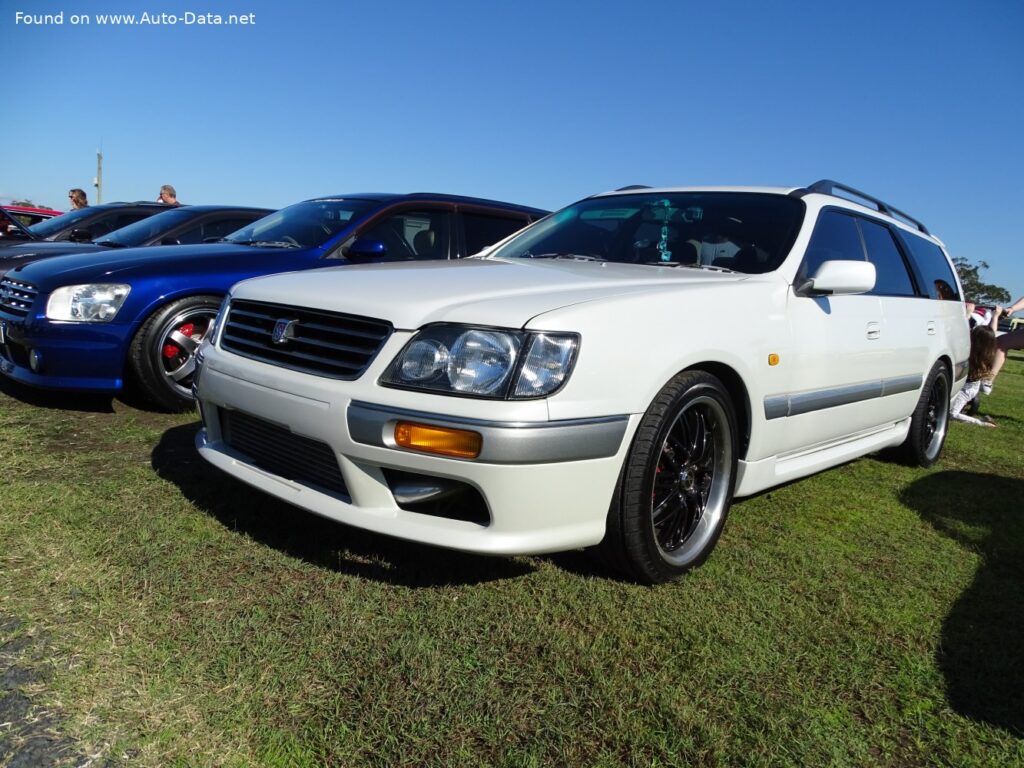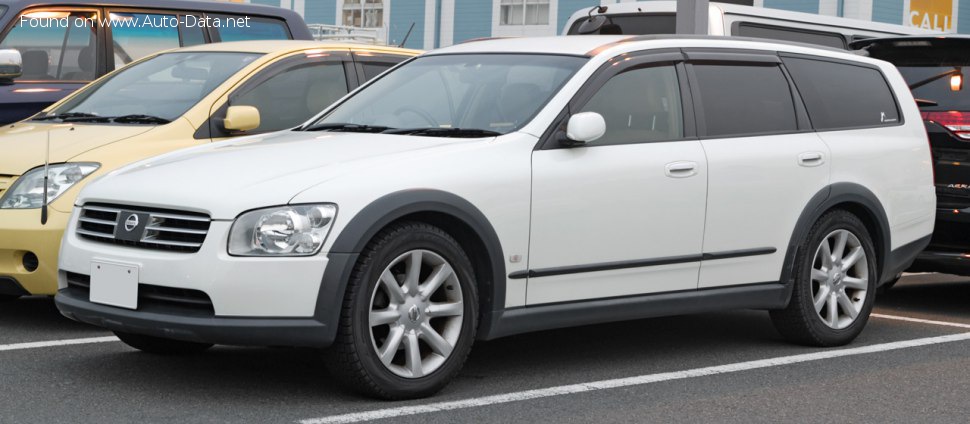
Introduction to the Nissan Stagea II (M35)
The Nissan Stagea II, internally designated M35, represents the second generation of Nissan’s executive station wagon, primarily developed for the Japanese domestic market (JDM). Produced from 2001 to 2007, the Nissan Stagea II (M35) carved out a unique niche as a premium, performance-oriented wagon, often colloquially referred to as the “Skyline wagon” due to its shared platform and powertrain components with the V35 generation Nissan Skyline (marketed as the Infiniti G35 in North America). This particular variant, the 2.5 V6 24V 4X4 (215 Hp), offered a compelling blend of spirited performance, all-weather capability, and practical utility, making it a highly desirable vehicle within its segment in Japan and a coveted import in other right-hand drive markets.
Unlike its predecessor, the M35 Stagea moved away from the more traditional, boxier wagon aesthetic, adopting a sleeker, more contemporary design that mirrored Nissan’s evolving design language of the early 2000s. It emphasized comfort, advanced technology for its era, and a refined driving experience, positioning itself against competitors like the Subaru Legacy Wagon and Toyota Caldina GT-Four in the JDM landscape. Its all-wheel-drive system and powerful V6 engine provided a dynamic driving experience, distinguishing it from more utilitarian wagons.
Engineering and Performance of the Nissan Stagea II (M35)
Powertrain and Drivetrain
At the heart of the Nissan Stagea II (M35) 2.5 V6 24V 4X4 lies Nissan’s renowned VQ25DD engine. This naturally aspirated 2.5-liter V6, part of the award-winning VQ engine family, is a testament to Nissan’s engineering prowess, known for its smooth operation, robust reliability, and eager power delivery. With a DOHC (Dual Overhead Camshaft) valvetrain and multi-port manifold injection, this engine produced a respectable 215 horsepower at 6400 rpm and a solid 199.14 lb.-ft. of torque at 4400 rpm. Its V-engine configuration and front, longitudinal layout contributed to a balanced weight distribution and optimized packaging within the engine bay. The compression ratio of 11:1 highlighted its efficiency-focused design for a naturally aspirated unit.
Power was seamlessly transmitted to all four wheels via a 5-speed automatic transmission, offering a refined and comfortable driving experience. The all-wheel-drive (4×4) system provided enhanced traction and stability, particularly beneficial in varying weather conditions or on challenging road surfaces, a significant advantage in Japan’s diverse geography. This combination of a potent V6 and intelligent AWD made the Stagea M35 a versatile performer, equally at home navigating urban environments or cruising on open highways.
Driving Dynamics and Fuel Efficiency
The Stagea II (M35) was designed to offer a comfortable yet engaging ride. Its suspension system, featuring coil springs at both the front and rear, was tuned to provide a good balance between ride comfort and handling precision. Stopping power was assured by ventilated disc brakes at the front and solid discs at the rear, complemented by an Anti-lock Braking System (ABS) for improved safety during emergency braking. Hydraulic power steering, utilizing a rack and pinion setup, offered tactile feedback and precise control, enhancing the driver’s connection to the road.
While performance was a key attribute, the 2.5 V6 24V 4X4 variant also offered reasonable fuel economy for its class and all-wheel-drive configuration. Official figures indicated approximately 15 US mpg in urban driving conditions and a more efficient 26.1 US mpg on the highway. With an 80-liter (21.13 US gallons) fuel tank, the Stagea was capable of respectable cruising ranges, making it suitable for longer journeys. Its maximum speed was electronically limited to 111.85 mph, a common practice for JDM vehicles of the era.
Design and Features
Exterior Aesthetics and Body Type
The Nissan Stagea II (M35) adopted a contemporary and sleek design that departed significantly from its more angular M34 predecessor. Classified as a 5-door station wagon (or estate), it featured smooth lines, a flowing roofline, and a more aerodynamic profile. Its overall length of 187.6 inches, width of 69.29 inches, and height of 59.45 inches gave it a substantial road presence without being overly cumbersome. The 112.2-inch wheelbase contributed to a stable ride and generous interior space. The design cues, particularly the front fascia and rear lighting, bore a strong resemblance to the V35 Skyline, reinforcing its premium and sporty image. Standard 215/55 R17 tires completed the athletic stance.
Interior Comfort and Practicality
Inside, the Stagea M35 was designed with passenger comfort and practicality in mind. It offered seating for five occupants, with a focus on quality materials and ergonomic design. The cabin environment was upscale for its class, featuring amenities expected in a premium vehicle of the early 2000s. These typically included automatic climate control, a sophisticated audio system, power windows and mirrors, and comfortable, supportive seats.
As a station wagon, cargo capacity was a primary strength. The Stagea offered a minimum trunk (boot) space of 500 liters (17.66 cubic feet), which could be expanded significantly by folding down the rear seats, providing ample room for luggage, sports equipment, or everyday cargo. This versatility made it an ideal choice for families or individuals requiring both performance and utility. Safety features for the time included the aforementioned ABS, and typically multiple airbags, though specific airbag counts are not detailed in the provided data.
Technical Specifications
| Category | Specification | US Equivalent |
|---|---|---|
| General Information | ||
| Brand | Nissan | Nissan |
| Model | Stagea | Stagea |
| Generation | Stagea II (M35) | Stagea II (M35) |
| Type (Engine) | 2.5 V6 24V 4X4 (215 Hp) | 2.5 V6 24V 4X4 (215 Hp) |
| Start of Production | 2001 year | 2001 |
| End of Production | 2007 year | 2007 |
| Powertrain Architecture | Internal Combustion engine | Internal Combustion engine |
| Body Type | Station wagon (estate) | Station Wagon |
| Seats | 5 | 5 |
| Doors | 5 | 5 |
| Performance Specs | ||
| Fuel Consumption (Urban) | 15 l/100 km | 15.7 US mpg |
| Fuel Consumption (Extra Urban) | 9 l/100 km | 26.1 US mpg |
| Fuel Type | Petrol (Gasoline) | Gasoline |
| Maximum Speed | 180 km/h | 111.85 mph |
| Weight-to-Power Ratio | 7.7 kg/Hp | 130.3 Hp/tonne |
| Weight-to-Torque Ratio | 6.1 kg/Nm | 163.6 Nm/tonne |
| Engine Specs | ||
| Power | 215 Hp @ 6400 rpm | 215 Hp @ 6400 rpm |
| Power per Liter | 86.2 Hp/l | 86.2 Hp/l |
| Torque | 270 Nm @ 4400 rpm | 199.14 lb.-ft. @ 4400 rpm |
| Engine Layout | Front, Longitudinal | Front, Longitudinal |
| Engine Displacement | 2495 cm3 | 2.5 liters (152.25 cu. in.) |
| Number of Cylinders | 6 | 6 |
| Engine Configuration | V-engine | V-engine |
| Cylinder Bore | 85 mm | 3.35 in. |
| Piston Stroke | 73.3 mm | 2.89 in. |
| Compression Ratio | 11:1 | 11:1 |
| Number of Valves per Cylinder | 4 | 4 |
| Fuel Injection System | Multi-port manifold injection | Multi-port manifold injection |
| Engine Aspiration | Naturally aspirated engine | Naturally aspirated engine |
| Valvetrain | DOHC | DOHC |
| Space, Volume and Weights | ||
| Kerb Weight | 1650 kg | 3637.63 lbs. |
| Trunk (boot) Space – Minimum | 500 l | 17.66 cu. ft. |
| Fuel Tank Capacity | 80 l | 21.13 US gal |
| Dimensions | ||
| Length | 4765 mm | 187.6 in. |
| Width | 1760 mm | 69.29 in. |
| Height | 1510 mm | 59.45 in. |
| Wheelbase | 2850 mm | 112.2 in. |
| Front Track | 1510 mm | 59.45 in. |
| Rear (Back) Track | 1510 mm | 59.45 in. |
| Drivetrain, Brakes and Suspension Specs | ||
| Drive Wheel | All wheel drive (4×4) | All-Wheel Drive (AWD) |
| Number of Gears and Type of Gearbox | 5 gears, automatic transmission | 5-speed automatic transmission |
| Front Suspension | Coil spring | Coil spring |
| Rear Suspension | Coil spring | Coil spring |
| Front Brakes | Ventilated discs | Ventilated discs |
| Rear Brakes | Disc | Disc |
| Assisting Systems | ABS (Anti-lock braking system) | ABS (Anti-lock Braking System) |
| Steering Type | Steering rack and pinion | Rack and pinion |
| Power Steering | Hydraulic Steering | Hydraulic Steering |
| Tires Size | 215/55 R17 | 215/55 R17 |
Legacy and Market Impact
The Nissan Stagea II (M35) 2.5 V6 24V 4X4 (215 Hp) left a notable legacy, particularly in the Japanese domestic market and among enthusiasts globally. Its primary reputation stems from its unique position as a sporty, premium station wagon that shared its underpinnings with the revered Nissan Skyline/Infiniti G35. This connection instantly elevated its status, endowing it with a “sleeper” appeal – a practical family vehicle with genuine performance credentials.
In its home market, the Stagea M35 competed with other performance wagons like the Subaru Legacy Wagon GT and the Toyota Caldina GT-Four, offering a different flavor of Japanese performance and utility. While the Legacy was known for its rally heritage and boxer engine, and the Caldina for its WRC-derived technology, the Stagea distinguished itself with its smooth VQ V6 engine, luxurious appointments, and a more refined, rear-wheel-drive biased (even in AWD variants) driving feel. It appealed to buyers who desired the practicality of a wagon but refused to compromise on driving enjoyment or a premium feel.
Beyond Japan, the Stagea M35 has garnered a significant following in countries like Australia and New Zealand, where it is a popular grey import. Enthusiasts appreciate its robust VQ engine, readily available aftermarket support (due to its Skyline/G35 lineage), and its inherent versatility. It has become a popular platform for modifications, ranging from subtle aesthetic enhancements to significant powertrain upgrades, further solidifying its status as a cult classic.
The M35 Stagea also represented a strategic shift for Nissan, moving towards a more global design language and platform sharing. While the Stagea nameplate was discontinued after this generation, its spirit of blending performance with practicality continued to influence Nissan’s product development. Today, the Nissan Stagea II (M35) is remembered as a well-engineered, stylish, and highly capable wagon that offered a compelling alternative to traditional sedans and SUVs, embodying a period when Nissan was pushing the boundaries of what a family vehicle could be. Its blend of technology, efficiency, and driving pleasure, combined with its unique JDM appeal, ensures its place in automotive history.