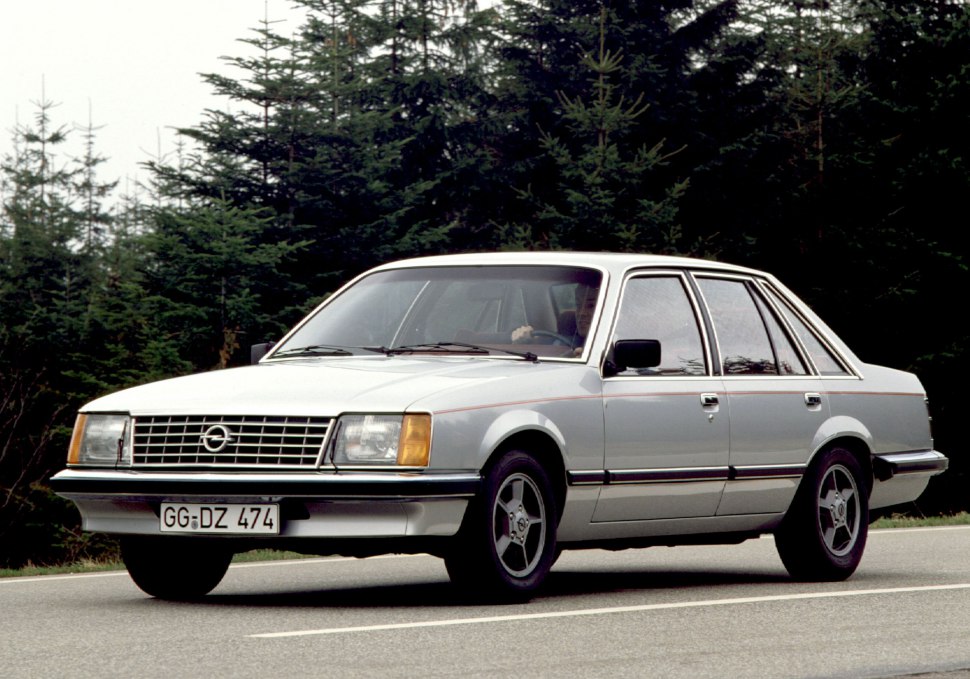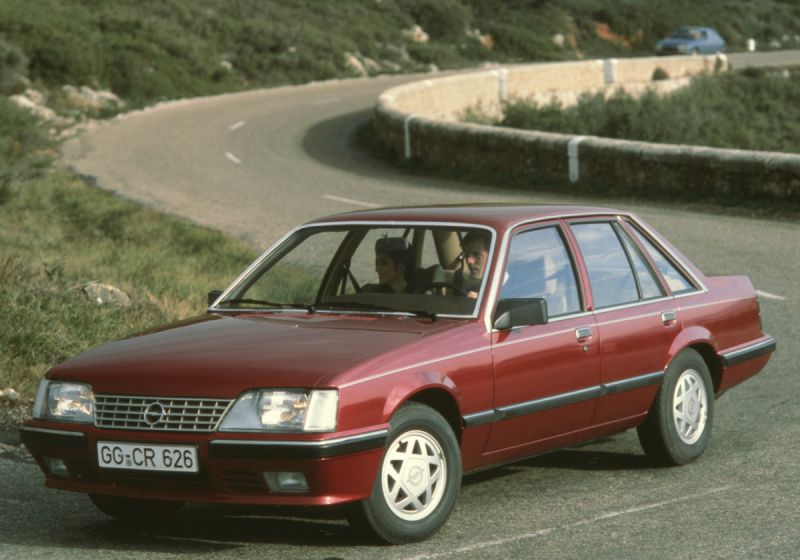
The Opel Senator A (facelift 1982) 2.0 E (110 Hp): A European Executive Sedan
The Opel Senator A, particularly the facelifted model introduced in 1982, represented Opel’s strong contender in the executive car segment within the European market. As a large, rear-wheel-drive sedan, the Opel Senator A (facelift 1982) 2.0 E (110 Hp) was positioned above Opel’s more ubiquitous Rekord and Ascona models, aimed at discerning buyers who desired comfort, space, and a refined driving experience without necessarily opting for the more expensive offerings from Mercedes-Benz or BMW. This particular variant, featuring the 2.0-liter “E” (for Einspritzung, or fuel injection) engine, served as an entry-level but capable option in the Senator lineup, balancing performance with improved fuel efficiency for its time. While Opel models had a presence in the United States through Buick dealers in earlier decades, by the 1980s, the brand was firmly focused on its European operations, making the Senator a distinctively European proposition.
Engine and Performance of the Opel Senator A (facelift 1982) 2.0 E (110 Hp)
Under the hood, the Opel Senator A (facelift 1982) 2.0 E (110 Hp) featured an inline four-cylinder engine, a common and reliable configuration for Opel during this period. This 1,979 cubic centimeter (approximately 120.77 cubic inches) powerplant was equipped with multi-port manifold fuel injection, a relatively advanced feature for the early 1980s that contributed to better fuel atomization and combustion efficiency compared to carbureted systems. The engine was naturally aspirated and utilized a Single Overhead Camshaft (SOHC) valvetrain with two valves per cylinder, a proven design for durability and ease of maintenance.
The engine produced a respectable 110 horsepower at 5400 revolutions per minute (rpm), translating to a power-per-liter output of 55.6 horsepower per liter. Torque figures stood at 162 Newton-meters (119.49 lb.-ft.) delivered at a relatively low 3000 rpm, indicating a flexible engine with good low-end pulling power suitable for everyday driving and cruising. Power was sent to the rear wheels via a 5-speed manual transmission, a choice that offered enthusiasts more engagement and, potentially, better fuel economy than the automatic options available in higher trims.
In terms of acceleration, the Opel Senator A (facelift 1982) 2.0 E (110 Hp) could reach 60 miles per hour from a standstill in an estimated 12.8 seconds, with a 0-62 mph (0-100 km/h) time of 13.5 seconds. Its top speed was rated at 111.85 mph (180 km/h). While not a performance leader, these figures were competitive for an entry-level executive sedan of its era, emphasizing comfortable cruising over outright speed. The combined fuel consumption was an estimated 9.2 liters per 100 kilometers, or approximately 25.6 US miles per gallon, which was a reasonable figure for a vehicle of its size and engine capacity in the early 1980s.
Design and Features
The Opel Senator A received its significant facelift in 1982, bringing its styling more in line with the contemporary Opel Rekord E2 and the smaller Ascona C. This updated design softened some of the sharper edges of the original A1 model, introducing a more aerodynamic and modern aesthetic. The Opel Senator A (facelift 1982) 2.0 E (110 Hp) maintained its classic four-door sedan body type, emphasizing a spacious and comfortable cabin suitable for four occupants. Its dimensions were substantial for the time, with a length of 190.51 inches (4839 mm), a width of 67.8 inches (1722 mm), and a height of 55.71 inches (1415 mm). The generous wheelbase of 105.63 inches (2683 mm) contributed to a smooth ride and ample interior room, particularly for rear passengers.
Design elements included a revised grille, updated headlights, and more integrated bumpers, contributing to a lower drag coefficient of 0.39, which was respectable for a large sedan of the period and aided both fuel economy and reduced wind noise. Inside, the Senator offered a well-appointed interior with comfortable seating and a logical dashboard layout. While specific luxury features varied by trim, even the entry-level 2.0 E would have provided a high level of standard equipment for its class, focusing on driver and passenger comfort for long journeys. The trunk space was particularly impressive, offering a maximum of 715 liters (25.25 cubic feet), making it highly practical for families or business travelers. Safety features typical for the era included disc brakes on both the front and rear axles, providing confident stopping power for a vehicle weighing 2943.17 pounds (1335 kg) at the curb.
Technical Specifications
| Category | Specification |
|---|---|
| General Information | |
| Brand | Opel |
| Model | Senator |
| Generation | Senator A (facelift 1982) |
| Engine Type | 2.0 E (110 Hp) |
| Start of Production | 1982 |
| End of Production | 1984 |
| Powertrain Architecture | Internal Combustion Engine |
| Body Type | Sedan |
| Seats | 4 |
| Doors | 4 |
| Performance Specs | |
| Fuel Consumption (Combined) | 9.2 l/100 km (25.6 US mpg) |
| Fuel Type | Petrol (Gasoline) |
| Acceleration 0 – 62 mph (0-100 km/h) | 13.5 sec |
| Acceleration 0 – 60 mph | 12.8 sec |
| Maximum Speed | 111.85 mph (180 km/h) |
| Weight-to-Power Ratio | 12.1 kg/Hp (82.4 Hp/tonne) |
| Weight-to-Torque Ratio | 8.2 kg/Nm (121.3 Nm/tonne) |
| Engine Specs | |
| Power | 110 Hp @ 5400 rpm |
| Power per Liter | 55.6 Hp/l |
| Torque | 162 Nm (119.49 lb.-ft.) @ 3000 rpm |
| Engine Displacement | 1979 cm3 (120.77 cu. in.) |
| Number of Cylinders | 4 |
| Engine Configuration | Inline |
| Cylinder Bore | 95 mm (3.74 in.) |
| Piston Stroke | 69.8 mm (2.75 in.) |
| Compression Ratio | 9.4:1 |
| Number of Valves per Cylinder | 2 |
| Fuel Injection System | Multi-port manifold injection |
| Engine Aspiration | Naturally aspirated engine |
| Valvetrain | SOHC |
| Engine Oil Capacity | 3.8 l (4.02 US qt) |
| Space, Volume and Weights | |
| Kerb Weight | 1335 kg (2943.17 lbs.) |
| Max. Weight (GVWR) | 1885 kg (4155.71 lbs.) |
| Max Load | 550 kg (1212.54 lbs.) |
| Trunk (Boot) Space – Maximum | 715 l (25.25 cu. ft.) |
| Fuel Tank Capacity | 75 l (19.81 US gal) |
| Dimensions | |
| Length | 4839 mm (190.51 in.) |
| Width | 1722 mm (67.8 in.) |
| Height | 1415 mm (55.71 in.) |
| Wheelbase | 2683 mm (105.63 in.) |
| Front Track | 1447 mm (56.97 in.) |
| Rear Track | 1472 mm (57.95 in.) |
| Ride Height (Ground Clearance) | 140 mm (5.51 in.) |
| Drag Coefficient (Cd) | 0.39 |
| Minimum Turning Circle | 10.8 m (35.43 ft.) |
| Drivetrain, Brakes and Suspension Specs | |
| Drivetrain Architecture | Rear-wheel drive |
| Drive Wheel | Rear wheel drive |
| Number of Gears and Type of Gearbox | 5 gears, manual transmission |
| Front Brakes | Disc |
| Rear Brakes | Disc |
Legacy and Market Impact of the Opel Senator A (facelift 1982)
The Opel Senator A, especially in its facelifted 1982 guise, played a crucial role in Opel’s strategy to compete in the highly contested European executive car market. While it lacked the immediate prestige of a Mercedes-Benz E-Class or a BMW 5 Series, the Senator offered a compelling blend of space, comfort, and solid engineering at a more accessible price point. Its primary competitors included the Ford Granada/Scorpio, as well as various models from French and Italian manufacturers. The Senator was known for its robust build quality and comfortable ride, making it a popular choice for business executives and discerning private buyers across Germany, the UK, and other European nations.
The introduction of the 2.0 E engine for the 1982 facelift underscored Opel’s commitment to offering more fuel-efficient options in response to changing market demands, particularly after the oil crises of the 1970s. While larger inline-six engines were available, the 2.0-liter variant provided a sensible balance for those who didn’t require top-tier performance but still desired the Senator’s executive presence. Its rear-wheel-drive architecture also appealed to traditionalists and offered predictable handling characteristics.
The Senator A’s legacy is that of a dependable, understated executive car that delivered genuine value. It helped solidify Opel’s reputation for producing well-engineered, practical vehicles, even at the higher end of the market. Although never officially sold in the United States under the Opel brand in this iteration, its underlying General Motors engineering principles and focus on mainstream appeal resonated with the broader GM philosophy. Today, the Opel Senator A is remembered as a classic European sedan, appreciated by enthusiasts for its comfortable cruising abilities, timeless styling (especially the facelifted model), and its representation of Opel’s ambition in the premium segment of the early 1980s. Its robust mechanicals ensure that many examples continue to be cherished by owners, a testament to its enduring quality and design.