The Mitsubishi Lancer III Wagon 1.8 (83 Hp) 4×4: A Blend of Utility and All-Wheel Drive Capability
The Mitsubishi Lancer, a nameplate synonymous with reliability and versatility for decades, saw numerous iterations across its global production run. Among these, the Mitsubishi Lancer III Wagon 1.8 (83 Hp) 4×4 stands out as a particularly practical and capable offering from the late 1980s. Produced from 1987 to 1989, this generation, known internally as the C50 series, represented Mitsubishi’s commitment to providing a compact family vehicle with enhanced utility and all-weather traction. While the Lancer sedan of this era was a common sight in various markets, including North America, this specific 4×4 wagon variant was more predominantly featured in European, Asian, and Oceanic markets, where its combination of spaciousness and robust drivetrain held significant appeal. It carved a niche for itself as an economical yet durable workhorse, adept at handling diverse road conditions thanks to its advanced (for the time) full-time four-wheel-drive system.
Engine and Performance of the Mitsubishi Lancer III Wagon
At the heart of the Mitsubishi Lancer III Wagon 1.8 (83 Hp) 4×4 was a naturally aspirated 1.8-liter inline-four gasoline engine. This powerplant, while not designed for outright speed, was engineered for dependability and efficiency—qualities highly valued in a family wagon. Delivering a respectable 83 horsepower, the engine provided adequate motivation for daily commuting, grocery runs, and light highway cruising. Its naturally aspirated design meant predictable power delivery and straightforward maintenance, contributing to the vehicle’s reputation for longevity. The engine’s torque characteristics were well-suited to its utilitarian purpose, ensuring sufficient pulling power even when the wagon was laden with passengers and cargo.
However, the true distinguishing feature of this particular Lancer Wagon was its sophisticated 4×4 powertrain architecture. Unlike many front-wheel-drive competitors, Mitsubishi equipped this model with a full-time four-wheel-drive system, a technology that was still relatively uncommon in the compact passenger car segment during the late 1980s. This system provided continuous power to all four wheels, significantly enhancing traction and stability, especially in adverse weather conditions such as rain, snow, or gravel roads. For consumers in regions with challenging climates or those who frequently encountered unpaved surfaces, the 4×4 system offered an invaluable layer of security and capability. It allowed the Lancer Wagon to venture beyond the typical limitations of a two-wheel-drive vehicle, providing a degree of versatility often associated with larger, more expensive SUVs, but in a more fuel-efficient and car-like package.
Design and Features
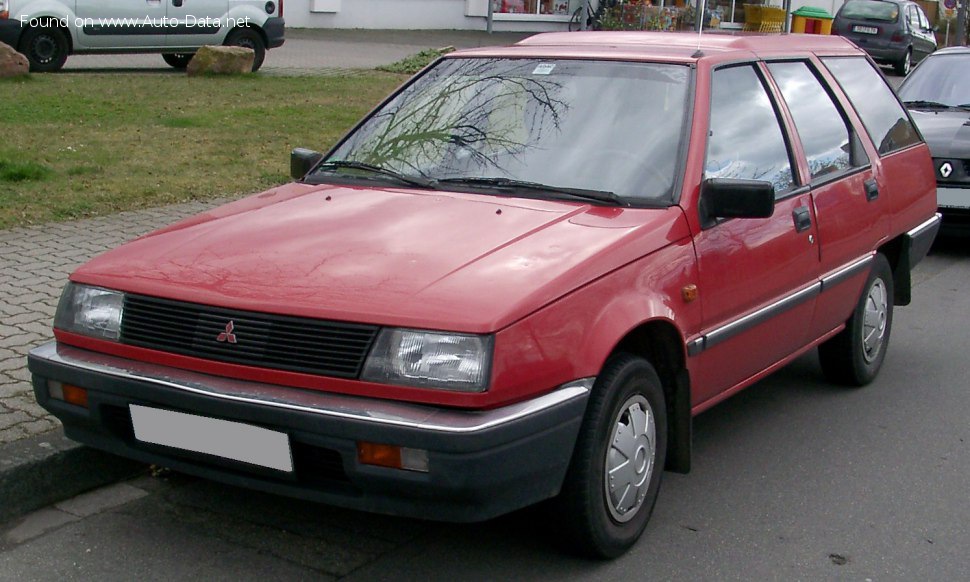
The design of the Mitsubishi Lancer III Wagon reflected the prevailing automotive aesthetics of the late 1980s: functional, angular, and practical. Its station wagon body type maximized interior volume, offering a spacious cabin and a substantial cargo area – a primary selling point for families and individuals requiring ample utility. The exterior featured clean lines and a relatively conservative styling approach, prioritizing aerodynamic efficiency and manufacturing simplicity. While not overtly flashy, its design communicated a sense of sturdy reliability and understated competence.
Inside, the Lancer Wagon was designed with practicality in mind. The interior layout was ergonomic and straightforward, with controls that were easy to reach and operate. Seating for five passengers was comfortable for its class, and the rear seats typically folded down to create an expansive, flat load floor, transforming the wagon into a highly versatile hauler. Features, consistent with a compact car of its era, were generally basic but functional. These would have included a standard AM/FM radio, manual windows and mirrors, and a basic heating and ventilation system. Air conditioning was often an optional extra, depending on the market. Safety features were rudimentary by modern standards, primarily consisting of seatbelts and a robust body structure designed to meet the crash standards of the late 1980s. The focus was on fundamental protection rather than advanced active or passive safety systems.
The combination of its practical station wagon body and the all-wheel-drive system made the Lancer III Wagon a compelling choice for consumers seeking a vehicle that could seamlessly transition between urban environments and more challenging rural or winter conditions. Its design was a testament to Mitsubishi’s philosophy of offering dependable, well-engineered vehicles that met the real-world needs of their owners.
Technical Specifications: Mitsubishi Lancer III Wagon 1.8 (83 Hp) 4×4
| Attribute | Specification |
|---|---|
| Brand | Mitsubishi |
| Model | Lancer |
| Generation | Lancer III Wagon |
| Type (Engine) | 1.8 (83 Hp) 4×4 |
| Start of Production | 1987 year |
| End of Production | 1989 year |
| Powertrain Architecture | Internal Combustion engine |
| Body type | Station wagon (estate) |
| Fuel Type | Petrol (Gasoline) |
| Power | 83 Hp |
| Engine aspiration | Naturally aspirated engine |
Legacy and Market Impact
The Mitsubishi Lancer III Wagon 1.8 (83 Hp) 4×4, while not a high-volume seller in every global market, left a significant legacy as a highly reliable and exceptionally practical vehicle. Its primary impact was felt in markets where its unique blend of compact dimensions, generous cargo space, and all-wheel-drive capability perfectly met consumer demands. In regions like Europe, Australia, and parts of Asia, where diverse climates and varied road conditions are common, its 4×4 system provided a distinct advantage over its two-wheel-drive counterparts, establishing a reputation for sure-footedness and dependable performance.
Competitors in its segment included other compact wagons such as the Toyota Corolla Wagon, Honda Civic Wagon, Nissan Sunny/Pulsar Wagon, and various European offerings like the Ford Escort Wagon or Opel Kadett Caravan. However, few of these rivals offered a full-time 4×4 system in a compact wagon package at a comparable price point during the late 1980s. This gave the Lancer a unique selling proposition, appealing to buyers who needed more than just front-wheel-drive traction but found traditional SUVs too large, too expensive, or too inefficient for their needs. It was a precursor to the crossover SUV trend, demonstrating the appeal of combining passenger car comfort with enhanced all-weather capability.
Historically, this Lancer Wagon contributed to Mitsubishi’s image as an innovator in drivetrain technology, particularly with its early adoption and refinement of four-wheel-drive systems in passenger cars. It reinforced the Lancer nameplate’s reputation for durability and value for money, qualities that would carry through subsequent generations of the model. Even decades later, many examples of this Lancer Wagon can still be found in service in various parts of the world, a testament to its robust engineering and long-term reliability. Its enduring presence underscores its historical significance as a dependable, versatile, and quietly capable family vehicle that offered advanced traction long before all-wheel drive became a common feature in compact cars.