The Enduring Legacy of the Mercedes-Benz S124 (facelift 1989) 300 TE
The Mercedes-Benz S124 (facelift 1989) 300 TE represents a pinnacle of German automotive engineering from an era celebrated for its over-engineered, durable, and supremely comfortable vehicles. As the station wagon variant of the revered W124 chassis, the S124 series, particularly the 300 TE, carved out a significant niche in the executive car segment. Produced from September 1989 until October 1992, this facelifted model combined the inherent practicality of a five-door, five-seat estate car with the sophisticated luxury and robust performance expected of a Mercedes-Benz. It was not merely a utility vehicle; it was a statement of discerning taste, offering a compelling blend of spaciousness, safety, and a driving experience that was both refined and engaging. The W124 generation, often retrospectively referred to as the “last truly over-engineered Mercedes,” set new benchmarks for reliability and build quality, and the 300 TE wagon epitomized these values, becoming a beloved choice for families and professionals alike who demanded uncompromising quality and versatility.
Engineering Excellence and Performance of the Mercedes-Benz S124 (facelift 1989) 300 TE
At the heart of the 1989 Mercedes-Benz S124 300 TE lies the M 103 E 30 / 103.983 engine, a testament to Mercedes-Benz’s commitment to smooth, reliable power delivery. This naturally aspirated, 3.0-liter (2960 cm³ or 180.63 cubic inches) inline-six cylinder engine was a marvel of its time, featuring a Single Overhead Camshaft (SOHC) valvetrain with two valves per cylinder and a multi-port manifold injection system. It produced a respectable 180 horsepower at 5700 rpm, which for a luxury wagon of its era, provided ample motivation. The engine’s torque output was equally impressive, generating 188.08 lb.-ft. at a relatively accessible 4400 rpm, ensuring robust acceleration and effortless cruising.
Power was sent to the rear wheels via a precise 5-speed manual transmission, offering a more direct and engaging driving experience than many of its automatic-equipped counterparts. This powertrain combination enabled the 300 TE to accelerate from 0 to 60 mph in a brisk 8.6 seconds, with a top speed of 131.73 mph. These figures were highly competitive for a luxury station wagon in the late 1980s and early 1990s, underscoring its capability as a competent grand tourer. The engine’s compression ratio of 9.2:1 balanced performance with efficiency, contributing to fuel consumption figures of approximately 15.5 US mpg in urban driving and an impressive 28 US mpg on the highway, making it a relatively economical choice for long-distance travel given its size and performance. Its weight-to-power ratio of 8.5 kg/Hp (117.6 Hp/tonne) further highlights its balanced engineering, providing a solid, confidence-inspiring feel on the road.
Timeless Design and Practical Features
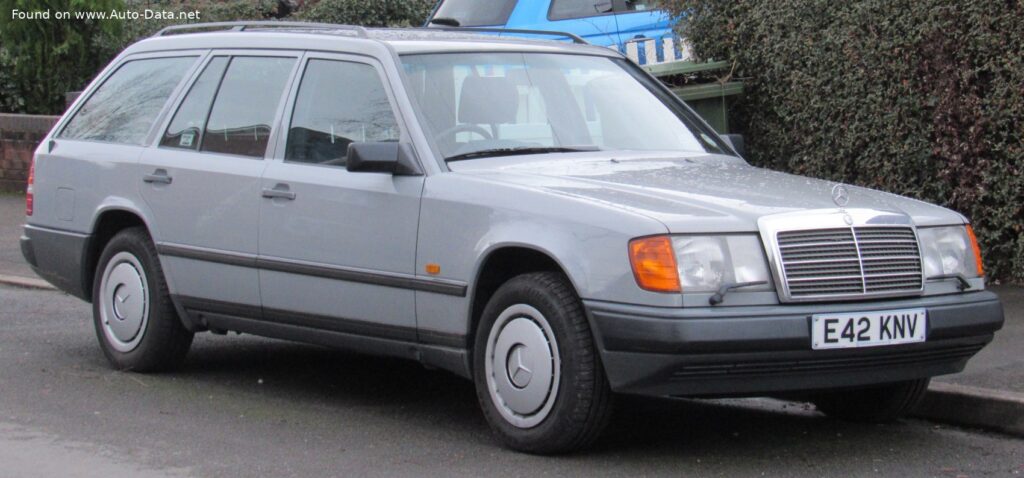
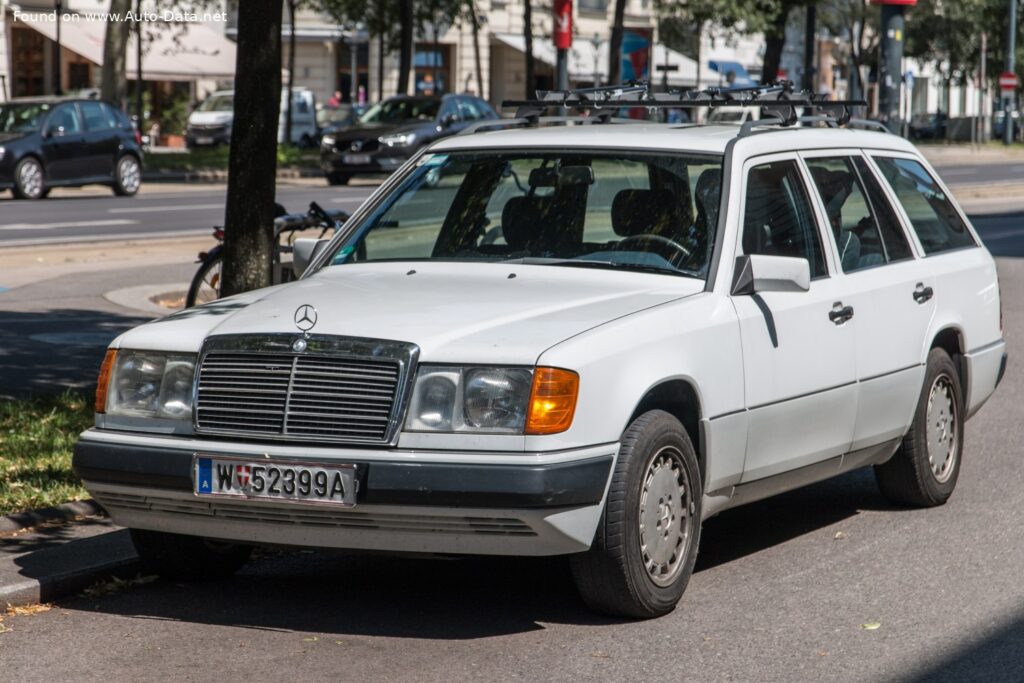
The design of the Mercedes-Benz S124 (facelift 1989) 300 TE is a classic example of form following function, executed with an unmistakable elegance that has aged gracefully. Its station wagon (estate) body type, with five doors and seating for five, offered exceptional practicality without compromising on Mercedes-Benz’s signature sophisticated aesthetic. The facelifted models, introduced in 1989, brought subtle refinements, including body-colored side moldings and a revised grille, maintaining the W124’s iconic, aerodynamic silhouette. With a length of 187.6 inches, a width of 68.5 inches, and a height of 58.62 inches, the S124 wagon struck an ideal balance between road presence and maneuverability, further enhanced by a generous 110.24-inch wheelbase that contributed to a remarkably stable and comfortable ride.
Beyond its visual appeal, the S124 300 TE was packed with features designed for safety, comfort, and durability. The independent multi-link rear suspension system, a Mercedes-Benz innovation, provided superior handling and ride comfort, effectively isolating occupants from road imperfections. Braking was handled by ventilated discs at the front and solid discs at the rear, complemented by an Anti-lock Braking System (ABS) as a standard safety feature, which was advanced for its time. Steering was managed by a robust cone worm system with recirculation balls, assisted by hydraulic power steering, ensuring precise control and ease of maneuvering. The vehicle rode on 195/65 R15 tires mounted on 6.5J x 15 wheels, providing a comfortable ride and predictable grip. The substantial 72-liter (19.02 US gallon) fuel tank capacity ensured an extended range, perfect for long journeys. Its robust construction, with a kerb weight of 3373.07 lbs. and a maximum load capacity of 1300.73 lbs., underscored its capability as a versatile workhorse for both cargo and passengers.
Technical Specifications: Mercedes-Benz S124 (facelift 1989) 300 TE
| Category | Specification |
|---|---|
| General Information | |
| Brand | Mercedes-Benz |
| Model | W124 |
| Generation | S124 (facelift 1989) |
| Type (Engine) | 300 TE (180 Hp) |
| Production Start | September, 1989 |
| Production End | October, 1992 |
| Powertrain Architecture | Internal Combustion engine |
| Body type | Station wagon (estate) |
| Seats | 5 |
| Doors | 5 |
| Performance Specs | |
| Fuel Consumption (Urban) | 15.2 l/100 km (15.5 US mpg) |
| Fuel Consumption (Extra Urban) | 8.4 l/100 km (28 US mpg) |
| Fuel Type | Petrol (Gasoline) |
| Acceleration 0-60 mph | 8.6 sec |
| Maximum Speed | 212 km/h (131.73 mph) |
| Weight-to-power ratio | 8.5 kg/Hp (117.6 Hp/tonne) |
| Weight-to-torque ratio | 6 kg/Nm (166.7 Nm/tonne) |
| Engine Specs | |
| Power | 180 Hp @ 5700 rpm |
| Power per liter | 60.8 Hp/l |
| Torque | 255 Nm @ 4400 rpm (188.08 lb.-ft. @ 4400 rpm) |
| Engine Layout | Front, Longitudinal |
| Engine Model/Code | M 103 E 30 / 103.983 |
| Engine Displacement | 2960 cm³ (3.0 liters / 180.63 cu. in.) |
| Number of Cylinders | 6 |
| Engine Configuration | Inline |
| Cylinder Bore | 88.49 mm (3.48 in.) |
| Piston Stroke | 80.2 mm (3.16 in.) |
| Compression Ratio | 9.2:1 |
| Number of Valves per Cylinder | 2 |
| Fuel Injection System | Multi-port manifold injection |
| Engine Aspiration | Naturally aspirated engine |
| Valvetrain | SOHC |
| Engine Oil Capacity | 6.5 l (6.87 US qt) |
| Coolant Capacity | 9 l (9.51 US qt) |
| Space, Volume and Weights | |
| Kerb Weight | 1530 kg (3373.07 lbs.) |
| Max. Weight | 2120 kg (4673.8 lbs.) |
| Max Load | 590 kg (1300.73 lbs.) |
| Fuel Tank Capacity | 72 l (19.02 US gal) |
| Dimensions | |
| Length | 4765 mm (187.6 in.) |
| Width | 1740 mm (68.5 in.) |
| Height | 1489 mm (58.62 in.) |
| Wheelbase | 2800 mm (110.24 in.) |
| Front Track | 1497 mm (58.94 in.) |
| Rear Track | 1497 mm (58.94 in.) |
| Drivetrain, Brakes and Suspension Specs | |
| Drivetrain Architecture | Internal Combustion engine drives the rear wheels |
| Drive Wheel | Rear wheel drive |
| Number of Gears and Gearbox Type | 5 gears, manual transmission |
| Front Suspension | Wishbone |
| Rear Suspension | Independent multi-link suspension |
| Front Brakes | Ventilated discs |
| Rear Brakes | Disc |
| Assisting Systems | ABS (Anti-lock braking system) |
| Steering Type | Cone worm with recirculation balls |
| Power Steering | Hydraulic Steering |
| Tires Size (Front/Rear) | 195/65 R15 |
| Wheel Rims Size (Front/Rear) | 6.5J x 15 |
Legacy and Market Impact of the Mercedes-Benz S124 300 TE
The Mercedes-Benz S124 300 TE, and indeed the entire W124 generation, enjoys an almost legendary status in the automotive world, particularly among enthusiasts and those who appreciate enduring quality. It is widely regarded as one of the best Mercedes-Benz models ever built, a testament to its unparalleled build quality, meticulous engineering, and long-term reliability. During its production run, the S124 wagon was a formidable competitor in the burgeoning executive estate market. It vied for attention against rivals such as the BMW 5 Series Touring (E34 generation), the Audi 100 Avant, and even premium offerings from Volvo like the 740/940 wagons. However, the Mercedes-Benz distinguished itself with a reputation for superior ride comfort, refined powertrains, and an almost indestructible nature that few could match.
Its historical significance lies in its role as a benchmark for luxury, safety, and practicality. The W124 introduced numerous innovations that would become industry standards, and the S124 wagon showcased how these advancements could be integrated into a highly versatile package. The model’s robust chassis, advanced suspension, and comprehensive safety features (including ABS) were cutting-edge for its time, setting a high bar for competitors. The 300 TE, with its powerful inline-six engine and manual transmission option, appealed to drivers who sought a more engaging experience without sacrificing the comfort and utility Mercedes-Benz was known for.
Today, the Mercedes-Benz S124 300 TE remains a highly sought-after classic. Its reputation for longevity means many examples are still on the road, often having accumulated hundreds of thousands of miles with proper maintenance. It represents a golden era for Mercedes-Benz, where engineering integrity and durability were paramount. Its timeless design, coupled with its practical attributes and engaging driving dynamics, ensures its place as a cherished icon among vintage luxury vehicles, influencing subsequent generations of the E-Class wagon and cementing its legacy as one of the finest wagons ever produced. Its impact on the market was profound, proving that a utilitarian vehicle could also be a luxurious, high-performance, and incredibly reliable machine.