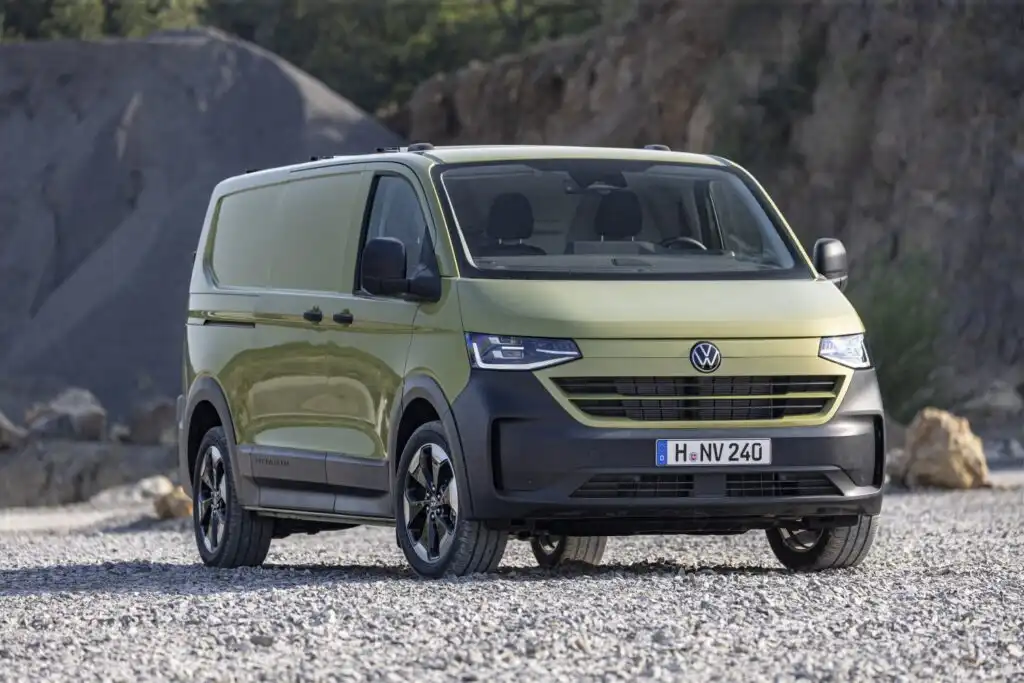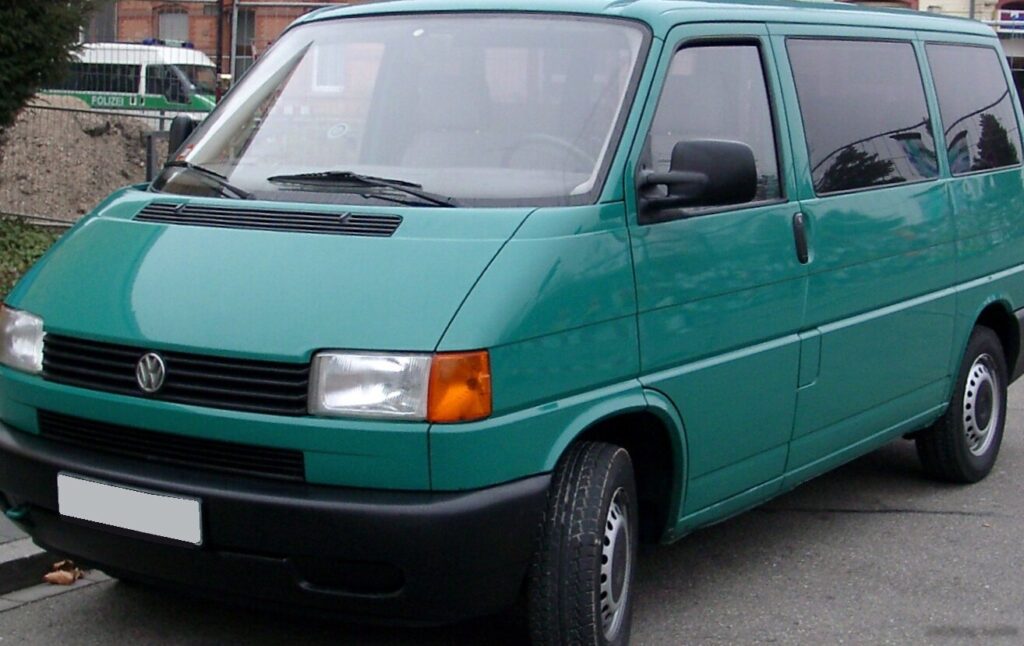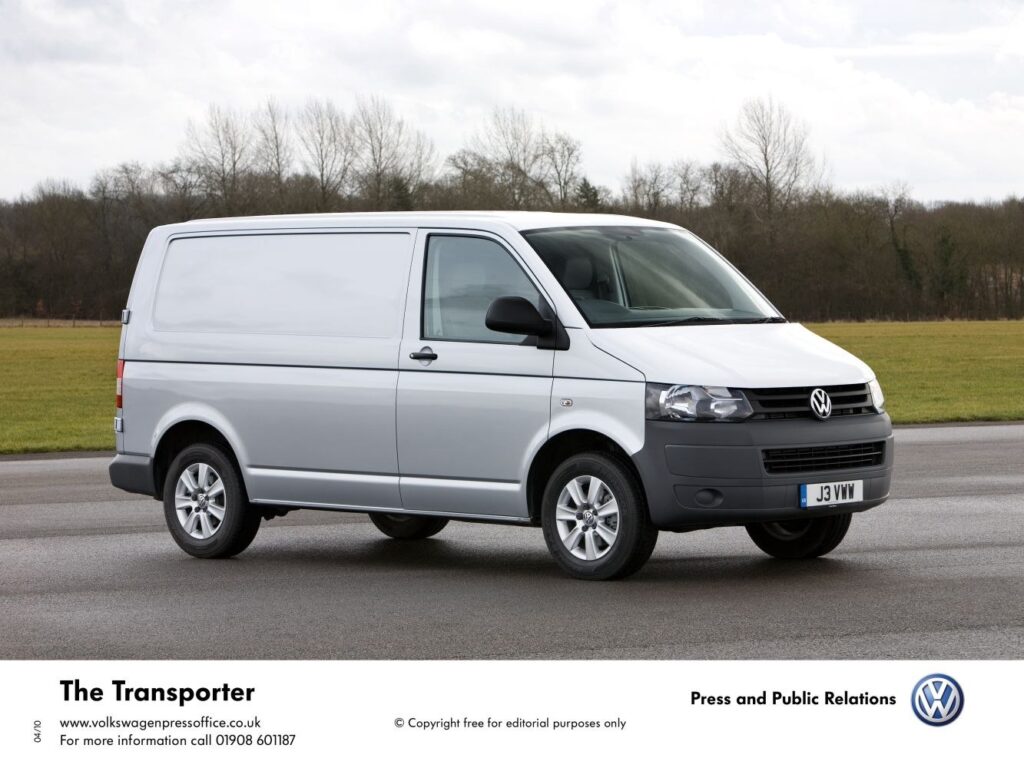
The Volkswagen Transporter (T5, facelift 2009) Panel Van: A European Workhorse
The Volkswagen Transporter, a name synonymous with reliability and versatility in the commercial vehicle sector, saw its fifth generation (T5) receive a significant facelift in 2009. This iteration, produced from 2011 to 2015, continued the Transporter’s legacy as a robust and efficient panel van, primarily targeting the demanding European and international markets. The specific model under review, the Volkswagen Transporter (T5, facelift 2009) Panel Van 2.0 TDI BMT (84 Hp) L1H2, represents a highly practical and fuel-efficient variant designed for businesses prioritizing operational economy and cargo capacity. While not a mainstream offering in the United States, the Transporter series is a cornerstone of Volkswagen’s global commercial vehicle strategy, embodying decades of engineering prowess dedicated to utility and durability. This particular configuration, featuring the 2.0-liter TDI BlueMotion Technology engine, was engineered to deliver optimal performance for daily commercial tasks without compromising on fuel efficiency or Volkswagen’s renowned build quality.
Engine and Performance of the Volkswagen Transporter (T5, facelift 2009) Panel Van
At the heart of this particular Volkswagen Transporter (T5, facelift 2009) Panel Van lies a 2.0-liter TDI (Turbocharged Direct Injection) engine, designated with the EA189 / CAAA code. This inline-four cylinder diesel powerplant, transversely mounted at the front, features a DOHC (Double Overhead Camshaft) valvetrain with four valves per cylinder, ensuring efficient combustion and robust performance. Despite its modest output of 84 horsepower at 3500 rpm, the engine is engineered for commercial use, where low-end torque and fuel efficiency are paramount. It delivers a substantial 162.26 lb.-ft. of torque, available across a broad and usable range from 1250 to 2500 rpm. This torque profile is crucial for a panel van, enabling it to confidently handle heavy loads and navigate urban environments with ease.
The inclusion of BlueMotion Technology (BMT) signifies Volkswagen’s commitment to environmental responsibility and operational cost savings. This package incorporates features such as a Start & Stop system to reduce fuel consumption and emissions during idle, along with a particulate filter to meet stringent Euro 5 emission standards. While acceleration figures, such as 0 to 60 mph in 18.8 seconds and a top speed of 88.23 mph, might seem leisurely by passenger car standards, they are entirely appropriate for a utility vehicle. The focus here is on sustained efficiency and reliability.
Power is delivered to the front wheels via a smooth-shifting 5-speed manual transmission, a common and reliable setup for commercial vehicles of this era. This drivetrain architecture, coupled with the efficient TDI engine, contributes significantly to the Transporter’s impressive fuel economy. Combined fuel consumption is rated between 33.6 and 35.1 US mpg, while extra-urban figures can reach an impressive 38.6 to 40.6 US mpg, making it an economically sensible choice for businesses that log many miles. The 21.13 US gallon fuel tank further enhances its range, reducing downtime for refueling.
Design and Features: Practicality and Utility
The Volkswagen Transporter (T5, facelift 2009) Panel Van is a masterclass in functional design. As a panel van, its primary purpose is cargo transport, and the L1H2 designation (Long wheelbase, High roof) underscores its generous interior volume. With a length of 192.6 inches, a width of 74.96 inches (89.88 inches including mirrors), and a height of 85.67 inches, this Transporter offers an expansive cargo area of up to 236.61 cubic feet. This substantial volume, combined with a maximum payload capacity ranging from 1977.55 to 2453.74 lbs., makes it an ideal choice for a wide array of commercial applications, from courier services to tradespeople.
The exterior design of the T5 facelift is characterized by its clean lines and robust appearance, reflecting its work-oriented nature. The facelift introduced subtle refinements to the front fascia, including updated headlights and grille, aligning its aesthetics with Volkswagen’s contemporary passenger car lineup while maintaining its utilitarian appeal. The four to five doors facilitate easy access to both the cabin and the cargo area, with large rear and side openings for efficient loading and unloading.
Inside, the cabin is designed for durability and driver comfort during long working hours. It typically accommodates two to three occupants, with durable materials chosen to withstand the rigors of daily commercial use. Storage compartments are strategically placed throughout the cabin for convenience. Safety features for the era include an Anti-lock Braking System (ABS), providing crucial stability during emergency braking, especially when the vehicle is loaded. The hydraulic power steering system, combined with a rack and pinion setup, ensures precise and responsive handling, a vital attribute for navigating congested urban streets and tight loading docks.
The suspension system is engineered for both ride comfort and load-carrying capability. The front features an independent McPherson strut setup with coil springs and an anti-roll bar, while the rear utilizes an independent coil spring system with a transverse stabilizer and trailing arms. This configuration provides a stable and predictable ride, whether empty or fully loaded. Braking is handled by ventilated discs both front (308×29.5 mm) and rear (294×22 mm), offering strong stopping power. The standard tire size is 215/65 R16 on 6.5J x 16 wheels, providing a good balance of load capacity and ride quality.
Technical Specifications
| Feature | Specification |
|---|---|
| Brand | Volkswagen |
| Model | Transporter |
| Generation | Transporter (T5, facelift 2009) Panel Van |
| Type (Engine) | 2.0 TDI BMT (84 Hp) L1H2 |
| Start of Production | 2011 year |
| End of Production | 2015 year |
| Powertrain Architecture | Internal Combustion engine |
| Body Type | Van |
| Seats | 2-3 |
| Doors | 4-5 |
| Performance Specs | |
| Fuel Consumption (Urban, NEDC) | 27.4 – 28.3 US mpg |
| Fuel Consumption (Extra Urban, NEDC) | 38.6 – 40.6 US mpg |
| Fuel Consumption (Combined, NEDC) | 33.6 – 35.1 US mpg |
| CO2 Emissions (NEDC) | 176-184 g/km |
| Fuel Type | Diesel |
| Acceleration 0 – 60 mph | 18.8 sec |
| Maximum Speed | 88.23 mph |
| Emission Standard | Euro 5 |
| Weight-to-Power Ratio | 20.1 kg/Hp, 49.8 Hp/tonne |
| Weight-to-Torque Ratio | 7.7 kg/Nm, 130.4 Nm/tonne |
| Engine Specs | |
| Power | 84 Hp @ 3500 rpm |
| Power per Litre | 42.7 Hp/l |
| Torque | 162.26 lb.-ft. @ 1250-2500 rpm |
| Engine Layout | Front, Transverse |
| Engine Model/Code | EA189 / CAAA |
| Engine Displacement | 120.09 cu. in. (1968 cm3) |
| Number of Cylinders | 4 |
| Engine Configuration | Inline |
| Cylinder Bore | 3.19 in. (81 mm) |
| Piston Stroke | 3.76 in. (95.5 mm) |
| Compression Ratio | 16.5:1 |
| Number of Valves per Cylinder | 4 |
| Fuel Injection System | Diesel Commonrail |
| Engine Aspiration | Turbocharger, Intercooler |
| Valvetrain | DOHC |
| Engine Oil Capacity | 7.4 US qt (7 l) |
| Coolant Capacity | 11.62 US qt (11 l) |
| Engine Systems | Start & Stop System, Particulate filter |
| Space, Volume and Weights | |
| Kerb Weight | 3719.2 – 4636.32 lbs. (1687-2103 kg) |
| Max. Weight (GVWR) | 6172.94 – 6613.87 lbs. (2800-3000 kg) |
| Max Load | 1977.55 – 2453.74 lbs. (897-1113 kg) |
| Trunk (Boot) Space – Maximum | 236.61 cu. ft. (6700 l) |
| Fuel Tank Capacity | 21.13 US gal (80 l) |
| Permitted Trailer Load with Brakes (12%) | 4850.17 lbs. (2200 kg) |
| Permitted Trailer Load without Brakes | 1653.47 lbs. (750 kg) |
| Permitted Towbar Download | 220.46 lbs. (100 kg) |
| Dimensions | |
| Length | 192.6 in. (4892 mm) |
| Width | 74.96 in. (1904 mm) |
| Width Including Mirrors | 89.88 in. (2283 mm) |
| Height | 85.67 in. (2176 mm) |
| Wheelbase | 118.11 in. (3000 mm) |
| Front Overhang | 35.28 in. (896 mm) |
| Rear Overhang | 39.21 in. (996 mm) |
| Ride Height (Ground Clearance) | 7.91 in. (201 mm) |
| Minimum Turning Circle (Diameter) | 39.04 ft. (11.9 m) |
| Approach Angle | 21° |
| Departure Angle | 17° |
| Ramp-over (Brakeover) Angle | 14° |
| Wading Depth | 11.81 in. (300 mm) |
| Drivetrain, Brakes and Suspension Specs | |
| Drivetrain Architecture | Front-wheel drive, Internal Combustion engine |
| Drive Wheel | Front wheel drive |
| Number of Gears and Type of Gearbox | 5 gears, manual transmission |
| Front Suspension | Independent, McPherson with coil spring and anti-roll bar |
| Rear Suspension | Independent coil spring, Transverse stabilizer, Trailing arm |
| Front Brakes | Ventilated discs, 308×29.5 mm |
| Rear Brakes | Ventilated discs, 294×22 mm |
| Assisting Systems | ABS (Anti-lock braking system) |
| Steering Type | Steering rack and pinion |
| Power Steering | Hydraulic Steering |
| Tires Size | 215/65 R16 |
| Wheel Rims Size | 6.5J x 16 |
Legacy and Market Impact of the Volkswagen Transporter (T5, facelift 2009) Panel Van
The Volkswagen Transporter series boasts a rich heritage dating back to the iconic Type 2 “Bus.” The T5 generation, particularly the facelifted models from 2009-2015, upheld this esteemed legacy by continuing to be a market leader in the light commercial vehicle segment across Europe, Australia, and many other global markets. Its reputation for exceptional durability, robust engineering, and impressive longevity made it a favored choice for businesses ranging from small independent contractors to large fleet operators.
In its primary markets, the Volkswagen Transporter (T5, facelift 2009) Panel Van competed fiercely with other established players such as the Ford Transit Custom, Mercedes-Benz Vito, Renault Trafic, and Opel Vivaro (Vauxhall Vivaro in the UK). What set the Transporter apart was often its strong residual values, perceived quality, and the extensive Volkswagen service network. The 2.0 TDI BMT (84 Hp) variant, in particular, carved out a niche for itself by offering an ideal balance of a respectable payload capacity, manageable running costs, and a purchase price that appealed to budget-conscious businesses. Its BlueMotion Technology features, including the Start & Stop system, were forward-thinking for the era, signaling Volkswagen’s early commitment to efficiency and lower emissions in commercial vehicles.
The T5 facelift was instrumental in solidifying the Transporter’s position as a versatile platform, not only as a panel van but also as a passenger carrier (Multivan, Caravelle) and a camper van (California). The L1H2 panel van variant, with its ample cargo volume and practical design, became an indispensable tool for countless tradespeople, delivery services, and logistics companies. Its ability to comfortably tow up to 4850.17 lbs. with brakes further extended its utility, making it adaptable to a wider range of tasks.
While this specific Transporter panel van was not offered in the United States market, its influence is evident globally. It represents a period where commercial vehicles were becoming increasingly sophisticated, incorporating technologies previously reserved for passenger cars to improve efficiency, safety, and driver comfort. The T5 facelift cemented the Transporter’s status as a benchmark for commercial vans, a vehicle that was not just a means of transport but a vital partner for businesses, embodying reliability and a commitment to getting the job done. Its impact continues to be felt through its strong presence in the used vehicle market and its foundational role in the subsequent T6 generation.