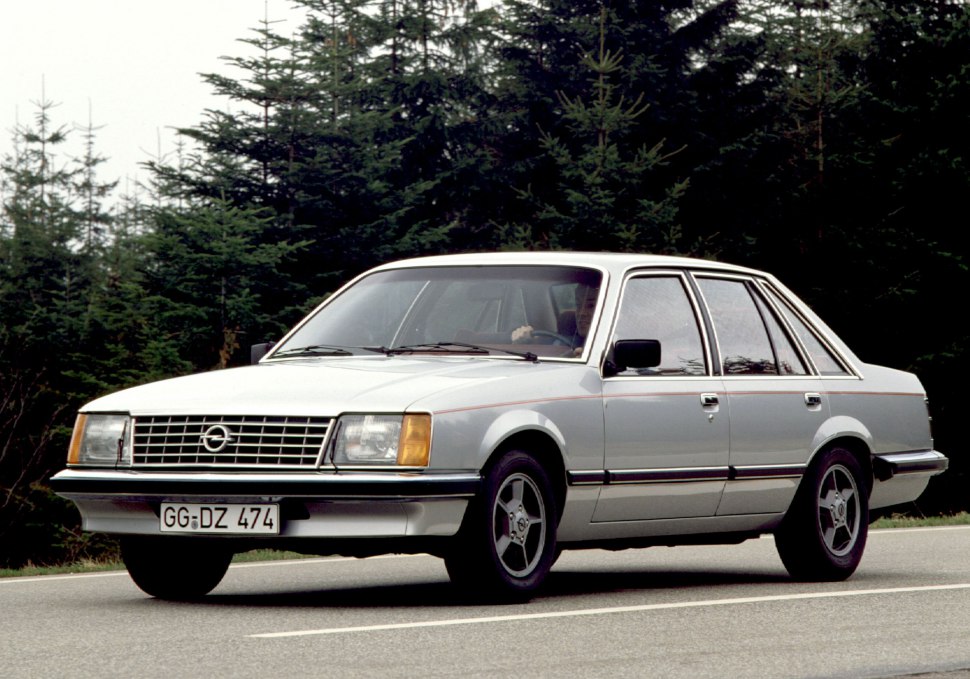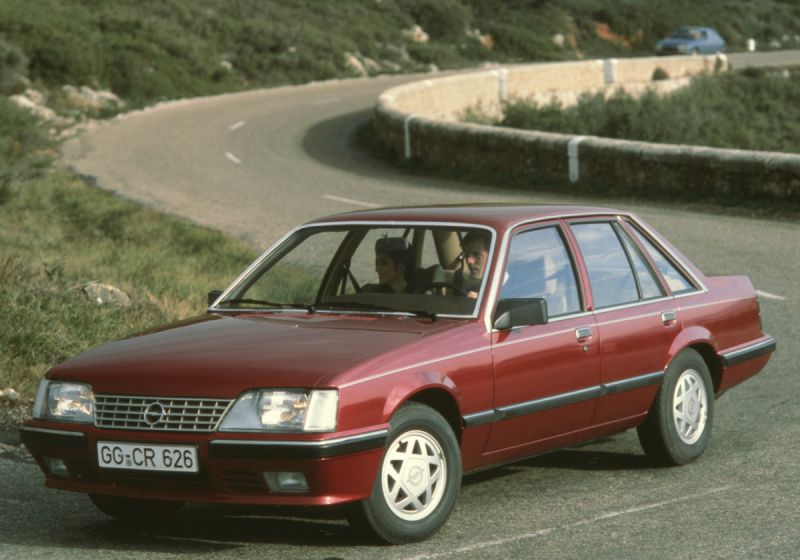
Introduction to the Opel Senator A (facelift 1982)
The Opel Senator A, particularly the updated model from the 1982 facelift, stands as a notable entry in the European executive car segment of the early 1980s. Produced by the German automaker Opel, a subsidiary of General Motors, the Senator A was a full-size sedan designed to compete with established luxury offerings from brands like Mercedes-Benz and BMW, albeit often positioned as a more value-oriented alternative. The A generation of the Senator was introduced in 1978, sharing its platform with the Opel Rekord E and the sporty Monza coupe. The 1982 facelift brought a refreshed aesthetic and technical enhancements, aiming to keep the model competitive in a rapidly evolving market.
This article focuses on the specific variant: the Opel Senator A (facelift 1982) 2.0 E with 110 horsepower and an automatic transmission. This particular model, produced from 1982 to 1984, represented an entry-level offering in the Senator lineup, providing a blend of executive comfort, robust engineering, and practical performance for its target audience in Europe. While not officially sold in the United States, the Senator embodied Opel’s engineering prowess and design philosophy, offering a glimpse into the European automotive landscape of its time through a distinctly American-influenced corporate lens.
Engine and Performance of the Opel Senator A (facelift 1982)
Powertrain Configuration
Under the hood, the Opel Senator A (facelift 1982) 2.0 E featured a naturally aspirated, inline four-cylinder gasoline engine. With an engine displacement of 1,979 cubic centimeters (approximately 2.0 liters or 120.77 cubic inches), this powerplant was designed for a balance of efficiency and adequate performance for an executive sedan of its era. The engine utilized a Single Overhead Camshaft (SOHC) valvetrain with two valves per cylinder, a common and reliable configuration for mass-produced engines during the early 1980s. Fuel delivery was managed by a multi-port manifold injection system, a more advanced solution than carburetors, contributing to better fuel efficiency and emissions control.
This 2.0-liter unit produced a respectable 110 horsepower at 5,400 revolutions per minute. Torque figures stood at 119.49 pound-feet (162 Newton-meters) delivered at a relatively low 3,000 rpm, indicating a flexible engine with decent pulling power available early in the rev range. The power-to-weight ratio for this model was approximately 81.5 horsepower per metric ton, or 12.3 kilograms per horsepower, which was typical for a four-cylinder executive car of the period.
Performance Figures
Power was sent to the rear wheels via a 3-speed automatic transmission. This setup, while lacking the refinement and efficiency of modern multi-speed automatics, was a common choice for comfort-oriented executive cars of the time, emphasizing smooth shifts over outright performance. The drivetrain architecture, with the engine driving the rear wheels, provided a traditional and well-balanced driving experience.
In terms of acceleration, the Senator A 2.0 E Automatic achieved 0 to 60 miles per hour in a calculated 15.2 seconds (0-100 km/h in 16 seconds). Its maximum speed was rated at 108.74 mph (175 km/h). These figures, while modest by today’s standards, were considered adequate for an entry-level executive sedan in the early 1980s, prioritizing comfortable cruising on autobahns and highways. Fuel economy for the combined cycle was rated at 23.5 US miles per gallon (10 liters per 100 kilometers), which was a competitive figure for a car of its size and engine capacity at the time. The substantial 19.81 US gallon (75 liter) fuel tank capacity ensured a decent cruising range.
Design and Features
Exterior Styling and Dimensions
The Opel Senator A (facelift 1982) retained the dignified and somewhat conservative styling that characterized European executive sedans of its era. As a four-door sedan, it offered a classic silhouette designed to project an image of understated sophistication. The facelift in 1982 brought subtle but effective updates, likely including revised grille designs, updated lighting, and minor trim changes, to modernize its appearance without a complete overhaul. Its overall length measured 190.51 inches (4,839 mm), with a width of 67.8 inches (1,722 mm) and a height of 55.71 inches (1,415 mm). The wheelbase of 105.63 inches (2,683 mm) contributed to a stable ride and generous interior space.
Despite its rather boxy appearance, common for the period, the Senator A achieved a drag coefficient (Cd) of 0.39. While not exceptionally low by modern standards, this was a respectable figure for a large sedan in the early 1980s, reflecting some attention to aerodynamic efficiency. The car’s substantial dimensions and solid construction contributed to a curb weight of 2,976.24 pounds (1,350 kg), reinforcing its executive presence.
Interior and Practicality
Inside, the Senator A was designed to accommodate four occupants in comfort, offering a spacious cabin typical of its segment. While specific interior features for this 2.0 E model are not detailed in the provided data, executive cars of this vintage typically included comfortable seating, quality upholstery, and a well-appointed dashboard with clear instrumentation. The focus was on providing a refined and quiet environment for long-distance travel.
Practicality was a strong suit, exemplified by its impressive trunk space. With a maximum capacity of 25.25 cubic feet (715 liters), the Senator A offered substantial cargo volume, making it highly suitable for business travel or family excursions. The maximum permissible load was 1,179.47 pounds (535 kg), further highlighting its utility.
Chassis and Safety
The Senator A featured disc brakes on both the front and rear wheels, a significant safety feature for the time, providing superior stopping power compared to drum brakes. The suspension setup, while not explicitly detailed, would have been tuned for a comfortable ride characteristic of executive sedans. Its rear-wheel-drive architecture ensured predictable handling dynamics. The minimum turning circle of 35.43 feet (10.8 meters) indicated decent maneuverability for a vehicle of its size, aiding in urban driving and parking. The robust construction and emphasis on comfort were inherent safety aspects for vehicles in this class during the early 1980s.
Technical Specifications
| Category | Specification |
|---|---|
| General Information | |
| Brand | Opel |
| Model | Senator |
| Generation | Senator A (facelift 1982) |
| Type (Engine) | 2.0 E (110 Hp) Automatic |
| Start of Production | 1982 |
| End of Production | 1984 |
| Powertrain Architecture | Internal Combustion Engine |
| Body Type | Sedan |
| Seats | 4 |
| Doors | 4 |
| Performance Specifications | |
| Fuel Consumption (Combined) | 23.5 US mpg (10 L/100 km) |
| Fuel Type | Petrol (Gasoline) |
| Acceleration 0-60 mph | 15.2 seconds |
| Acceleration 0-100 km/h | 16 seconds |
| Maximum Speed | 108.74 mph (175 km/h) |
| Weight-to-Power Ratio | 27.12 lbs/Hp (12.3 kg/Hp) |
| Weight-to-Torque Ratio | 18.3 lbs/lb-ft (8.3 kg/Nm) |
| Engine Specifications | |
| Power | 110 horsepower @ 5400 rpm |
| Power per Liter | 55.6 Hp/L |
| Torque | 119.49 lb-ft @ 3000 rpm (162 Nm) |
| Engine Displacement | 120.77 cu. in. (1,979 cm³ / 2.0 L) |
| Number of Cylinders | 4 |
| Engine Configuration | Inline |
| Cylinder Bore | 3.74 inches (95 mm) |
| Piston Stroke | 2.75 inches (69.8 mm) |
| Compression Ratio | 9.4:1 |
| Number of Valves per Cylinder | 2 |
| Fuel Injection System | Multi-port manifold injection |
| Engine Aspiration | Naturally aspirated engine |
| Valvetrain | SOHC |
| Engine Oil Capacity | 4.02 US quarts (3.8 L) |
| Space, Volume, and Weights | |
| Kerb Weight | 2,976.24 lbs (1,350 kg) |
| Max. Weight (GVWR) | 4,155.71 lbs (1,885 kg) |
| Max Load | 1,179.47 lbs (535 kg) |
| Trunk (Boot) Space – Maximum | 25.25 cu. ft. (715 L) |
| Fuel Tank Capacity | 19.81 US gallons (75 L) |
| Dimensions | |
| Length | 190.51 inches (4,839 mm) |
| Width | 67.8 inches (1,722 mm) |
| Height | 55.71 inches (1,415 mm) |
| Wheelbase | 105.63 inches (2,683 mm) |
| Front Track | 56.97 inches (1,447 mm) |
| Rear (Back) Track | 57.95 inches (1,472 mm) |
| Ride Height (Ground Clearance) | 5.51 inches (140 mm) |
| Drag Coefficient (Cd) | 0.39 |
| Minimum Turning Circle | 35.43 feet (10.8 m) |
| Drivetrain, Brakes, and Suspension | |
| Drivetrain Architecture | Internal Combustion Engine drives the rear wheels |
| Drive Wheel | Rear-wheel drive |
| Number of Gears and Type of Gearbox | 3 gears, automatic transmission |
| Front Brakes | Disc |
| Rear Brakes | Disc |
Legacy and Market Impact
The Opel Senator A, especially after its 1982 facelift, played a significant role in Opel’s strategy to compete in the demanding European executive car market. While Opel was often perceived as a brand for the masses, the Senator was its flagship sedan, designed to offer a more luxurious and sophisticated experience. In its primary European market, the Senator A competed directly with vehicles such as the Ford Granada, Volvo 760, and to some extent, the entry-level variants of the BMW 5-Series (E28) and Mercedes-Benz W123.
The Senator’s reputation was built on its combination of comfortable ride quality, robust build, and generous interior space. It offered a compelling alternative to its more expensive German rivals, often providing similar levels of equipment and comfort at a more accessible price point. The 2.0 E variant, with its four-cylinder engine, was particularly important for markets where fuel efficiency and lower taxation on smaller displacement engines were key considerations. It allowed Opel to offer the Senator’s executive presence to a broader customer base who might not need or want the more powerful six-cylinder options.
The 1982 facelift helped to keep the Senator A visually fresh and technologically current for a few more years, bridging the gap until the introduction of the all-new Senator B in 1987. The A generation is remembered for its straightforward engineering, comfortable highway cruising capabilities, and its role in demonstrating Opel’s ability to produce large, respectable executive sedans. While it might not have achieved the same iconic status as some of its more premium competitors, the Opel Senator A was a workhorse of the European executive class, valued for its reliability and understated luxury. Its legacy lies in its contribution to Opel’s brand image and its provision of a solid, comfortable, and practical executive transport option during a pivotal decade for the automotive industry.