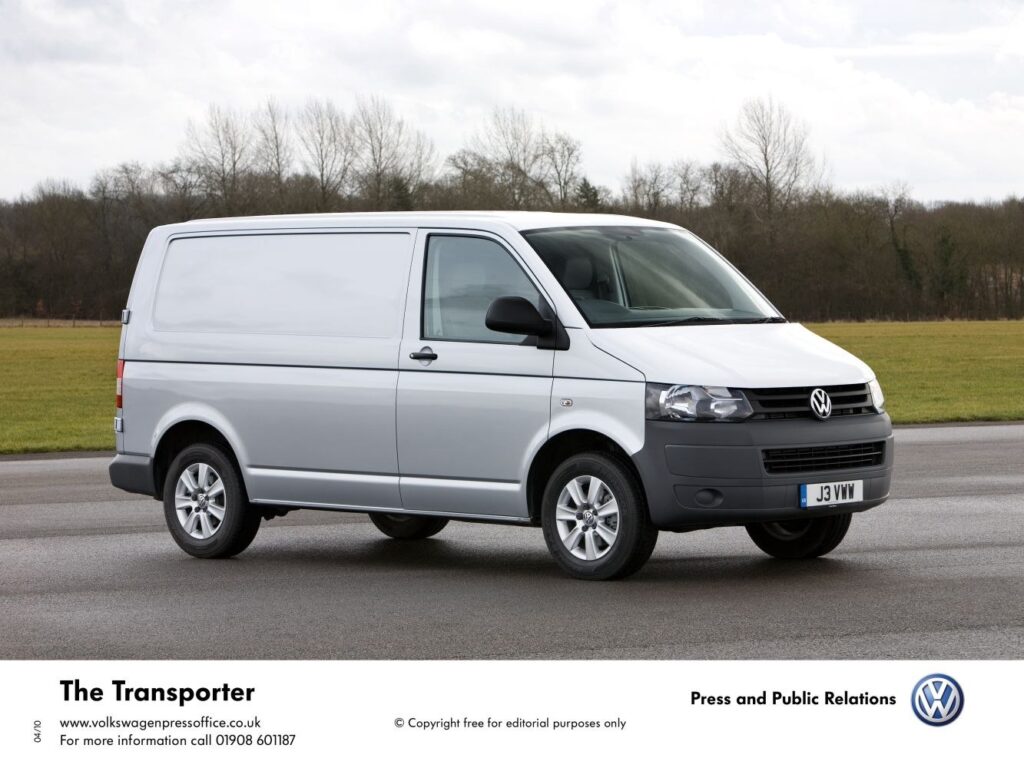
The Volkswagen Transporter (T5, facelift 2009) Panel Van: A European Workhorse
The Volkswagen Transporter, known colloquially as the “Bus” or “Microbus” in earlier generations, has an enduring legacy as one of the most versatile and iconic commercial vehicles globally. The T5 generation, introduced in 2003, continued this tradition, and its significant facelift in 2009 brought a host of updates to keep it competitive in the demanding light commercial vehicle segment. This article focuses on a specific variant: the Volkswagen Transporter (T5, facelift 2009) Panel Van 2.0 TDI BMT (84 Hp) L2H1, produced between 2011 and 2015. While the Transporter has a global presence, this particular configuration, with its efficient diesel engine and BlueMotion Technology, was a staple in European markets, renowned for its low running costs and robust utility, making it a cornerstone for businesses across the continent.
This panel van variant, characterized by its L2H1 designation (Long Wheelbase, Standard Roof), was engineered to maximize cargo capacity while maintaining a manageable footprint for urban and inter-city operations. Its powertrain architecture, featuring an internal combustion engine driving the front wheels, provided a practical and efficient setup for its intended commercial duties. The T5 facelift brought updated styling cues, enhanced safety features, and, crucially, a new range of more efficient engines, including the 2.0-liter TDI, which was a significant step forward in terms of fuel economy and reduced emissions compared to its predecessors.
Engine and Performance of the Volkswagen Transporter (T5, facelift 2009) Panel Van
At the heart of this particular Volkswagen Transporter (T5, facelift 2009) Panel Van variant is a 2.0-liter (1968 cm³, or 120.09 cu. in.) inline four-cylinder TDI (Turbocharged Direct Injection) diesel engine. This unit, designated EA189 / CAAA, was part of Volkswagen’s commitment to cleaner, more efficient diesel powertrains. Equipped with BlueMotion Technology (BMT), it incorporated features like a Start & Stop system and a particulate filter, which were instrumental in achieving Euro 5 emission standards.
Despite its relatively modest output of 84 horsepower (Hp) at 3500 rpm, the engine delivered a substantial 220 Nm (162.26 lb.-ft.) of torque across a broad and usable rev range, from 1250 to 2500 rpm. This low-end torque was critical for a commercial vehicle, ensuring ample pulling power for heavy loads and smooth acceleration from a standstill, even if outright speed was not its primary objective. Power per liter stood at 42.7 Hp/l, reflecting an engine tuned for durability and efficiency rather than high performance.
Paired with a 5-speed manual transmission, the front-wheel-drive Transporter offered a practical and reliable drivetrain. Performance figures, while not exhilarating, were entirely adequate for its role as a work vehicle. It accelerated from 0 to 60 mph in approximately 18.7 seconds, with a top speed of 90.72 mph (146 km/h). More importantly for commercial operators, fuel economy was a strong suit. The combined NEDC cycle rated it at 6.7-7 liters per 100 km, translating to an impressive 35.1 – 33.6 US mpg. This efficiency, combined with an 80-liter (21.13 US gallon) fuel tank, offered a substantial range, reducing downtime for refueling and contributing to lower operational costs.
Design, Features, and Practicality
The Volkswagen Transporter (T5, facelift 2009) Panel Van in its L2H1 configuration embodies a design philosophy centered on functionality and durability. Its body type is a traditional van, featuring 4-5 doors for easy access and seating for 2-3 occupants, typically a driver and one or two passengers. The exterior dimensions of 208.35 inches (5292 mm) in length, 74.96 inches (1904 mm) in width (89.88 inches or 2283 mm including mirrors), and 78.35 inches (1990 mm) in height, along with a significant 133.86-inch (3400 mm) wheelbase, contributed to its substantial cargo volume and stable road manners.
The L2H1 designation specifically indicates a long wheelbase and a standard roof height, offering a generous maximum trunk (boot) space of 6700 liters (236.61 cu. ft.). This vast, unobstructed cargo area was ideal for various commercial applications, from parcel delivery to tradesmen requiring space for tools and materials. The robust chassis could handle a maximum payload of 818-1062 kg (1803.38 – 2341.31 lbs.), and the vehicle’s maximum permissible weight ranged from 2800-3000 kg (6172.94 – 6613.87 lbs.). Furthermore, it boasted considerable towing capabilities, with a permitted trailer load of 4850.17 lbs (2200 kg) with brakes.
In terms of driver comfort and safety, the T5 facelift incorporated features expected in a modern commercial vehicle. The independent McPherson front suspension with coil springs and an anti-roll bar, combined with an independent coil spring rear suspension with a transverse stabilizer and trailing arm, provided a balance of ride comfort and load stability. Braking was handled by ventilated discs both front (308×29.5 mm) and rear (294×22 mm), complemented by an Anti-lock Braking System (ABS) for enhanced control during emergency stops. Hydraulic power steering made maneuvering the large van easier, especially in urban environments, contributing to a minimum turning circle of 43.31 feet (13.2 m). The cabin, while utilitarian, was designed for ergonomic efficiency, ensuring that the driver had access to essential controls and adequate visibility.
Technical Specifications
| Category | Specification | US/Imperial Equivalent |
|---|---|---|
General Information |
||
| Brand | Volkswagen | |
| Model | Transporter | |
| Generation | Transporter (T5, facelift 2009) Panel Van | |
| Type (Engine) | 2.0 TDI BMT (84 Hp) L2H1 | |
| Start of production | 2011 year | |
| End of production | 2015 year | |
| Powertrain Architecture | Internal Combustion engine | |
| Body type | Van | |
| Seats | 2-3 | |
| Doors | 4-5 | |
Performance Specs |
||
| Fuel consumption (urban NEDC) | 8.3-8.6 l/100 km | 28.3 – 27.4 US mpg |
| Fuel consumption (extra urban NEDC) | 5.8-6.1 l/100 km | 40.6 – 38.6 US mpg |
| Fuel consumption (combined NEDC) | 6.7-7 l/100 km | 35.1 – 33.6 US mpg |
| CO2 emissions (NEDC) | 176-184 g/km | |
| Fuel Type | Diesel | |
| Acceleration 0 – 60 mph | 18.7 sec | |
| Maximum speed | 146 km/h | 90.72 mph |
| Emission standard | Euro 5 | |
| Weight-to-power ratio | 20.7 kg/Hp | 48.3 Hp/tonne |
| Weight-to-torque ratio | 7.9 kg/Nm | 126.6 Nm/tonne |
Engine Specs |
||
| Power | 84 Hp @ 3500 rpm | |
| Power per liter | 42.7 Hp/l | |
| Torque | 220 Nm @ 1250-2500 rpm | 162.26 lb.-ft. @ 1250-2500 rpm |
| Engine layout | Front, Transverse | |
| Engine Model/Code | EA189 / CAAA | |
| Engine displacement | 1968 cm³ | 2.0 liters / 120.09 cu. in. |
| Number of cylinders | 4 | |
| Engine configuration | Inline | |
| Cylinder Bore | 81 mm | 3.19 in. |
| Piston Stroke | 95.5 mm | 3.76 in. |
| Compression ratio | 16.5:1 | |
| Number of valves per cylinder | 4 | |
| Fuel injection system | Diesel Commonrail | |
| Engine aspiration | Turbocharger, Intercooler | |
| Valvetrain | DOHC | |
| Engine oil capacity | 7 l | 7.4 US qt |
| Coolant | 11 l | 11.62 US qt |
| Engine systems | Start & Stop System, Particulate filter | |
Space, Volume and Weights |
||
| Kerb Weight | 1738-2182 kg | 3831.63 – 4810.49 lbs. |
| Max. weight | 2800-3000 kg | 6172.94 – 6613.87 lbs. |
| Max load | 818-1062 kg | 1803.38 – 2341.31 lbs. |
| Trunk (boot) space – maximum | 6700 l | 236.61 cu. ft. |
| Fuel tank capacity | 80 l | 21.13 US gal |
| Max. roof load | 100 kg | 220.46 lbs. |
| Permitted trailer load with brakes (12%) | 2200 kg | 4850.17 lbs. |
| Permitted trailer load without brakes | 750 kg | 1653.47 lbs. |
| Permitted towbar download | 100 kg | 220.46 lbs. |
Dimensions |
||
| Length | 5292 mm | 208.35 in. |
| Width | 1904 mm | 74.96 in. |
| Width including mirrors | 2283 mm | 89.88 in. |
| Height | 1990 mm | 78.35 in. |
| Wheelbase | 3400 mm | 133.86 in. |
| Front overhang | 896 mm | 35.28 in. |
| Rear overhang | 996 mm | 39.21 in. |
| Ride height (ground clearance) | 201 mm | 7.91 in. |
| Minimum turning circle (turning diameter) | 13.2 m | 43.31 ft. |
| Approach angle | 21° | |
| Departure angle | 17° | |
| Ramp-over (brakeover) angle | 12° | |
Drivetrain, Brakes and Suspension Specs |
||
| Drivetrain Architecture | The Internal combustion engine (ICE) drives the front wheels of the vehicle. | |
| Drive wheel | Front wheel drive | |
| Number of gears and type of gearbox | 5 gears, manual transmission | |
| Front suspension | Independent, type McPherson with coil spring and anti-roll bar | |
| Rear suspension | Independent coil spring, Transverse stabilizer, Trailing arm | |
| Front brakes | Ventilated discs, 308×29.5 mm | |
| Rear brakes | Ventilated discs, 294×22 mm | |
| Assisting systems | ABS (Anti-lock braking system) | |
| Steering type | Steering rack and pinion | |
| Power steering | Hydraulic Steering | |
| Tires size | 215/65 R16 | |
| Wheel rims size | 6.5J x 16 | |
Legacy and Market Impact
The Volkswagen Transporter series holds an unparalleled position in the history of commercial vehicles, tracing its lineage back to the iconic T1 “Splitscreen” of the 1950s. The T5 generation, and specifically the facelifted models from 2009-2015, continued this proud heritage by focusing on the core attributes that made its predecessors so successful: reliability, versatility, and cost-effectiveness. The Volkswagen Transporter (T5, facelift 2009) Panel Van, particularly with the 2.0 TDI BMT (84 Hp) L2H1 engine, was a prime example of this philosophy.
In its primary markets, predominantly Europe, the T5 facelift was a formidable competitor against rivals such as the Ford Transit, Mercedes-Benz Vito, Renault Trafic, Opel Vivaro, and Fiat Ducato. Its reputation for robust engineering and strong residual values made it a preferred choice for fleet operators and small businesses alike. The introduction of BlueMotion Technology, with its emphasis on fuel efficiency and lower emissions, was a significant selling point, especially in an era of increasing environmental regulations and rising fuel costs. The 84 Hp variant, while not the most powerful in the lineup, was strategically positioned as an entry-level workhorse, offering maximum economy without compromising on the essential utility demanded of a panel van.
The T5’s independent suspension setup, a departure from the leaf springs found in many competitors, contributed to a more car-like driving experience, enhancing driver comfort on long hauls. Its practical dimensions, particularly the long wheelbase of the L2H1 model, allowed for an impressive cargo volume that could accommodate a wide array of goods and equipment. This adaptability solidified its status as a versatile tool for various trades, from electricians and plumbers to delivery services.
Even after the introduction of the T6 generation in 2015, the T5 facelift models continue to be highly sought after in the used vehicle market, a testament to their enduring quality and design. Their legacy is one of unwavering service, providing reliable transport and a mobile workspace for countless businesses. The 2.0 TDI BMT (84 Hp) L2H1 variant of the Transporter T5 facelift stands as a prime example of Volkswagen’s engineering prowess in the commercial vehicle segment, demonstrating how efficiency, practicality, and durability can converge to create a truly impactful and successful product.