<!DOCTYPE html>
<html lang=”en”>
<head>
<meta charset=”UTF-8″>
<meta name=”viewport” content=”width=device-width, initial-scale=1.0″>
<title>Suzuki Ignis Hatchback I FH 1.3 i (85 Hp) Automatic – Expert Review</title>
<style>
body { font-family: Arial, sans-serif; line-height: 1.6; color: #333; margin: 20px; }
h2 { color: #2c3e50; border-bottom: 2px solid #3498db; padding-bottom: 10px; margin-top: 30px; }
h3 { color: #34495e; margin-top: 20px; }
p { margin-bottom: 10px; text-align: justify; }
table { width: 100%; border-collapse: collapse; margin-top: 20px; margin-bottom: 20px; }
th, td { border: 1px solid #ddd; padding: 8px; text-align: left; }
th { background-color: #f2f2f2; font-weight: bold; }
.container { max-width: 960px; margin: auto; padding: 0 15px; }
</style>
</head>
<body>
<div class=”container”>
<h2>The Suzuki Ignis Hatchback I FH: A Compact Contender of the Early 2000s</h2>
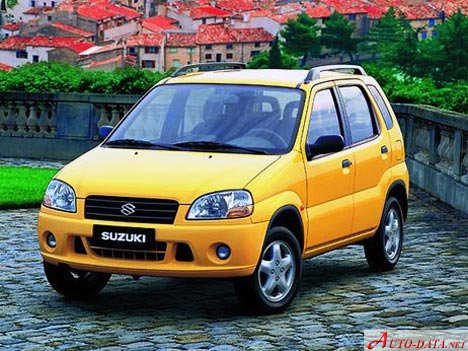
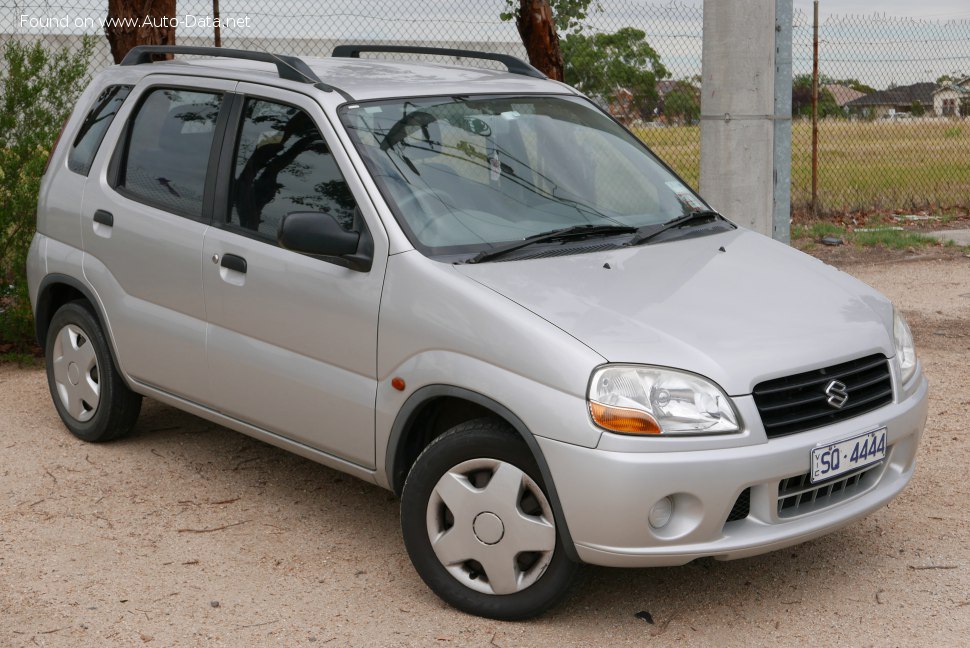
<p>The <strong>Suzuki Ignis Hatchback I FH</strong>, produced from 2000 to 2003, represented Suzuki’s foray into the burgeoning subcompact segment with a distinct, slightly elevated stance that hinted at the crossover trend to come. This first-generation Ignis, particularly the 1.3 i (85 Hp) Automatic variant, was primarily targeted at European and Asian markets, where its compact dimensions, fuel efficiency, and robust build quality made it a practical choice for urban dwellers and small families. While not a mainstream offering in the North American market in this specific configuration, the Ignis contributed to Suzuki’s global reputation for building reliable, value-oriented small vehicles. It carved out a niche as a versatile and economical vehicle, combining hatchback practicality with a hint of SUV-like ground clearance, setting the stage for future compact crossovers.</p>
<h2>Engine and Performance: The Heart of the <strong>Suzuki Ignis Hatchback I FH</strong></h2>
<p>Under the hood, the <strong>Suzuki Ignis Hatchback I FH</strong> 1.3 i (85 Hp) Automatic was powered by Suzuki’s M13A engine, a naturally aspirated 1.3-liter (1299 cm<sup>3</sup>) inline-four cylinder unit. This engine, featuring a Double Overhead Camshaft (DOHC) valvetrain and multi-port manifold injection, was engineered for efficiency and reliability, delivering 85 horsepower at 6000 rpm. Torque output stood at 78.18 lb.-ft. (106 Nm) available at a relatively low 3500 rpm, providing adequate thrust for city driving and modest highway speeds. The power-to-weight ratio, at 112.6 Hp per tonne (or 8.9 kg/Hp), highlighted the vehicle’s lightweight construction, contributing to its nimble feel.</p>
<p>Mated to a 3-speed automatic transmission, the powertrain configuration emphasized ease of use, particularly in congested urban environments. While a 3-speed automatic might seem rudimentary by today’s standards, it was a common and durable choice for economy cars of its era, prioritizing simplicity and robustness. This setup allowed the Ignis to accelerate from 0 to 60 mph in a respectable 12.4 seconds, with a top speed of 96.31 mph. Fuel economy was a significant selling point, with the Ignis achieving an estimated 33.1 US mpg combined, making it an economical choice for daily commuting. The engine’s compact design and front, transverse layout ensured efficient use of space within the engine bay, contributing to the vehicle’s overall compact footprint.</p&
<h2>Design and Features: Practicality Meets Compact Versatility</h2>
<p>The design of the first-generation <strong>Suzuki Ignis Hatchback I FH</strong> was characterized by its functional yet distinctive appearance. As a 5-door hatchback with seating for five, it offered a practical solution for urban mobility. Its dimensions were compact, measuring 151.38 inches in length, 62.6 inches in width, and 54.33 inches in height, with a wheelbase of 93.11 inches. These proportions contributed to its excellent maneuverability and a tight minimum turning circle of 31.5 feet, ideal for navigating narrow city streets and tight parking spaces.</p>
<p>Despite its small exterior, the Ignis provided a surprisingly airy cabin, thanks to its relatively tall roofline and large windows. Cargo flexibility was a key feature, with a minimum trunk space of 9.89 cubic feet, expandable to 21.9 cubic feet by folding the rear seats. This adaptability made it suitable for carrying groceries, luggage, or even larger items when needed. The vehicle’s kerb weight of just 1664.49 lbs. further underscored its efficiency and agile handling.</p>
<p>In terms of chassis and suspension, the Ignis employed a straightforward and effective setup. The front suspension utilized a wishbone design, providing a good balance of comfort and control, while the rear featured coil springs. Braking duties were handled by disc brakes at the front and drum brakes at the rear, a common configuration for vehicles in this class, offering reliable stopping power. Hydraulic power steering, featuring a rack and pinion system, ensured light and responsive steering, enhancing the driving experience in urban settings. The modest 165/70 R13 tires completed the package, prioritizing ride comfort and cost-effectiveness.</p>
<h2>Technical Specifications: <strong>Suzuki Ignis Hatchback I FH</strong> 1.3 i (85 Hp) Automatic</h2>
<table>
<thead>
<tr>
<th colspan=”2″>General Information</th>
</tr>
</thead>
<tbody>
<tr><td>Brand</td><td>Suzuki</td></tr>
<tr><td>Model</td><td>Ignis</td></tr>
<tr><td>Generation</td><td>Ignis Hatchback I FH</td></tr>
<tr><td>Type (Engine)</td><td>1.3 i (85 Hp) Automatic</td></tr>
<tr><td>Production Start</td><td>2000 year</td></tr>
<tr><td>Production End</td><td>2003 year</td></tr>
<tr><td>Powertrain Architecture</td><td>Internal Combustion Engine</td></tr>
<tr><td>Body Type</td><td>Hatchback</td></tr>
<tr><td>Seats</td><td>5</td></tr>
<tr><td>Doors</td><td>5</td></tr>
</tbody>
<thead>
<tr>
<th colspan=”2″>Performance Specifications</th>
</tr>
</thead>
<tbody>
<tr><td>Fuel Consumption (Urban)</td><td>25.3 US mpg</td></tr>
<tr><td>Fuel Consumption (Extra Urban)</td><td>39.9 US mpg</td></tr>
<tr><td>Fuel Consumption (Combined)</td><td>33.1 US mpg</td></tr>
<tr><td>Fuel Type</td><td>Petrol (Gasoline)</td></tr>
<tr><td>Acceleration 0-60 mph</td><td>12.4 sec</td></tr>
<tr><td>Maximum Speed</td><td>96.31 mph</td></tr>
<tr><td>Weight-to-Power Ratio</td><td>8.9 kg/Hp</td></tr>
<tr><td>Weight-to-Torque Ratio</td><td>7.1 kg/Nm</td></tr>
</tbody>
<thead>
<tr>
<th colspan=”2″>Engine Specifications</th>
</tr>
</thead>
<tbody>
<tr><td>Power</td><td>85 Hp @ 6000 rpm</td></tr>
<tr><td>Power per liter</td><td>65.4 Hp/l</td></tr>
<tr><td>Torque</td><td>78.18 lb.-ft. @ 3500 rpm</td></tr>
<tr><td>Engine Layout</td><td>Front, Transverse</td></tr>
<tr><td>Engine Model/Code</td><td>M13A</td></tr>
<tr><td>Engine Displacement</td><td>1.3 liters (79.27 cu. in.)</td></tr>
<tr><td>Number of Cylinders</td><td>4</td></tr>
<tr><td>Engine Configuration</td><td>Inline</td></tr>
<tr><td>Cylinder Bore</td><td>2.91 in.</td></tr>
<tr><td>Piston Stroke</td><td>2.97 in.</td></tr>
<tr><td>Compression Ratio</td><td>9.5:1</td></tr>
<tr><td>Valves per Cylinder</td><td>4</td></tr>
<tr><td>Fuel Injection System</td><td>Multi-port manifold injection</td></tr>
<tr><td>Engine Aspiration</td><td>Naturally aspirated</td></tr>
<tr><td>Valvetrain</td><td>DOHC</td></tr>
<tr><td>Engine Oil Capacity</td><td>4.02 US qt</td></tr>
<tr><td>Coolant Capacity</td><td>5.92 US qt</td></tr>
</tbody>
<thead>
<tr>
<th colspan=”2″>Space, Volume, and Weights</th>
</tr>
</thead>
<tbody>
<tr><td>Kerb Weight</td><td>1664.49 lbs.</td></tr>
<tr><td>Maximum Weight</td><td>2843.96 lbs.</td></tr>
<tr><td>Maximum Load</td><td>1179.47 lbs.</td></tr>
<tr><td>Trunk (Boot) Space – Minimum</td><td>9.89 cu. ft.</td></tr>
<tr><td>Trunk (Boot) Space – Maximum</td><td>21.9 cu. ft.</td></tr>
<tr><td>Fuel Tank Capacity</td><td>10.57 US gal</td></tr>
</tbody>
<thead>
<tr>
<th colspan=”2″>Dimensions</th>
</tr>
</thead>
<tbody>
<tr><td>Length</td><td>151.38 in.</td></tr>
<tr><td>Width</td><td>62.6 in.</td></tr>
<tr><td>Height</td><td>54.33 in.</td></tr>
<tr><td>Wheelbase</td><td>93.11 in.</td></tr>
<tr><td>Front Track</td><td>53.74 in.</td></tr>
<tr><td>Rear Track</td><td>52.76 in.</td></tr>
<tr><td>Minimum Turning Circle</td><td>31.5 ft.</td></tr>
</tbody>
<thead>
<tr>
<th colspan=”2″>Drivetrain, Brakes, and Suspension</th>
</tr>
</thead>
<tbody>
<tr><td>Drivetrain Architecture</td><td>Front-wheel drive (ICE drives front wheels)</td></tr>
<tr><td>Drive Wheel</td><td>Front wheel drive</td></tr>
<tr><td>Number of Gears