
<!DOCTYPE html>
<html lang=”en”>
<head>
<meta charset=”UTF-8″>
<meta name=”viewport” content=”width=device-width, initial-scale=1.0″>
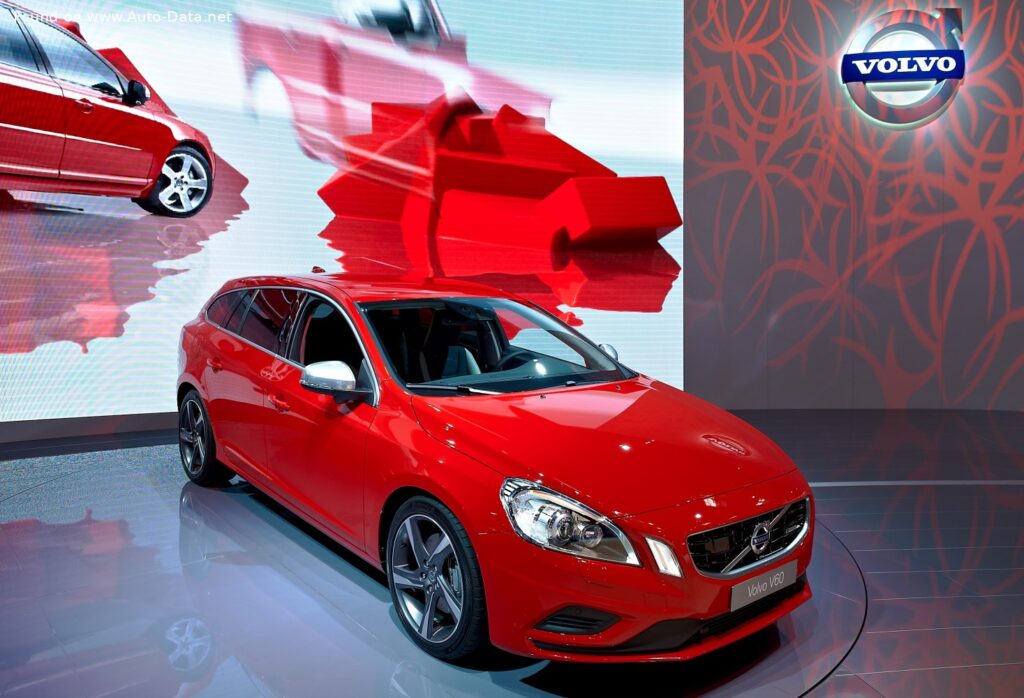
<title>Volvo V60 I 2.0 D3 (163 Hp) Automatic</title>
<style>
body { font-family: ‘Segoe UI’, Tahoma, Geneva, Verdana, sans-serif; line-height: 1.6; color: #333; margin: 20px; }
h2 { color: #2c3e50; border-bottom: 2px solid #3498db; padding-bottom: 10px; margin-top: 30px; }
h3 { color: #34495e; margin-top: 20px; }
p { margin-bottom: 10px; text-align: justify; }
table { width: 100%; border-collapse: collapse; margin-top: 20px; }
th, td { border: 1px solid #ddd; padding: 8px; text-align: left; }
th { background-color: #f2f2f2; color: #333; }
.note { font-style: italic; color: #666; font-size: 0.9em; }
</style>
</head>
<body>
<h2>The Volvo V60 I 2.0 D3 (163 Hp) Automatic: A European Premium Wagon</h2<
<p>The <strong>Volvo V60 I 2.0 D3 (163 Hp) Automatic</strong> represents a significant chapter in Volvo’s modern history, marking a distinct shift in the Swedish automaker’s design philosophy while retaining its core values of safety and practicality. Launched in 2010 as part of the first generation V60 lineup, this particular variant, produced until 2013, was a prominent player in the competitive European premium compact executive wagon segment. Designed to offer a more dynamic and sporty alternative to traditional, boxier Volvo estates, the V60 I combined sleek aesthetics with robust engineering, making it a compelling choice for consumers seeking a blend of performance, efficiency, and Scandinavian luxury.</p>
<p>While the V60 nameplate eventually found its way to North American shores in later generations, the 2.0 D3 diesel variant with 163 horsepower was specifically tailored for the European market, where diesel engines dominated the segment due to their superior fuel economy and torque characteristics. This model underscored Volvo’s commitment to offering efficient yet powerful powertrains, perfectly suited for the diverse driving conditions across the continent, from bustling city streets to high-speed Autobahns. It stood as a testament to Volvo’s ability to innovate within its established brand identity, presenting a vehicle that was both recognizably Volvo and refreshingly modern.</p>
<h2>Engine and Performance of the Volvo V60 I 2.0 D3 (163 Hp) Automatic</h2>
<p>At the heart of the <strong>Volvo V60 I 2.0 D3 (163 Hp) Automatic</strong> was Volvo’s renowned D5204T2 engine, a 2.0-liter (1984 cm<sup>3</sup> or 121.07 cu. in.) inline five-cylinder turbo-diesel unit. This engine configuration was a signature characteristic of Volvo’s powertrain offerings during this era, celebrated for its distinctive sound and smooth power delivery. Equipped with a common rail direct fuel injection system, a turbocharger, and an intercooler, the D3 engine was engineered for both spirited performance and impressive fuel efficiency.</p>
<p>The engine produced a respectable 163 horsepower at 2900 rpm, which was ample for the V60’s size and segment. More importantly, it generated a robust 400 Nm (295.02 lb.-ft.) of torque across a wide rev range, from 1400 to 2850 rpm. This broad torque band ensured excellent responsiveness and effortless acceleration, particularly beneficial for highway cruising and overtaking. Power was channeled to the front wheels via a smooth-shifting 6-speed automatic transmission, providing a refined driving experience.</p>
<p>Performance figures were competitive for its class, with the V60 D3 accelerating from 0 to 60 mph in a brisk 8.9 seconds (0-100 km/h in 9.4 seconds). Fuel economy was a major selling point in Europe, with a combined rating of 38.6 US mpg (6.1 l/100 km). Urban driving yielded 28.3 US mpg (8.3 l/100 km), while extra-urban cycles saw an impressive 48 US mpg (4.9 l/100 km). These figures, combined with CO2 emissions of 162 g/km and compliance with Euro 5 emission standards, underlined the D3’s credentials as an environmentally conscious and economically viable choice for its time. The inclusion of a particulate filter further reduced harmful emissions.</p>
<h3>Powertrain Architecture</h3>
<p>The V60 I 2.0 D3 featured a front, transverse engine layout, driving the front wheels. This front-wheel-drive architecture is common for its segment, offering a good balance of packaging efficiency, traction, and predictable handling characteristics.</p>
<h2>Design and Features</h2>
<p>The design of the <strong>Volvo V60 I</strong> marked a significant departure from Volvo’s traditional, angular wagon aesthetic. Instead, it embraced a sleeker, more coupe-like profile, often described as a “sports wagon.” This dynamic styling was intended to attract a younger, more design-conscious demographic without sacrificing the fundamental practicality expected of a Volvo estate. The five-door, five-seat station wagon body type offered a versatile and stylish solution for families and individuals alike.</p>
<p>Measuring 182.2 inches in length, 73.43 inches in width, and 58.43 inches in height, with a wheelbase of 109.29 inches, the V60 I struck a balanced stance on the road. Despite its sporty silhouette, it provided a practical 24.44 cubic feet (692 liters) of minimum trunk space, expandable by folding down the rear seats, making it a capable cargo hauler. The minimum turning circle of 37.73 feet (11.5 meters) ensured good maneuverability in urban environments.</p>
<p>Inside, the V60 continued Volvo’s tradition of ergonomic and high-quality Scandinavian design. The cabin featured comfortable seating, intuitive controls, and premium materials, creating a refined and user-friendly environment. As a Volvo, safety was paramount. While specific advanced driver-assistance systems are not detailed in the provided data, the V60 I came standard with a comprehensive suite of passive and active safety features, including ABS (Anti-lock Braking System), multiple airbags, and a robust body structure. Volvo’s reputation for pioneering safety innovations meant that even in its base form, the V60 was among the safest vehicles in its class.</p>
<p>Other notable features included a rack and pinion steering system, providing precise and responsive handling. The overall engineering focused on delivering a comfortable yet engaging driving experience, characteristic of premium European sedans and wagons.</p>
<h2>Technical Specifications</h2>
<table>
<thead>
<tr>
<th>Category</th>
<th>Specification</th>
</tr>
</thead>
<tbody>
<tr><td colspan=”2″><h3>General Information</h3></td></tr>
<tr><td>Brand</td><td>Volvo</td></tr>
<tr><td>Model</td><td>V60</td></tr>
<tr><td>Generation</td><td>V60 I</td></tr>
<tr><td>Type (Engine)</td><td>2.0 D3 (163 Hp) Automatic</td></tr>
<tr><td>Start of Production</td><td>2010 year</td></tr>
<tr><td>End of Production</td><td>2013 year</td></tr>
<tr><td>Powertrain Architecture</td><td>Internal Combustion engine</td></tr>
<tr><td>Body Type</td><td>Station wagon (estate)</td></tr>
<tr><td>Seats</td><td>5</td></tr>
<tr><td>Doors</td><td>5</td></tr>
<tr><td colspan=”2″><h3>Performance Specs</h3></td></tr>
<tr><td>Fuel Consumption (Urban)</td><td>8.3 l/100 km (28.3 US mpg)</td></tr>
<tr><td>Fuel Consumption (Extra Urban)</td><td>4.9 l/100 km (48 US mpg)</td></tr>
<tr><td>Fuel Consumption (Combined)</td><td>6.1 l/100 km (38.6 US mpg)</td></tr>
<tr><td>CO2 Emissions</td><td>162 g/km</td></tr>
<tr><td>Fuel Type</td><td>Diesel</td></tr>
<tr><td>Acceleration 0 – 60 mph</td><td>8.9 sec</td></tr>
<tr><td>Acceleration 0 – 100 km/h</td><td>9.4 sec</td></tr>
<tr><td>Emission Standard</td><td>Euro 5</td></tr>
<tr><td>Weight-to-Power Ratio</td><td>9.7 kg/Hp (103 Hp/tonne)</td></tr>
<tr><td>Weight-to-Torque Ratio</td><td>4 kg/Nm (252.8 Nm/tonne)</td></tr>
<tr><td colspan=”2″><h3>Engine Specs</h3></td></tr>
<tr><td>Power</td><td>163 Hp @ 2900 rpm</td></tr>
<tr><td>Power per Liter</td><td>82.2 Hp/l</td></tr>
<tr><td>Torque</td><td>400 Nm (295.02 lb.-ft.) @ 1400-2850 rpm</td></tr>
<tr><td>Engine Layout</td><td>Front, Transverse</td></tr>
<tr><td>Engine Model/Code</td><td>D5204T2</td></tr>
<tr><td>Engine Displacement</td><td>1984 cm<sup>3</sup> (2.0 Liters / 121.07 cu. in.)</td></tr>
<tr><td>Number of Cylinders</td><td>5</td></tr>
<tr><td>Engine Configuration</td><td>Inline</td></tr>
<tr><td>Piston Stroke</td><td>81 mm (3.19 in.)</td></tr>
<tr><td>Fuel Injection System</td><td>Diesel Commonrail</td></tr>
<tr><td>Engine Aspiration</td><td>Turbocharger, Intercooler</td></tr>
<tr><td>Engine Oil Capacity</td><td>5.9 l (6.23 US qt)</td></tr>
<tr><td>Coolant Capacity</td><td>8.9 l (9.4 US qt)</td></tr>
<tr><td>Engine Systems</td><td>Particulate filter</td></tr>
<tr><td colspan=”2″><h3>Space, Volume and Weights</h3></td></tr>
<tr><td>Kerb Weight</td><td>1582 kg (3487.71 lbs.)</td></tr>
<tr><td>Max. Weight</td><td>2090 kg (4607.66 lbs.)</td></tr>
<tr><td>Max Load</td><td>508 kg (1119.95 lbs.)</td></tr>
<tr><td>Trunk (Boot) Space – Minimum</td><td>692 l (24.44 cu. ft.)</td></tr>
<tr><td>Fuel Tank Capacity</td><td>67.5 l (17.83 US gal)</td></tr>
<tr><td colspan=”2″><h3>Dimensions</h3></td></tr>
<tr><td>Length</td><td>4628 mm (182.2 in.)</td></tr>
<tr><td>Width</td><td>1865 mm (73.43 in.)</td></tr>
<tr><td>Height</td><td>1484 mm (58.43 in.)</td></tr>
<tr><td>Wheelbase</td><td>2776 mm (109.29 in.)</td></tr>
<tr><td>Front Track</td><td>1588 mm (62.52 in.)</td></tr>
<tr><td>Rear (Back) Track</td><
