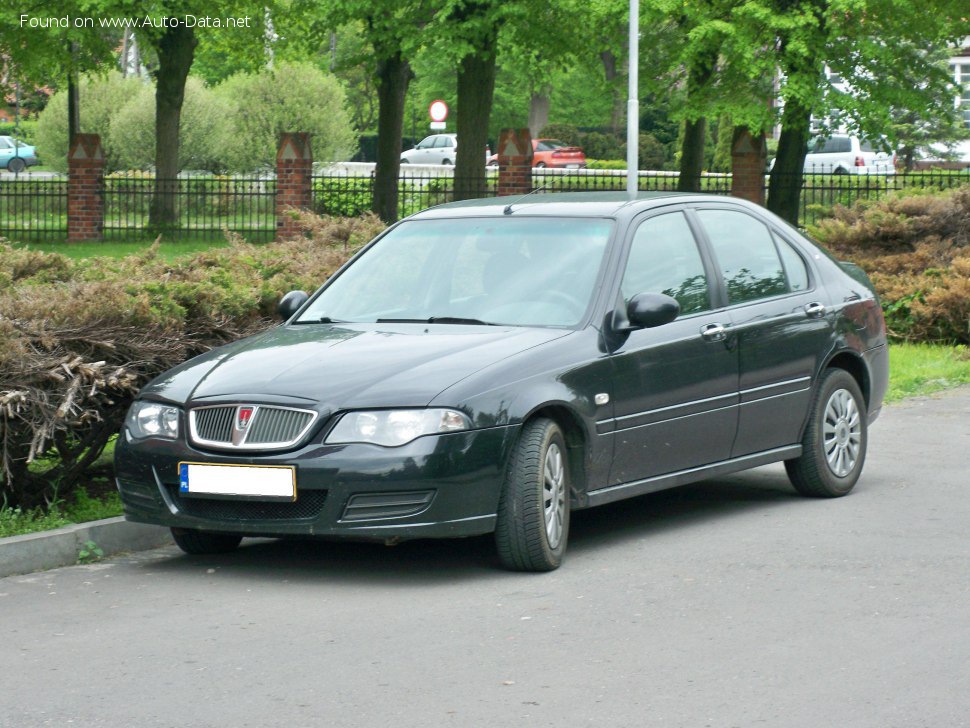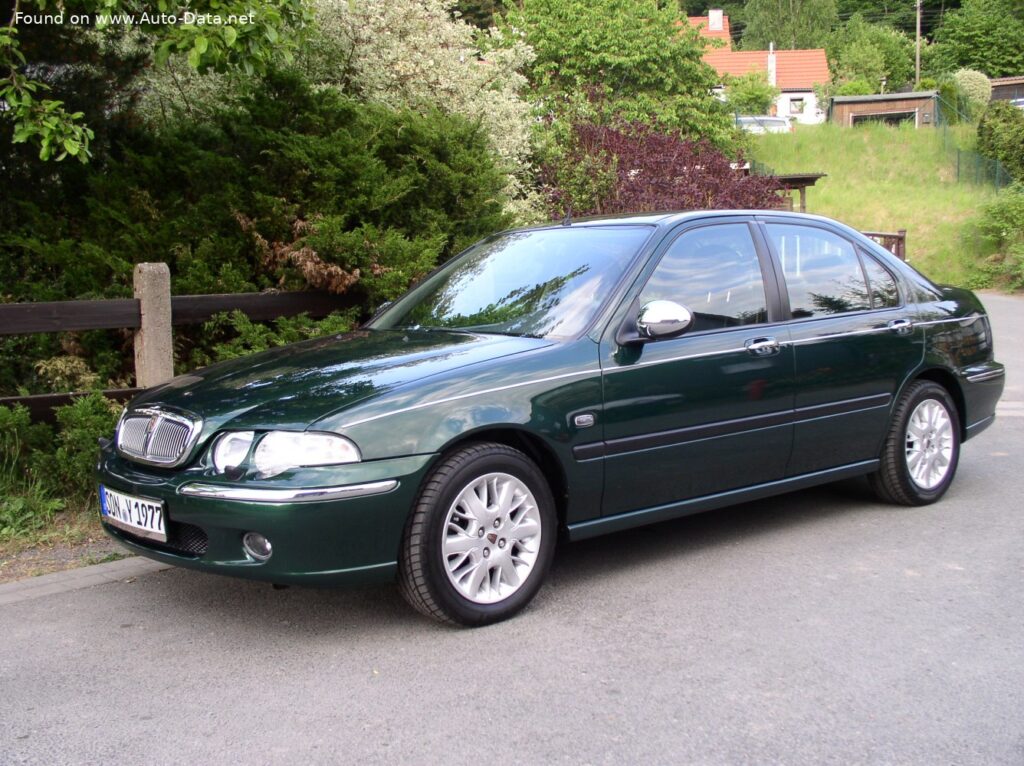
The Rover 45 (RT) 1.8i 16V (117 Hp): A British Contender in the European Compact Segment
The Rover 45 (RT) 1.8i 16V (117 Hp) represents a significant chapter in the history of the British Rover marque, serving as its entry into the fiercely competitive European compact family car segment (often referred to as the C-segment). Produced from 1999 to 2005, the Rover 45 was essentially a heavily revised and re-engineered version of its predecessor, the Rover 400. While the Rover 400 shared a platform with the Honda Civic/Domani, the 45 sought to distance itself somewhat from its Japanese roots with updated styling, a more refined interior, and a focus on traditional British comfort and driving dynamics. This particular variant, powered by the 1.8-liter K-Series engine, aimed to offer a compelling blend of performance and economy for the discerning European buyer, emphasizing a slightly more upmarket feel compared to its mainstream rivals.
Engineering and Performance of the Rover 45 (RT) 1.8i 16V (117 Hp)
Powertrain and Dynamics
At the heart of the Rover 45 (RT) 1.8i 16V (117 Hp) lay Rover’s venerable K-Series engine, specifically the K18 variant. This naturally aspirated, 1.8-liter (1796 cm3 or 109.6 cu. in.) inline-four powerplant was renowned for its lightweight aluminum construction and advanced (for its time) 16-valve, DOHC (Double Overhead Camshaft) valvetrain. It utilized a multi-port manifold injection system to deliver fuel efficiently. The engine was transversely mounted at the front, driving the front wheels through a precise 5-speed manual transmission, a common and reliable setup for compact sedans of this era.
The K18 engine produced a respectable 117 horsepower at 5500 rpm, which translated to a power-to-liter ratio of 65.1 HP/liter. Torque output was equally impressive for its displacement, generating 118.01 lb.-ft. at a relatively low 2750 rpm. This broad torque band contributed to the car’s flexible driving characteristics, making it suitable for both urban commutes and highway cruising. The power and torque figures, coupled with a curb weight of 2711.69 lbs., resulted in a weight-to-power ratio of 10.5 kg/Hp (or 95.1 Hp/tonne), allowing the Rover 45 to accelerate from 0 to 60 mph in a brisk 8.8 seconds. Its top speed was rated at 119.92 mph (193 km/h), making it a capable performer within its class.
Fuel economy was a key consideration for European buyers, and the 1.8i 16V delivered competitive figures. The combined cycle fuel consumption was rated at 33.1 US mpg (7.1 liters per 100 km), with urban driving yielding 24.8 US mpg (9.5 liters per 100 km) and extra-urban (highway) driving achieving an impressive 41.3 US mpg (5.7 liters per 100 km). With a 14.53 US gallon (55-liter) fuel tank, the Rover 45 offered a decent cruising range.
Design and Features
Body and Interior
The Rover 45 (RT) was offered primarily as a 4-door sedan, a popular body style in many European markets. Its design language was an evolution of Rover’s established aesthetic, aiming for a more conservative and dignified appearance compared to some of its more aggressively styled competitors. The exterior featured smoother lines, a distinct Rover grille, and updated headlamp and taillight designs that gave it a more modern yet classically British feel. Dimensions measured 177.83 inches in length, 66.77 inches in width, and 54.92 inches in height, with a wheelbase of 103.15 inches, providing a stable and comfortable ride.
Inside, the Rover 45 prioritized comfort and a traditional, slightly upmarket ambiance. The cabin was designed to accommodate five occupants, offering a sense of spaciousness within its compact footprint. Materials often included wood accents and chrome detailing, reflecting Rover’s attempt to infuse a touch of luxury into the mainstream segment. The trunk space was practical, ranging from 16.6 cu. ft. (470 liters) with all seats in place, expanding to 28.6 cu. ft. (810 liters) when needed, making it suitable for family use or longer journeys.
Chassis and Safety
The chassis of the Rover 45 featured a suspension setup designed to balance comfort with competent handling. The front suspension utilized a wishbone design, known for its ability to provide good wheel control and ride quality, while the rear employed a spring strut system. Braking duties were handled by ventilated discs at the front and solid discs at the rear, complemented by an Anti-lock Braking System (ABS) as a crucial safety feature for improved stopping power and control in adverse conditions. Steering was managed by a rack and pinion system with hydraulic power steering, offering a direct and communicative feel that drivers of the era appreciated. The vehicle rode on 185/60 R14 tires, providing a good balance of grip and ride compliance for its intended purpose.
Technical Specifications
| Category | Specification |
|---|---|
| Brand | Rover |
| Model | 45 (RT) |
| Type (Engine) | 1.8i 16V (117 Hp) |
| Production Years | 1999 – 2005 |
| Body Type | Sedan |
| Seats | 5 |
| Doors | 4 |
| Performance | |
| Power | 117 Hp @ 5500 rpm |
| Torque | 118.01 lb.-ft. @ 2750 rpm |
| Acceleration 0-60 mph | 8.8 seconds |
| Maximum Speed | 119.92 mph (193 km/h) |
| Fuel Type | Petrol (Gasoline) |
| Fuel Consumption (Combined) | 33.1 US mpg (7.1 l/100 km) |
| Fuel Consumption (Urban) | 24.8 US mpg (9.5 l/100 km) |
| Fuel Consumption (Extra Urban) | 41.3 US mpg (5.7 l/100 km) |
| Weight-to-Power Ratio | 10.5 kg/Hp |
| Engine Details | |
| Engine Layout | Front, Transverse |
| Engine Model/Code | K18 |
| Engine Displacement | 1.8 liters (1796 cm3 / 109.6 cu. in.) |
| Number of Cylinders | 4, Inline |
| Valvetrain | DOHC, 16 valves (4 per cylinder) |
| Bore x Stroke | 3.15 in (80 mm) x 3.52 in (89.3 mm) |
| Compression Ratio | 10.5:1 |
| Fuel Injection System | Multi-port manifold injection |
| Engine Aspiration | Naturally aspirated |
| Engine Oil Capacity | 5.28 US qt (5 liters) |
| Coolant Capacity | 5.81 US qt (5.5 liters) |
| Dimensions, Volume & Weights | |
| Length | 177.83 in (4517 mm) |
| Width | 66.77 in (1696 mm) |
| Height | 54.92 in (1395 mm) |
| Wheelbase | 103.15 in (2620 mm) |
| Front Track | 58.07 in (1475 mm) |
| Rear Track | 57.68 in (1465 mm) |
| Kerb Weight | 2711.69 lbs (1230 kg) |
| Maximum Weight | 3615.58 lbs (1640 kg) |
| Maximum Load | 903.9 lbs (410 kg) |
| Trunk Space (minimum) | 16.6 cu. ft. (470 liters) |
| Trunk Space (maximum) | 28.6 cu. ft. (810 liters) |
| Fuel Tank Capacity | 14.53 US gal (55 liters) |
| Drivetrain, Brakes & Suspension | |
| Drivetrain Architecture | Front-wheel drive, Internal Combustion Engine |
| Drive Wheel | Front-wheel drive |
| Gearbox Type | 5 gears, manual transmission |
| Front Suspension | Wishbone |
| Rear Suspension | Spring Strut |
| Front Brakes | Ventilated discs |
| Rear Brakes | Disc |
| Assisting Systems | ABS (Anti-lock braking system) |
| Steering Type | Steering rack and pinion |
| Power Steering | Hydraulic Steering |
| Tires Size | 185/60 R14 |
Legacy and Market Impact
The Rover 45, and particularly the Rover 45 (RT) 1.8i 16V (117 Hp) variant, occupied a unique niche in the European compact car market during its production run. It aimed to provide a more traditional, comfort-oriented alternative to the increasingly sharp and technologically driven offerings from rivals like the Ford Focus, Vauxhall (Opel) Astra, and Volkswagen Golf/Bora. While it retained some underpinnings from its Honda Civic lineage, Rover’s engineers worked diligently to infuse it with a distinct British character, focusing on a softer ride, a more refined interior ambiance, and a classic aesthetic.
Its reputation was largely built on its comfortable ride, relatively quiet cabin, and what many considered to be a more “grown-up” feel than some of its more youthful competitors. The 1.8-liter K-Series engine, despite some well-documented head gasket issues that plagued the series generally (though often exaggerated and largely addressed in later iterations), offered a good balance of enthusiastic performance and reasonable fuel economy for its class. This made it a popular choice for buyers who appreciated a blend of practicality and traditional motoring values.
However, the Rover 45 faced an uphill battle in a segment dominated by global giants with massive marketing budgets and increasingly innovative designs. Its conservative styling, while appealing to some, struggled to capture the imagination of a broader audience looking for cutting-edge design or groundbreaking technology. The car’s sales were primarily concentrated in the UK and certain parts of continental Europe, where the Rover brand still held some sway.
Historically, the Rover 45 represents one of the final attempts by the struggling MG Rover Group to remain competitive as an independent British car manufacturer. It was part of the product line that MG Rover continued to develop and sell after BMW divested the company in 2000. Its production ceased in 2005, coinciding with the collapse of the MG Rover Group, marking the end of a significant era for British automotive manufacturing. Despite its challenges, the Rover 45 remains a car remembered for its comfort, its distinct British character, and its role as a testament to Rover’s enduring spirit in a rapidly changing automotive landscape. Today, it stands as a reminder of a brand that, for a time, offered a unique proposition in the global car market.