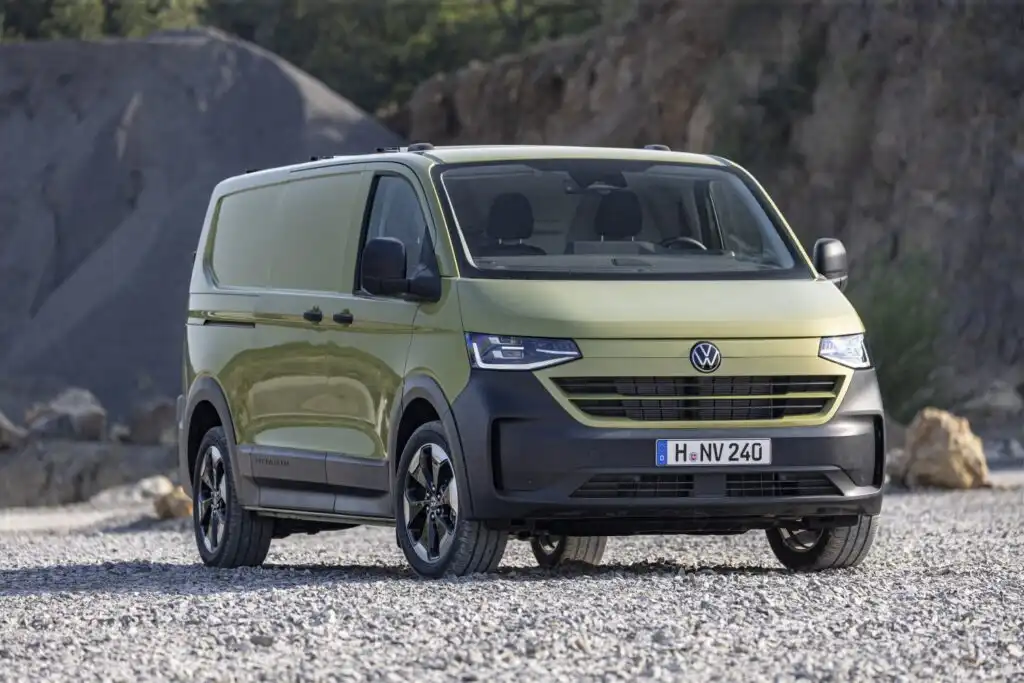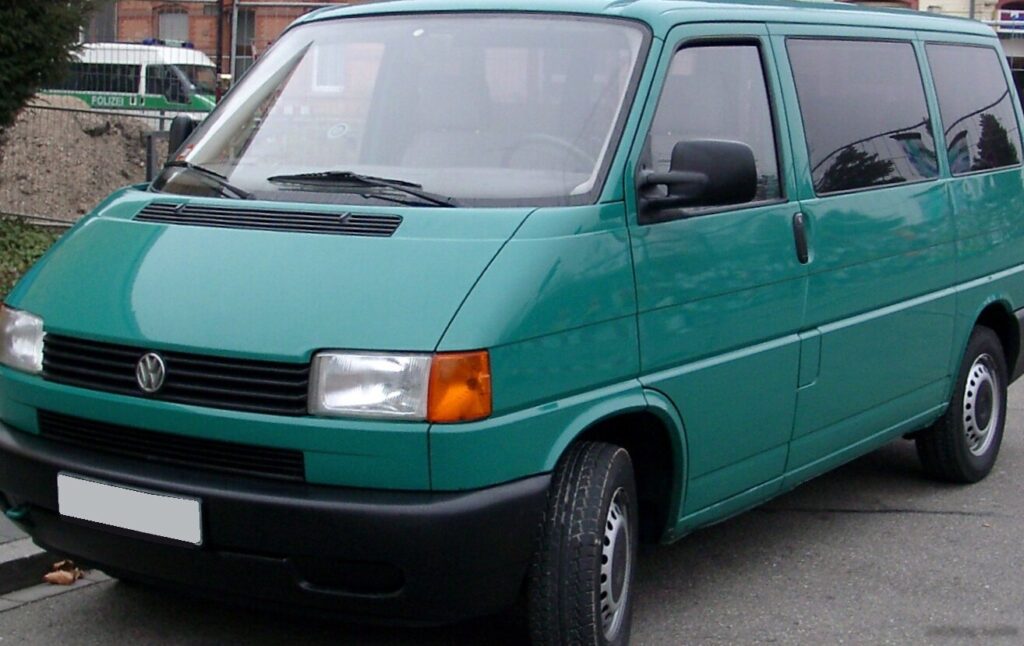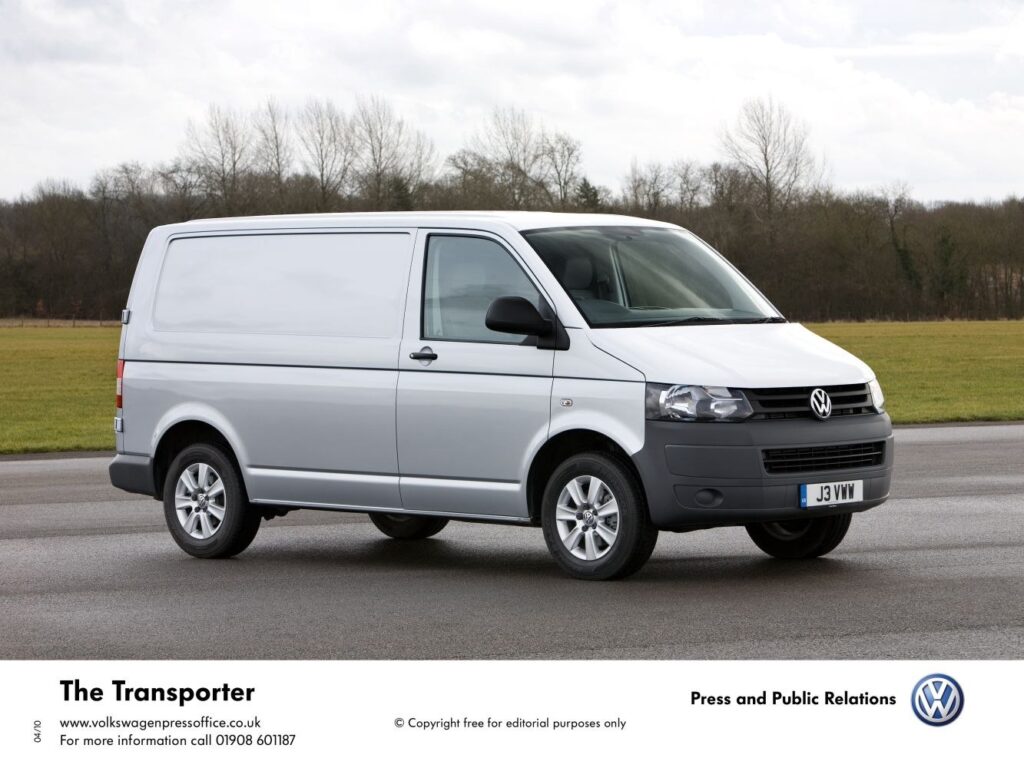
The Volkswagen Transporter (T5, facelift 2009) Panel Van: A European Workhorse
The Volkswagen Transporter, a name synonymous with versatility and reliability in the commercial vehicle sector, represents a cornerstone of Volkswagen Commercial Vehicles’ global lineup. The specific variant under discussion, the Volkswagen Transporter (T5, facelift 2009) Panel Van 2.0 TDI BMT (84 Hp) L2H3, is a prime example of the fifth generation’s enduring appeal and its adaptation to modern demands. Produced between 2011 and 2015, this model is part of the T5 generation that received a significant facelift in 2009, bringing updated styling, enhanced powertrains, and improved technology to an already successful platform. Predominantly a European market staple, the T5 Transporter, particularly in its Panel Van configuration, served as an indispensable tool for businesses requiring robust, efficient, and capacious transportation solutions.
Known for its practicality and build quality, this particular L2H3 variant signifies a long wheelbase and a super-high roof, maximizing cargo volume for operators. While not directly sold in the United States as a commercial panel van in this iteration, the Transporter series holds a legendary status worldwide, building upon a heritage that dates back to the iconic Type 2 “Bus.” The T5 facelift brought the Transporter into the 21st century with a focus on fuel efficiency, reduced emissions, and improved driver comfort, all while maintaining its core mission as a dependable work vehicle.
Engine & Performance of the Volkswagen Transporter (T5, facelift 2009) Panel Van
At the heart of this Volkswagen Transporter (T5, facelift 2009) Panel Van lies a 2.0-liter (1968 cm3 or 120.09 cu. in.) inline four-cylinder TDI diesel engine, internally designated as EA189 / CAAA. This powertrain, renowned for its efficiency and durability, delivers 84 horsepower at 3500 rpm. While 84 HP might seem modest by passenger car standards, it is precisely tuned for the demands of a commercial vehicle, prioritizing low-end torque and fuel economy over outright speed. The engine generates a substantial 220 Nm (162.26 lb.-ft.) of torque, available across a broad and usable range from 1250 to 2500 rpm. This characteristic is crucial for a panel van, enabling confident acceleration from a standstill, effortless hauling of heavy loads, and relaxed cruising even when fully laden.
The engine benefits from advanced diesel technology, including a Commonrail fuel injection system, a turbocharger, and an intercooler, ensuring efficient combustion and optimal power delivery. Its Double Overhead Camshaft (DOHC) valvetrain with four valves per cylinder further enhances breathing and efficiency. With a compression ratio of 16.5:1, the engine is designed for robust performance.
Further enhancing its efficiency and environmental credentials, this model incorporates Volkswagen’s BlueMotion Technology (BMT), which typically includes a Start & Stop system and a particulate filter. These features contribute to its Euro 5 emission standard compliance and impressive fuel economy figures for its class: a combined NEDC rating of 7.1-7.4 liters/100 km, translating to approximately 33.1 – 31.8 US mpg. CO2 emissions are kept in check at 187-195 g/km.
Power is transmitted to the front wheels via a durable 5-speed manual transmission, a common choice for commercial vehicles due to its robustness and driver control. While its 0-60 mph acceleration time of 19.3 seconds and a top speed of 84.51 mph (136 km/h) clearly indicate its purpose as a utility vehicle rather than a speed demon, these figures are entirely appropriate for urban delivery routes and highway hauling, where reliability and cost-effectiveness are paramount. The vehicle’s weight-to-power ratio stands at 20.7 kg/Hp (48.3 Hp/tonne), reflecting its capacity-focused design.
Design & Features: The L2H3 Panel Van Configuration
The Volkswagen Transporter (T5, facelift 2009) Panel Van is a purpose-built commercial vehicle, prioritizing utility and cargo capacity. Its “Panel Van” designation means the rear compartment is completely enclosed, without windows, offering maximum security and advertising space. The “L2H3” code is particularly significant: “L2” denotes the long wheelbase variant, stretching 3400 mm (133.86 in.), which provides enhanced stability and a larger load area. The “H3” signifies the super-high roof, contributing to an impressive maximum trunk (boot) space of 9300 liters (328.43 cu. ft.). This voluminous cargo area makes it suitable for a wide range of trades, from couriers to carpenters, who need to transport large or bulky items.
Measuring 5292 mm (208.35 in.) in length, 1904 mm (74.96 in.) in width (2283 mm or 89.88 in. including mirrors), and a towering 2476 mm (97.48 in.) in height, the L2H3 variant is a substantial vehicle designed to handle demanding tasks. Its practical design includes 4-5 doors, typically featuring sliding side doors for easy access in tight spaces and rear barn doors for efficient loading and unloading. The cabin accommodates 2-3 seats, providing space for a driver and one or two crew members.
Underpinning the Transporter’s robust design are its suspension and braking systems. The front features an independent McPherson type setup with coil springs and an anti-roll bar, while the rear utilizes an independent coil spring system with a transverse stabilizer and trailing arms. This configuration aims to provide a balance of load-carrying capability and ride comfort, even when unladen. Braking is handled by ventilated discs both front (308×29.5 mm) and rear (294×22 mm), coupled with an Anti-lock Braking System (ABS) for enhanced safety and control under diverse driving conditions. Steering is a hydraulic rack and pinion system, providing direct feedback and assisting maneuverability, which is commendable for a vehicle of this size with a minimum turning circle of 13.2 meters (43.31 ft.). The vehicle rides on 215/65 R16 tires mounted on 6.5J x 16 steel wheel rims.
Technical Specifications
| Category | Specification | US Equivalent |
|---|---|---|
General Information |
||
| Brand | Volkswagen | |
| Model | Transporter | |
| Generation | Transporter (T5, facelift 2009) Panel Van | |
| Type (Engine) | 2.0 TDI BMT (84 Hp) L2H3 | |
| Start of Production | 2011 year | |
| End of Production | 2015 year | |
| Powertrain Architecture | Internal Combustion engine | |
| Body Type | Van | |
| Seats | 2-3 | |
| Doors | 4-5 | |
Performance Specifications |
||
| Fuel Consumption (Urban, NEDC) | 8.4-8.7 l/100 km | 28 – 27 US mpg |
| Fuel Consumption (Extra Urban, NEDC) | 6.4-6.7 l/100 km | 36.8 – 35.1 US mpg |
| Fuel Consumption (Combined, NEDC) | 7.1-7.4 l/100 km | 33.1 – 31.8 US mpg |
| CO2 Emissions (NEDC) | 187-195 g/km | |
| Fuel Type | Diesel | |
| Acceleration 0 – 62 mph (0 – 100 km/h) | 20.3 sec | |
| Acceleration 0 – 60 mph (Calculated) | 19.3 sec | |
| Maximum Speed | 136 km/h | 84.51 mph |
| Emission Standard | Euro 5 | |
| Weight-to-Power Ratio | 20.7 kg/Hp | 48.3 Hp/tonne |
| Weight-to-Torque Ratio | 7.9 kg/Nm | 126.6 Nm/tonne |
Engine Specifications |
||
| Power | 84 Hp @ 3500 rpm | |
| Power per Liter | 42.7 Hp/l | |
| Torque | 220 Nm @ 1250-2500 rpm | 162.26 lb.-ft. @ 1250-2500 rpm |
| Engine Layout | Front, Transverse | |
| Engine Model/Code | EA189 / CAAA | |
| Engine Displacement | 1968 cm3 | 120.09 cu. in. |
| Number of Cylinders | 4 | |
| Engine Configuration | Inline | |
| Cylinder Bore | 81 mm | 3.19 in. |
| Piston Stroke | 95.5 mm | 3.76 in. |
| Compression Ratio | 16.5:1 | |
| Number of Valves per Cylinder | 4 | |
| Fuel Injection System | Diesel Commonrail | |
| Engine Aspiration | Turbocharger, Intercooler | |
| Valvetrain | DOHC | |
| Engine Oil Capacity | 7 l | 7.4 US qt |
| Coolant Capacity | 11 l | 11.62 US qt |
| Engine Systems | Start & Stop System, Particulate filter | |
Space, Volume and Weights |
||
| Kerb Weight | 1738-2182 kg | 3831.63 – 4810.49 lbs. |
| Max. Weight (GVWR) | 2800-3000 kg | 6172.94 – 6613.87 lbs. |
| Max Load | 818-1062 kg | 1803.38 – 2341.31 lbs. |
| Trunk (Boot) Space – Maximum | 9300 l | 328.43 cu. ft. |
| Fuel Tank Capacity | 80 l | 21.13 US gal |
| Permitted Trailer Load with Brakes (12%) | 2200 kg | 4850.17 lbs. |
| Permitted Trailer Load without Brakes | 750 kg | 1653.47 lbs. |
| Permitted Towbar Download | 100 kg | 220.46 lbs. |
Dimensions |
||
| Length | 5292 mm | 208.35 in. |
| Width | 1904 mm | 74.96 in. |
| Width including mirrors | 2283 mm | 89.88 in. |
| Height | 2476 mm | 97.48 in. |
| Wheelbase | 3400 mm | 133.86 in. |
| Front Overhang | 896 mm | 35.28 in. |
| Rear Overhang | 996 mm | 39.21 in. |
| Ride Height (Ground Clearance) | 201 mm | 7.91 in. |
| Minimum Turning Circle (Turning Diameter) | 13.2 m | 43.31 ft. |
| Approach Angle | 21° | |
| Departure Angle | 17° | |
| Ramp-over (Brakeover) Angle | 12° | |
Drivetrain, Brakes and Suspension Specifications |
||
| Drivetrain Architecture | The Internal combustion engine (ICE) drives the front wheels of the vehicle. | |
| Drive Wheel | Front wheel drive | |
| Number of Gears and Type of Gearbox | 5 gears, manual transmission | |
| Front Suspension | Independent, type McPherson with coil spring and anti-roll bar | |
| Rear Suspension | Independent coil spring, Transverse stabilizer, Trailing arm | |
| Front Brakes | Ventilated discs, 308×29.5 mm | |
| Rear Brakes | Ventilated discs, 294×22 mm | |
| Assisting Systems | ABS (Anti-lock braking system) | |
| Steering Type | Steering rack and pinion | |
| Power Steering | Hydraulic Steering | |
| Tires Size | 215/65 R16 | |
| Wheel Rims Size | 6.5J x 16 | |
Legacy & Market Impact of the Volkswagen Transporter
The Volkswagen Transporter T5, especially in its facelifted iteration, continued the legendary legacy of the Transporter series, cementing its position as a dominant force in the European light commercial vehicle (LCV) market. This particular Volkswagen Transporter (T5, facelift 2009) Panel Van variant, with its 2.0 TDI BMT (84 Hp) L2H3 configuration, exemplified the blend of practicality, efficiency, and robust engineering that businesses demand. Its role in its primary market was immense, serving as the backbone for countless small and large enterprises across Europe, from delivery services to construction crews and mobile tradespeople.
The T5 Transporter’s reputation for durability and low running costs, further enhanced by the BlueMotion Technology, made it a highly attractive proposition. Its strong resale value also underscored its perceived quality and longevity. Competitors in the fiercely contested European LCV segment included formidable rivals such as the Ford Transit, Mercedes-Benz Sprinter, Renault Trafic (and its rebadged variants like the Opel/Vauxhall Vivaro and Nissan Primastar), and the Fiat Ducato. Against these, the Transporter consistently stood out for its car-like driving dynamics, superior refinement, and the inherent trust associated with the Volkswagen brand.
The L2H3 variant, with its maximum cargo volume, directly addressed the needs of operators requiring substantial load space without stepping up to a larger, less maneuverable heavy-duty van. Its thoughtful design, including ergonomic cabin layout, robust interior materials, and practical features, contributed to driver comfort during long working hours. The facelift ensured that the T5 remained competitive aesthetically and technologically, incorporating modern safety features and infotainment options (though perhaps less prominent in this base panel van specification).
Historically, the Transporter series has been a global icon, and the T5 generation continued this tradition, albeit with a more pronounced focus on specific regional markets. While the commercial Panel Van version of the T5 wasn’t broadly offered in the U.S. market (where Volkswagen’s full-size commercial van presence was limited to the larger Crafter, and later the discontinuation of the Eurovan/Multivan), its influence on global van design and engineering standards is undeniable. The T5 generation played a critical role in Volkswagen’s strategy to offer a comprehensive range of commercial vehicles, from compact Caddy vans to the larger Crafter, with the Transporter occupying the crucial mid-size segment.
The T5’s legacy is one of unwavering utility, clever engineering, and an ability to adapt to the evolving demands of commercial transport. It remains a highly sought-after used vehicle in Europe, testament to its build quality and long operational life, and continues to be a benchmark against which new entrants in the LCV market are often measured.