The Peugeot 3008 I (Phase II, 2013) 1.6 THP (165 Hp) Automatic: A European Crossover’s Refined Evolution
The Peugeot 3008 I (Phase II, 2013) 1.6 THP (165 Hp) Automatic represents a significant chapter in the French automaker’s foray into the burgeoning compact crossover segment. Unveiled as a mid-cycle refresh for the first-generation 3008, this particular iteration, produced between 2015 and 2016, aimed to sharpen its appeal within the highly competitive European market. While never officially sold in the United States, the 3008 played a crucial role in shaping Peugeot’s modern identity, bridging the gap between traditional multi-purpose vehicles (MPVs) and sport utility vehicles (SUVs) with its distinctive design and practical attributes. This Phase II model brought updated styling cues, enhanced technology, and refined powertrains, including the potent yet efficient 1.6-liter THP engine paired with a smooth automatic transmission.
Positioned as a versatile family vehicle, the 3008 I Phase II offered a compelling blend of elevated driving position, spacious interior, and car-like driving dynamics. Its development reflected a growing consumer preference in Europe for vehicles that combined the rugged aesthetic of an SUV with the comfort and fuel economy of a hatchback. The 1.6 THP (165 Hp) Automatic variant, in particular, stood out for its balance of performance and efficiency, making it a popular choice for urban commuting and longer journeys across the continent.
Engine & Performance of the Peugeot 3008 I (Phase II, 2013) 1.6 THP (165 Hp) Automatic
At the heart of this particular Peugeot 3008 lies the acclaimed 1.6-liter THP (Turbo High Pressure) gasoline engine, a powerplant co-developed with BMW, known for its spirited performance and efficiency. Designated with the internal code 5GZ EP6FDT, this inline four-cylinder unit features direct fuel injection and is boosted by a turbocharger with an intercooler, allowing it to produce a robust 165 horsepower at 6000 rpm. This impressive output for a 1.6-liter engine translates to a power per liter figure of 103.3 HP/L, underscoring its advanced engineering.
Equally noteworthy is the engine’s torque delivery. It generates a substantial 177.01 lb.-ft. of torque from a remarkably low 1400 rpm. This broad and accessible torque band is a key characteristic of turbocharged engines, providing excellent responsiveness and reducing the need for constant downshifts, especially beneficial in urban driving or when navigating hilly terrain. The engine’s layout is front-transverse, driving the front wheels, a common and efficient configuration for compact crossovers.
Power is channeled through a sophisticated 6-speed automatic transmission, which offers smooth and timely gear changes, contributing significantly to both driving comfort and fuel economy. This powertrain combination allows the 3008 to accelerate from 0 to 60 mph in a respectable 9.1 seconds, with a top speed reaching 121.79 mph.
Despite its lively performance, the Peugeot 3008 I (Phase II) 1.6 THP maintains a commendable focus on fuel efficiency and environmental responsibility. Its combined fuel consumption is rated at 39.2 US mpg, making it an economical choice for its class. Furthermore, with CO2 emissions of 138 g/km and adherence to the Euro 6 emission standard, it demonstrated Peugeot’s commitment to cleaner powertrains, a crucial factor in the European market. The vehicle’s weight-to-power ratio stands at 8.8 kg/Hp (113.8 Hp/tonne), indicating a well-balanced power-to-weight dynamic for its segment.
Design & Features
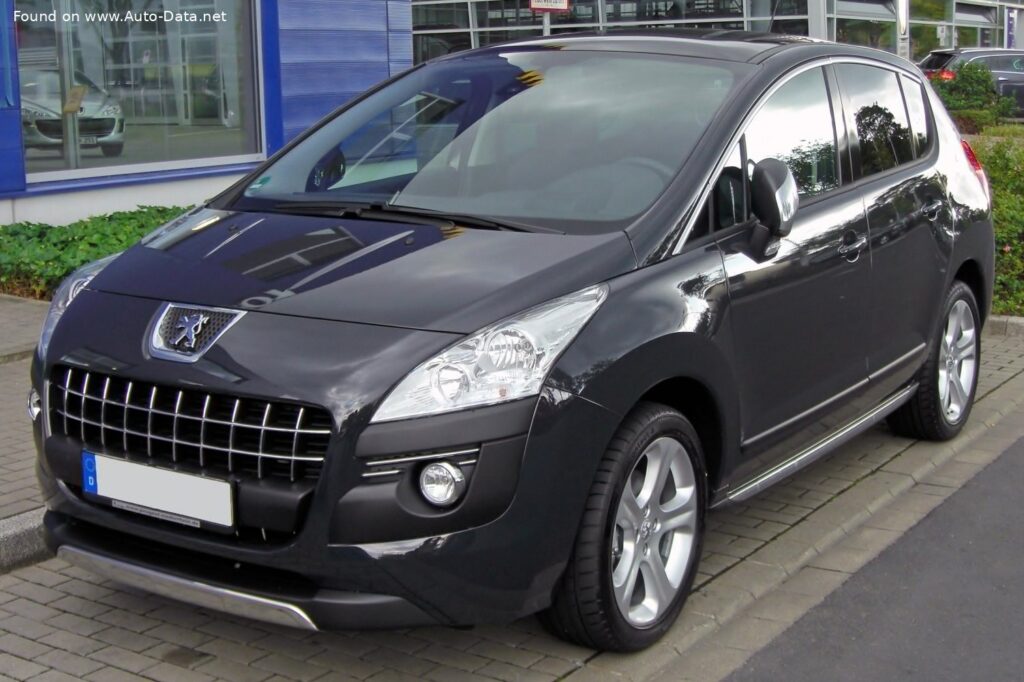
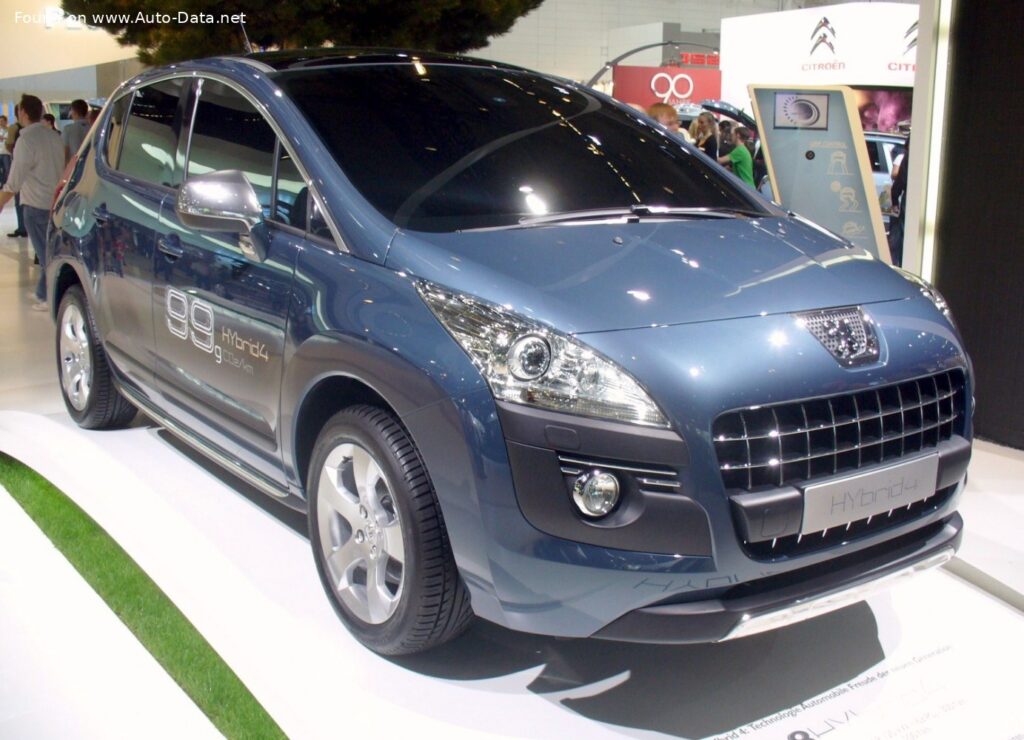
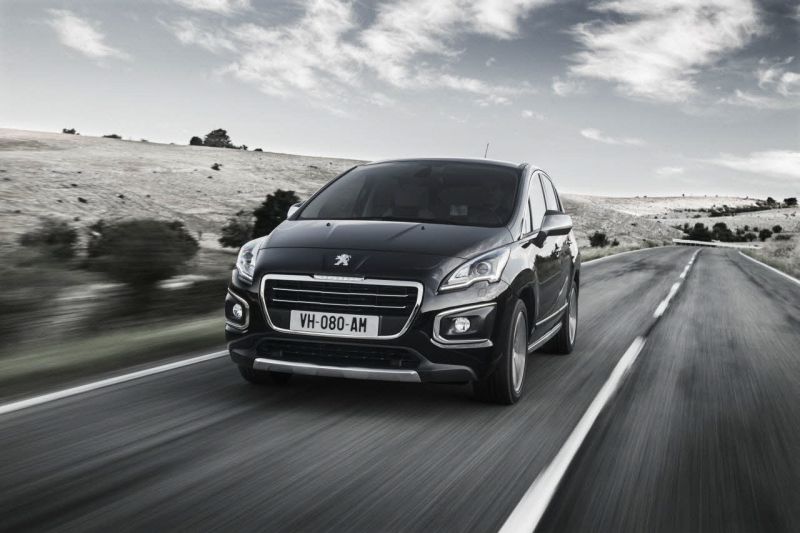
The Peugeot 3008 I (Phase II) retained the distinctive silhouette of the original model but introduced several aesthetic enhancements to keep it fresh and competitive. As an SUV body type, it features five doors and accommodates five occupants comfortably. The facelift brought a revised front fascia, including a more prominent grille with the updated Peugeot lion emblem, redesigned headlights with LED daytime running lights, and refreshed bumper designs. These changes aimed to give the 3008 a more assertive and modern presence on the road.
Dimensionally, the 3008 measures 171.85 inches in length, 72.32 inches in width (excluding mirrors), and 64.37 inches in height, with a wheelbase of 102.87 inches. These dimensions contribute to its compact yet spacious character, allowing for easy maneuverability in crowded European cityscapes while offering ample interior room. The minimum turning circle of 35.76 feet further aids its urban agility.
Inside, the 3008 prioritized practicality and comfort. Its versatile interior design, a hallmark of Peugeot’s crossover strategy, offered substantial cargo capacity. With the rear seats in place, the trunk space is a generous 18.08 cubic feet, expanding to an impressive 56.64 cubic feet when the rear seats are folded down. This flexibility made it highly suitable for families and individuals needing adaptable storage solutions.
The vehicle’s ride quality was managed by an independent McPherson strut front suspension with coil springs and an anti-roll bar, complemented by a semi-independent rear suspension with coil springs. This setup provided a comfortable and composed ride, balancing handling prowess with passenger comfort. Braking performance was ensured by ventilated discs at the front and solid discs at the rear, supported by an Anti-lock Braking System (ABS) for enhanced safety during emergency stops. The steering system utilized a rack and pinion setup, offering direct and responsive feedback. The 3008 rode on 17-inch wheels fitted with 225/50 R17 tires, providing a good balance of grip and ride comfort.
Technical Specifications
| Category | Specification |
|---|---|
| Brand | Peugeot |
| Model | 3008 |
| Generation | 3008 I (Phase II, 2013) |
| Type (Engine) | 1.6 THP (165 Hp) Automatic |
| Start of Production | 2015 year |
| End of Production | 2016 year |
| Powertrain Architecture | Internal Combustion engine |
| Body type | SUV |
| Seats | 5 |
| Doors | 5 |
| Fuel Consumption (Urban) | 7.4 l/100 km (31.8 US mpg) |
| Fuel Consumption (Extra Urban) | 5.1 l/100 km (46.1 US mpg) |
| Fuel Consumption (Combined) | 6 l/100 km (39.2 US mpg) |
| CO2 Emissions | 138 g/km |
| Fuel Type | Petrol (Gasoline) |
| Acceleration 0 – 60 mph | 9.1 sec |
| Acceleration 0 – 62 mph (0-100 km/h) | 9.6 sec |
| Maximum Speed | 121.79 mph (196 km/h) |
| Emission Standard | Euro 6 |
| Weight-to-Power Ratio | 8.8 kg/Hp (113.8 Hp/tonne) |
| Weight-to-Torque Ratio | 6 kg/Nm (165.5 Nm/tonne) |
| Power | 165 Hp @ 6000 rpm |
| Power per Liter | 103.3 Hp/l |
| Torque | 177.01 lb.-ft. @ 1400 rpm (240 Nm) |
| Engine Layout | Front, Transverse |
| Engine Model/Code | 5GZ EP6FDT |
| Engine Displacement | 1.6 Liters (1598 cm3, 97.52 cu. in.) |
| Number of Cylinders | 4 |
| Engine Configuration | Inline |
| Number of Valves per Cylinder | 4 |
| Fuel Injection System | Direct injection |
| Engine Aspiration | Turbocharger, Intercooler |
| Engine Oil Capacity | 4.25 l (4.49 US qt) |
| Coolant Capacity | 6.2 l (6.55 US qt) |
| Kerb Weight | 3196.7 lbs. (1450 kg) |
| Max. Weight | 4409.25 lbs. (2000 kg) |
| Max Load | 1212.54 lbs. (550 kg) |
| Trunk (Boot) Space – Minimum | 18.08 cu. ft. (512 l) |
| Trunk (Boot) Space – Maximum | 56.64 cu. ft. (1604 l) |
| Fuel Tank Capacity | 15.85 US gal (60 l) |
| Length | 171.85 in. (4365 mm) |
| Width | 72.32 in. (1837 mm) |
| Width with Mirrors Folded | 75.2 in. (1910 mm) |
| Width Including Mirrors | 83.19 in. (2113 mm) |
| Height | 64.37 in. (1635 mm) |
| Wheelbase | 102.87 in. (2613 mm) |
| Front Track | 60.31 in. (1532 mm) |
| Rear (Back) Track | 60.12 in. (1527 mm) |
| Front Overhang | 36.06 in. (916 mm) |
| Rear Overhang | 32.91 in. (836 mm) |
| Minimum Turning Circle (Turning Diameter) | 35.76 ft. (10.9 m) |
| Drivetrain Architecture | Front-wheel drive, Internal Combustion engine |
| Drive Wheel | Front wheel drive |
| Number of Gears and Type of Gearbox | 6 gears, automatic transmission |
| Front Suspension | Independent, type McPherson with coil spring and anti-roll bar |
| Rear Suspension | Semi-independent, coil spring |
| Front Brakes | Ventilated discs |
| Rear Brakes | Disc |
| Assisting Systems | ABS (Anti-lock braking system) |
| Steering Type | Steering rack and pinion |
| Tires Size | 225/50 R17 |
| Wheel Rims Size | 17 inches |
Legacy & Market Impact
The Peugeot 3008 I (Phase II, 2013) 1.6 THP (165 Hp) Automatic, like the rest of the first-generation lineup, played a pivotal role in Peugeot’s strategy to capture a share of the booming European crossover market. While its initial design, launched in 2008, was often perceived as a blend between an MPV and an SUV, the Phase II facelift in 2013, and particularly the 2015-2016 model years, solidified its identity as a more conventional, albeit distinctive, compact SUV. Its primary market was Europe, where it competed fiercely against established rivals such as the Nissan Qashqai, Volkswagen Tiguan, Renault Kadjar, Kia Sportage, and Hyundai Tucson.
The 3008’s reputation was built on its combination of a comfortable and compliant ride, a surprisingly spacious and practical interior with flexible cargo solutions, and a distinctive, if somewhat polarizing, exterior design. The 1.6 THP engine, in particular, earned praise for its refined performance and good fuel economy, offering a more premium driving experience compared to some naturally aspirated competitors. Its Euro 6 compliance also positioned it as an environmentally conscious choice for the time, appealing to buyers in regions with strict emission regulations.
Despite being a solid performer, the first-generation 3008 sometimes struggled to fully break free from its MPV roots in the minds of some consumers, particularly as the market shifted decisively towards more aggressively styled SUVs. However, its significant contribution lies in laying the groundwork for its successor. The lessons learned from the first 3008’s market reception, particularly its strengths in practicality and ride comfort, were instrumental in the development of the critically acclaimed second-generation 3008, which debuted in 2016. The second-gen model embraced a much bolder, more conventional SUV aesthetic and went on to win numerous awards, including European Car of the Year, largely building on the foundation of engineering and market understanding established by the first generation.
In essence, the Peugeot 3008 I (Phase II) 1.6 THP (165 Hp) Automatic stands as a testament to Peugeot’s resilience and adaptability. It was a well-engineered, practical, and efficient vehicle that served its purpose diligently in its home market, paving the way for Peugeot’s subsequent success in the increasingly popular global SUV segment. Its absence from the North American market meant U.S. consumers missed out on a unique blend of French automotive design and engineering from that era.