The Toyota Corona (T140): A Pillar of Mid-80s Japanese Reliability
The Toyota Corona (T140) represents a significant chapter in the storied history of Toyota’s long-running compact and mid-size sedan line. Produced from 1983 to 1987, the T140 generation succeeded the T130 series and continued the Corona’s legacy as a dependable, practical, and economical vehicle for global markets. While the Corona nameplate had a presence in North America, often under different guises or with specific engine configurations, the T140, particularly the 1.5-liter, 90 horsepower variant, was a ubiquitous sight across Asia, Oceania, and other regions, cementing Toyota’s reputation for bulletproof reliability and value. This particular iteration of the Corona embodied the brand’s commitment to engineering efficiency and durability in a package designed for everyday utility.
Evolution of the Toyota Corona (T140)
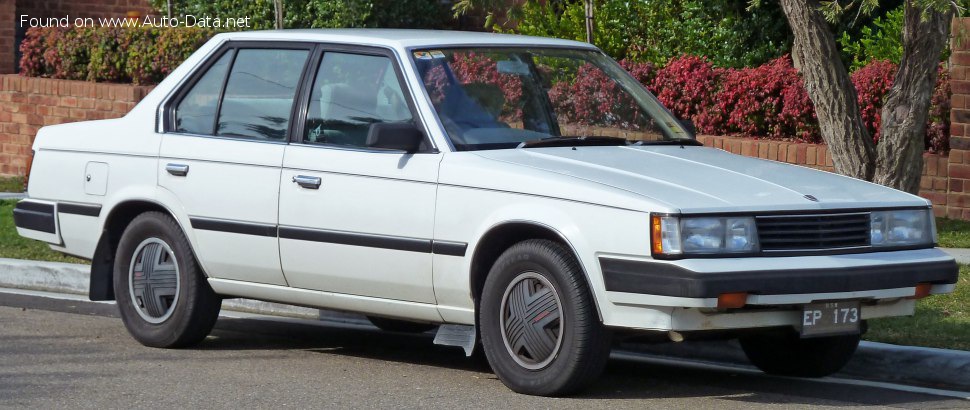
The T140 generation marked a stylistic and mechanical evolution for the Corona. Moving away from some of the softer lines of its predecessors, the T140 adopted a more angular, crisp design language that was characteristic of early 1980s automotive trends. This design not only gave the car a more contemporary appearance but also improved aerodynamics, contributing to better fuel efficiency. The Corona series, first introduced in 1957, had by this point established itself as a global workhorse, bridging the gap between smaller economy cars and larger luxury sedans. The T140 continued this tradition, offering a blend of spaciousness, comfort, and low running costs that appealed to a wide demographic, from private buyers to fleet operators.
Engine and Performance: The Toyota Corona (T140) 1.5 (90 Hp) Powertrain
At the heart of the Toyota Corona (T140) 1.5 (90 Hp) variant was the 3A-LU engine, a 1.5-liter (1497 cm³ or 91.35 cubic inches) inline-four gasoline engine. This powerplant was a testament to Toyota’s engineering philosophy of creating durable and efficient engines. Producing 90 horsepower at 5400 rpm and a respectable 95.88 lb-ft of torque at 4200 rpm, the 3A-LU was well-suited for the Corona’s role as a practical family sedan. The power output, generating 60.1 horsepower per liter, was competitive for its class during the mid-1980s.
A notable technical feature for an engine of this era and segment was the inclusion of a Double Overhead Camshaft (DOHC) valvetrain with four valves per cylinder. While many competitors still utilized single overhead camshaft (SOHC) or pushrod designs, Toyota’s application of DOHC technology in a mainstream compact car underscored its commitment to advanced engineering. This setup allowed for more efficient air intake and exhaust flow, contributing to better power delivery and fuel economy compared to less sophisticated designs.
Furthermore, the 3A-LU engine utilized a multi-port manifold injection system for fuel delivery. This was a significant upgrade over traditional carburetors, offering more precise fuel metering, improved cold starts, smoother idle, and better emissions control. The engine was naturally aspirated, meaning it relied solely on atmospheric pressure for air intake, a common and reliable configuration for mass-market vehicles. With a compression ratio of 9.4:1, the engine was designed to run on readily available regular unleaded gasoline, further enhancing its appeal as an economical choice.
The engine was mounted in a front, transverse layout, a configuration that was becoming standard for front-wheel-drive vehicles of the era. This design maximized interior cabin space and contributed to predictable handling characteristics. While not designed for outright performance, the 1.5-liter engine provided ample power for city driving, highway cruising, and light family duties, all while upholding Toyota’s benchmark for longevity and low maintenance.
Design and Features of the T140 Sedan
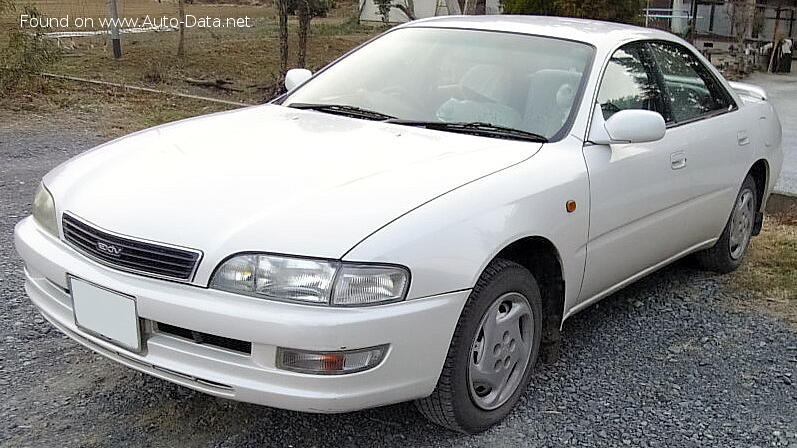
The Toyota Corona (T140) was offered in various body styles, but the 4-door sedan, as specified for this 1.5-liter variant, was arguably its most popular and enduring form. Its design was characterized by clean, straight lines, a relatively upright greenhouse, and large glass areas that provided excellent visibility. The exterior aesthetic was functional and understated, prioritizing practicality over flamboyant styling, a hallmark of Toyota’s design philosophy for its mainstream models.
Inside, the T140 sedan offered a spacious and ergonomic cabin designed for comfort and ease of use. The dashboard layout was straightforward, with clearly legible instrumentation and logically placed controls. Materials were chosen for their durability and ability to withstand years of daily use, reflecting the car’s utilitarian purpose. While luxury features were typically reserved for higher trims or larger models, the Corona offered essential amenities for its time, such as comfortable cloth seating, a capable heating and ventilation system, and an AM/FM radio.
Safety features for the T140 generation, consistent with 1980s standards, included robust body construction, front and rear seatbelts, and a collapsible steering column. While modern safety technologies like airbags or anti-lock brakes were still nascent or not yet standard in this segment, the Corona was engineered with a focus on structural integrity to provide a reasonable level of occupant protection for its era. The four-door configuration ensured easy access for all passengers, reinforcing its appeal as a family or fleet vehicle.
Technical Specifications: Toyota Corona (T140) 1.5 (90 Hp)
| Attribute | Specification |
|---|---|
| Brand | Toyota |
| Model | Corona |
| Generation | Corona (T140) |
| Type (Engine) | 1.5 (90 Hp) |
| Start of Production | 1983 year |
| End of Production | 1987 year |
| Powertrain Architecture | Internal Combustion Engine |
| Body Type | Sedan |
| Doors | 4 |
| Fuel Type | Petrol (Gasoline) |
| Power | 90 Hp @ 5400 rpm |
| Power per Liter | 60.1 Hp/l |
| Torque | 130 Nm (95.88 lb.-ft.) @ 4200 rpm |
| Engine Layout | Front, Transverse |
| Engine Model/Code | 3A-LU |
| Engine Displacement | 1497 cm³ (91.35 cu. in. / 1.5 Liters) |
| Number of Cylinders | 4 |
| Engine Configuration | Inline |
| Cylinder Bore | 74 mm (2.91 in.) |
| Piston Stroke | 87 mm (3.43 in.) |
| Compression Ratio | 9.4:1 |
| Number of Valves per Cylinder | 4 |
| Fuel Injection System | Multi-port manifold injection |
| Engine Aspiration | Naturally aspirated engine |
| Valvetrain | DOHC |
Legacy and Market Impact
The Toyota Corona (T140) 1.5 (90 Hp) played a crucial role in reinforcing Toyota’s global reputation for building incredibly reliable and durable vehicles. While it might not have garnered the same enthusiast following as some performance-oriented models, its impact was profound in the everyday lives of millions. It was a car that simply worked, day in and day out, with minimal fuss and low running costs, which was precisely what its target audience demanded.
In its primary markets, particularly Japan, Southeast Asia, and Australia, the T140 Corona faced stiff competition from other Japanese manufacturers. Key rivals included the Nissan Stanza (Bluebird in some markets), the Mitsubishi Lancer and Galant, and to some extent, the Honda Accord. However, the Corona consistently held its own, often outselling competitors due to its unparalleled reputation for longevity and its extensive dealer network. It was the preferred choice for many taxi operators and government fleets, a true testament to its robustness.
The T140 generation’s legacy is rooted in its contribution to Toyota’s image as a brand synonymous with quality and dependability. It was a workhorse that helped solidify Toyota’s position as a global automotive powerhouse. The lessons learned in engineering and manufacturing the Corona, particularly its efficient DOHC engine technology and robust construction, paved the way for future successful Toyota models, including the Camry and Corolla, which would eventually eclipse the Corona in global sales and recognition. The Corona (T140) stands as a quiet but incredibly significant chapter in Toyota’s journey, embodying the core values that continue to define the brand today.