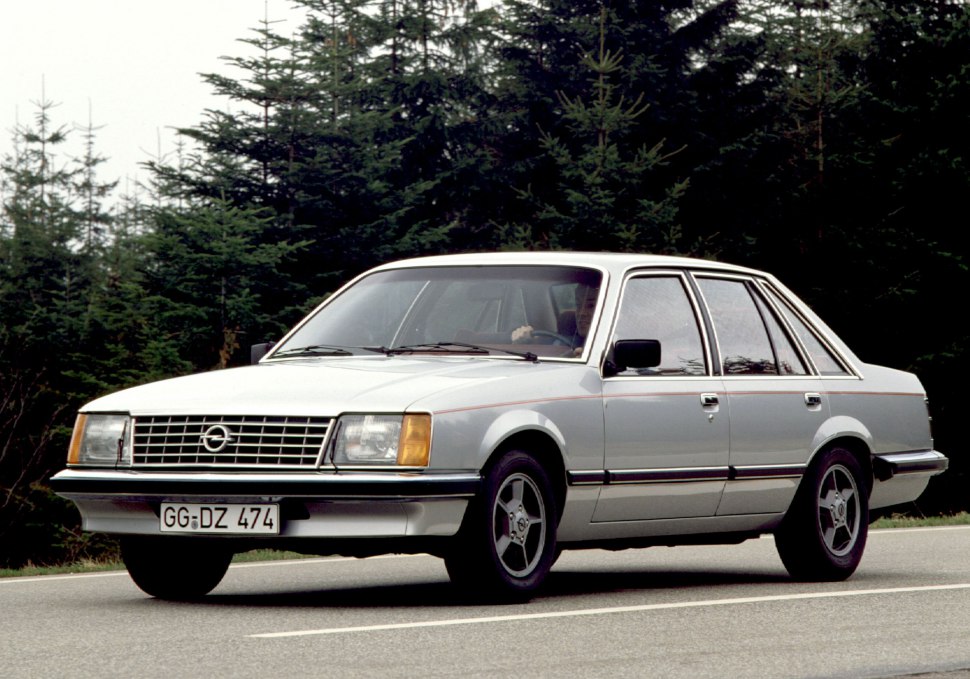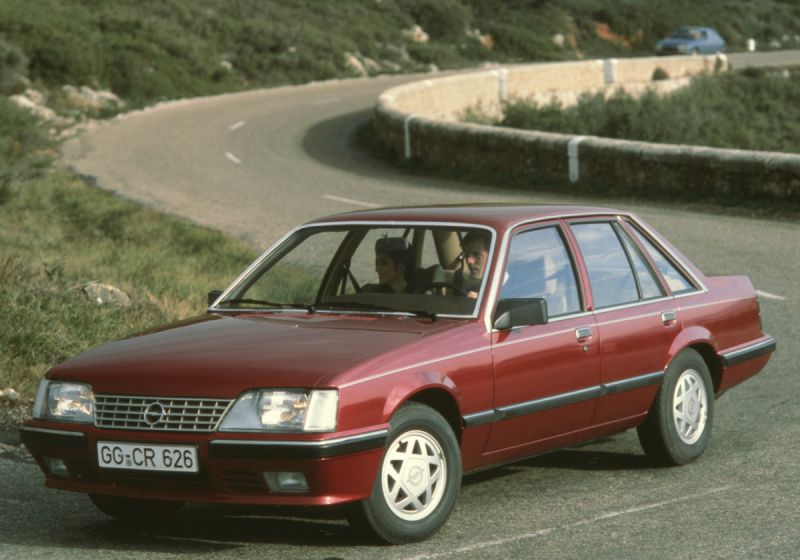
The Opel Senator A (facelift 1982) 2.2i (115 Hp): Opel’s Executive Standard Bearer
The Opel Senator A (facelift 1982) 2.2i (115 Hp) represents a significant chapter in Opel’s history, serving as the German automaker’s flagship executive sedan during the 1980s. First introduced in 1978, the Senator A was Opel’s answer to the burgeoning luxury and executive car market in Europe, directly competing with established players and offering a blend of comfort, space, and robust engineering. The model underwent a notable facelift in 1982, refining its aesthetics and introducing updated powertrains. The specific 2.2i (115 Hp) variant, produced from 1984 to 1986, offered a compelling balance of performance and efficiency for its time, embodying the practical luxury that Opel aimed to deliver to its discerning European clientele. While never officially sold in the United States under the Opel badge, the Senator shared its platform with the Vauxhall Royale/Senator in the UK and was a recognizable figure on European roads, prized for its spacious interior, comfortable ride, and straightforward mechanics.
Engine and Performance of the Opel Senator A (facelift 1982) 2.2i (115 Hp)
At the heart of the Opel Senator A (facelift 1982) 2.2i (115 Hp) was a robust 2.2-liter (2197 cm3 or 134.07 cu. in.) inline-four gasoline engine. This powerplant utilized a Single Overhead Camshaft (SOHC) valvetrain with two valves per cylinder, a common and reliable configuration for the era. Fuel delivery was managed by a multi-port manifold injection system, a step up from carburetors and a key contributor to improved fuel efficiency and smoother power delivery. As a naturally aspirated engine, it delivered its power without forced induction, relying on its displacement and efficient design.
The engine produced a respectable 115 horsepower at 4800 revolutions per minute (rpm), providing a power-to-liter ratio of 52.3 horsepower per liter. Torque output was equally impressive for a four-cylinder of its size, peaking at 182 Newton-meters (134.24 lb.-ft.) at a relatively low 2800 rpm. This low-end torque characteristic contributed to the car’s tractable nature and comfortable cruising ability. The power was sent to the rear wheels via a 5-speed manual transmission, offering drivers direct control and an engaging driving experience.
Performance figures for the 2.2i were competitive for an executive sedan of the mid-1980s. The Senator could accelerate from 0 to 60 miles per hour in an estimated 10.9 seconds, with 0 to 62 mph (100 km/h) taking 11.5 seconds. Its maximum speed was recorded at 113.71 mph (183 km/h). Fuel economy was rated at 8.9 liters per 100 kilometers in a combined cycle, translating to approximately 26.4 US miles per gallon, a reasonable figure for a car of its size and power from that period. The vehicle’s weight-to-power ratio stood at 11.5 kg per horsepower (87.1 Hp per tonne), indicating a solid, if not overtly sporty, performance envelope.
Design and Features
The Opel Senator A, particularly after its 1982 facelift, presented a dignified and somewhat understated aesthetic that was characteristic of German executive sedans of the era. Its body type was a classic 4-door sedan, designed to comfortably accommodate five occupants. The facelift brought subtle changes to the front and rear styling, including updated grille designs, headlamps, and taillights, giving it a more modern and aerodynamic appearance compared to its pre-facelift predecessor. The drag coefficient (Cd) of 0.39 was respectable for a large sedan of the mid-1980s, contributing to both fuel efficiency and reduced wind noise at higher speeds.
In terms of dimensions, the Senator A was a substantial vehicle, measuring 190.51 inches (4839 mm) in length, 67.8 inches (1722 mm) in width, and 55.71 inches (1415 mm) in height. Its generous wheelbase of 105.63 inches (2683 mm) was instrumental in providing a spacious cabin and a stable ride. The interior was designed with comfort and practicality in mind, featuring ample legroom and headroom for all passengers. While specific interior features varied by trim level, typical amenities for an executive car of this vintage would have included power windows, central locking, and a well-appointed dashboard with clear instrumentation. The trunk space was particularly impressive, offering a maximum capacity of 715 liters (25.25 cu. ft.), making it highly practical for long journeys and family use.
Underneath, the Senator featured an independent suspension system tuned for comfort, capable of absorbing road imperfections typical of European roads. Braking duties were handled by ventilated discs at the front and solid discs at the rear, providing confident stopping power. The rear-wheel-drive architecture, combined with a relatively tight turning circle of 35.43 feet (10.8 m), ensured a traditional driving feel and good maneuverability despite its size.
Technical Specifications: Opel Senator A (facelift 1982) 2.2i (115 Hp)
| Category | Specification |
|---|---|
| Brand | Opel |
| Model | Senator |
| Generation | Senator A (facelift 1982) |
| Engine Type | 2.2i (115 Hp) |
| Production Start | 1984 |
| Production End | 1986 |
| Powertrain Architecture | Internal Combustion Engine, Rear Wheel Drive |
| Body Type | Sedan |
| Seats | 5 |
| Doors | 4 |
| Fuel Type | Petrol (Gasoline) |
| Fuel Consumption (Combined) | 8.9 l/100 km (26.4 US mpg) |
| Acceleration 0 – 60 mph | 10.9 seconds |
| Acceleration 0 – 62 mph (0-100 km/h) | 11.5 seconds |
| Maximum Speed | 113.71 mph (183 km/h) |
| Power | 115 Hp @ 4800 rpm |
| Power per liter | 52.3 Hp/l |
| Torque | 182 Nm (134.24 lb.-ft.) @ 2800 rpm |
| Engine Displacement | 2197 cm3 (2.2 liters / 134.07 cu. in.) |
| Number of Cylinders | 4 |
| Engine Configuration | Inline |
| Cylinder Bore | 3.74 in. (95 mm) |
| Piston Stroke | 3.05 in. (77.5 mm) |
| Compression Ratio | 9.4:1 |
| Valves per Cylinder | 2 |
| Fuel Injection System | Multi-port manifold injection |
| Engine Aspiration | Naturally aspirated |
| Valvetrain | SOHC |
| Kerb Weight | 2910.1 lbs. (1320 kg) |
| Max. Weight | 4155.71 lbs. (1885 kg) |
| Max Load | 1245.61 lbs. (565 kg) |
| Trunk (Boot) Space | 25.25 cu. ft. (715 l) |
| Fuel Tank Capacity | 19.81 US gal (75 l) |
| Length | 190.51 in. (4839 mm) |
| Width | 67.8 in. (1722 mm) |
| Height | 55.71 in. (1415 mm) |
| Wheelbase | 105.63 in. (2683 mm) |
| Front Track | 56.97 in. (1447 mm) |
| Rear Track | 57.95 in. (1472 mm) |
| Ride Height (Ground Clearance) | 5.51 in. (140 mm) |
| Drag Coefficient (Cd) | 0.39 |
| Minimum Turning Circle | 35.43 ft. (10.8 m) |
| Drive Wheel | Rear wheel drive |
| Gearbox Type | 5 gears, manual transmission |
| Front Brakes | Ventilated discs |
| Rear Brakes | Disc |
| Weight-to-power ratio | 11.5 kg/Hp (87.1 Hp/tonne) |
| Weight-to-torque ratio | 7.3 kg/Nm (137.9 Nm/tonne) |
Legacy and Market Impact
The Opel Senator A (facelift 1982) 2.2i (115 Hp) played a crucial role in Opel’s strategy to compete in the executive segment across Europe. It was positioned as a more affordable yet highly capable alternative to premium German rivals like the BMW 5-Series (E28) and the Mercedes-Benz W123/W124 series, as well as mainstream competitors such as the Ford Granada. The Senator offered a compelling package for buyers seeking a large, comfortable, and reliable sedan without the often-higher price tag associated with its luxury counterparts.
Its reputation was built on its solid build quality, spacious interior, and comfortable ride, making it a popular choice for business executives, government fleets, and families requiring substantial passenger and cargo capacity. The 2.2i engine, while not the most powerful option available in the Senator range (which also included larger inline-six engines), offered a good balance of performance and running costs, appealing to a broader base of buyers who valued efficiency alongside comfort. The availability of a precise 5-speed manual transmission further enhanced its appeal to drivers who preferred more engagement than automatic offerings of the time.
Although the Opel Senator A, and its subsequent Senator B generation, eventually faced increasing pressure from more sophisticated and badge-conscious competitors, the A-series remains a testament to Opel’s engineering capabilities in the 1980s. It is remembered for its robust mechanics, timeless design, and its role as a comfortable, long-distance cruiser. Today, the Opel Senator A, particularly well-preserved examples, is appreciated by classic car enthusiasts in Europe for its period charm, straightforward maintenance, and the glimpse it provides into the executive car market of a bygone era.