The Seat Ibiza IV SC (facelift 2015) 1.0 (75 Hp): A European Urban Companion
The Seat Ibiza is a cornerstone of the Spanish automaker SEAT, a brand renowned for its vibrant, design-led vehicles within the Volkswagen Group. The vehicle under examination, the Seat Ibiza IV SC (facelift 2015) 1.0 (75 Hp), represents a crucial refresh of the fourth-generation Ibiza, specifically in its “Sport Coupe” (SC) three-door configuration. Launched in May 2015 and produced until 2017, this particular iteration was designed to enhance the model’s appeal in the highly competitive European subcompact (B-segment) market, offering a blend of youthful styling, practical urban usability, and commendable fuel efficiency.
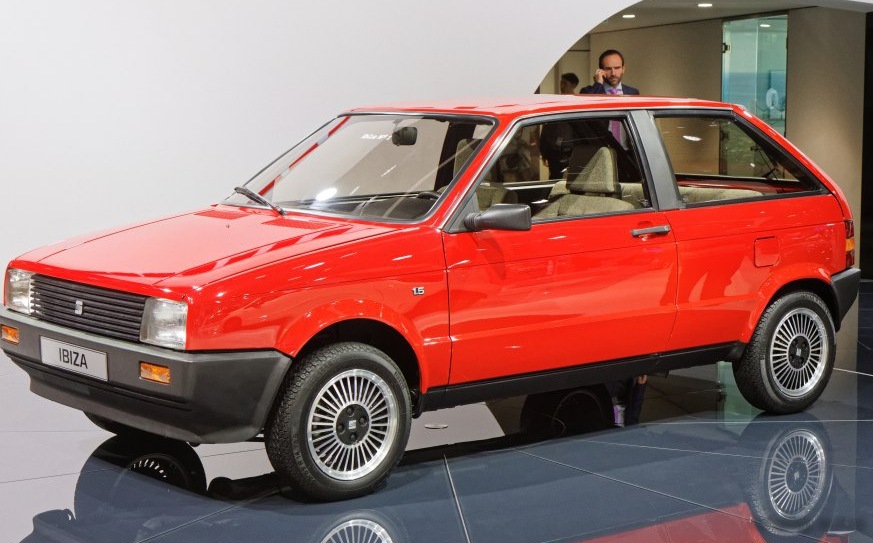
Unlike many vehicles widely available in the United States, SEAT models, including the Ibiza, are primarily marketed across Europe, parts of Asia, and Latin America. The Ibiza has consistently been one of SEAT’s best-selling vehicles since its introduction in 1984, establishing itself as a stylish and affordable alternative to its Volkswagen Group siblings, such as the VW Polo and Skoda Fabia. This 2015 facelift aimed to keep the Ibiza fresh against an onslaught of new competitors, focusing on subtle exterior refinements, interior material upgrades, and updated powertrain options, including the efficient 1.0-liter gasoline engine.
Engine and Performance: The Heart of the Seat Ibiza IV SC (facelift 2015) 1.0 (75 Hp)
Under the hood, the Seat Ibiza IV SC (facelift 2015) 1.0 (75 Hp) featured a compact and efficient powertrain designed with urban commuting and economical operation in mind. This model was equipped with a 1.0-liter (999 cm³ or 60.96 cubic inches) naturally aspirated inline three-cylinder gasoline engine, identified by the engine code CHYB. This powerplant delivered a modest but adequate 75 horsepower at 6200 rpm, coupled with 70.07 lb.-ft. of torque, available across a broad range from 3000 to 4300 rpm. The engine’s layout was front, transverse, driving the front wheels through a precise 5-speed manual transmission.
While not a performance-oriented variant, the 1.0-liter engine provided sufficient动力 for daily driving in city environments and comfortable cruising on highways, albeit with measured acceleration. It could propel the Ibiza SC from 0 to 60 mph in an estimated 13.6 seconds, with a top speed of 106.88 mph (172 km/h). The focus of this particular engine was clearly on efficiency and low running costs. With a combined fuel consumption rating of 49 US mpg (4.8 l/100 km), it was an attractive option for budget-conscious buyers. Furthermore, its CO2 emissions of 108 g/km ensured compliance with stringent Euro 6 emission standards, a critical factor for its European market success.
The engine’s architecture included a 10.5:1 compression ratio and four valves per cylinder, utilizing a multi-port manifold injection system for fuel delivery. Despite its small displacement, the three-cylinder configuration offered a characteristic thrum and acceptable refinement for its class. The lightweight design, with a kerb weight of just 2147.3 lbs (974 kg), contributed to a weight-to-power ratio of 13 kg/Hp, making the 75 horsepower feel more responsive than the raw numbers might suggest in a larger vehicle.
Design and Features: Sporty Aesthetics Meets Practicality
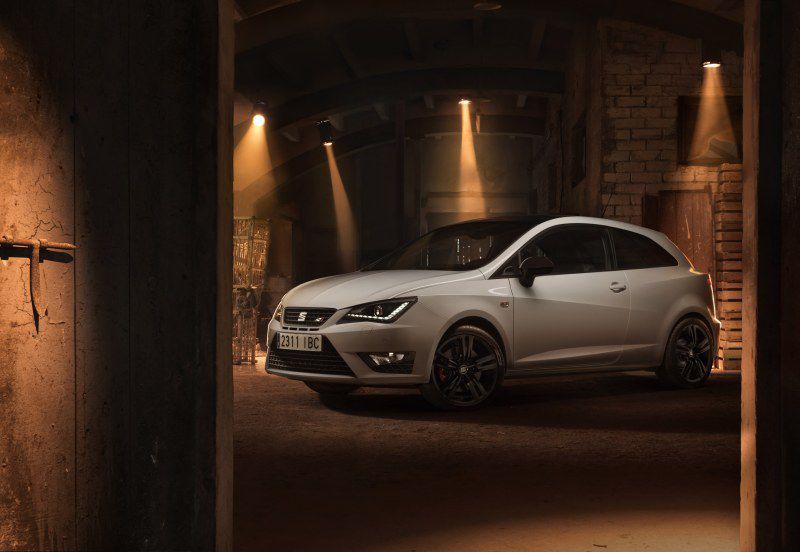
The “SC” designation in the Seat Ibiza IV SC (facelift 2015) 1.0 (75 Hp) stands for “Sport Coupe,” indicating its three-door body style. This variant was designed to appeal to a younger, more style-conscious demographic, offering a sleeker, sportier profile compared to its more practical five-door hatchback sibling. The facelift in 2015 brought subtle but effective design enhancements, including redesigned headlights with optional LED daytime running lights, a refreshed grille, and updated wheel designs. The overall aesthetic remained true to SEAT’s sharp, angular design language, giving the Ibiza a dynamic and assertive presence on the road.
Measuring 159.17 inches (4043 mm) in length, 66.65 inches (1693 mm) in width, and 56.22 inches (1428 mm) in height, the Ibiza SC maintained its compact dimensions, making it highly maneuverable in congested urban settings and easy to park. The wheelbase of 97.2 inches (2469 mm) provided a stable ride, while the minimum turning circle of 32.81 feet (10 meters) further enhanced its city-friendly nature.
Inside, the facelift introduced improved material quality, a redesigned dashboard, and updated infotainment systems, though the 1.0 (75 Hp) model would likely have come with a more basic setup. Despite its coupe moniker, the Ibiza SC offered seating for five, though rear access and legroom would naturally be more constrained than in the five-door version. The trunk capacity of 10.31 cubic feet (292 liters) was respectable for its class, accommodating daily errands and weekend luggage. Standard features included an anti-lock braking system (ABS) for enhanced safety, a MacPherson independent front suspension with an anti-roll bar, and a semi-independent coil spring rear suspension, providing a comfortable yet engaging ride. Braking was handled by ventilated discs at the front and drum brakes at the rear, a common setup for economical subcompacts. The car offered various tire sizes, from 175/70 R14 to 215/45 R16, mounted on corresponding 14, 15, or 16-inch wheel rims, allowing for personalization and varying levels of grip and ride comfort.
Technical Specifications
| Category | Specification | US Equivalent / Notes |
|---|---|---|
| General Information | ||
| Brand | Seat | |
| Model | Ibiza | |
| Generation | Ibiza IV SC (facelift 2015) | |
| Type (Engine) | 1.0 (75 Hp) | |
| Start of Production | May, 2015 | |
| End of Production | 2017 | |
| Powertrain Architecture | Internal Combustion Engine | |
| Body Type | Coupe | 3-Door |
| Seats | 5 | |
| Doors | 3 | |
| Performance Specifications | ||
| Fuel Consumption (Combined) | 4.8 l/100 km | 49 US mpg |
| CO2 Emissions | 108 g/km | |
| Fuel Type | Petrol (Gasoline) | |
| Acceleration 0-60 mph | 13.6 sec | |
| Maximum Speed | 172 km/h | 106.88 mph |
| Emission Standard | Euro 6 | |
| Weight-to-Power Ratio | 13 kg/Hp | 77 Hp/tonne |
| Weight-to-Torque Ratio | 10.3 kg/Nm | 97.5 Nm/tonne |
| Engine Specifications | ||
| Power | 75 Hp @ 6200 rpm | |
| Power per Liter | 75.1 Hp/l | |
| Torque | 95 Nm @ 3000-4300 rpm | 70.07 lb.-ft. @ 3000-4300 rpm |
| Engine Layout | Front, Transverse | |
| Engine Model/Code | CHYB | |
| Engine Displacement | 999 cm³ | 60.96 cu. in. (1.0 L) |
| Number of Cylinders | 3 | |
| Engine Configuration | Inline | |
| Cylinder Bore | 74.5 mm | 2.93 in. |
| Piston Stroke | 76.4 mm | 3.01 in. |
| Compression Ratio | 10.5:1 | |
| Valves per Cylinder | 4 | |
| Fuel Injection System | Multi-port manifold injection | |
| Engine Aspiration | Naturally Aspirated | |
| Engine Oil Capacity | 3.4 l | 3.59 US qt |
| Coolant Capacity | 8 l | 8.45 US qt |
| Space, Volume, and Weights | ||
| Kerb Weight | 974 kg | 2147.3 lbs |
| Maximum Weight (GVWR) | 1540 kg | 3395.12 lbs |
| Maximum Load | 566 kg | 1247.82 lbs |
| Trunk (Boot) Space – Minimum | 292 l | 10.31 cu. ft. |
| Fuel Tank Capacity | 45 l | 11.89 US gal |
| Dimensions | ||
| Length | 4043 mm | 159.17 in. |
| Width | 1693 mm | 66.65 in. |
| Height | 1428 mm | 56.22 in. |
| Wheelbase | 2469 mm | 97.2 in. |
| Front Track | 1465 mm | 57.68 in. |
| Rear Track | 1457 mm | 57.36 in. |
| Minimum Turning Circle | 10 m | 32.81 ft. |
| Drivetrain, Brakes, and Suspension | ||
| Drivetrain Architecture | Front-wheel drive with Internal Combustion Engine | |
| Drive Wheel | Front-wheel drive | |
| Number of Gears & Type | 5 gears, manual transmission | |
| Front Suspension | Independent, McPherson with coil spring and anti-roll bar | |
| Rear Suspension | Semi-independent, coil spring | |
| Front Brakes | Ventilated discs | |
| Rear Brakes | Drum | |
| Assisting Systems | ABS (Anti-lock Braking System) | |
| Steering Type | Steering rack and pinion | |
| Tire Sizes | 175/70 R14; 185/60 R15; 215/45 R16 | |
| Wheel Rim Sizes | 14; 15; 16 | |
Legacy and Market Impact in the B-Segment
The Seat Ibiza has carved out a significant legacy in the European B-segment, a market segment characterized by fierce competition and a strong demand for economical, stylish, and practical compact vehicles. The fourth-generation Ibiza, particularly after its 2015 facelift, continued this tradition, maintaining its reputation as a youthful and dynamic choice within its class. The Seat Ibiza IV SC (facelift 2015) 1.0 (75 Hp), with its entry-level engine, was particularly important for SEAT’s sales volume, appealing to first-time car buyers, urban dwellers, and those prioritizing low running costs.
In its primary markets, the Ibiza faced stiff competition from established rivals such as the Volkswagen Polo (its platform sibling), Ford Fiesta, Renault Clio, Peugeot 208, and Skoda Fabia. What set the Ibiza apart was its distinctive design language, often perceived as more passionate and edgy than its German counterparts, and its competitive pricing. The “SC” or Sport Coupe variant further differentiated it, offering a more emotionally charged aesthetic for buyers who valued style over the slight practical compromises of a three-door body.
Historically, the Ibiza has been a pivotal model for SEAT, often leading the brand’s sales charts and serving as an ambassador for its “auto emocion” slogan. The fourth generation, introduced in 2008 and facelifted twice (in 2012 and 2015), was instrumental in cementing SEAT’s position as a modern, design-focused brand within the Volkswagen Group. The 2015 facelift ensured the Ibiza remained relevant and attractive in a rapidly evolving market, bridging the gap until the arrival of the all-new fifth generation in 2017.
The 1.0-liter (75 Hp) engine variant, while not the most powerful, played a crucial role in meeting market demands for fuel efficiency and lower emissions, directly addressing consumer concerns about running costs and environmental impact. Its Euro 6 compliance was a testament to its modern engineering. Overall, the Seat Ibiza IV SC (facelift 2015) 1.0 (75 Hp) represented a well-rounded package for its segment: a stylish, efficient, and practical urban companion that upheld SEAT’s reputation for delivering engaging vehicles with a distinct Spanish flair.