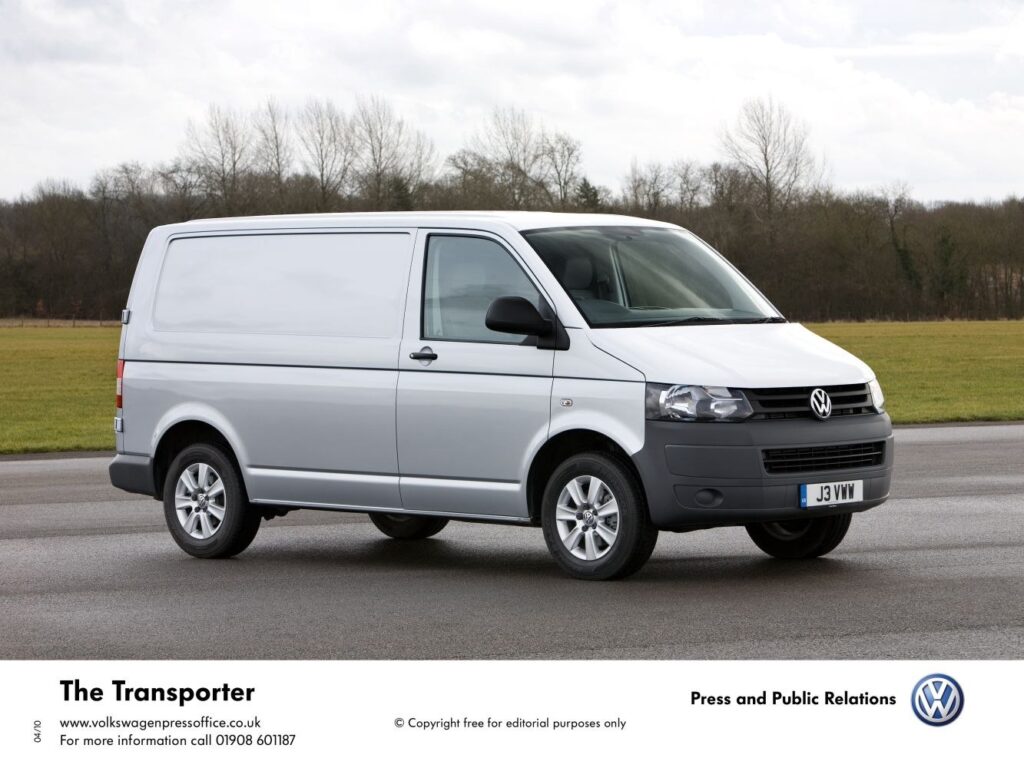
The Volkswagen Transporter (T5, facelift 2009) Panel Van 2.0 TSI (150 Hp) L1H1: A European Workhorse
The Volkswagen Transporter, an iconic nameplate in the light commercial vehicle (LCV) segment, boasts a rich heritage spanning over seven decades. The T5 generation, introduced in 2003, continued this legacy, offering a modern, versatile platform for businesses and individuals alike. The specific model under review, the Volkswagen Transporter (T5, facelift 2009) Panel Van 2.0 TSI (150 Hp) L1H1, represents a key iteration produced between 2012 and 2015. This particular variant, featuring the L1H1 designation for standard length and standard height, was a cornerstone of Volkswagen’s commercial vehicle lineup in its primary European and international markets, renowned for its blend of practicality, robust engineering, and impressive efficiency for its class. While not widely sold in the United States due to market dynamics and import tariffs, the T5 Transporter remains a benchmark for compact and mid-size vans globally.
The 2009 facelift brought a host of improvements to the T5, refining its exterior aesthetics with updated headlights, grille, and bumpers, while significantly upgrading the interior with more contemporary materials and technology. Crucially, the facelift also introduced a new range of powertrains, including the advanced 2.0-liter TSI gasoline engine, which offered a compelling alternative to the more common diesel options. This model, with its 150 horsepower, positioned itself as a capable and refined panel van, designed to handle diverse commercial tasks with ease and a focus on operational cost-effectiveness.
Engine and Performance of the Volkswagen Transporter (T5, facelift 2009) Panel Van
At the heart of this specific Transporter variant is Volkswagen’s acclaimed EA888 engine. This 2.0-liter (1984 cm3 or 121.07 cu. in.) inline four-cylinder gasoline engine is a testament to modern powertrain engineering, featuring a DOHC (Double Overhead Camshaft) valvetrain with four valves per cylinder, direct fuel injection, and forced induction via a turbocharger and intercooler. This sophisticated setup allows the engine to deliver a robust 150 horsepower (Hp) at a broad range of 3750 to 6000 rpm.
More importantly for a commercial vehicle, the engine produces a substantial 206.52 lb.-ft. (280 Nm) of torque, available across an incredibly wide and usable band from just 1500 to 3750 rpm. This low-end torque is critical for a panel van, ensuring strong pulling power from a standstill, effortless acceleration even when fully loaded, and reduced need for frequent gear changes. The engine’s transverse front-wheel-drive architecture is paired with a slick-shifting 6-speed manual transmission, providing the driver with precise control over power delivery and contributing to the vehicle’s overall efficiency.
In terms of performance, the Volkswagen Transporter (T5, facelift 2009) Panel Van 2.0 TSI (150 Hp) L1H1 is surprisingly sprightly for a utility vehicle. It can accelerate from 0 to 60 mph in a respectable 10.5 seconds, and reach a top speed of 111.85 mph (180 km/h). These figures demonstrate that the Transporter is not merely a utilitarian box on wheels but a capable vehicle that can keep pace with traffic on highways and swiftly navigate urban environments.
Fuel economy, a vital concern for commercial operators, is competitive for a gasoline-powered van of this size. The combined NEDC cycle rating stands at approximately 24-24.8 US mpg. Urban consumption ranges from 18.1-18.5 US mpg, while extra-urban driving can achieve 29.4-30.5 US mpg. While typically less fuel-efficient than its diesel counterparts, the 2.0 TSI offered a smoother, quieter operation and often lower purchase costs in certain markets. Its adherence to the Euro 5 emission standard with CO2 emissions of 222-228 g/km further highlighted Volkswagen’s commitment to environmental responsibility during its production years.
Design and Features of the Volkswagen Transporter (T5, facelift 2009) Panel Van
The design of the T5 Transporter, particularly after the 2009 facelift, embodies a philosophy of functional elegance. As a panel van, its primary purpose is utility, and the L1H1 designation signifies its standard length (192.6 inches) and standard height (78.35 inches), making it maneuverable in urban settings while still offering substantial cargo capacity. The exterior styling is clean and purposeful, with the facelift introducing sharper lines, updated lighting clusters, and a more modern grille that aligned it with Volkswagen’s passenger car lineup of the era.
Inside, the Transporter is designed for durability and driver comfort. The cabin typically accommodates 2-3 occupants, with robust materials chosen to withstand the rigors of daily commercial use. Ergonomics are well-considered, with controls logically placed and excellent visibility from the driver’s seat. While specific feature lists can vary by market and trim, the T5 facelift generally offered improved infotainment options, air conditioning, and a suite of passive and active safety features.
The cargo area is the undisputed highlight for a panel van. With a maximum trunk space of 204.83 cu. ft. (5800 liters), the Transporter L1H1 provides ample room for goods, tools, or equipment. The van boasts an impressive maximum payload capacity of between 2317.06 and 2341.31 lbs., making it suitable for a wide range of tasks. Furthermore, its towing capabilities are substantial, rated at 5511.56 lbs. (2500 kg) with brakes, and it can carry a roof load of up to 220.46 lbs.
Underneath, the T5 Transporter features an independent suspension setup both front and rear. The front employs a McPherson strut design with coil springs and an anti-roll bar, while the rear utilizes independent coil springs with a transverse stabilizer and trailing arms. This sophisticated suspension system, uncommon in many commercial vans of its time, contributes to a more car-like ride quality, improved handling, and better stability, especially when loaded. Braking is handled by ventilated discs at both the front (308×29.5 mm) and rear (294×22 mm), complemented by an Anti-lock Braking System (ABS) for enhanced safety. The hydraulic rack and pinion steering system provides precise feedback and ease of maneuverability, with a minimum turning circle of 39.04 ft.
Technical Specifications: Volkswagen Transporter (T5, facelift 2009) Panel Van 2.0 TSI (150 Hp) L1H1
| Category | Specification |
|---|---|
| Brand | Volkswagen |
| Model | Transporter |
| Generation | Transporter (T5, facelift 2009) Panel Van |
| Type (Engine) | 2.0 TSI (150 Hp) L1H1 |
| Start of Production | 2012 |
| End of Production | 2015 |
| Powertrain Architecture | Internal Combustion engine |
| Body Type | Van |
| Seats | 2-3 |
| Doors | 4-5 |
| Fuel Type | Petrol (Gasoline) |
| Acceleration 0-60 mph | 10.5 seconds |
| Maximum Speed | 111.85 mph (180 km/h) |
| Fuel Consumption (Urban, NEDC) | 18.1 – 18.5 US mpg (12.7-13 l/100 km) |
| Fuel Consumption (Extra Urban, NEDC) | 29.4 – 30.5 US mpg (7.7-8 l/100 km) |
| Fuel Consumption (Combined, NEDC) | 24 – 24.8 US mpg (9.5-9.8 l/100 km) |
| CO2 Emissions (NEDC) | 222-228 g/km |
| Emission Standard | Euro 5 |
| Power | 150 Hp @ 3750-6000 rpm |
| Power per Liter | 75.6 Hp/l |
| Torque | 206.52 lb.-ft. (280 Nm) @ 1500-3750 rpm |
| Engine Layout | Front, Transverse |
| Engine Model/Code | EA888 / CJKB |
| Engine Displacement | 2.0 Liters (1984 cm3 / 121.07 cu. in.) |
| Number of Cylinders | 4, Inline |
| Cylinder Bore | 3.25 in. (82.5 mm) |
| Piston Stroke | 3.65 in. (92.8 mm) |
| Compression Ratio | 9.8:1 |
| Valves per Cylinder | 4 |
| Fuel Injection System | Direct injection |
| Engine Aspiration | Turbocharger, Intercooler |
| Valvetrain | DOHC |
| Engine Oil Capacity | 6.02 US qt (5.7 l) |
| Coolant Capacity | 11.62 US qt (11 l) |
| Kerb Weight | 3855.88 – 4713.48 lbs. (1749-2138 kg) |
| Max. Weight (GVWR) | 6172.94 – 7054.79 lbs. (2800-3200 kg) |
| Max Load | 2317.06 – 2341.31 lbs. (1051-1062 kg) |
| Trunk (Boot) Space – maximum | 204.83 cu. ft. (5800 l) |
| Fuel Tank Capacity | 21.13 US gal (80 l) |
| Max. Roof Load | 220.46 lbs. (100 kg) |
| Permitted Trailer Load with Brakes (12%) | 5511.56 lbs. (2500 kg) |
| Permitted Trailer Load without Brakes | 1653.47 lbs. (750 kg) |
| Permitted Towbar Download | 220.46 lbs. (100 kg) |
| Length | 192.6 in. (4892 mm) |
| Width | 74.96 in. (1904 mm) |
| Width including Mirrors | 89.88 in. (2283 mm) |
| Height | 78.35 in. (1990 mm) |
| Wheelbase | 118.11 in. (3000 mm) |
| Front Overhang | 35.28 in. (896 mm) |
| Rear Overhang | 39.21 in. (996 mm) |
| Ride Height (Ground Clearance) | 7.91 in. (201 mm) |
| Minimum Turning Circle | 39.04 ft. (11.9 m) |
| Approach Angle | 21° |
| Departure Angle | 17° |
| Ramp-over (Brakeover) Angle | 14° |
| Wading Depth | 11.81 in. (300 mm) |
| Drivetrain Architecture | Front-wheel drive (ICE drives front wheels) |
| Drive Wheel | Front-wheel drive |
| Number of Gears and Type of Gearbox | 6 gears, manual transmission |
| Front Suspension | Independent, McPherson with coil spring and anti-roll bar |
| Rear Suspension | Independent coil spring, Transverse stabilizer, Trailing arm |
| Front Brakes | Ventilated discs, 308×29.5 mm |
| Rear Brakes | Ventilated discs, 294×22 mm |
| Assisting Systems | ABS (Anti-lock braking system) |
| Steering Type | Steering rack and pinion |
| Power Steering | Hydraulic Steering |
| Tires Size | 215/65 R16 |
| Wheel Rims Size | 6.5J x 16 |
Legacy and Market Impact of the Volkswagen Transporter (T5, facelift 2009) Panel Van
The Volkswagen Transporter T5, especially in its facelifted form from 2009 onwards, solidified its reputation as a highly respected and sought-after light commercial vehicle across Europe and many other international markets. Its legacy is built upon decades of reliability, versatility, and robust build quality, characteristics that have made the Transporter an enduring icon. The T5 generation, in particular, blended these traditional strengths with modern comfort, safety, and powertrain technology, making it a highly competitive offering.
In its primary markets, the Transporter T5 faced stiff competition from rivals such as the Ford Transit Custom, Mercedes-Benz Vito, Renault Trafic, and various offerings from Stellantis brands like the Fiat Scudo and Citroën Jumpy/Peugeot Expert. Despite this crowded segment, the T5 consistently performed well, often commanding a premium due to its perceived quality, strong residual values, and the extensive Volkswagen dealer network. Its car-like driving dynamics, refined interior, and wide array of configurations (including passenger vans, camper vans like the California, and chassis cabs) further broadened its appeal beyond just basic panel van duties.
The introduction of the 2.0 TSI gasoline engine in models like the 150 Hp L1H1 variant marked a strategic move by Volkswagen to offer alternatives to the dominant diesel engines. While diesels remained popular for their fuel economy and torque, the TSI engine provided a smoother, quieter, and often more responsive driving experience, particularly appealing to businesses operating mainly in urban areas or those prioritizing refinement. It also provided an option for markets where diesel fuel might be less favorable or regulated differently.
For the North American market, the Transporter T5, like its predecessors and successors, was largely absent. This absence is primarily attributed to several factors, including the long-standing “Chicken Tax” – a 25% tariff on imported light trucks – which makes European-built vans prohibitively expensive. Additionally, the U.S. market traditionally favors larger, full-size vans (like the Ford E-Series, later the Transit, and the Mercedes-Benz Sprinter) that offer greater cargo volume and towing capacity, catering to different commercial needs and infrastructure. While enthusiasts might lament its absence, the Transporter’s design and size were optimized for European city streets and regulations.
In conclusion, the Volkswagen Transporter (T5, facelift 2009) Panel Van 2.0 TSI (150 Hp) L1H1 stands as a highly competent and influential commercial vehicle. It represents a successful evolution of a legendary nameplate, combining practical design, advanced engineering, and robust performance within the competitive light commercial vehicle sector.