The Ford Mustang V (facelift 2012) GT 5.0 V8: A Modern American Icon
The Ford Mustang V, specifically the facelifted model introduced for the 2012 model year, represented a significant evolution of the fifth-generation S197 platform. This iteration, produced from 2012 to 2014, revitalized the iconic American pony car with enhanced styling, refined dynamics, and, most notably, the powerful 5.0-liter “Coyote” V8 engine. The Ford Mustang V (facelift 2012) GT 5.0 V8 stood as a formidable contender in the performance coupe segment, embodying the spirit of classic muscle cars while incorporating modern technology and engineering. This particular model, with its robust 420 horsepower engine, cemented the Mustang’s reputation as an accessible yet potent performance vehicle, appealing to enthusiasts seeking raw power and an exhilarating driving experience.
Engine and Performance: The Roar of the Coyote V8
At the heart of the Ford Mustang V (facelift 2012) GT 5.0 V8 was the revered “Coyote” engine, a 4.95-liter (302.13 cubic inch) naturally aspirated V8. This powerhouse delivered a robust 420 horsepower at 6500 rpm, translating to an impressive 84.8 horsepower per liter, a testament to its advanced design. Torque figures were equally compelling, with 390.17 lb.-ft. (529 Nm) available at 4250 rpm, providing a broad powerband that made the Mustang GT thrilling both on the street and the track.
The Coyote engine featured a sophisticated dual overhead camshaft (DOHC) design with four valves per cylinder and Ford’s Twin Independent Variable Cam Timing (Ti-VCT) system. This valvetrain technology allowed for precise control over valve overlap, optimizing performance and efficiency across the engine’s rev range, which extended up to a maximum of 7000 rpm. Fuel was delivered via a multi-port manifold injection system, ensuring consistent and responsive power delivery. With a compression ratio of 11:1, the engine was tuned for premium gasoline, maximizing its output.
Power was exclusively sent to the rear wheels via a durable 6-speed manual transmission, offering an engaging and direct driving experience that purists cherished. This drivetrain architecture, combined with the engine’s substantial output, resulted in an impressive weight-to-power ratio of 3.9 kg per horsepower (255.9 Hp per tonne), allowing the 3617.79-pound (1641 kg) coupe to accelerate with authority. While official 0-60 mph times varied slightly depending on testing conditions, the 2012 Mustang GT 5.0 V8 was generally capable of achieving this sprint in the low 4-second range, making it a serious performer for its segment and price point. Fuel economy, while not the primary focus of a muscle car, was rated at an estimated 19 US mpg combined, with 15 US mpg in urban driving and 26.1 US mpg on the highway, reflecting the advancements in engine technology.
Design and Features: Aggression Meets Heritage
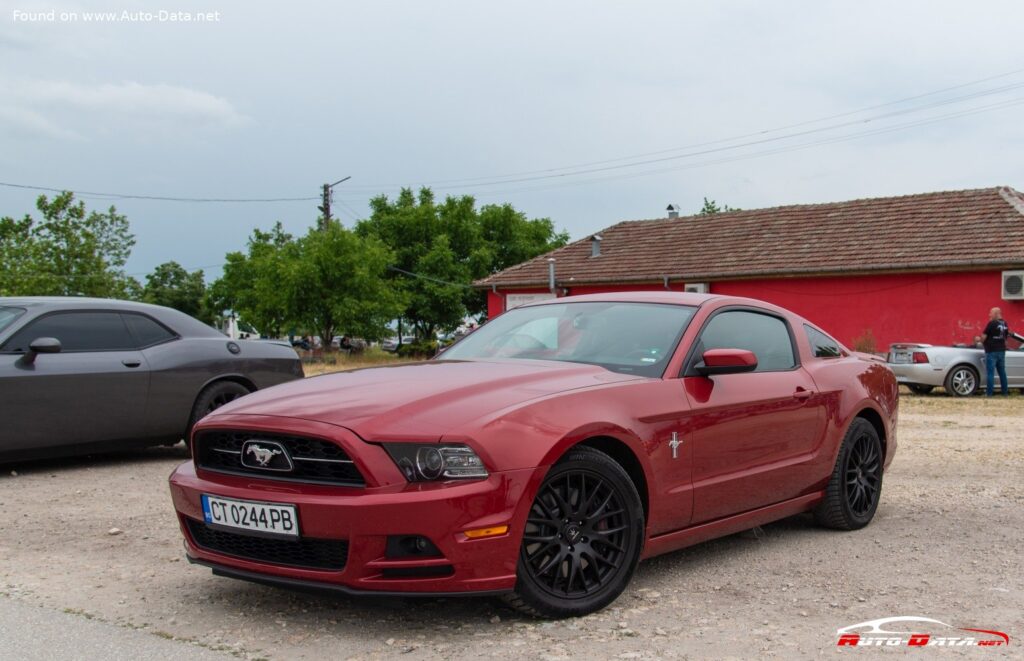
The 2012 facelift of the fifth-generation Mustang brought a more aggressive and modern aesthetic to the classic S197 platform. The design retained the Mustang’s iconic long hood, short deck proportions, but introduced several key updates. The front fascia received a more prominent grille and a redesigned lower valance, giving the car a more assertive stance. High-intensity discharge (HID) headlamps with distinctive LED accent lighting became standard, providing improved visibility and a contemporary visual signature. The power dome hood, a subtle but effective styling cue, hinted at the potent V8 beneath.
At the rear, the facelifted Mustang featured updated taillights with sequential LED turn signals, a nod to Mustang heritage that also added a modern touch. The rear diffuser and dual exhaust outlets further emphasized the car’s performance credentials. The body type remained a two-door coupe, offering seating for four occupants, though the rear seats were typically best suited for shorter journeys or additional storage.
Inside, the Mustang GT offered a driver-focused cockpit with quality materials for its era. Standard features included air conditioning, power windows and locks, and a robust audio system. While not a luxury car, the interior provided a comfortable and functional environment for spirited driving. Safety features for the 2012 model year included standard anti-lock braking system (ABS), dual front airbags, and side airbags, reflecting the evolving safety standards of the automotive industry.
The chassis and suspension setup featured an independent McPherson strut system with a transverse stabilizer bar at the front, providing responsive steering and handling. The rear, however, maintained a rigid axle suspension with coil springs and a transverse stabilizer. While some competitors had moved to independent rear suspension, Ford engineers meticulously tuned the rigid axle to deliver a surprisingly compliant ride and excellent traction, especially during hard acceleration. Braking duties were handled by ventilated discs both front (336×36 mm) and rear (300×19 mm), providing ample stopping power. The electric power steering system offered customizable feedback settings, allowing drivers to tailor the steering feel to their preference. Various tire sizes, from 235/50 R18 to 255/40 R19, mounted on corresponding wheel rims, allowed for different levels of grip and aesthetic appeal.
Technical Specifications
| Category | Specification | Value |
|---|---|---|
| General Information | Brand | Ford |
| Model | Mustang | |
| Generation | Mustang V (facelift 2012) | |
| Type (Engine) | GT 5.0 V8 (420 Hp) | |
| Start of Production | 2012 year | |
| End of Production | 2014 year | |
| Powertrain Architecture | Internal Combustion engine | |
| Body Type | Coupe | |
| Seats | 4 | |
| Doors | 2 | |
| Performance Specs | Fuel Consumption (Urban) | 15.7 l/100 km (15 US mpg) |
| Fuel Consumption (Extra Urban) | 9 l/100 km (26.1 US mpg) | |
| Fuel Consumption (Combined) | 12.4 l/100 km (19 US mpg) | |
| Fuel Type | Petrol (Gasoline) | |
| Weight-to-Power Ratio | 3.9 kg/Hp (255.9 Hp/tonne) | |
| Weight-to-Torque Ratio | 3.1 kg/Nm (322.4 Nm/tonne) | |
| Engine Specs | Power | 420 Hp @ 6500 rpm |
| Power per Liter | 84.8 Hp/l | |
| Torque | 529 Nm (390.17 lb.-ft.) @ 4250 rpm | |
| Maximum Engine Speed | 7000 rpm | |
| Engine Layout | Front, Longitudinal | |
| Engine Model/Code | Coyote | |
| Engine Displacement | 4951 cm³ (302.13 cu. in.) | |
| Number of Cylinders | 8 | |
| Engine Configuration | V-engine | |
| Cylinder Bore | 92.2 mm (3.63 in.) | |
| Piston Stroke | 92.7 mm (3.65 in.) | |
| Compression Ratio | 11:1 | |
| Number of Valves per Cylinder | 4 | |
| Fuel Injection System | Multi-port manifold injection | |
| Engine Aspiration | Naturally aspirated engine | |
| Valvetrain | DOHC, Ti-VCT | |
| Engine Oil Capacity | 7.6 l (8.03 US qt) | |
| Coolant Capacity | 12.3 l (13 US qt) | |
| Space, Volume and Weights | Kerb Weight | 1641 kg (3617.79 lbs) |
| Trunk (Boot) Space – Minimum | 379 l (13.38 cu. ft.) | |
| Fuel Tank Capacity | 61 l (16.11 US gal) | |
| Permitted Trailer Load with Brakes (12%) | 454 kg (1000.9 lbs) | |
| Dimensions | Length | 4788 mm (188.5 in.) |
| Width | 1877 mm (73.9 in.) | |
| Width Including Mirrors | 2035 mm (80.12 in.) | |
| Height | 1417 mm (55.79 in.) | |
| Wheelbase | 2720 mm (107.09 in.) | |
| Front Track | 1562 mm (61.5 in.) | |
| Rear (Back) Track | 1577 mm (62.09 in.) | |
| Minimum Turning Circle | 10.2 m (33.46 ft.) | |
| Drivetrain, Brakes and Suspension | Drivetrain Architecture | Internal combustion engine drives the rear wheels. |
| Drive Wheel | Rear wheel drive | |
| Number of Gears and Type of Gearbox | 6 gears, manual transmission | |
| Front Suspension | Independent type McPherson, Transverse stabilizer | |
| Rear Suspension | Rigid axle suspension, Transverse stabilizer, Coil spring | |
| Front Brakes | Ventilated discs, 336×36 mm | |
| Rear Brakes | Ventilated discs, 300×19 mm | |
| Assisting Systems | ABS (Anti-lock braking system) | |
| Steering Type | Steering rack and pinion | |
| Power Steering | Electric Steering | |
| Tires Size | 235/50 R18; 245/45 R19; 255/40 R19 | |
| Wheel Rims Size | 8J x 18; 8.5J x 19; 9J x 19 |
Legacy and Market Impact
The Enduring Appeal of the Ford Mustang V (facelift 2012) GT 5.0 V8
The Ford Mustang V (facelift 2012) GT 5.0 V8 holds a significant place in the Mustang’s storied history and the broader American automotive landscape. Its introduction marked a triumphant return of the “5.0” badge, a legendary designation for Mustang enthusiasts, and delivered on the promise of raw, unadulterated performance combined with daily usability. This model was a direct response to the escalating “muscle car wars” of the early 2010s, where it fiercely competed with renewed rivals like the Chevrolet Camaro SS and the Dodge Challenger R/T and SRT8. The Mustang GT distinguished itself with its relatively lighter weight, rev-happy Coyote engine, and more traditional pony car styling.
Its reputation was built on its accessible performance. For a price point significantly lower than many European sports cars, the Mustang GT offered comparable, if not superior, straight-line acceleration and a visceral driving experience. The robust aftermarket support for the Mustang further amplified its appeal, allowing owners to customize and enhance their vehicles to an unprecedented degree, from superchargers to suspension upgrades.
The 2012-2014 Mustang GT 5.0 V8 is widely regarded as one of the best iterations of the S197 generation. It successfully blended the retro-futuristic styling of the early fifth-gen models with modern performance and technological refinements. Its strong sales performance during its production run underscored its popularity and Ford’s success in catering to both loyal Mustang fans and a new generation of muscle car enthusiasts.
Even after the introduction of the all-new, globally-focused S550 generation Mustang in 2015, which brought an independent rear suspension and more sophisticated dynamics, the facelifted S197 GT 5.0 V8 remains highly sought after. Its classic muscle car feel, combined with the proven reliability and immense power of the Coyote engine, ensures its status as a modern classic. It stands as a testament to Ford’s commitment to the Mustang legacy, proving that a blend of heritage and cutting-edge engineering can create an automotive icon that resonates deeply with drivers.