The Mitsubishi Lancer IV 1.3 12V (75 Hp): A Global Compact Workhorse (1992-1994)
The Mitsubishi Lancer, a nameplate synonymous with accessible, reliable transportation across various global markets, saw its fourth major iteration, the Lancer IV, introduced in 1992. This generation, specifically the Mitsubishi Lancer IV 1.3 12V (75 Hp) variant, represented a cornerstone of Mitsubishi’s compact car offerings, particularly outside the North American market where larger engines and different trim levels were typically offered. Produced between 1992 and 1994, this sedan was designed as a practical, economical, and durable family vehicle, catering to consumers who prioritized low running costs and dependable performance over outright speed or luxury. It played a crucial role in establishing Mitsubishi’s reputation for engineering robust vehicles suitable for diverse road conditions and driving demands, especially in Asia, Europe, and other emerging markets.
Engine & Performance: Efficiency at its Core
Under the hood of the Mitsubishi Lancer IV 1.3 12V (75 Hp) lay a modest yet highly efficient powertrain designed for daily usability and fuel economy. The heart of this model was a 1.3-liter (1299 cm³ or 79.27 cu. in.) inline four-cylinder engine. This naturally aspirated unit featured a Single Overhead Camshaft (OHC) valvetrain with 12 valves, an arrangement that offered a good balance of power delivery and mechanical simplicity for its era. Delivering 75 horsepower at a peak of 6000 rpm, and a respectable 75.23 lb.-ft. of torque at 4000 rpm, the engine was tuned for smooth, accessible power throughout the rev range, ideal for urban commuting and steady highway cruising.
Fueling the engine was a carbureted system, a common and cost-effective solution for compact cars in the early 1990s, ensuring reliable operation and relatively straightforward maintenance. With a compression ratio of 9.5:1, the engine was designed to run efficiently on standard gasoline. Power was channeled to the front wheels via a 5-speed manual transmission, offering the driver direct control and contributing to the vehicle’s overall fuel efficiency. This drivetrain architecture, with its front-engine, front-wheel-drive layout, was typical for compact sedans of the period, providing predictable handling and maximizing interior space. Performance figures for this variant included a top speed of 101.28 mph (163 km/h), making it perfectly adequate for most road networks. Fuel economy was a strong point, with an estimated 26.1 US mpg in urban driving and an impressive 39.2 US mpg on the extra-urban cycle, underscoring its role as an economical choice for families and commuters.
Design & Features: Practicality in a Sedan Package
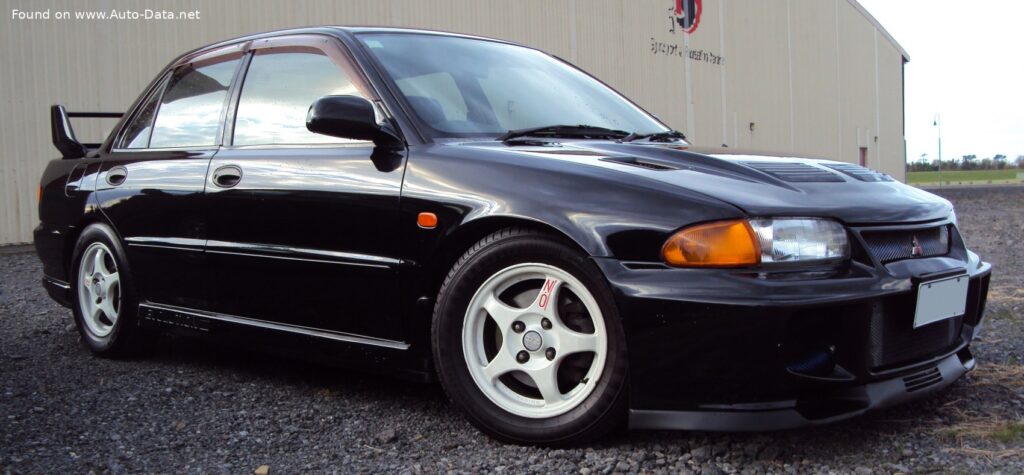
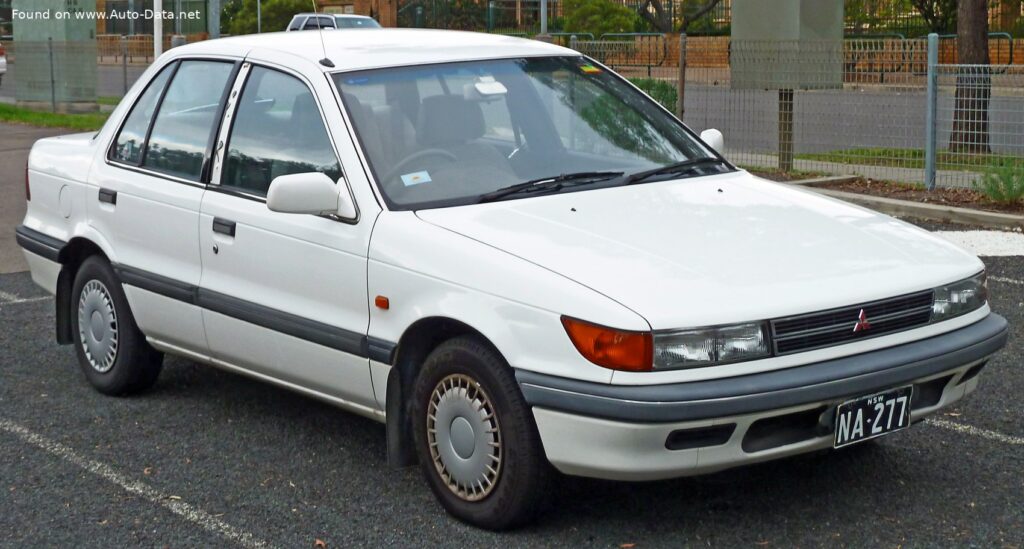
The Mitsubishi Lancer IV adopted a clean, aerodynamic sedan body style, characteristic of early 1990s automotive design. Its four-door, five-seat configuration made it a practical choice for small families or individuals needing ample passenger and cargo capacity. The exterior dimensions were compact yet well-proportioned: a length of 166.73 inches (4235 mm), a width of 65.75 inches (1670 mm), and a height of 55.31 inches (1405 mm). A wheelbase of 96.65 inches (2455 mm) contributed to a stable ride and reasonable interior room for its class.
Inside, the Lancer IV prioritized functionality and durability. While specific luxury features were minimal in this base 1.3L variant, the cabin was designed to be ergonomic and user-friendly. The trunk offered a respectable 11.9 cubic feet (337 liters) of cargo space, sufficient for groceries, luggage, or daily essentials. The vehicle’s suspension system comprised coil springs at both the front and rear, a common setup that provided a comfortable ride while maintaining adequate handling characteristics. Braking was handled by disc brakes at the front and drum brakes at the rear, a proven and cost-effective combination for a vehicle of this size and performance level. Steering was managed by a rack-and-pinion system, offering direct and responsive feedback. The Lancer IV rode on modest 155/80 R13 tires, emphasizing economy and ride comfort over high-performance grip.
Technical Specifications
| Category | Specification |
|---|---|
| General Information | |
| Brand | Mitsubishi |
| Model | Lancer |
| Generation | Lancer IV |
| Type (Engine) | 1.3 12V (75 Hp) |
| Start of Production | 1992 year |
| End of Production | 1994 year |
| Powertrain Architecture | Internal Combustion engine |
| Body type | Sedan |
| Seats | 5 |
| Doors | 4 |
| Performance Specs | |
| Fuel consumption (economy) – urban | 26.1 US mpg (9 l/100 km) |
| Fuel consumption (economy) – extra urban | 39.2 US mpg (6 l/100 km) |
| Fuel Type | Petrol (Gasoline) |
| Maximum speed | 101.28 mph (163 km/h) |
| Weight-to-power ratio | 11.7 kg/Hp, 85.2 Hp/tonne |
| Weight-to-torque ratio | 8.6 kg/Nm, 115.9 Nm/tonne |
| Engine Specs | |
| Power | 75 Hp @ 6000 rpm |
| Power per liter | 57.7 Hp/l |
| Torque | 75.23 lb.-ft. @ 4000 rpm (102 Nm) |
| Engine layout | Front, Transverse |
| Engine displacement | 1.3 liters (1299 cm³ / 79.27 cu. in.) |
| Number of cylinders | 4 |
| Engine configuration | Inline |
| Cylinder Bore | 2.8 in. (71 mm) |
| Piston Stroke | 3.23 in. (82 mm) |
| Compression ratio | 9.5:1 |
| Number of valves per cylinder | 3 |
| Fuel injection system | Carburettor |
| Engine aspiration | Naturally aspirated engine |
| Valvetrain | OHC |
| Space, Volume and Weights | |
| Kerb Weight | 1940.07 lbs. (880 kg) |
| Max. weight | 3229.77 lbs. (1465 kg) |
| Max load | 1289.7 lbs. (585 kg) |
| Trunk (boot) space – minimum | 11.9 cu. ft. (337 l) |
| Fuel tank capacity | 13.21 US gal (50 l) |
| Dimensions | |
| Length | 166.73 in. (4235 mm) |
| Width | 65.75 in. (1670 mm) |
| Height | 55.31 in. (1405 mm) |
| Wheelbase | 96.65 in. (2455 mm) |
| Front track | 56.3 in. (1430 mm) |
| Rear (Back) track | 56.3 in. (1430 mm) |
| Drivetrain, Brakes and Suspension Specs | |
| Drivetrain Architecture | The Internal combustion engine (ICE) drives the front wheels of the vehicle. |
| Drive wheel | Front wheel drive |
| Number of gears and type of gearbox | 5 gears, manual transmission |
| Front suspension | Coil spring |
| Rear suspension | Coil spring |
| Front brakes | Disc |
| Rear brakes | Drum |
| Steering type | Steering rack and pinion |
| Tires size | 155/80 R13 |
Legacy & Market Impact of the Mitsubishi Lancer IV
The Mitsubishi Lancer IV, particularly in its 1.3 12V (75 Hp) configuration, was a crucial model for Mitsubishi’s global strategy, even if this specific variant wasn’t widely marketed in the United States. In its primary markets of Asia, Europe, and Latin America, it competed fiercely with other established compact sedans such as the Toyota Corolla, Honda Civic, Nissan Sentra (known as Sunny in some markets), and various European offerings like the Volkswagen Golf (though typically in hatchback form) and Opel Astra. What set the Lancer apart was its reputation for robust build quality, mechanical reliability, and overall value for money.
This generation of the Lancer contributed significantly to Mitsubishi’s image as a manufacturer of dependable and affordable vehicles. Its modest yet efficient engine made it an attractive option in regions where fuel economy and lower taxation on smaller engines were significant purchasing factors. While the Lancer name would later gain immense recognition globally through its high-performance Evolution variants, it was models like the Lancer IV 1.3 12V that formed the bread-and-butter foundation, providing a practical and accessible entry point to the brand for countless consumers worldwide. Its enduring legacy is not one of groundbreaking innovation or exhilarating performance, but rather of consistent reliability and unwavering practicality, solidifying its status as a true workhorse in the compact sedan segment of the early 1990s. The Lancer IV laid the groundwork for subsequent generations to build upon, carrying forward Mitsubishi’s commitment to delivering reliable and efficient transportation solutions to a global audience.