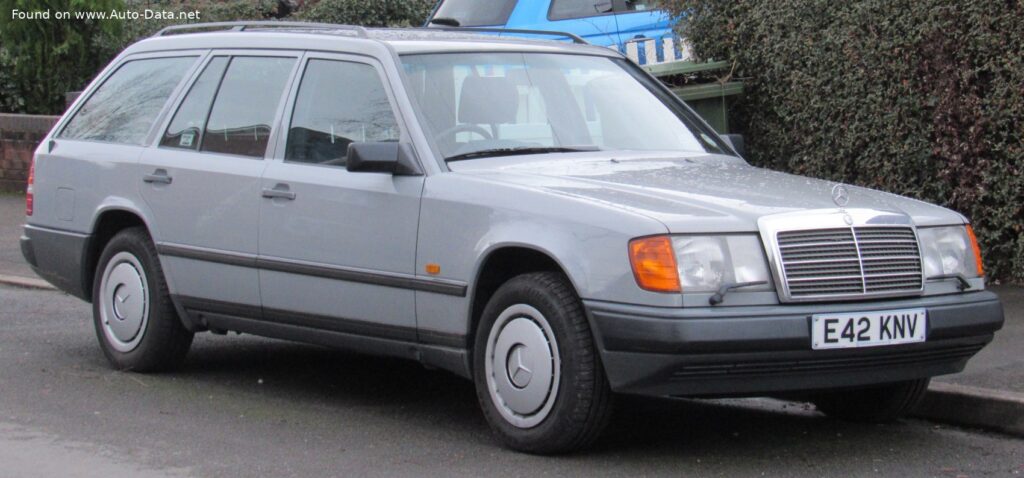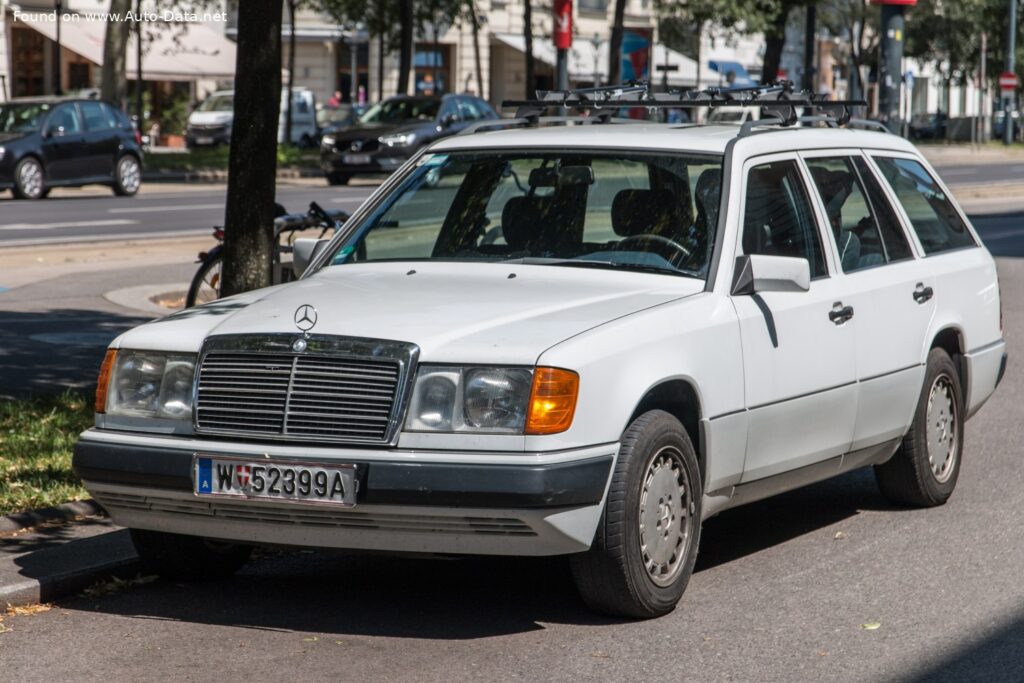
Mercedes-Benz S124 (facelift 1989) 300 TE-24 (220 Hp) Automatic
The Mercedes-Benz S124 (facelift 1989) 300 TE-24 (220 Hp) Automatic represents a pinnacle of German engineering and luxury from the late 1980s and early 1990s. As part of the iconic W124 generation, a series revered for its exceptional build quality, durability, and refined driving dynamics, the S124 designation specifically refers to the station wagon (or “estate” in European parlance) variant. The 300 TE-24, introduced with the 1989 facelift, distinguished itself with a potent 24-valve inline-six engine, offering a blend of performance, practicality, and sophisticated luxury that was highly sought after in its primary European market. While the W124 platform in various forms saw widespread global distribution, including significant sales in the United States, this particular 300 TE-24 model, with its advanced M104 engine, underscored Mercedes-Benz’s commitment to combining utility with spirited performance and cutting-edge technology for its era.
Engine and Performance of the Mercedes-Benz S124 300 TE-24
At the heart of the Mercedes-Benz S124 (facelift 1989) 300 TE-24 (220 Hp) Automatic lies the formidable M 104 E 30, also known by its engine code 104.980. This naturally aspirated, front-longitudinally mounted inline-six engine was a significant step forward for Mercedes-Benz, notably featuring a Dual Overhead Camshaft (DOHC) valvetrain with four valves per cylinder, totaling 24 valves. This advanced configuration, uncommon for a station wagon of its time, allowed for superior breathing and efficiency, contributing to its impressive power output. The engine displacement measures 2960 cubic centimeters (180.63 cu. in.), producing a robust 220 horsepower at 6400 rpm and 195.45 lb.-ft. of torque at 4600 rpm. This power-per-liter figure of 74.3 Hp/l was quite respectable for a naturally aspirated engine of the period.
Power is channeled to the rear wheels via a smooth and durable 4-speed automatic transmission, a common and reliable choice for Mercedes-Benz models of this vintage. This powertrain combination allows the 300 TE-24 to achieve a spirited acceleration from 0 to 60 mph in a mere 7.8 seconds, with a maximum speed of 134.84 mph. These performance figures were outstanding for a luxury station wagon, enabling comfortable high-speed cruising on European autobahns and confident overtaking. The vehicle’s weight-to-power ratio stands at 7.2 kg/Hp (or 138.4 Hp/tonne), highlighting its athletic capabilities. Fuel efficiency, while not its primary focus, was reasonable for a vehicle of its size and performance, with urban consumption rated at approximately 16 US mpg and extra-urban driving yielding around 24 US mpg on gasoline. The engine features multi-port manifold injection and a compression ratio of 10:1, ensuring efficient fuel delivery and combustion.
Design and Features of the S124 Station Wagon
The Mercedes-Benz S124 (facelift 1989) 300 TE-24 (220 Hp) Automatic embodies the timeless and functional design philosophy of the W124 generation. Its body type is a 5-door station wagon, designed to offer both luxurious passenger comfort for five occupants and substantial cargo versatility. The 1989 facelift brought subtle yet impactful enhancements to the W124 line, including revised side cladding (often referred to as “Sacco panels”), integrated door handles, and a slightly restyled grille, contributing to a more modern and cohesive aesthetic. Despite these updates, the core design remained true to the W124’s reputation for understated elegance and aerodynamic efficiency.
Dimensions of the S124 are substantial, with a length of 187.6 inches, a width of 68.5 inches, and a height of 58.62 inches. A generous wheelbase of 110.24 inches contributed significantly to the car’s stable ride and spacious interior. The engineering emphasis on ride quality and safety is evident in its chassis setup. The front suspension utilizes a wishbone design, while the rear features an advanced independent multi-link suspension system, providing a sophisticated balance of comfort, handling, and load-carrying capability. Braking performance is robust, with ventilated discs at the front and disc brakes at the rear, complemented by an Anti-lock Braking System (ABS) as a standard assisting feature, a crucial safety innovation for its time. Steering is handled by a hydraulic power steering system with a cone worm and recirculation balls mechanism, offering precise and responsive feedback. The vehicle rides on 195/65 R15 tires mounted on 6.5J x 15-inch wheel rims, providing a comfortable and grippy contact patch.
Technical Specifications
| Category | Specification | US Equivalent |
|---|---|---|
| General Information | ||
| Brand | Mercedes-Benz | |
| Model | W124 | |
| Generation | S124 (facelift 1989) | |
| Type (Engine) | 300 TE-24 (220 Hp) Automatic | |
| Start of production | 1989 year | |
| End of production | 1992 year | |
| Powertrain Architecture | Internal Combustion engine | |
| Body type | Station wagon (estate) | |
| Seats | 5 | |
| Doors | 5 | |
| Performance Specs | ||
| Fuel consumption (economy) – urban | 14.7 l/100 km | 16 US mpg |
| Fuel consumption (economy) – extra urban | 9.8 l/100 km | 24 US mpg |
| Fuel Type | Petrol (Gasoline) | |
| Acceleration 0 – 60 mph | 7.8 sec | |
| Maximum speed | 217 km/h | 134.84 mph |
| Weight-to-power ratio | 7.2 kg/Hp | 138.4 Hp/tonne |
| Weight-to-torque ratio | 6 kg/Nm | 166.7 Nm/tonne |
| Engine Specs | ||
| Power | 220 Hp @ 6400 rpm. | |
| Power per liter | 74.3 Hp/l | |
| Torque | 265 Nm @ 4600 rpm. | 195.45 lb.-ft. @ 4600 rpm. |
| Engine layout | Front, Longitudinal | |
| Engine Model/Code | M 104 E 30 / 104.980 | |
| Engine displacement | 2960 cm3 | 180.63 cu. in. |
| Number of cylinders | 6 | |
| Engine configuration | Inline | |
| Cylinder Bore | 88.5 mm | 3.48 in. |
| Piston Stroke | 80.2 mm | 3.16 in. |
| Compression ratio | 10:1 | |
| Number of valves per cylinder | 4 | |
| Fuel injection system | Multi-port manifold injection | |
| Engine aspiration | Naturally aspirated engine | |
| Valvetrain | DOHC | |
| Engine oil capacity | 6.5 l | 6.87 US qt |
| Coolant | 9 l | 9.51 US qt |
| Space, Volume and Weights | ||
| Kerb Weight | 1590 kg | 3505.35 lbs. |
| Max. weight | 2160 kg | 4761.98 lbs. |
| Max load | 570 kg | 1256.63 lbs. |
| Fuel tank capacity | 72 l | 19.02 US gal |
| Dimensions | ||
| Length | 4765 mm | 187.6 in. |
| Width | 1740 mm | 68.5 in. |
| Height | 1489 mm | 58.62 in. |
| Wheelbase | 2800 mm | 110.24 in. |
| Front track | 1497 mm | 58.94 in. |
| Rear (Back) track | 1497 mm | 58.94 in. |
| Drivetrain, Brakes and Suspension Specs | ||
| Drivetrain Architecture | Internal combustion engine drives rear wheels | |
| Drive wheel | Rear wheel drive | |
| Number of gears and type of gearbox | 4 gears, automatic transmission | |
| Front suspension | Wishbone | |
| Rear suspension | Independent multi-link suspension | |
| Front brakes | Ventilated discs | |
| Rear brakes | Disc | |
| Assisting systems | ABS (Anti-lock braking system) | |
| Steering type | Cone worm with recirculation balls | |
| Power steering | Hydraulic Steering | |
| Tires size | Front: 195/65 R15, Rear: 195/65 R15 | |
| Wheel rims size | Front: 6.5J x 15, Rear: 6.5J x 15 | |
Legacy and Market Impact of the Mercedes-Benz S124
The Mercedes-Benz S124 (facelift 1989) 300 TE-24 (220 Hp) Automatic, like the entire W124 series, holds a revered place in automotive history. It is widely considered one of the most “over-engineered” vehicles ever produced by Mercedes-Benz, a testament to its exceptional build quality, meticulous attention to detail, and legendary durability. This reputation for robustness meant that many W124s, including the S124 wagons, remained on the road for decades, often accumulating hundreds of thousands of miles with proper maintenance.
In its primary European market, the 300 TE-24 was positioned as a premium, high-performance family hauler. It competed with other luxury wagons like the BMW 5-Series Touring and the Audi 100 Avant (which later evolved into the A6 Avant). What set the S124 apart was its unique blend of Mercedes-Benz’s traditional comfort and refinement with the enhanced performance offered by the 24-valve M104 engine. This made it an ideal choice for discerning buyers who required the practicality of a station wagon but refused to compromise on driving enjoyment or prestige. Its advanced multi-link rear suspension, a significant innovation for its time, provided a ride quality and handling prowess that few competitors could match, especially when fully loaded.
Historically, the W124 platform served as a benchmark for executive cars, setting new standards for safety, reliability, and engineering excellence. The 300 TE-24 variant, with its powerful engine and practical wagon body, exemplified Mercedes-Benz’s capability to deliver a versatile vehicle without sacrificing its core brand values. Today, the W124 series, and particularly well-preserved examples of the 300 TE-24, are increasingly recognized as modern classics. Their enduring appeal stems from their timeless design, bulletproof mechanicals, and a driving experience that still feels substantial and refined even by contemporary standards. The Mercedes-Benz S124 300 TE-24 stands as a significant chapter in the brand’s heritage, showcasing a period when Mercedes-Benz truly excelled in creating vehicles that blended luxury, performance, and unparalleled longevity.