
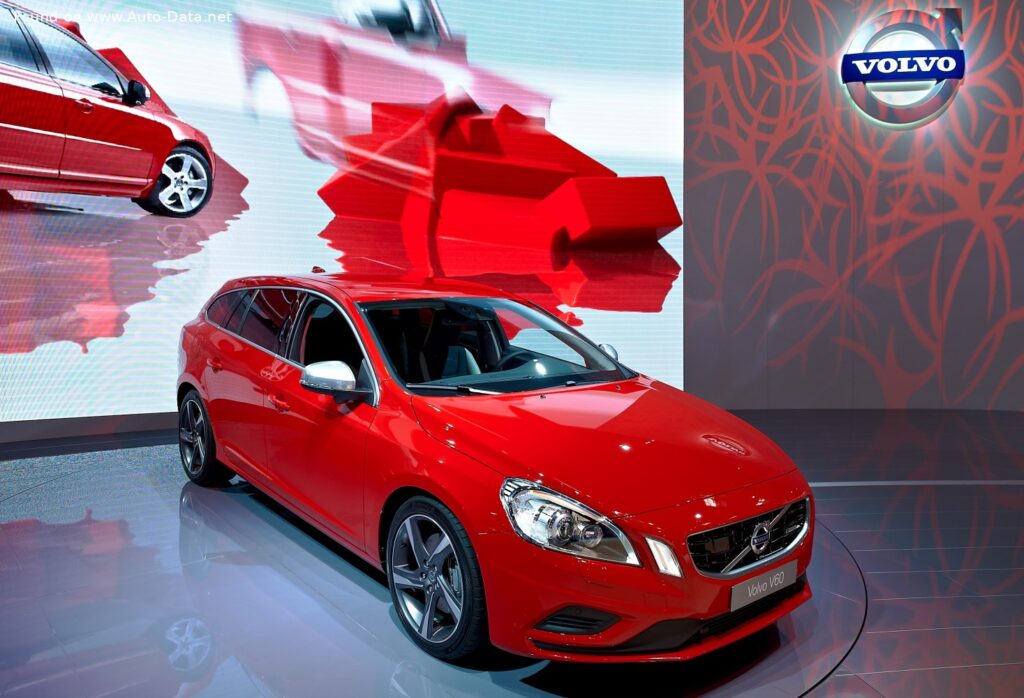
The Volvo V60 I 2.0 T5 (240 Hp): A Scandinavian Blend of Sportiness and Practicality
The Volvo V60 I 2.0 T5 (240 Hp) represents a significant chapter in Volvo’s modern design and engineering philosophy, marking a clear departure from the brand’s traditionally boxy, utilitarian wagon aesthetic. Introduced in 2011 as part of the first-generation V60 lineup, this particular variant, produced until 2013, was positioned as a premium compact executive station wagon. It aimed to merge Volvo’s renowned safety credentials and practical Scandinavian design with a more dynamic and engaging driving experience. While Volvo has a strong presence in the United States, the V60 I often found its most enthusiastic reception and broadest range of configurations in European and other international markets, where the station wagon body style holds considerable appeal. This 2.0 T5 model, with its potent turbocharged engine and available manual transmission, offered a compelling blend of performance, efficiency, and everyday versatility.
Engine and Performance: The Heart of the Volvo V60 I 2.0 T5 (240 Hp)
At the core of the Volvo V60 I 2.0 T5 (240 Hp) is a sophisticated powertrain designed to deliver a balance of spirited performance and commendable fuel efficiency. This model is equipped with a 2.0-liter (1999 cm3) inline four-cylinder engine, designated by the code B4204T7. This unit benefits from direct fuel injection, a turbocharger, and an intercooler, technologies that were cutting-edge for its time and contributed significantly to its output and responsiveness.
The engine produces a robust 240 horsepower at 5500 revolutions per minute (rpm), making it one of the more powerful options in its segment. Torque is equally impressive, peaking at 320 Newton-meters (236.02 lb.-ft.) across a broad range from 1800 to 5000 rpm. This wide torque band ensures strong pulling power from low engine speeds, translating into effortless acceleration and flexible driving characteristics, whether navigating city traffic or cruising on the highway.
Power is sent to the front wheels via a precise 6-speed manual transmission, a choice that appeals to driving enthusiasts seeking a more engaging connection with the vehicle. This combination allows the V60 I 2.0 T5 to accelerate from 0 to 60 miles per hour in an estimated 7.1 seconds, and from 0 to 100 kilometers per hour in 7.5 seconds – respectable figures for a family-oriented wagon.
Despite its performance capabilities, Volvo engineered this T5 variant with an eye towards efficiency. Running on gasoline, it achieves a combined fuel economy of approximately 29 US miles per gallon (8.1 l/100 km). Urban driving yields around 20.8 US mpg (11.3 l/100 km), while extra-urban cruising can see figures as high as 37.3 US mpg (6.3 l/100 km). Emissions are rated at 189 g/km of CO2, meeting the Euro 5 emission standard, reflecting Volvo’s commitment to environmental responsibility even in its performance models. The engine’s advanced design, including a 9.5:1 compression ratio and four valves per cylinder, optimizes combustion for both power and efficiency.
Design and Features: Form Meets Function
The first-generation Volvo V60 introduced a more athletic and dynamic design language for the brand’s wagons. Moving away from the traditional, upright “estate” silhouette, the V60 I adopted a sleeker, more coupe-like profile, particularly evident in its tapering roofline and sculpted rear end. This station wagon (estate) body type, featuring five doors and seating for five occupants, masterfully blends aesthetic appeal with practical utility.
Measuring 182.2 inches in length, 73.43 inches in width, and 58.43 inches in height, with a wheelbase of 109.29 inches, the V60 I possesses a substantial road presence while remaining maneuverable. Its minimum turning circle of 37.73 feet underscores its urban agility. The design emphasizes aerodynamic efficiency and a planted stance, with a front track of 62.52 inches and a rear track of 62.4 inches.
Inside, the V60 I upholds Volvo’s reputation for ergonomic excellence and high-quality materials. The cabin is designed with a driver-centric approach, featuring intuitive controls and comfortable seating that provides excellent support for long journeys. While the sleek exterior design subtly reduces ultimate cargo volume compared to more traditional wagons, the V60 I still offers a respectable 24.44 cubic feet (692 liters) of trunk space with the rear seats in place, making it highly practical for daily use, family trips, or hauling sports equipment.
Safety, as always with Volvo, is paramount. Although the provided data specifically mentions only ABS (Anti-lock Braking System), a premium vehicle from Volvo in this era would have been equipped with a comprehensive suite of active and passive safety features. These typically included multiple airbags, dynamic stability and traction control systems, and Volvo’s pioneering City Safety system, designed to prevent low-speed collisions. These features collectively contributed to the V60’s strong safety ratings and peace of mind for its occupants.
Technical Specifications
| Category | Specification |
|---|---|
| Brand | Volvo |
| Model | V60 I |
| Type (Engine) | 2.0 T5 (240 Hp) |
| Production Years | 2011 – 2013 |
| Body Type | Station wagon (estate) |
| Seats | 5 |
| Doors | 5 |
| Powertrain Architecture | Internal Combustion engine |
| Fuel Type | Petrol (Gasoline) |
| Engine Layout | Front, Transverse |
| Engine Model/Code | B4204T7 |
| Engine Displacement | 1999 cm3 (121.99 cu. in.) |
| Number of Cylinders | 4 |
| Engine Configuration | Inline |
| Cylinder Bore | 87.5 mm (3.44 in.) |
| Piston Stroke | 83.1 mm (3.27 in.) |
| Compression Ratio | 9.5:1 |
| Valves per Cylinder | 4 |
| Fuel Injection System | Direct injection |
| Engine Aspiration | Turbocharger, Intercooler |
| Power | 240 Hp @ 5500 rpm |
| Power per liter | 120.1 Hp/l |
| Torque | 320 Nm (236.02 lb.-ft.) @ 1800-5000 rpm |
| Acceleration 0-60 mph (calculated) | 7.1 sec |
| Acceleration 0-100 km/h | 7.5 sec |
| Fuel Consumption (Urban) | 11.3 l/100 km (20.8 US mpg) |
| Fuel Consumption (Extra Urban) | 6.3 l/100 km (37.3 US mpg) |
| Fuel Consumption (Combined) | 8.1 l/100 km (29 US mpg) |
| CO2 Emissions | 189 g/km |
| Emission Standard | Euro 5 |
| Drivetrain Architecture | Front wheel drive (ICE drives front wheels) |
| Drive Wheel | Front wheel drive |
| Gearbox | 6 gears, manual transmission |
| Assisting Systems | ABS (Anti-lock braking system) |
| Kerb Weight | 1568 kg (3456.85 lbs.) |
| Max. Weight | 2130 kg (4695.85 lbs.) |
| Max Load | 562 kg (1239 lbs.) |
| Weight-to-power ratio | 6.5 kg/Hp (153.1 Hp/tonne) |
| Weight-to-torque ratio | 4.9 kg/Nm (204.1 Nm/tonne) |
| Trunk (boot) Space – minimum | 692 l (24.44 cu. ft.) |
| Fuel Tank Capacity | 67.5 l (17.83 US gal) |
| Engine oil capacity | 5.4 l (5.71 US qt) |
| Coolant | 10.5 l (11.1 US qt) |
| Length | 4628 mm (182.2 in.) |
| Width | 1865 mm (73.43 in.) |
| Height | 1484 mm (58.43 in.) |
| Wheelbase | 2776 mm (109.29 in.) |
| Front Track | 1588 mm (62.52 in.) |
| Rear (Back) Track | 1585 mm (62.4 in.) |
| Minimum Turning Circle | 11.5 m (37.73 ft.) |
Legacy and Market Impact
The Volvo V60 I, particularly in its 2.0 T5 (240 Hp) manual transmission guise, played a crucial role in shaping Volvo’s image during the early 2010s. It represented a bold statement from the Swedish automaker, signaling a shift towards more emotionally resonant designs and dynamic driving characteristics, without compromising on the core values of safety and practicality that the brand was built upon.
In its primary European market, the V60 I was a strong contender in the highly competitive premium compact executive wagon segment. Its rivals included well-established models like the BMW 3 Series Touring, Audi A4 Avant, and Mercedes-Benz C-Class Estate. The V60 distinguished itself with its unique Scandinavian aesthetic, a focus on human-centric design, and its unwavering commitment to pioneering safety technologies. The 2.0 T5 engine offered a compelling alternative to its German counterparts, providing robust performance and a distinct character. The availability of a manual transmission, while becoming increasingly rare in this segment, was a particular draw for enthusiasts who appreciated the added driver involvement.
For the American market, the V60 I was also offered, though specific engine and transmission configurations varied. While automatics were more prevalent in the US, the V60 helped solidify Volvo’s position as a premium brand offering sophisticated alternatives to German luxury cars, emphasizing safety and a unique design sensibility.
The V60 I’s legacy is defined by its success in transforming perceptions of Volvo wagons from purely practical conveyances to stylish, desirable vehicles that offered both utility and driving pleasure. It laid important groundwork for subsequent Volvo models, influencing the brand’s contemporary design language and powertrain strategies. The 2.0 T5 (240 Hp) variant, in particular, showcased how a relatively compact turbocharged four-cylinder engine could deliver impressive power and efficiency, a trend that continues to dominate the automotive industry. It remains a testament to Volvo’s ability to innovate and adapt while staying true to its core values.
