The Peugeot 3008 I (Phase II, 2013): A European Crossover’s Evolution
The Peugeot 3008 I (Phase II, 2013) represents a significant iteration of Peugeot’s foray into the compact crossover segment, a vehicle type that gained immense popularity across Europe during the early 2010s. While not officially sold in the United States, the 3008 played a crucial role in Peugeot’s strategy to capture market share in a burgeoning category that blended the practicality of an SUV with the driving dynamics and fuel efficiency of a conventional hatchback or sedan. This specific variant, featuring the 2.0 BlueHDi (136 Hp) S&S engine, was produced from 2015 to 2016, showcasing Peugeot’s commitment to advanced diesel technology and environmental compliance with Euro 6 emission standards. The Phase II facelift, introduced in 2013, brought updated styling and enhanced features, ensuring the 3008 remained competitive in its highly contested segment before the arrival of its more radically styled successor.
Peugeot 3008 I (Phase II, 2013) Engine & Performance
At the heart of this particular Peugeot 3008 I (Phase II, 2013) model lies the 2.0-liter BlueHDi inline-four diesel engine, a powerplant engineered for a balance of robust performance and exceptional fuel economy. Generating a respectable 136 horsepower at 4000 rpm, this engine delivered ample power for daily driving and highway cruising. More impressively, its torque output stood at a substantial 272.9 lb.-ft. at a low 2000 rpm, providing strong acceleration from a standstill and confident overtaking capabilities, a characteristic highly valued in diesel engines.
The BlueHDi designation signifies Peugeot’s advanced diesel particulate filter (DPF) and Selective Catalytic Reduction (SCR) technology, which work in tandem to significantly reduce harmful nitrogen oxide (NOx) emissions, allowing the vehicle to meet the stringent Euro 6 emission standard. Further enhancing its efficiency credentials was the inclusion of a Start & Stop (S&S) system, which automatically shuts off the engine when the vehicle is stationary and restarts it seamlessly when the driver intends to move. This system, primarily beneficial in urban traffic, contributes to reduced fuel consumption and lower CO2 emissions.
Power was delivered to the front wheels via a precise 6-speed manual transmission, offering drivers an engaging and direct connection to the powertrain. The front-transverse engine layout, combined with front-wheel drive, is a typical configuration for this class, optimizing interior space and manufacturing efficiency while providing predictable handling characteristics. With an engine displacement of 1997 cubic centimeters (approximately 2.0 Liters or 121.86 cubic inches), a bore of 3.35 inches, and a stroke of 3.46 inches, the engine’s specifications point to a well-engineered unit designed for durability and efficiency.
Design & Features of the Peugeot 3008 I (Phase II, 2013)
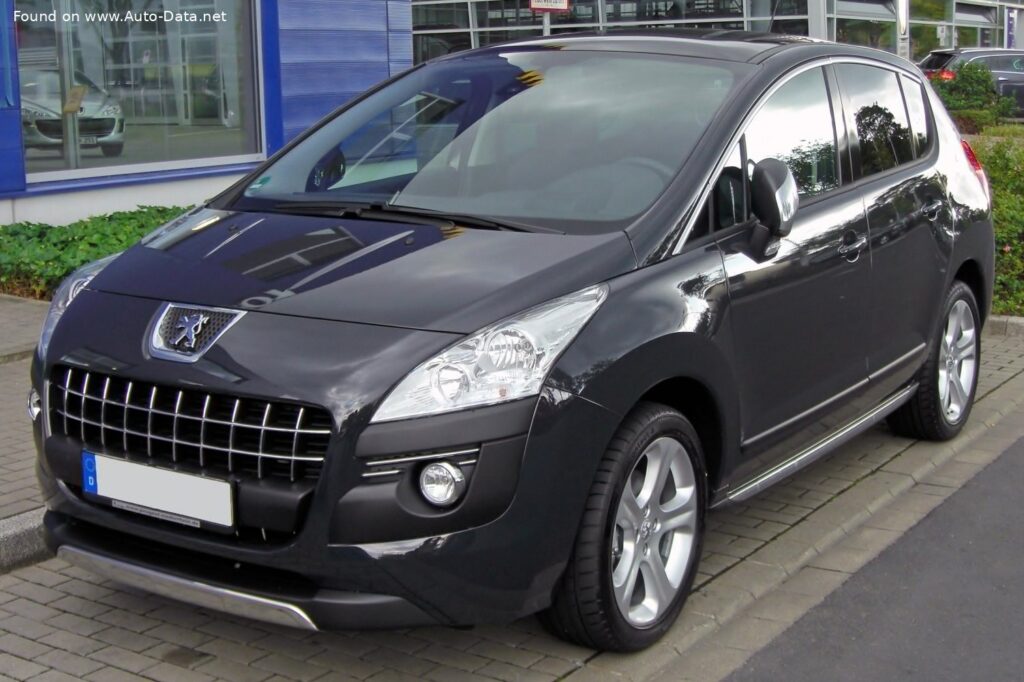
The Peugeot 3008 I (Phase II, 2013), classified as an SUV or compact crossover, offered a distinctive blend of MPV (multi-purpose vehicle) practicality and SUV styling cues. Measuring 171.85 inches in length, 72.32 inches in width (83.19 inches including mirrors), and 64.37 inches in height, it presented a substantial but manageable footprint for European city streets and rural roads. Its wheelbase of 102.87 inches contributed to a stable ride and a surprisingly spacious cabin for five occupants across two rows of seating.
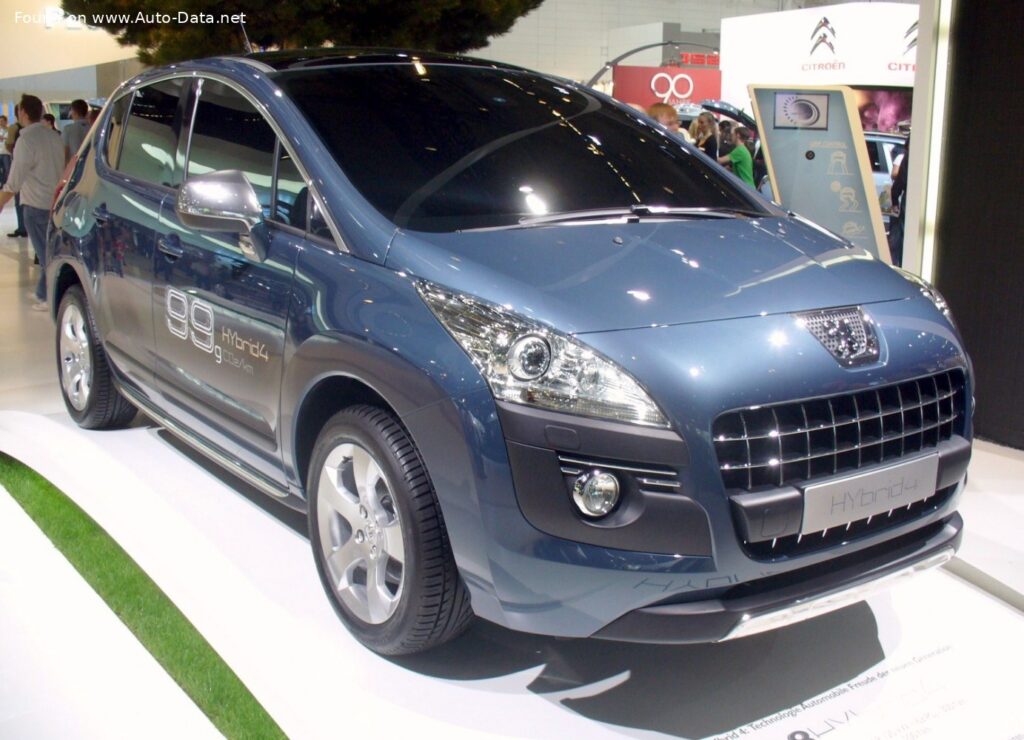
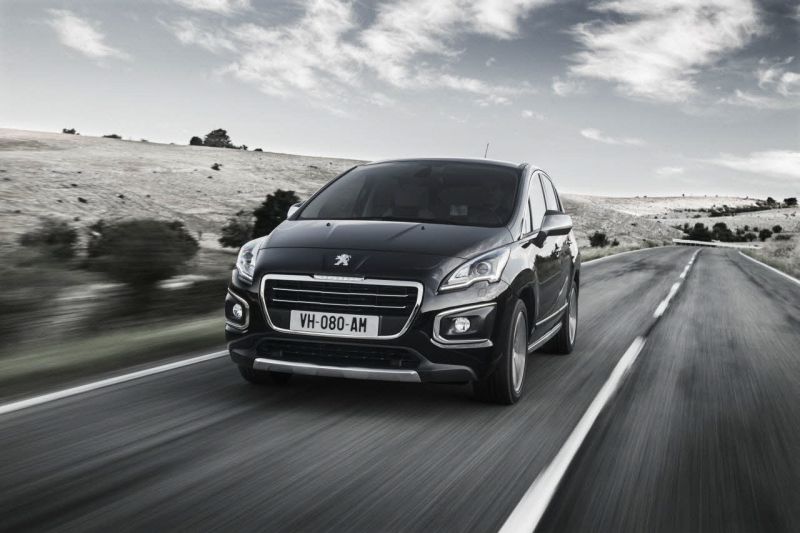
The exterior design of the Phase II model featured a refreshed front fascia with updated headlights, a revised grille, and new bumper designs that gave it a more contemporary and assertive look compared to its initial launch. While its design was sometimes described as unconventional, it prioritized interior volume and versatility. The five-door body type facilitated easy access for passengers and cargo.
Inside, the 3008 was known for its elevated driving position and a cockpit-like dashboard design, which was unique for its time. Practicality was a strong suit, with a minimum trunk space of 18.08 cubic feet (512 liters), expanding significantly to a maximum of 56.64 cubic feet (1604 liters) with the rear seats folded down, making it highly versatile for families and active lifestyles. A 15.85 US gallon (60-liter) fuel tank provided an excellent cruising range, especially with the frugal diesel engine.
Underneath, the 3008 I featured an independent McPherson strut front suspension with coil springs and an anti-roll bar, paired with a semi-independent coil spring rear suspension. This setup delivered a comfortable ride quality and competent handling characteristics. Braking duties were handled by ventilated discs at the front and solid discs at the rear, supported by an Anti-lock Braking System (ABS) for enhanced safety. Electric power steering provided light and precise control, aiding maneuverability in tight spaces with a minimum turning circle of 35.76 feet. The vehicle rode on 225/50 R17 tires mounted on 7.5J x 17-inch wheel rims.
Technical Specifications: Peugeot 3008 I (Phase II, 2013) 2.0 BlueHDi (136 Hp) S&S
| Category | Specification |
|---|---|
| General Information | |
| Brand | Peugeot |
| Model | 3008 |
| Generation | 3008 I (Phase II, 2013) |
| Type (Engine) | 2.0 BlueHDi (136 Hp) S&S |
| Start of Production | 2015 year |
| End of Production | 2016 year |
| Powertrain Architecture | Internal Combustion engine |
| Body Type | SUV |
| Seats | 5 |
| Doors | 5 |
| Performance Specs | |
| Fuel Type | Diesel |
| Emission Standard | Euro 6 |
| Power | 136 Hp @ 4000 rpm |
| Power per Liter | 68.1 Hp/l |
| Torque | 272.9 lb.-ft. @ 2000 rpm (370 Nm) |
| Engine Layout | Front, Transverse |
| Engine Displacement | 2.0 Liters (1997 cm3 / 121.86 cu. in.) |
| Number of Cylinders | 4 |
| Engine Configuration | Inline |
| Cylinder Bore | 3.35 in. (85 mm) |
| Piston Stroke | 3.46 in. (88 mm) |
| Number of Valves per Cylinder | 2 |
| Fuel Injection System | Diesel Commonrail |
| Engine Aspiration | Turbocharger, Intercooler |
| Engine Systems | Start & Stop System, Particulate filter |
| Space, Volume and Weights | |
| Trunk (boot) space – minimum | 18.08 cu. ft. (512 l) |
| Trunk (boot) space – maximum | 56.64 cu. ft. (1604 l) |
| Fuel Tank Capacity | 15.85 US gal (60 l) |
| Dimensions | |
| Length | 171.85 in. (4365 mm) |
| Width | 72.32 in. (1837 mm) |
| Width with mirrors folded | 75.2 in. (1910 mm) |
| Width including mirrors | 83.19 in. (2113 mm) |
| Height | 64.37 in. (1635 mm) |
| Wheelbase | 102.87 in. (2613 mm) |
| Front Track | 60.31 in. (1532 mm) |
| Rear (Back) Track | 60.12 in. (1527 mm) |
| Front Overhang | 36.06 in. (916 mm) |
| Rear Overhang | 32.91 in. (836 mm) |
| Minimum Turning Circle | 35.76 ft. (10.9 m) |
| Drivetrain, Brakes and Suspension Specs | |
| Drivetrain Architecture | The Internal combustion engine (ICE) drives the front wheels of the vehicle. |
| Drive Wheel | Front wheel drive |
| Number of Gears and Type of Gearbox | 6 gears, manual transmission |
| Front Suspension | Independent, type McPherson with coil spring and anti-roll bar |
| Rear Suspension | Semi-independent, coil spring |
| Front Brakes | Ventilated discs |
| Rear Brakes | Disc |
| Assisting Systems | ABS (Anti-lock braking system) |
| Steering Type | Steering rack and pinion |
| Power Steering | Electric Steering |
| Tires Size | 225/50 R17 |
| Wheel Rims Size | 7.5J x 17 |
Legacy & Market Impact of the Peugeot 3008 I (Phase II, 2013)
The Peugeot 3008 I (Phase II, 2013) carved out a significant niche for itself in the highly competitive European compact crossover market. Launched initially in 2009, the 3008 was one of Peugeot’s early ventures into a segment that would soon explode in popularity. Its unique blend of hatchback-like driving dynamics, MPV practicality, and SUV-inspired styling made it a compelling choice for families seeking versatility without the bulk of a traditional SUV.
In its primary European markets, the 3008 competed against a formidable array of rivals, including the Nissan Qashqai, Volkswagen Tiguan, Ford Kuga (Escape in the US), Renault Kadjar, and Skoda Yeti. While some critics initially found its styling polarizing, its strong points in terms of interior space, ride comfort, and fuel efficiency – particularly with the BlueHDi diesel engines – ensured its sustained appeal. The 2.0 BlueHDi (136 Hp) S&S variant, with its Euro 6 compliance and Start & Stop system, was particularly relevant as environmental regulations became stricter and consumers increasingly valued lower running costs and reduced emissions.
The 3008 I’s legacy is defined by its role as a transitional model for Peugeot. It demonstrated the brand’s ability to innovate and adapt to changing consumer preferences, laying the groundwork for future SUV successes. While it wasn’t a traditional, rugged SUV, its higher driving position, increased ground clearance, and flexible interior offered enough SUV attributes to satisfy a growing demand. Its success proved that Peugeot could effectively compete in this segment, paving the way for the critically acclaimed second-generation 3008, which adopted a more conventional and overtly SUV-like design, winning numerous awards, including European Car of the Year. The first-generation 3008, particularly its refined Phase II iteration with advanced diesel powertrains, remains a testament to Peugeot’s engineering prowess and its understanding of the diverse needs of the European automotive landscape.