The 2015 Seat Ibiza IV SC (facelift) 1.0 Eco TSI (110 Hp) DSG: A European Supermini with a Sporty Edge
The Seat Ibiza IV SC (facelift 2015) 1.0 Eco TSI (110 Hp) DSG represents a significant iteration of SEAT’s popular B-segment supermini, specifically the sportier three-door “SC” (SportCoupé) variant. Unveiled in May 2015 as a mid-cycle refresh for the fourth generation Ibiza, this model continued SEAT’s tradition of blending Spanish flair with German engineering, courtesy of its Volkswagen Group parentage. While the SEAT brand is not present in the United States market, the Ibiza has been a cornerstone of the European automotive landscape since its inception, offering a compelling mix of dynamic styling, agile handling, and practical urban usability. This particular version, powered by an advanced 1.0-liter Eco TSI engine mated to a sophisticated DSG automatic transmission, highlighted the industry’s shift towards efficient, downsized powertrains that still delivered engaging performance.
The 2015 facelift brought a series of enhancements to the Ibiza IV, focusing on improved interior quality, updated infotainment systems, and a revised engine lineup, all while retaining the sharp, expressive exterior design that had become a hallmark of the model. The SC variant, with its three-door configuration, offered a sportier aesthetic and a slightly more compact profile, appealing to younger buyers and those prioritizing style and driving dynamics over maximum rear-door practicality. The 1.0 Eco TSI engine, a marvel of modern engine technology, demonstrated how a small displacement unit could deliver impressive horsepower and torque figures, making the Seat Ibiza IV SC (facelift 2015) 1.0 Eco TSI (110 Hp) DSG a nimble and economical choice for city driving and longer commutes alike.
Engine and Performance: The Heart of the Seat Ibiza IV SC (facelift 2015) 1.0 Eco TSI (110 Hp) DSG
At the core of this particular Ibiza variant is the highly efficient and surprisingly potent 1.0-liter Eco TSI engine. Coded CHZC, this inline three-cylinder gasoline engine utilizes direct fuel injection, a turbocharger, and an intercooler to produce impressive output for its size. It generates a robust 110 horsepower (HP) between 5000 and 5500 rpm, translating to a power-per-liter ratio of 110.1 HP/liter – a testament to its advanced engineering. More critically for everyday driving, the engine delivers a healthy 200 Newton-meters (147.51 lb-ft) of torque across a broad and accessible rev range, from 2000 to 3500 rpm. This wide torque band ensures responsive acceleration and flexible performance, making it feel more substantial than its displacement might suggest.
The powertrain architecture is a front, transverse layout, driving the front wheels. Power is channeled through a seven-speed DSG (Direct Shift Gearbox) automatic transmission, a dual-clutch unit renowned for its rapid and smooth gear changes. This combination contributes significantly to both the car’s performance and its fuel efficiency. The Ibiza SC with this setup can accelerate from 0 to 60 mph in a brisk 8.8 seconds, with a top speed reaching 122.41 mph. These figures are highly competitive within the supermini segment and underscore the car’s dynamic capabilities.
Fuel economy is a standout feature, with a combined rating of 4.4 liters per 100 kilometers, which translates to an impressive 53.5 US miles per gallon. This efficiency, combined with CO2 emissions of just 102 grams per kilometer, allowed the Ibiza to meet the stringent Euro 6 emission standard, making it an environmentally conscious choice in its market. The combination of a small, turbocharged engine and a sophisticated automatic transmission perfectly exemplifies the modern automotive trend of “right-sizing” powertrains to achieve an optimal balance of performance, economy, and emissions.
Design and Features: Sporty Aesthetics and Urban Practicality
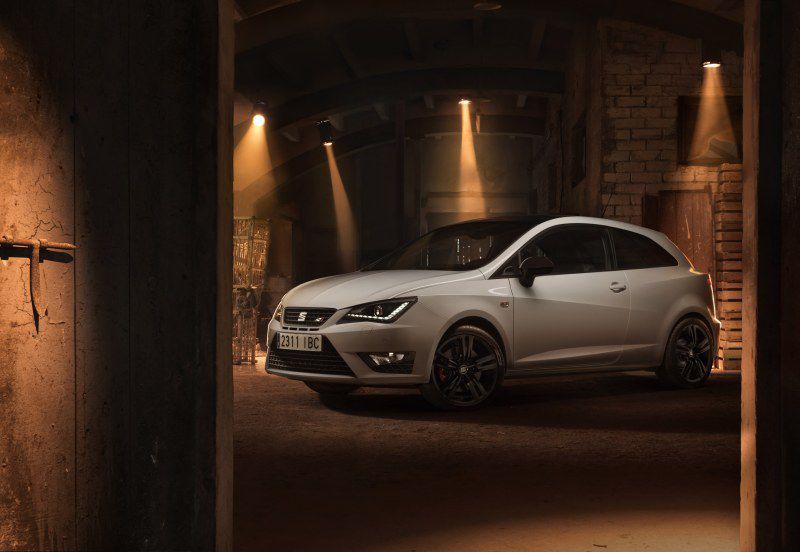
The Seat Ibiza IV SC (facelift 2015), particularly in its SportCoupé (SC) guise, is characterized by its distinctive and athletic design. As a three-door coupe, it presents a more dynamic and streamlined profile compared to its five-door sibling. The facelift in 2015 subtly refined this aesthetic, with updated headlights, taillights, and wheel designs, further sharpening its already aggressive stance. Its compact dimensions – a length of 159.17 inches, a width of 66.65 inches, and a height of 56.22 inches – make it highly maneuverable in congested urban environments, a crucial attribute for European cities.
Despite its coupe designation, the Ibiza SC offers seating for five occupants, making it practical for small families or groups, though rear-seat access is naturally less convenient than in a five-door car. The trunk space provides 10.31 cubic feet of cargo volume, adequate for daily errands or weekend trips. The interior of the facelifted model saw significant improvements in material quality and the introduction of SEAT’s latest infotainment systems, including options for smartphone integration, enhancing connectivity and user experience.
Underneath, the Ibiza SC employs a robust chassis designed for engaging handling. It features an independent McPherson strut front suspension with coil springs and an anti-roll bar, providing precise steering and good road holding. The rear utilizes a semi-independent setup with coil springs, a common and effective solution for this segment that balances ride comfort with cost-effectiveness. Braking is handled by ventilated discs at the front and disc brakes at the rear, complemented by an Anti-lock Braking System (ABS) for enhanced safety. Steering is a responsive rack and pinion system. Available tire sizes ranged from 185/60 R15 to wider 215/40 R17 options, allowing buyers to customize the car’s grip and aesthetic.
Technical Specifications
| Category | Specification | US Equivalent / Notes |
|---|---|---|
| Brand | Seat | |
| Model | Ibiza IV SC (facelift 2015) | |
| Type (Engine) | 1.0 Eco TSI (110 Hp) DSG | |
| Start of production | May, 2015 | |
| End of production | 2017 | |
| Powertrain Architecture | Internal Combustion engine | |
| Body type | Coupe (3 Doors) | |
| Seats | 5 | |
| Fuel consumption (combined) | 4.4 l/100 km | 53.5 US mpg |
| CO2 emissions | 102 g/km | |
| Fuel Type | Petrol | Gasoline |
| Acceleration 0 – 60 mph | 8.8 sec | |
| Maximum speed | 197 km/h | 122.41 mph |
| Emission standard | Euro 6 | |
| Power | 110 Hp @ 5000-5500 rpm | 110 HP |
| Power per liter | 110.1 Hp/l | |
| Torque | 200 Nm @ 2000-3500 rpm | 147.51 lb-ft |
| Engine layout | Front, Transverse | |
| Engine Model/Code | CHZC | |
| Engine displacement | 999 cm3 | 1.0 Liter / 60.96 cu. in. |
| Number of cylinders | 3 | |
| Engine configuration | Inline | |
| Cylinder Bore | 74.5 mm | 2.93 in. |
| Piston Stroke | 76.4 mm | 3.01 in. |
| Compression ratio | 10.5:1 | |
| Number of valves per cylinder | 4 | |
| Fuel injection system | Direct injection | |
| Engine aspiration | Turbocharger, Intercooler | |
| Engine oil capacity | 4 l | 4.23 US qt |
| Coolant capacity | 8 l | 8.45 US qt |
| Kerb Weight | 1065 kg | 2347.92 lbs. |
| Max. weight | 1630 kg | 3593.53 lbs. |
| Max load | 565 kg | 1245.61 lbs. |
| Trunk (boot) space – minimum | 292 l | 10.31 cu. ft. |
| Fuel tank capacity | 45 l | 11.89 US gal |
| Length | 4043 mm | 159.17 in. |
| Width | 1693 mm | 66.65 in. |
| Height | 1428 mm | 56.22 in. |
| Wheelbase | 2469 mm | 97.2 in. |
| Front track | 1465 mm | 57.68 in. |
| Rear (Back) track | 1457 mm | 57.36 in. |
| Minimum turning circle | 10 m | 32.81 ft. |
| Drivetrain Architecture | Front wheel drive (ICE drives front wheels) | |
| Drive wheel | Front wheel drive | |
| Number of gears and type of gearbox | 7 gears, automatic transmission DSG | |
| Front suspension | Independent, type McPherson with coil spring and anti-roll bar | |
| Rear suspension | Semi-independent, coil spring | |
| Front brakes | Ventilated discs | |
| Rear brakes | Disc | |
| Assisting systems | ABS (Anti-lock braking system) | |
| Steering type | Steering rack and pinion | |
| Tires size | 185/60 R15; 215/45 R16; 215/40 R17 | |
| Wheel rims size | 15; 16; 17 |
Legacy and Market Impact
The Seat Ibiza has long been a pivotal model for the Spanish automaker, serving as its most popular and accessible offering across Europe and other international markets where the brand operates. The fourth-generation Ibiza, particularly after its 2015 facelift, continued to uphold this legacy, remaining highly competitive in the cutthroat B-segment, often referred to as the supermini class. Its primary rivals included stablemates like the Volkswagen Polo and Skoda Fabia, as well as formidable competitors such as the Ford Fiesta, Renault Clio, Peugeot 208, and Opel Corsa.
The Seat Ibiza IV SC (facelift 2015) 1.0 Eco TSI (110 Hp) DSG, with its specific powertrain, played a crucial role in showcasing SEAT’s commitment to modern automotive trends. The adoption of the 1.0-liter Eco TSI engine was a significant step, illustrating how efficient, downsized, turbocharged engines could deliver both spirited performance and excellent fuel economy. This engine technology allowed the Ibiza to appeal to a broad demographic, from young drivers seeking a stylish and affordable first car to urban dwellers prioritizing low running costs and easy maneuverability.
The “SC” SportCoupé variant, with its three-door body style, carved out a niche for buyers who valued sportier aesthetics and a more dynamic appearance. While perhaps less practical for families than the five-door hatchback, its distinctive styling and agile handling characteristics resonated with those looking for a car that offered a bit more “auto emoción,” SEAT’s long-standing brand philosophy. Its reputation for reliable Volkswagen Group underpinnings, combined with SEAT’s unique design language and slightly more driver-focused tuning, helped it maintain a strong position in its market segment.
Although the SEAT brand, and thus the Ibiza, was never officially imported or sold in the United States, its impact on the European automotive scene is undeniable. The Ibiza IV SC facelift, especially with its advanced 1.0 Eco TSI engine and DSG transmission, stands as a prime example of how European manufacturers adapted to evolving consumer demands for efficiency, connectivity, and engaging driving experiences within a compact, stylish package. It cemented the Ibiza’s status as a well-rounded and appealing choice in a highly competitive segment, contributing to SEAT’s overall brand strength and market presence before the introduction of its successor, the fifth-generation Ibiza, in 2017.